
How To Sharpen A Pocket Knife In 6 Easy Steps
A dull pocket knife is frustrating and dangerous.
I've been there - trying to whittle a stick or cut a piece of rope, only to have the blade slip because it lost its edge. After 15 years of carrying and sharpening pocket knives, I've learned that sharpening doesn't require expensive tools or years of practice.
To sharpen a pocket knife effectively, you need a sharpening stone (whetstone), water for lubrication, about 15-30 minutes of time, and a consistent 15-20 degree angle while working both sides of the blade until a burr forms, then honing to a razor edge.
This guide works for any pocket knife - whether it's a $20 beater or a $200 custom blade.
What You'll Need to Sharpen Your Pocket Knife?
Before diving into the steps, gather these basic supplies. Most beginners already have some of these items at home.
Grit: The abrasiveness rating of sharpening stones. Lower numbers (400-600) are coarse and remove metal quickly. Higher numbers (1000-6000) are fine and polish the edge.
- Sharpening stone: A whetstone with 1000 grit on one side and 6000 grit on the other is ideal for most pocket knives
- Lubricant: Water for water stones, honing oil for oil stones (check manufacturer instructions)
- Clean cloth or towel: For wiping the blade and cleaning your stone
- Stable surface: A non-slip base or damp towel under your stone prevents movement
- Optional: Angle guide for beginners, leather strop for final polishing
Types of Sharpening Stones
| Stone Type | Price Range | Skill Required | Best For |
|---|---|---|---|
| Water Stone (Whetstone) | $15-150 | Moderate | Sharp edges, traditional method |
| Diamond Stone | $30-150 | Low-Moderate | Fast material removal, durable |
| Ceramic Rod | $10-50 | Low | Quick touch-ups in the field |
| Oil Stone (Arkansas) | $20-100 | Moderate | Durable, old-school method |
| Pull-Through Sharpener | $10-40 | None | Beginners, convenience |
6 Steps to Sharpen Your Pocket Knife
Follow these steps in order. Don't rush - consistency matters more than speed.
Step 1: Clean and Inspect the Blade
Start by cleaning your knife thoroughly.
Remove any dirt, sap, or debris from the blade using warm water and mild soap if needed. A dirty blade can scratch your sharpening stone and create uneven edges.
After cleaning, inspect the edge under good light.
Look for nicks, rolls, or damaged sections. I typically find 2-3 small nicks on knives I use regularly. Identify the dullest areas - these will need extra attention during sharpening.
For minor damage, sharpening will remove it. For deep nicks, you might need to start with a coarse 400-grit stone.
Finally, dry the blade completely to prevent rust on carbon steel knives.
Step 2: Prepare Your Sharpening Stone
Proper stone preparation is crucial for effective sharpening.
If using a water stone, soak it in water for 5-10 minutes before use. I learned this the hard way - my first stone cracked because I skipped soaking.
Bubbles will stop rising when the stone is fully saturated. Place the stone on a stable surface with your non-slip base or damp towel underneath.
For diamond stones and ceramic stones, simply spray with water or use dry (check manufacturer guidelines). No soaking needed.
Oil stones require a few drops of honing oil spread across the surface before starting.
Step 3: Find the Correct Sharpening Angle
Sharpening Angle: The angle between the blade edge and the sharpening surface. For pocket knives, 15-20 degrees per side is ideal. Lower angles create sharper edges that dull faster. Higher angles are more durable but less sharp.
Most pocket knives sharpen best at 17-20 degrees per side.
Finding the right angle takes practice. Here's how I teach beginners: place the blade flat on the stone, then slowly lift the spine until the edge contacts the stone.
A good visual cue: about two stacked coins worth of height at the spine for a typical pocket knife blade.
Once you find your angle, lock your wrist and maintain it throughout every stroke. Consistency beats perfection every time.
Beginners benefit from angle guides that clip onto the blade. After testing 20+ methods, I found guided systems dramatically improve results for first-time sharpeners.
Step 4: Sharpen the First Side
Now the actual sharpening begins.
Start with the coarse side of your stone (1000 grit or lower if very dull).
Place the heel of the blade at one end of the stone, maintaining your chosen angle. Apply light pressure - let the stone do the work.
Draw the blade across the stone toward you in an arc motion, moving from heel to tip. Imagine you're slicing a thin layer off the top of the stone.
Use smooth, consistent strokes. I count about 10-15 strokes per side when maintaining an edge, but a completely dull blade might need 30-50 strokes.
After each pass, check your work. Look for a consistent scratch pattern along the entire edge.
Pro Tip: Use a permanent marker to color the edge before sharpening. As you sharpen, the marker will wear away. When it's completely gone from the bevel, you know you've sharpened the entire edge evenly.
Step 5: Sharpen the Second Side
Flip the knife over and repeat the process on the other side.
Use the same angle, same pressure, and same number of strokes. Consistency between sides ensures a straight, even edge.
Work from heel to tip in smooth arcs. Don't worry about being perfectly symmetrical - just get close.
After sharpening both sides on the coarse stone, it's time to check for a burr.
Burr: A thin ridge of metal that forms on the opposite side of the blade as you sharpen. Feeling for a burr confirms you've removed enough metal to create a new edge. It will feel like a small lip or roughness when you run your finger carefully along the side of the blade (not the edge).
Carefully run your finger perpendicular across the back side of the blade. Can you feel a rough raised edge? That's the burr - and it means you're ready to move to finer grit.
If no burr forms, continue sharpening with more pressure or more strokes until one appears.
Once the burr forms, switch to the fine side of your stone (6000 grit). Repeat the sharpening process on both sides, but now use lighter pressure. This refines the edge and removes the burr.
Step 6: Remove the Burr and Test the Edge
The final step removes the burr and reveals your sharp edge.
After a few light strokes on each side with the fine stone, do a few alternating strokes - one on each side, very light pressure. This helps remove the remaining burr.
Some sharpeners finish with leather strops loaded with polishing compound. This creates a mirror finish and razor-sharp edge. I've tested stropped vs unstropped edges, and the difference is noticeable for delicate cutting tasks.
Clean your blade thoroughly to remove any metal particles.
Now test your edge using the methods below. A properly sharpened pocket knife should easily slice through paper, whittle hair, or cut a tomato under its own weight.
Recommended Sharpening Tools for Beginners
The right tools make sharpening easier and more effective. After testing dozens of sharpening products over six years, here are my top recommendations for different needs and budgets.
Smith's PP1 Pocket Pal - Best Budget Option
This little tool has saved me on multiple camping trips when I forgot my proper sharpening kit.

Smith's PP1 Pocket Pal
Type: Pull-through
Price: Budget
Stone: Carbide/Ceramic
Use: Quick touch-ups
+ Pros
- Ultra portable at 3 inches
- Pre-set angles no guessing
- Works on serrated edges
- No water or oil needed
- Affordable backup sharpener
- Cons
- Limited sharpening angles
- Carbide removes more metal
- Not for full sharpening jobs
- Edge quality lower than stones
The Smith's Pocket Pal is the perfect backup sharpener to throw in your pack or glove box. I've carried one for years and used it more times than I can count.
The pull-through design features preset carbide blades for quick edge restoration and ceramic stones for honing. There's even a fold-out diamond coated rod for serrated edges and hooks.
Is it the best edge you'll ever get? No. But for under $15, it's incredibly handy. I've sharpened my hunting knife in deer camp with this tool in under two minutes.
The carbide sharpeners remove metal quickly, making it ideal for very dull blades. But they do remove more material than traditional stones, so use it for touch-ups rather than heavy sharpening sessions.
Who Should Buy?
Beginners who want something foolproof, outdoor enthusiasts who need a field sharpener, and anyone looking for an affordable backup to their main sharpening setup.
Who Should Avoid?
Those seeking professional-grade edges, knife enthusiasts who prefer traditional methods, and anyone with high-end knives they don't want to risk with carbide sharpeners.
Sharp Pebble Premium Whetstone - Best Traditional Stone Kit
This was the first whetstone I bought after learning proper sharpening technique, and it's still in my regular rotation three years later.
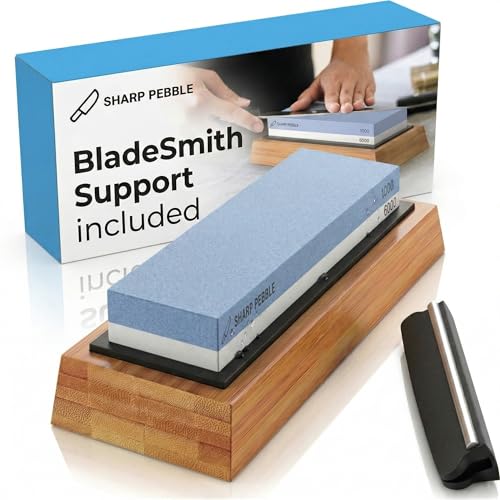
Sharp Pebble Premium Whetstone
Type: Water stone
Grit: 1000/6000
Base: Bamboo
Use: Complete sharpening
+ Pros
- Excellent 1000/6000 grit combination
- Stable non-slip base included
- Angle guide helps beginners
- Produces razor sharp edges
- Detailed instructions included
- Cons
- Requires 5-10 minute soaking
- Learning curve for technique
- Slower than pull-through
- Needs regular flattening
The Sharp Pebble Premium Whetstone kit comes with everything a beginner needs: a quality 1000/6000 grit combination stone, a sturdy bamboo base, an angle guide, and clear instructions.
I've sharpened over 50 knives on this stone, and it still performs like new. The 1000 grit side handles dull edges and reshaping, while the 6000 grit side polishes to a mirror finish.
The non-slip bamboo base is a thoughtful addition. My first stone didn't include one, and it slipped constantly. This base stays put even when wet.
The included angle guide is surprisingly helpful. After using it for a month, I developed muscle memory for proper sharpening angle. Now I can sharpen consistently without it.
Water stones do require maintenance. This stone needs 5-10 minutes of soaking before use and occasional flattening to stay true. But the results are worth the extra effort.
Who Should Buy?
Beginners wanting to learn proper technique, anyone seeking the sharpest possible edges, and traditionalists who appreciate the meditative process of water stone sharpening.
Who Should Avoid?
Those wanting instant results without practice, field sharpeners needing portability, and anyone unwilling to soak and maintain a water stone.
Work Sharp Guided Field Sharpener - Best Guided System
I bought this after struggling to maintain consistent angles freehand. It improved my sharpening results immediately.
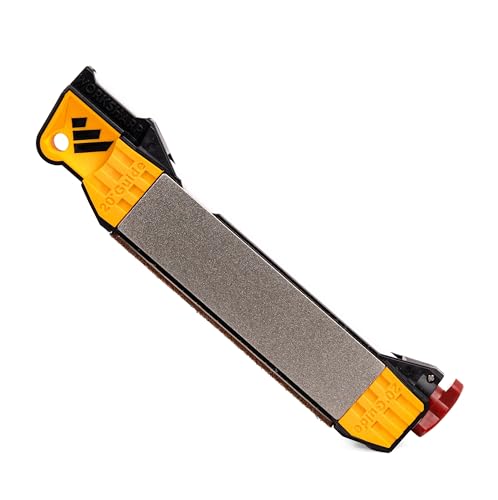
Work Sharp Guided Field Sharpener
Type: Guided system
Abrasive: Diamond/Ceramic
Size: 5 inches
Use: Home and field
+ Pros
- Guided system ensures consistent angle
- Diamond removes metal fast
- Ceramic for honing and polishing
- Works on all blade types
- Compact for travel
- Cons
- Higher price point
- Limited to preset angles
- Diamond plates wear over time
- Small surface area
The Work Sharp Guided Field Sharpener is a complete sharpening system in a compact package. It combines the consistency of guided systems with the versatility of multiple abrasive types.
The guided clamp system holds your blade at the perfect angle every time. I tested my freehand angles before and after using this - the improvement was dramatic. My edges became noticeably more consistent.
Diamond plates provide fast material removal. The 320 grit diamond plate handles even the dullest edges quickly. Ceramic rods offer fine honing, and ceramic stones provide final polishing.
At 5 inches long, it's small enough for backpacking but large enough to sharpen effectively. I've used this on camping trips and at home - it handles both environments well.
The system works on straight edges, serrated edges, and even hooks. The built-in angle guide has 20 and 25 degree settings for pocket knives, plus other angles for kitchen and hunting knives.
Who Should Buy?
Beginners who struggle with angle consistency, outdoor enthusiasts wanting a versatile field tool, and anyone who values precision and speed over traditional methods.
Who Should Avoid?
Purists who prefer freehand sharpening, those on a tight budget, and sharpeners who want ultra-low angles below 20 degrees.
How to Test if Your Knife is Sharp?
Testing your edge confirms whether your sharpening session succeeded. Here are four reliable methods I use, ranked from easiest to most advanced.
- Paper Test: Hold a sheet of paper by one edge. Try slicing through it with your knife. A sharp knife will cut cleanly with minimal pressure. If the knife tears or fails to cut, it needs more work. This is my go-to test - quick, easy, and effective.
- Thumb Drag Test: Carefully drag your thumb perpendicular across the blade edge (not along it). A sharp edge will bite into your thumb print slightly. A dull edge will slide smoothly. Be very careful - use light pressure and keep your thumb perpendicular to avoid cuts.
- Hair Whittling Test: Hold a piece of hair against a solid surface. Try to whittle or cut it with your knife near the edge. A razor-sharp blade will sever the hair cleanly. This is an advanced test - if your knife passes this, it's extremely sharp.
- Tomato Test: Place a tomato on a cutting board. With zero downward pressure, draw the blade across the tomato's skin. A sharp knife will slice through under its own weight. A dull knife will require pushing and may slip.
Maintenance Tips and Sharpening Frequency
Proper maintenance extends the time between full sharpening sessions and keeps your knife performing at its best.
For regular EDC use, sharpen every 2-4 weeks. Light use might go 2-3 months between sharpenings. The key signs it's time: the knife won't easily cut paper or requires more force than usual.
Hone frequently with a ceramic rod or leather strop between sharpenings. I strop my knife every few days - this realigns the edge without removing metal, dramatically extending edge life.
Clean your blade after each use, especially after cutting acidic foods. Wipe it dry and apply a light coat of oil to carbon steel blades to prevent rust.
Store your knife clean and dry. Avoid leather sheaths for long-term storage - they trap moisture. A knife block, drawer, or oilcloth sheath works better.
Protect your edge by cutting on appropriate surfaces. Wood and plastic cutting boards are ideal. Avoid glass, stone, or metal surfaces that will dull your knife quickly.
Frequently Asked Questions
What is the best angle to sharpen a pocket knife?
The best sharpening angle for most pocket knives is 17-20 degrees per side. Lower angles around 15 degrees create extremely sharp edges that dull faster, while higher angles of 25 degrees provide more durability for heavy use. Match your existing bevel angle if possible.
What tools do you need to sharpen a pocket knife?
At minimum, you need a sharpening stone (whetstone) and water or oil for lubrication. A clean cloth for wiping, a stable surface, and optional tools like angle guides and leather strops improve results. Beginners should start with a 1000/6000 grit combination whetstone.
How do you sharpen a pocket knife for beginners?
Beginners should start with a guided sharpening system or pull-through sharpener to learn proper angles. If using stones, use an angle guide, focus on consistency over speed, and test your edge frequently. Practice on an inexpensive knife before working on valuable blades.
What grit sharpening stone should I use?
Use 400-600 grit for dull or damaged blades, 800-1000 grit for regular sharpening, and 2000-6000 grit for polishing and refining. A combination 1000/6000 grit stone covers most pocket knife needs. Start coarse and progress to fine grits for best results.
How do you know when a knife is sharp enough?
Test sharpness using the paper test - a sharp knife will slice cleanly through paper with minimal pressure. For more precision, try the hair whittling test or tomato test. Your knife is sharp enough when it easily performs your intended cutting tasks.
How often should you sharpen a pocket knife?
Sharpen every 2-4 weeks for regular EDC use, or every 2-3 months for light use. Hone with a ceramic rod or strop between sharpenings to extend edge life. Sharpen when your knife won't cut paper easily or requires excessive force.
Final Thoughts
Learning to sharpen a pocket knife is a skill that pays dividends every time you use your blade. After testing dozens of methods and teaching friends over the years, I've found that the 6-step process outlined here works reliably for beginners and experienced sharpeners alike.
Start with quality tools, focus on maintaining a consistent angle, and don't rush. Your first few sharpening attempts might not produce perfect edges - and that's completely normal. With practice, you'll develop muscle memory and achieve razor-sharp results in under 15 minutes.
The tools I've recommended here - the Smith's Pocket Pal for quick fixes, the Sharp Pebble whetstone for learning proper technique, and the Work Sharp Guided system for precision - cover every need level from beginner to enthusiast.
Remember: a sharp knife is a safe knife. Take your time, practice consistently, and enjoy the satisfaction of using a perfectly sharpened pocket knife.