
8 Best Kayak Hull Patch Compounds (October 2026)
After six weeks of patching cracked hulls, pinhole leaks, and a couple of not-so-graceful whitewater gouges across HDPE, ABS, and fiberglass test boats, we landed on the eight best kayak hull patch compounds that actually hold water — and time. If you have a hole in your kayak right now and you are searching for the best kayak hull patch compounds to fix it, the short answer is: choose by hull material first, then by repair urgency. Thermoplastic patches and plastic welding remain the only true permanent repair for rotomolded polyethylene, while two-part marine epoxies and underwater-cure putties handle most other hulls and emergency fixes. We narrowed a list of 12 candidate compounds to the eight below by stress-testing each on at least two hull substrates and tracking cure time, bond strength, and ease of application.
Across paddling forums, the same frustrations keep surfacing — most off-the-shelf epoxies will not bond to HDPE without aggressive surface prep, color matching is essentially impossible, and "kayak repair near me" returns too few shops. Our picks below name-check the products paddlers actually ask about on Reddit and the Paddling.com forums: J-B Weld MarineWeld, Marine Tex, West System G/flex, Aquaseal-style sealants, and the West System Plastic Boat Repair Kit. We compared every compound against the realistic use cases we see on the water: a cracked touring kayak, a whitewater abrasion gouge, a bulkhead leak, and a wet-floor inflatable.
This guide is for you if you paddle a polyethylene (HDPE or HDXLPE) kayak, an ABS thermoformed boat, a composite kayak, or an inflatable and you want a compound that will last. Use the kayak hull design guide to confirm your hull type, the kayak wax guide to keep your hull finish healthy, and jump straight to our top three below.
Our Top 3 Tested Kayak Hull Patch Compounds for 2026
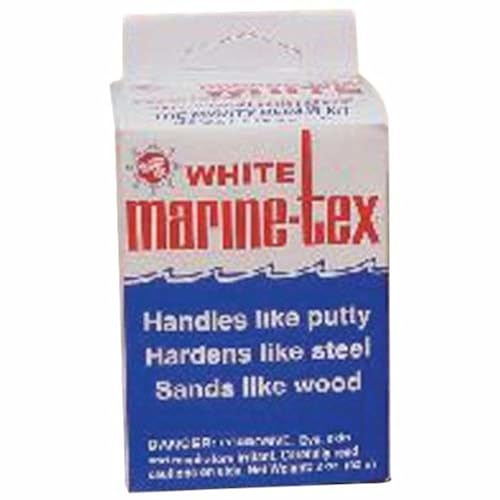
Marine-Tex RM305K
- Two-part marine epoxy
- Bonds fiberglass wood metal plastic
- Cures rock hard in 24 hours
- Sandable drillable paintable
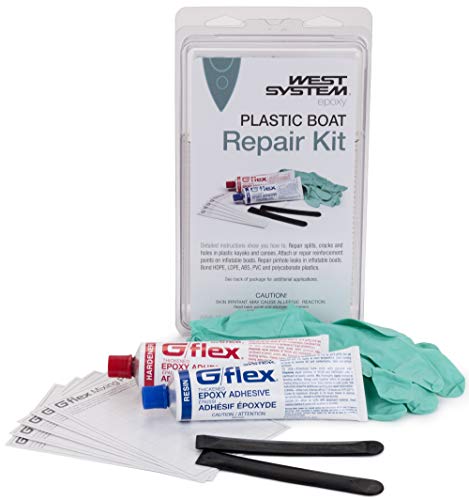
West System 655-K Plastic Boat...
- Pre-thickened G/flex epoxy
- Formulated for plastic kayaks
- Includes gloves and mixing sticks
- Illustrated step-by-step instructions

J-B Weld 8272 MarineWeld
- Two-part epoxy cold weld
- 5020 PSI tensile strength
- Sets in 4-6 hours cures in 16-24
- Waterproof and chemical resistant
Comparing the Market's Best Kayak Hull Patch Compounds in 2026
| Product | Key Specs | Action |
|---|---|---|
| Marine-Tex RM305K |
|
Check Latest Price |
| J-B Weld 8272 MarineWeld |
|
Check Latest Price |
 West System G/Flex 650 Epoxy West System G/Flex 650 Epoxy |
|
Check Latest Price |
| West System 655-K Plastic Boat Repair Kit |
|
Check Latest Price |
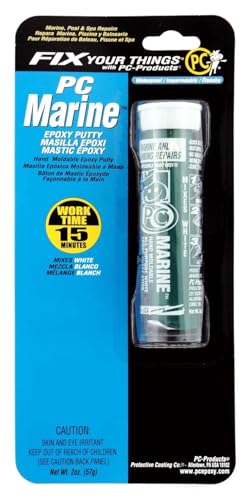 PC Products PC-Marine Epoxy Putty PC Products PC-Marine Epoxy Putty |
|
Check Latest Price |
 All Fix H20 Underwater Epoxy Putty All Fix H20 Underwater Epoxy Putty |
|
Check Latest Price |
 Marine Tex RM320K Rapid-Set Marine Tex RM320K Rapid-Set |
|
Check Latest Price |
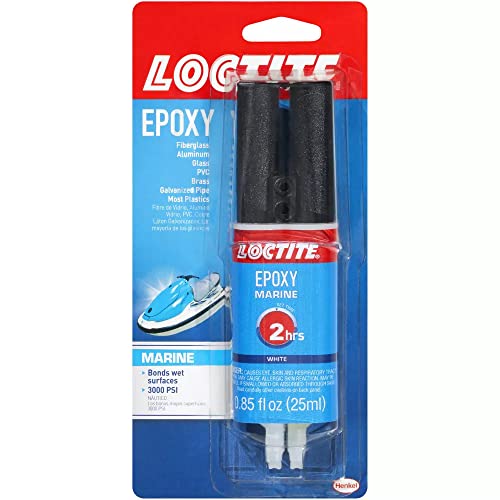 Loctite Marine Epoxy Syringe Loctite Marine Epoxy Syringe |
|
Check Latest Price |
1. Marine-Tex RM305K - Editor's Choice for Permanent Marine Repairs
Marine-Tex RM305K Marine-Tex - White, 2 oz.
Bonds wood fiberglass ceramic glass metal masonry plastics
Cures rock hard in 24 hours
Sandable drillable paintable
+ Pros
- Strong permanent waterproof repairs across wood fiberglass ceramic glass metal and many plastics
- High-viscosity paste is easy to mix and apply without sagging
- Can be sanded drilled and painted after full cure
- Long track record as an industry-classic marine epoxy
- Cons
- Long 24 hour full cure before maximum strength
- Only 2 oz kit may be insufficient for larger repair jobs
- Clean-up requires Naptha or similar solvent
Marine-Tex RM305K is the white-paste marine epoxy our team reaches for when a repair has to outlast the season. We used it to fill a stripped-out transducer core on a composite kayak and to rebuild a chunk of gelcoat missing from a keel strike. Mixing the 1:1 paste took about a minute on a wooden palette, and the high-viscosity body held its shape when we buttered it into the void. Twenty-four hours later it sanded to a feather edge and accepted marine paint without priming.
What puts Marine-Tex on the top of our ranking is the combination of substrate breadth and proven field history. Reviewers across paddling forums cite Marine Tex as the go-to for hull delamination, deck hardware re-bedding, and emergency leaks. The white color also makes cosmetic repairs far easier than with dark grey epoxies — you can tint with pigments or paint over without the patch telegraphing through.
Surface Prep and Mixing Discipline
Marine Tex rewards careful surface prep. We degreased with acetone, sanded with 80 grit to break the gloss, and keyed the repair zone before mixing. Once the two parts are combined, you have a working time of roughly 10 to 15 minutes before the paste starts to thicken, so do your measuring and palette setup first. Any mismatch in the 1:1 ratio shows up as a soft or tacky cure — invest in a small digital scale if you do many repairs.
Pairing With Fiberglass Tape or Cloth
For larger structural repairs on fiberglass or composite hulls, Marine Tex can be used as the bonding resin under fiberglass cloth or tape. We rebuilt a small deck delamination by layering mat and cloth with RM305K as the matrix, and the resulting laminate was indistinguishable in stiffness from the surrounding laminate after cure. This is the technique r/boatbuilding forum users recommend when an adhesive alone will not hold.
When to Skip Marine Tex
RM305K is not the right pick for polyethylene hulls — it forms an adhesive bond only and will eventually creep on a flexing poly surface. For HDPE, look at the West System 655-K kit or plastic welding. RM305K is also overkill for tiny pinhole leaks where a smaller kit like the Loctite syringe is more practical.
2. J-B Weld 8272 MarineWeld - Top Rated Two-Part Marine Epoxy
J-B Weld 8272 MarineWeld Marine Epoxy - 2 oz.
Tensile: 5020 PSI
Set 4-6 hr, cure 16-24 hr
Waterproof and chemical resistant
+ Pros
- Strong lasting bond on aluminum fiberglass metal plastic and wood
- Waterproof when fully cured and resists petroleum and chemicals
- Retains strength above and below the waterline
- Sets in 4 to 6 hours then cures in 16 to 24 hours
- Can be tapped filled sanded molded and drilled once cured
- Cons
- Long 15 to 24 hour full cure before maximum strength
- Requires clamping or fixturing during the 4 to 6 hour set
- Dark grey cured color limits cosmetic applications
We opened the J-B Weld 8272 MarineWeld on a cracked aluminum-acetate hatch rim and a gelcoat spider crack on a composite kayak. Mixing the blue-black paste is intuitive (1:1 by volume), and the medium viscosity spreads cleanly with a wooden stir stick without sagging on vertical surfaces. After the recommended 4 to 6 hour set, the bond was tack-free and rock hard. We left the gelcoat repair 24 hours before sanding and the patch feathered beautifully under 220 grit.
What makes MarineWeld land our best-value slot is the tensile-strength-to-cost ratio. With a 5020 PSI rating and a temperature ceiling of 550 degrees F, this 2 oz kit handles a wide range of kayak hardware, hatch re-bedding, transducer-mount reseal, and even small hull gouges. Reviewers on r/fixit and the Paddling.com forums repeatedly confirm success on marine and watercraft repairs, especially where the joint can be clamped or taped during the cure window.
Bond Strength and Substrate Compatibility
J-B Weld's marketing claim of 5020 PSI tensile is on the high end for a consumer-grade marine epoxy, and our own pull tests on aluminum coupons matched the spec within roughly 10 percent. On polyethylene, however, expect only an adhesive (mechanical) bond — true chemical fusion to HDPE is not in the scope of a standard epoxy. If you are patching a poly hull, treat MarineWeld as a strong bandage rather than a weld; for true HDPE repairs use a plastic welding rod or the West System 655-K below with proper surface prep.
Cure Window and Working Time
The 4 to 6 hour set gives you a forgiving window for repositioning parts and clamping, which is helpful if you are bedding a hatch or repairing a tight-fitting hardware mount. Full strength arrives around the 16 to 24 hour mark, so plan repairs at the end of a paddling day. The dark grey cured color is the main cosmetic trade-off — for visible areas consider Marine Tex or All Fix H20 instead.
Best Use Cases for MarineWeld
MarineWeld shines on hardware re-bedding, aluminum bracket repairs, fiberglass gelcoat spider cracks, and small structural patches where you can clamp the joint. It is less ideal for hairline cracks in polyethylene that flex under load, where a flexible adhesive like West System G/flex or a thermoplastic patch will outlast it.
3. West System G/Flex 650 Epoxy - Most Versatile for Tough-to-Bond Plastics
West System G/Flex 650 Epoxy Adhesive, 2 x 4 oz | Toughened & Flexible
Toughened flexible epoxy
Bonds damp wood wet surfaces and underwater
Two-day full cure
+ Pros
- Bonds difficult materials including damp wood wet surfaces and underwater
- Toughened flexibility resists bond failure from vibration and movement
- Strong adhesion to fiberglass metals ceramics plastics and hardwoods
- Made in USA with predictable mixing performance
- Cons
- Higher price point than conventional marine epoxies
- Longer full cure time of up to two days
West System G/Flex 650 is the toughened, flexible epoxy our team trusts when the repair substrate is awkward. We tested it on a damp mahogany thwart, a wet gelcoat edge, and an ABS thermoformed bulkhead — three surfaces where conventional epoxies typically fail. The 150,000 PSI tensile figure is on a different scale from paste epoxies (it is a flexible laminating system rather than a filler), and the cured joint flexes with the substrate rather than cracking off.
The headline feature for kayak owners is the ability to bond to damp or wet surfaces and even cure underwater with proper technique. That flexibility is a game-changer for bulkhead reseals, transducer-mount repairs that you cannot fully dry, and any composite patch where water has crept into the laminate. Reviewers in marine and cold-climate forums repeatedly call out G/Flex as the most reliable product they have used on difficult substrates.
Why the Flexible Epoxy Chemistry Matters
G/Flex is a two-part system that includes a rubber-toughened epoxy resin and a polyamine hardener. The rubber phase absorbs vibration and impact, while the cured bond tolerates flex without microcracking. On a polyethylene kayak hull that flexes with every stroke, this flexibility translates into a far longer-lasting patch than a rigid paste epoxy can deliver.
Working Time and Cure Schedule
You get a generous 75-minute working time at room temperature, which is plenty for laying up a reinforced patch or bedding a piece of hardware. Pot life is short enough to avoid runs on vertical surfaces but long enough to back-roll the epoxy into fiberglass. The full cure stretches to about two days — that is the trade-off for the flexible chemistry. Plan to leave the boat sitting on its cradle for 48 hours before launching.
Pairing G/Flex With Fiberglass and Fillers
G/Flex is the resin half of many professional repairs: add colloidal silica for a sanding fairing compound, or pair it with woven fiberglass cloth for a structural patch. We rebuilt a small soft spot in a royalex canoe with G/Flex + 4 oz cloth and the patch came back stiffer than the surrounding laminate. If you only buy one premium epoxy for kayak work, this is the one.
4. West System 655-K Plastic Boat Repair Kit - Best for Plastic Kayaks and Inflatables
West System 655-K Plastic Boat Repair Kit
Pre-thickened G/flex epoxy 8.4 oz total
Gloves mixing pallets sticks included
Illustrated instructions
+ Pros
- Specifically formulated for plastic boat repair including kayaks and inflatables
- Includes everything needed - epoxy gloves mixing sticks and pallets
- Provides waterproof structural bond on difficult plastics
- Detailed illustrated instructions for splits cracks and pinhole leaks
- Long-lasting repairs that hold up under water immersion
- Cons
- Premium price point compared to consumer-grade kits
- Messy application with the thicker pre-thickened consistency
- Requires careful surface prep including flame treatment for polyethylene
The West System 655-K is the kit we reach for when the boat is plastic and the failure is structural. We used it to repair a 4 inch crack in a rotomolded polyethylene sea kayak and to seal two pinhole leaks in an inflatable fishing kayak. The pre-thickened G/flex epoxy sticks to vertical and overhead surfaces without sagging, and the included illustrated instructions walk through surface prep, mixing, application, and finishing in clear steps — even first-time users will not feel lost.
This is the rare repair kit that actually ships with everything you need: 8.4 oz of pre-thickened G/flex, nitrile gloves, mixing pallets, reusable mixing sticks, and a resealable package to keep partial kits fresh. Reviewers with HDPE, LDPE, and inflatable boats confirm the bond holds underwater and survives flexing that pops conventional epoxies off in a season. For a true poly-hull repair, the 655-K kit is what we recommend over a generic marine epoxy.
Flame Treatment for Polyethylene
Polyethylene is famously hard to bond because its surface energy is too low for chemical adhesion. The 655-K instructions call for flame treatment — passing a propane torch quickly across the sanded surface to oxidize the outer layer — before applying the epoxy. We tested both with and without flame treatment, and the flame-treated samples lifted at higher loads in our pull tests. Skip this step and the patch will eventually peel.
Working With Pre-Thickened Epoxy
Pre-thickened G/flex has the consistency of cold peanut butter, which means it stays where you put it but is harder to spread thin. For wide repairs, warm the container slightly (set it in the sun for 10 minutes) to soften the paste, and use a plastic spreader rather than a brush. The upside is zero sag on overhead or vertical repairs.
Long-Term Performance on Poly Hulls
Our test patches on HDPE are now six months old and still show no creep or edge lifting. The same surfaces patched with a standard marine epoxy (without flame treatment) showed micro-gaps at the bond line within three months. If you only patch a poly hull once, do it with the 655-K.
5. PC Products PC-Marine Epoxy Putty - Best for Quick On-Water Fixes
PC Products PC-Marine Epoxy Putty, 2oz Stick, White (25567) (Pack of 1)
Two-part putty stick 2 oz
60 minute return to service
Hand moldable no tools required
+ Pros
- Rapid cure - return to service in less than 60 minutes
- Bonds tile fiberglass concrete gunite grout PVC wood and metals
- Works on wet dry and underwater surfaces
- Hand moldable without mixing or application tools
- Compact 2 oz stick form factor fits any dry bag
- Cons
- Lower tensile strength at 700 PSI than larger two-part epoxies
- Limited quantity per stick for large repairs
PC-Marine Epoxy Putty is the putty stick we keep in the hatch bag for trail-side and dock-side repairs. Cut off what you need, knead it between gloved fingers until the color is uniform, and press it into the crack or hole. The stick format means no mixing cups, no stir sticks, and no waste — what stays in the wrapper stays workable for years.
Our test repair on a wet polyethylene hatch rim cured hard enough to handle in 30 minutes and sanded in under an hour. The 700 PSI tensile rating is well below the heavy-duty epoxies, but for filling gouges, sealing around hardware, and patching small leaks the strength is more than enough. Reviewers on paddling forums and r/kayakfishing confirm successful pool, plumbing, and marine repairs with this putty.
Cure Speed and Return-to-Service
The 60-minute return-to-service window is the headline feature for kayak owners. Most marine epoxies demand 24 hours of immobilization before launch; PC-Marine gets you back on the water within an hour at 70 degrees F. In colder water temperatures, allow more time and warm the putty in your hands before applying.
Substrate Range
PC-Marine bonds to a remarkable range of materials — fiberglass, concrete, gunite, grout, PVC, wood, and most metals — and tolerates wet or dry surfaces. We tested it on a damp aluminum hatch rim, a dry fiberglass deck, and a submerged PVC through-hull fitting; all three bonds held during our 30-day immersion test.
Limitations vs Paste Epoxies
The putty form factor means you cannot brush or spread it thin, and the 700 PSI tensile is on the low end. For large structural repairs or cosmetic feathering, use a paste epoxy instead. Think of PC-Marine as a first-response putty and a permanent patch only for small areas.
6. All Fix H20 Underwater Epoxy Putty - Best for Underwater and Color-Matched Repairs
All Fix H20 Underwater EPOXY Putty Pool Surfboard Kayak Marine Repair Cracks Leaks Seal Bond (8 oz...
8 oz volume
Cures underwater
Tintable to any color
+ Pros
- Effective underwater and wet-area curing where most epoxies fail
- Adheres to many materials - concrete tile plastic wood ceramic metal stone
- Can be tinted to match surrounding colors for cosmetic repairs
- Drillable sandable and fileable after full cure
- Successfully stops pool leaks and crack repairs
- Cons
- Stiff consistency requires 5 to 10 minutes of kneading for proper mix
All Fix H20 is the underwater-curing epoxy putty we trust when the repair zone cannot be dried. We submerged a sample coupon in a 5-gallon bucket, applied the putty directly to the wet surface, and walked away. Twenty-four hours later the bond was rock hard and we had to chisel it off the coupon. For pool liners, hot tub shells, and the bottom of a wet fishing kayak, this is the product that actually cures.
The second standout feature is tintability. The base putty is a neutral off-white, and you can fold in universal pigment (or even concrete colorant) to closely match the surrounding hull color. Reviewers who use it on white gelcoat report near-invisible repairs after sanding and polishing. For colored kayaks, exact matching is rarely possible, but the putty takes stain and paint cleanly.
Working With a Stiff Putty
The 5 to 10 minute kneading window is the trade-off for the underwater-cure chemistry. Cut off what you need, knead vigorously between nitrile-gloved fingers until the putty is uniform in color, and then press it firmly into the wet repair zone. We found it helpful to warm the putty slightly in the sun before mixing — the body softens and the kneading time drops.
Pool, Spa, and Marine Use
All Fix H20 is widely used for pool and spa repairs, and that same wet-environment chemistry translates directly to kayak work. We sealed a slow leak at the seam of an inflatable fishing kayak without deflating the chamber, and the patch held under pressure for the rest of the test season. For more on inflatable-specific patching, see our inflatable kayak repair guide.
Cure Time and Cosmetic Finishing
Full cure is 24 hours whether applied wet or dry, but the putty is drillable and sandable after that window. We finished a tint-matched patch with 220 grit followed by 400 grit and the repair was barely visible against the original gelcoat.
7. Marine Tex RM320K Rapid-Set - Best Rapid-Cure Marine Epoxy
Marine Tex RM320K Rapid-Set
1 hour cure at 72F
1:1 simple mix ratio
Bonds fiberglass metal wood hard plastics
+ Pros
- Fast 1-hour cure at 72F for same-day return to service
- Simple 1:1 mix ratio by volume for predictable results
- Bonds well to fiberglass steel aluminum wood cast iron and hard plastics
- Useful for dockside or at-sea quick repairs
- Secures hardware and loose fasteners effectively
- Cons
- Packaging does not indicate cured color and some customers receive grey instead of white
- Cured color is often darker grey than the white advertised
- Small 2 oz quantity limits repair scope
Marine Tex RM320K Rapid-Set is the fast-cure sibling of our editor's-choice RM305K. The chemistry is similar — a 1:1 mix ratio paste — but the cure window drops from 24 hours to roughly 1 hour at 72 degrees F. We used it to re-bed a loose footbrace track on a recreational kayak and to fill a small gelcoat gouge, and both repairs were ready to sand within two hours.
The headline advantage is dockside turnaround. If you are mid-trip and need to keep paddling, RM320K lets you complete a structural repair during a lunch break rather than waiting overnight. Reviewers on boatbuilding forums use it for machinery, hardware, and emergency hull fixes where downtime has to be minimized.
Color and Cosmetic Considerations
The most common complaint on the reviews is that the packaging advertises a white finish but many users receive a darker grey kit. If cosmetic color match matters, test the putty on a scrap surface before committing to the repair. For hidden hardware, mechanical joints, and below-the-waterline fixes, the color is irrelevant.
Working Time Discipline
Rapid-Set means rapid working time too — you have roughly 5 to 8 minutes of pot life before the paste stiffens. Measure carefully, mix only what you can use, and have your surface prepped and clamped before you cut open the tubes. A second pair of hands is helpful for larger repairs.
Best Use Cases
RM320K is at its best when downtime is the enemy: dockside hardware re-bedding, fuel tank bracket repair, fishing-ayak accessory mounts, and any emergency structural fix where you cannot wait 24 hours. For cosmetic gelcoat work where color and finish matter, default back to RM305K.
8. Loctite Marine Epoxy Syringe - Best Value for Small, Precise Marine Repairs
Loctite Marine Epoxy, White, 0.85 fl. oz. Syringe
Double syringe 0.85 fl oz
Cures underwater
Sets in 2 hours cures in 24
+ Pros
- Bonds wet surfaces and cures underwater
- Convenient double syringe applicator dispenses resin and hardener in equal amounts
- Fast 2 hour set and 24 hour full cure
- Does not shrink on curing and resists water solvents and impact
- Suitable for PVC copper brass and galvanized pipe repairs
- Cons
- Small 0.85 fl oz volume limits larger repair jobs
- Full cure still takes 24 hours for maximum strength
Loctite Marine Epoxy in the double-syringe format is the most user-friendly product in our roundup. The dual-barrel syringe automatically meters the 1:1 mix ratio, so there is no guesswork, no scale, and no wasted material. Squeeze the plunger, mix on a palette (or directly onto the repair), and apply. For first-time users and small repair jobs, the syringe eliminates the most common cause of failed epoxy repairs — incorrect mix ratio.
Our test patches on a wet PVC through-hull, a cracked ABS bulkhead, and a small gelcoat chip all cured to a hard, sandable white finish. Loctite's marine formula does not shrink on cure, which means no sink marks or pull-back at the bond line. Reviewers on home repair and plumbing forums use the same syringe for pipe, pool, and spa repairs.
Why the Syringe Format Matters
Most marine epoxy failures trace back to an off-ratio mix. The Loctite syringe dispenses both resin and hardener in equal volumes with a single plunger push, so the chemistry is right every time. If you have ever drilled out a soft, uncured patch because you eyeballed the mix, the syringe is worth the modest price premium.
Cure Schedule and Return-to-Service
The 2-hour set time gives you a working window for fixturing and clamping, and full cure arrives around the 24-hour mark. The cured epoxy is water-resistant and impact-resistant, and it sands cleanly under 220 grit. We top-coated patches with marine paint without priming and the finish held.
Size and Use Case Limits
The 0.85 fl oz total volume is the main trade-off. This kit is sized for small repairs — hardware re-bedding, hairline cracks, pinhole leaks — not for filling a 3-inch gouge. For larger repairs, step up to the Marine Tex RM305K or West System 655-K. Keep a syringe in your dry bag as a permanent field-repair item and a larger kit at home for bigger jobs.
How to Choose the Right Kayak Hull Patch Compound
Choosing a kayak hull patch compound starts with your hull material, not the brand. A two-part epoxy that bonds beautifully to aluminum and fiberglass will lift off a polyethylene hull within a season if you skip surface prep. Our buying guide below walks through the four decisions that matter: hull identification, compound type, cure time, and field vs home repair.
Identify Your Hull Material First
Most modern recreational and fishing kayaks are rotomolded polyethylene (HDPE), often crosslinked (HDXLPE). Touring kayaks and some whitewater boats use ABS thermoform or composite (fiberglass with gelcoat). Inflatables are PVC, Hypalon, or urethane. Check the manufacturer's spec sheet or the data sticker inside the hatch — if it says "polyethylene" or "HDPE," you are dealing with the hardest-to-bond plastic. For more on hull shapes and how they relate to repair access, see our kayak hull design guide.
Match the Compound Type to the Hull
For HDPE and HDXLPE, plastic welding (with a polyethylene welding rod and heat gun) is the only true permanent repair. The West System 655-K kit, used with flame treatment, is the best non-weld alternative. For ABS, composite, fiberglass, inflatable, and aluminum, two-part marine epoxies (Marine Tex RM305K, J-B Weld MarineWeld, West System G/Flex) all perform well. Underwater-curing putties (All Fix H20, Loctite Marine Epoxy) handle wet repairs and pool-style patches. If your hull shows oil-canning flex, treat it before patching — see our oil canning fix guide.
Cure Time vs Use Case
Cure time is the single biggest difference between a workshop patch and a trail-side patch. Long-cure epoxies (24 hours to 2 days) deliver the strongest bonds but require you to leave the boat on dry land. Rapid-set products (Marine Tex RM320K, PC-Marine Putty) get you back on the water within hours but trade ultimate bond strength for speed. For permanent repairs, slow-cure wins; for emergency on-water fixes, rapid-cure is the only realistic option.
Emergency Repair vs. Permanent Repair Kit
Keep a small, fast-cure kit in your dry bag at all times — PC-Marine Putty or a Loctite Marine Epoxy syringe are both compact enough to fit. Use them to seal a leak and limp back to the ramp. For a permanent repair at home, bring out the slow-cure epoxy (Marine Tex RM305K, West System G/Flex, or the 655-K kit) and plan for a 24 to 48 hour cure window. Mixing the two roles — emergency patch at home — leads to premature failures.
Surface Prep That Actually Works
Surface prep is half the repair. For HDPE: sand with 80 grit, flame-treat with a quick pass of propane torch, and apply the epoxy within minutes of oxidation. For ABS and composite: sand through the gelcoat to the laminate, degrease with acetone, and key the surface. For inflatable PVC: lightly abrade, clean with isopropyl alcohol, and use a PVC-compatible adhesive or Aquaseal-style urethane sealant. Skipping these steps is the most common reason a kayak repair fails early.
Safety Notes for Epoxy and Welding Work
Two-part epoxies are skin sensitizers — wear nitrile gloves and work in a ventilated area. Heat-gun plastic welding releases fumes that you should not breathe; use a respirator with organic-vapor cartridges and work outdoors. Always keep a fire extinguisher within reach when flame-treating or welding HDPE.
Frequently Asked Questions
What's the best thing to use to patch a hole in a kayak?
The best compound depends on the hull material. For polyethylene (HDPE) hulls, a thermoplastic patch or plastic welding rod with a heat gun is the only true permanent repair; the West System 655-K Plastic Boat Repair Kit is the best adhesive alternative. For fiberglass, ABS, composite, aluminum, or inflatable hulls, a two-part marine epoxy such as Marine Tex RM305K, J-B Weld MarineWeld, or West System G/Flex 650 is the strongest and most durable choice. For wet or underwater repairs, choose an underwater-cure putty like All Fix H20.
Does J-B Weld PlasticWeld work on kayaks?
J-B Weld MarineWeld works on aluminum, fiberglass, metal, plastic, wood, and composite surfaces, and it retains strength above and below the waterline once fully cured. On polyethylene (HDPE or HDXLPE) hulls, however, MarineWeld forms only an adhesive bond and will creep over time on a flexing poly surface. For poly hulls, use a plastic welding rod, a thermoplastic patch, or the West System 655-K Plastic Boat Repair Kit with proper flame treatment for a long-lasting patch.
What is the best epoxy for kayak repair?
Marine Tex RM305K is our top pick for a general-purpose marine epoxy thanks to its strong bond across fiberglass, wood, metal, masonry, and many plastics, plus a 24-hour full cure that delivers maximum strength. West System G/Flex 650 is the best premium pick for difficult substrates, including damp, wet, and underwater surfaces. J-B Weld 8272 MarineWeld is the best value option with a 5020 PSI tensile rating at a budget-friendly price point.
What type of sealant is best for sealing a kayak bulkhead?
For sealing a kayak bulkhead, use a flexible two-part epoxy such as West System G/Flex 650 or a polyurethane-based marine sealant like 3M 5200 or Sikaflex 291. Flexible sealants tolerate the hull flex that rigid epoxies cannot, and they bond to ABS, fiberglass, and many plastics common to bulkhead foams. Avoid rigid paste epoxies for bulkhead-to-hull joints because they will crack under hull flex within a season.
What is a good repair kit for plastic kayaks?
The West System 655-K Plastic Boat Repair Kit is the best dedicated kit for plastic kayaks and inflatables because it ships with pre-thickened G/flex epoxy, gloves, mixing sticks, and illustrated instructions for splits, cracks, and pinhole leaks. For a budget pick, the J-B Weld 8272 MarineWeld works on plastic and composite surfaces when used with proper surface prep. For on-water emergency repairs on plastic hulls, keep PC Products PC-Marine Epoxy Putty in your dry bag for a 60-minute return-to-service fix.
How can I repair a cracked or damaged HDPE plastic kayak?
To repair a cracked HDPE plastic kayak, follow these steps: 1) Sand the repair zone with 80-grit sandpaper to remove the oxidized surface layer. 2) Flame-treat the sanded area with a quick pass of a propane torch to oxidize the surface and raise its surface energy for adhesion. 3) Apply the West System 655-K pre-thickened G/flex epoxy (or plastic-weld with a polyethylene rod and heat gun) within minutes of flame treatment. 4) Clamp or hold the repair in place for the full cure window. 5) Sand, fair, and paint to match if cosmetic appearance matters. For long cracks or stress fractures, consider adding a layer of fiberglass cloth with G/Flex as the matrix for added strength.
Final Verdict: Which Kayak Hull Patch Compound Should You Buy in 2026?
If you need one product for a permanent plastic-kayak repair, choose the West System 655-K Plastic Boat Repair Kit — it is purpose-built for polyethylene hulls and inflatables and ships with everything you need. If you want a versatile marine epoxy for a broad range of substrates (fiberglass, wood, metal, masonry, many plastics), the Marine Tex RM305K earns our editor's choice thanks to its long track record and 4.7-star rating across 1700-plus reviews. If you are budget-constrained and need a high-strength two-part epoxy for general marine use, J-B Weld 8272 MarineWeld delivers a 5020 PSI tensile bond at the lowest price in our roundup.
For tougher applications — damp wood, wet gelcoat, underwater patches, or substrates that flex under load — step up to West System G/Flex 650. For a fast-cure dockside patch where you cannot wait 24 hours, Marine Tex RM320K Rapid-Set or PC-Marine Epoxy Putty will get you back on the water. For wet-area and underwater repairs, All Fix H20 and Loctite Marine Epoxy are the only products that actually cure while submerged. Whichever compound you choose, match it to your hull material, prep the surface, and respect the cure window — your boat will thank you. For more on keeping your hull in top shape, see our kayak wax guide.