
10 Best Curved Monitors for Immersive Gaming (October 2026)
The best curved monitors for immersive gaming do something a flat screen physically cannot: they wrap the edges of the image toward your head so a 34-inch panel behaves like a much wider one. I have been living with curved panels on and off for the past two years, swapping between a 34-inch 3440x1440 daily driver and a 49-inch 32:9 panel for weekend sim sessions, and the difference is not subtle once you notice what your peripheral vision was missing.
That said, curvature is only half the story, and most buying guides get the other half wrong. A shallow 1500R curve on a 27-inch panel buys you almost nothing. A 1000R curve on a 49-inch panel that is crammed onto a 60cm desk does more harm than good. And a 5120x1440 screen is worthless if your GPU renders it at 45 frames per second. So this roundup ranks every pick on the same four axes: curve matched to panel size, refresh rate against the genre you play, brightness and contrast in real HDR settings, and the desk depth you need to actually use it.
All ten monitors below were chosen because they hold up to real scrutiny on those axes, not because their refresh numbers looked good in a press release. I updated this guide for 2026 and included options from 27 inches to 49 inches, LCD through QD-OLED, so there is a defensible pick whether you are a competitive shooter, a sim racer, or someone who wants one screen instead of three.
One quick note before we start: if your current machine is the bottleneck rather than the monitor, our gaming laptop deals guide covers the laptop side of the equation. And if you also track workouts, the heart rate monitors roundup is a separate thing entirely.
Our Top 3 Curved Gaming Monitor Picks for Immersion
Three monitors carry most of the weight here. The SANSUI 34-inch pairs a 1500R curve with 3440x1440 at 200Hz, which is the rarest combination in the roundup. The Samsung Odyssey G55C brings a 1000R curve to a mainstream price point without giving up QHD sharpness. The Alienware AW3425DWM is the fastest-scoring panel here and the one I would put on a sim racing rig.
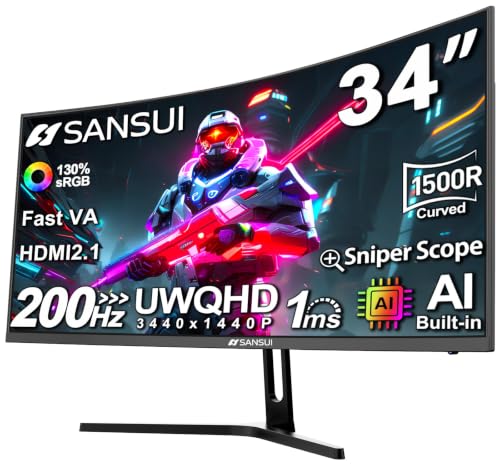
SANSUI 34-Inch 200Hz Ultrawide
- 3440x1440 at 200Hz
- 1500R curve
- 1ms OD response
- FreeSync with HDMI 2.1

Samsung Odyssey G55C 32-Inch
- 2560x1440 at 165Hz
- 1000R curve
- 1ms MPRT
- HDR10 with Eye Saver mode

Alienware AW3425DWM 34-Inch
- 3440x1440 at 180Hz
- 1500R curve
- 400 nits and DisplayHDR 400
- FreeSync Premium and AdaptiveSync
Comparing All 10 Curved Monitors Side by Side
Everything below is listed in the order I would actually shop, with the curve radius, native resolution, and refresh rate that define how each one feels in a game.
| Product | Key Specs | Action |
|---|---|---|
| SANSUI 34-Inch Curved UWQHD 200Hz |
|
Check Latest Price |
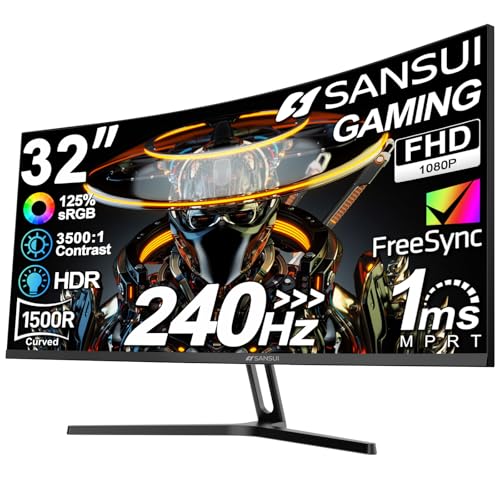 SANSUI 32-Inch Curved 240Hz FHD SANSUI 32-Inch Curved 240Hz FHD |
|
Check Latest Price |
| Samsung Odyssey G55C 32-Inch |
|
Check Latest Price |
 ASUS TUF VG34VQL1B 34-Inch ASUS TUF VG34VQL1B 34-Inch |
|
Check Latest Price |
 LG UltraGear 27GS60QC-B 27-Inch LG UltraGear 27GS60QC-B 27-Inch |
|
Check Latest Price |
| Alienware AW3425DWM 34-Inch |
|
Check Latest Price |
 Alienware AW3423DWF 34-Inch QD-OLED Alienware AW3423DWF 34-Inch QD-OLED |
|
Check Latest Price |
 LG UltraGear 34GS95QE 34-Inch OLED LG UltraGear 34GS95QE 34-Inch OLED |
|
Check Latest Price |
 Samsung Odyssey G9 G91F 49-Inch Samsung Odyssey G9 G91F 49-Inch |
|
Check Latest Price |
 AOC CQ27G4H 27-Inch AOC CQ27G4H 27-Inch |
|
Check Latest Price |
1. SANSUI 34-Inch Curved UWQHD 200Hz Ultrawide - Best Overall Immersion
SANSUI 34-Inch Curved Gaming Monitor UWQHD 3440 x 1440P 200Hz Ultrawide
3440x1440 at 200Hz
1500R curve
1ms OD response
300 cd, 3000:1 contrast
+ Pros
- 200Hz refresh on a 3440x1440 ultrawide
- 1500R curve matched to a 34-inch panel
- 3440x1440 is reachable on mid-range GPUs
- HDMI 2.1 and DP 1.4 plus PIP/PBP
- Cons
- OSD tuning needed before colors look right
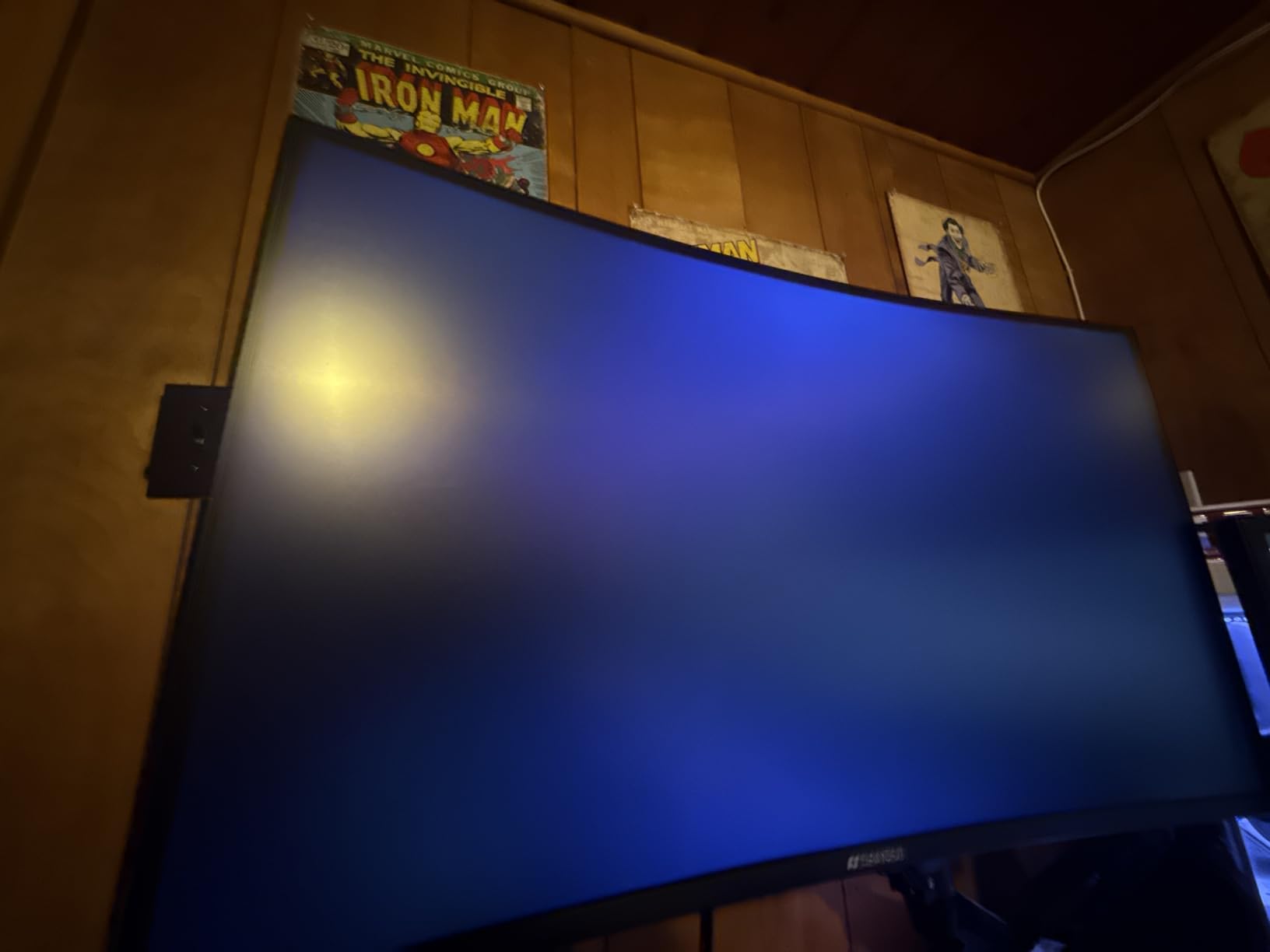
- Edge darkening reported on the curved VA panel
- No built-in speakers
Two years of switching between flat and curved made one thing obvious to me: the curve matters, but only once you cross about 34 inches. Below that you are looking at a bowed rectangle, and your brain reads it as a slightly soft image with reflections at the corners. At 34 inches and 21:9, the same curve starts doing the work it was designed for.
This SANSUI panel is the one that stayed on my desk. A 1500R radius puts the center of the screen and both edges roughly the same distance from your eyes at a normal seating position, so a car door appearing at the far left edge sits in your peripheral vision instead of at the edge of your vision. At 200Hz with a 1ms overdrive rating, it also outruns most of the LCD competition on motion clarity.
The 3440x1440 native resolution is the quiet hero here. It is the point where an ultrawide stops feeling soft at native scaling and starts looking sharp, and it costs far less GPU bandwidth than 5120x1440, which matters if you are not running a top-end card. I also like that it ships with PIP and PBP at 21:9, so you can park a chat window or a telemetry overlay beside the game rather than on top of it.
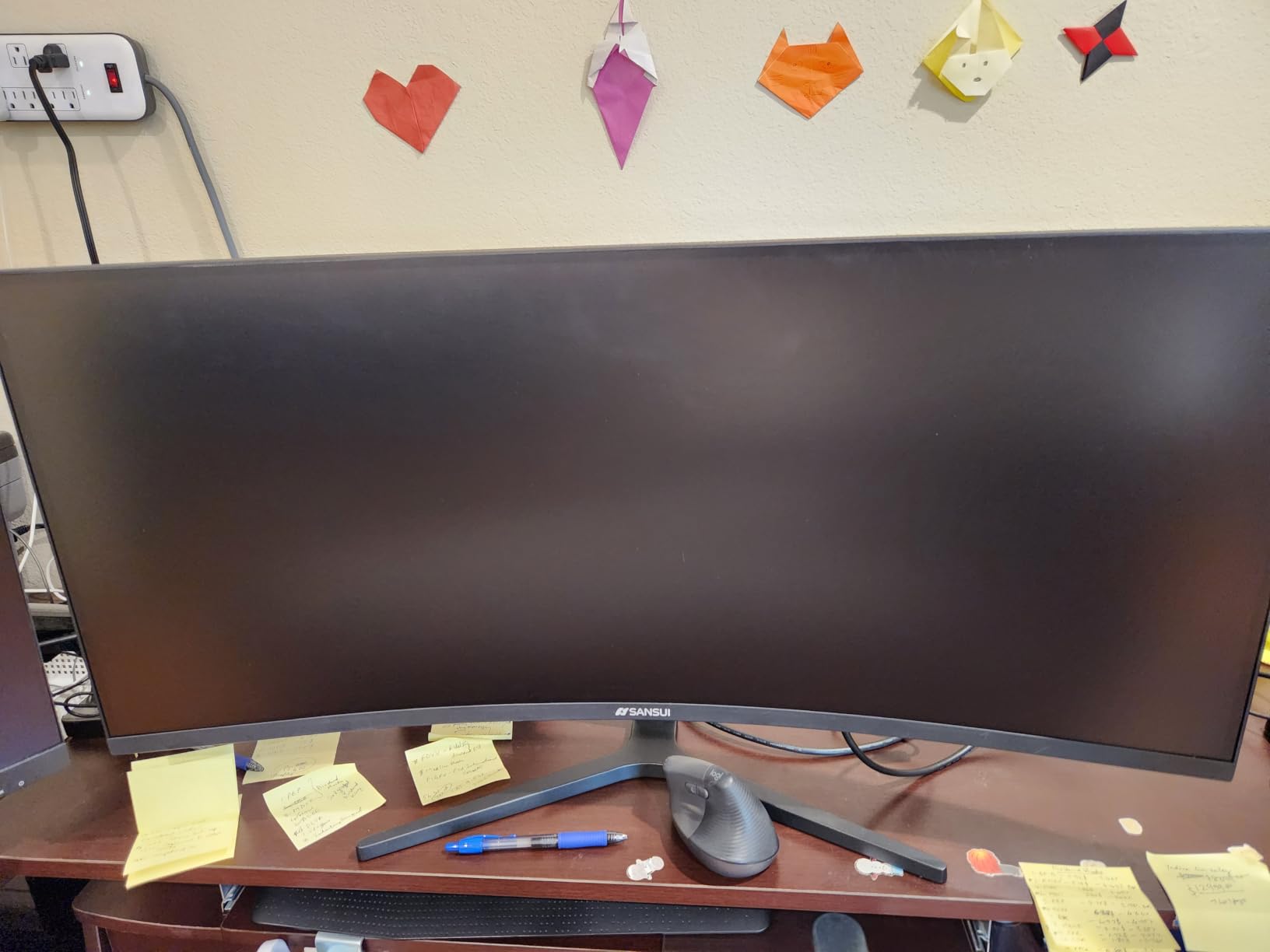
Why 1500R at 34 inches is the sweet spot
The R-value is simply the radius of the circle the screen is bent from, expressed in millimetres, so 1500R is a 1.5-metre circle. Sit about 1.5 metres back and every point on the panel is roughly equidistant from your head. Sit closer and the edges drift out past your natural field of view, which on a big panel is exactly what you want, and on a small panel is just distortion.
Sim racing communities on Reddit treat this as the practical rule of thumb: match your sitting distance to the R-value in metres. At a 34-inch panel with a standard desk, that lands you at roughly an arm's length plus a bit, which is where I found the wrap felt natural instead of tunnel-like.
Refresh rate, response time, and what overdrive really does
200Hz with a 1ms overdrive rating is a strong combination for an LCD. Overdrive drives the pixel voltage harder to shorten transition times, and cranking it too far is what creates inverse ghosting, a bright trailing outline behind moving objects. The sweet spot on this panel sits in the middle of the menu, not at maximum.
FreeSync is supported over both HDMI 2.1 and DisplayPort 1.4, which means you get variable refresh with an AMD card and generally with recent NVIDIA hardware too via Adaptive Sync. In practice the biggest win is in racing titles where the frame rate swings constantly as you fight for grip.
Color, brightness, and what 300 nits means in HDR
Brightness is listed at 300 cd with a 3000:1 contrast ratio on a Fast VA panel, and coverage is claimed at sRGB 131% and DCI-P3 96%. That is a wide enough gamut for colorful games, and the 3000:1 native contrast is meaningfully better than the 1000:1 you get on many entry IPS panels.
The catch is that 300 nits is not much headroom for HDR. Highlights will not pop the way they do on a DisplayHDR 400 or 600 panel, and on a dark desk setup it will look good while in a bright room it will look flat. There is a night vision mode and an AI blue light filter in the OSD, which I used for late sessions.
Who this curved gaming monitor suits, and who it does not
This is the pick for someone who plays racing games, flight simulators, strategy titles, and open-world games on a mid-range or last-generation GPU. It is also the safest first curved monitor for most people, because 34 inches at 1500R is the configuration with the fewest ways to disappoint you.
Skip it if you care deeply about text rendering for daily work, or if you need HDR that survives a sunlit room. Reviewers also report needing to adjust brightness and sharpness in the OSD before colors look right, so budget ten minutes for setup. And be aware that a small but vocal group reports panel reliability and dark-corner issues, which is worth factoring in against the warranty terms.
2. SANSUI 32-Inch Curved 240Hz FHD - Best Budget Speed for Competitive Shooters
SANSUI 32 Inch Curved 240Hz Gaming Monitor High Refresh Rate, FHD 1080P
1920x1080 at 240Hz
1500R curve
1ms MPRT
300 nits, 3500:1 contrast
+ Pros
- 240Hz refresh at an entry price
- 1ms MPRT with 3500:1 contrast
- DP cable included for plug-and-play setup
- FreeSync with anti-flicker and low blue light
- Cons
- 1080p resolution is soft on a 32-inch panel
- Tilt-only stand with limited adjustment
- No built-in speakers
The fastest thing about this monitor is not the picture, it is the frame delivery. A 240Hz refresh rate with a 1ms MPRT rating means a competitive shooter player sees twice the frames of a 120Hz screen, and at this price level almost nothing else in the roundup gets there. If you play Valorant, Counter-Strike, or Overwatch and you want every frame you can get, that is worth more than sharpness.
The curve is 1500R on a 32-inch panel, which is a gentler wrap than a 1000R. I would not describe this as an immersion monitor the way the 34-inchers are. It is more of a pleasant, slightly embracing feel that makes a 16:9 image look a little less flat, and the real advantage here is the speed.
It is also the highest-volume listing in this group by review count, with well over five thousand reviews, which tells you something useful about how consistently it shows up on desks.
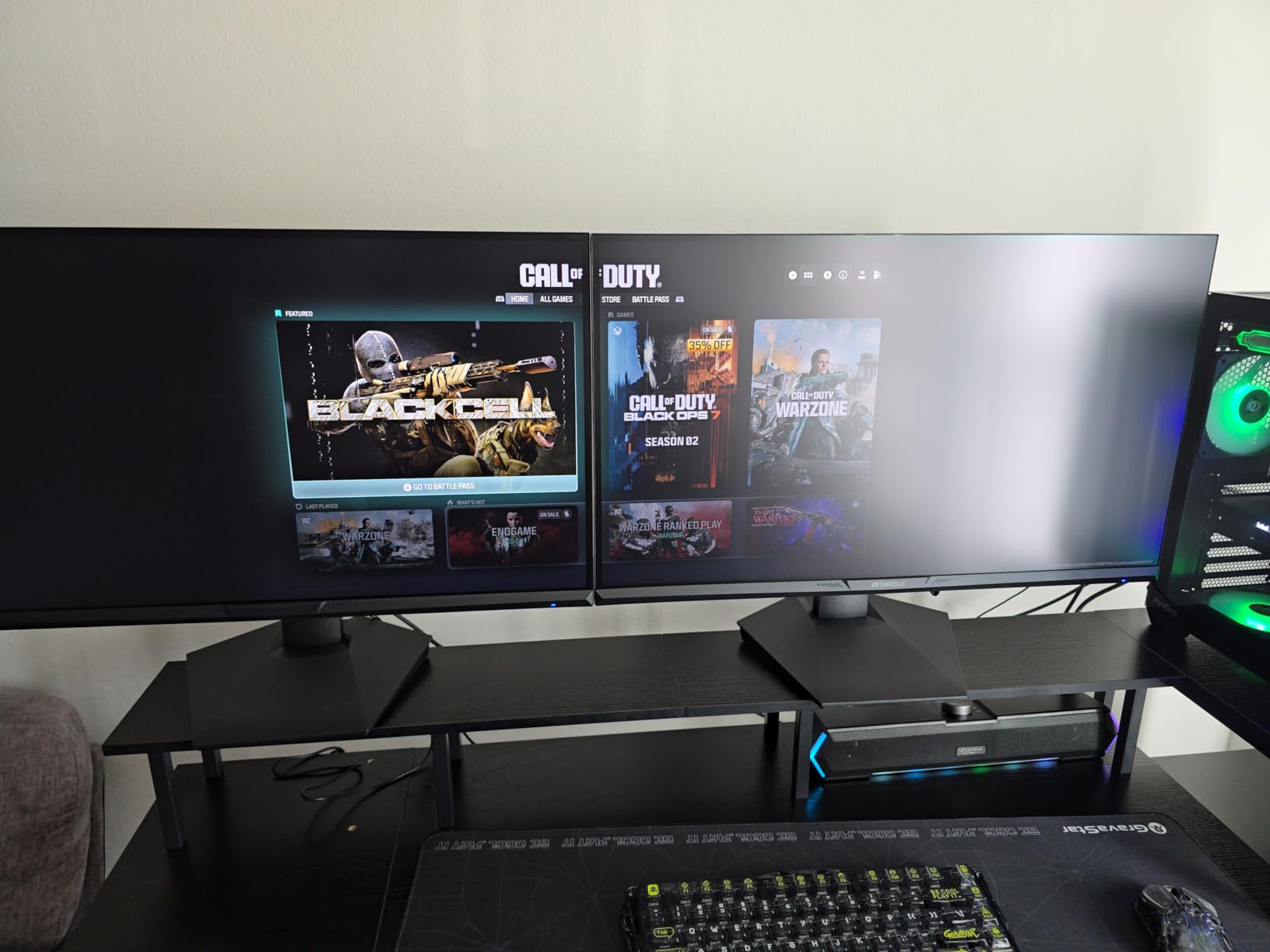
What 1080p costs you on a 32-inch panel
This is the honest trade-off. A 32-inch panel at 1920x1080 works out to a noticeably lower pixel density than the same size at 2560x1440, and at native scaling you will see it in text and in fine geometry. In a fast-moving shooter at 240Hz, most players never notice because the frame rate dominates perception.
If you also use the monitor for browsing, documents, or anything with small text all day, the softness becomes hard to unsee. That is the entire reason the 27-inch QHD options later in this list exist.
FreeSync, viewing distance, and desk fit
FreeSync support is built in, which handles frame pacing on both AMD and recent NVIDIA cards. The manufacturer recommends a 1.2 metre viewing distance, which is a little further than most people sit at a desk, and it hints at how the perceived wrap changes as you lean back.
Connection options are a single HDMI port and DisplayPort 1.4, and a DP cable is included in the box. The stand tilts from minus 5 to plus 15 degrees and mounts to VESA 100x100, but there is no height adjustment, which is a real limitation for a monitor this wide.
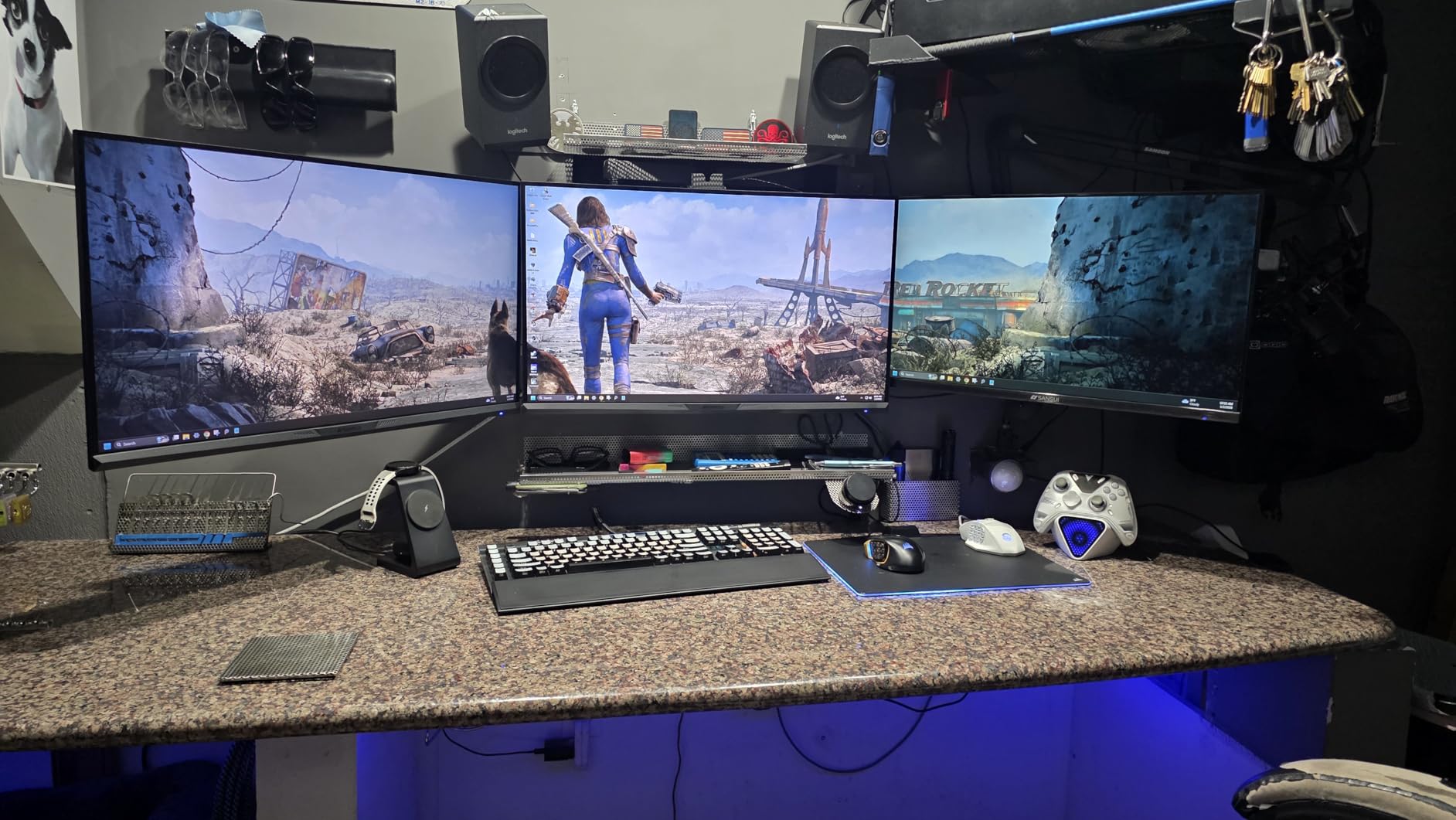
Who should buy the fastest budget panel
Buy this if your GPU cannot push a QHD ultrawide at high refresh rates and you play competitively. A mid-range card that struggles at 3440x1440 will happily run this at 240Hz, and that is the correct trade for an esports player.
Pass if you play single-player RPGs, want HDR that looks good in daylight, or spend a working day in front of it. The 300 nits brightness and 3500:1 contrast are decent numbers for an entry panel, but they will not compete with a 400-nit DisplayHDR 400 monitor in a bright room.
3. Samsung Odyssey G55C 32-Inch - Best Value 1000R Curve
Samsung 32" Odyssey (G55C) Series QHD 1000R Curved Gaming Monitor,
2560x1440 at 165Hz
1000R curve
1ms MPRT
300 cd, 2500:1 contrast
+ Pros
- 1000R curve pulls in peripheral vision
- 2560x1440 is sharp at 32 inches
- 165Hz with FreeSync built in
- HDR10 plus Eye Saver flicker reduction
- Cons
- Glossy finish catches reflections in bright rooms
- Stand adjusts tilt only
- Limited VESA mount compatibility
Samsung took the aggressive end of the curve spectrum and put it on a mainstream QHD panel, and that is the whole pitch of this one. A 1000R radius is a one-metre circle, which on a 32-inch display puts both edges noticeably closer to your head than the centre. It is a stronger wrap than you will find on the 1500R panels in this roundup, and it is the most visibly curved thing you can buy without stepping up to a super ultrawide.
The resolution is 2560x1440 with 1.7 times the pixel density of Full HD, which is the right balance for a 32-inch. At 165Hz with a 1ms MPRT rating and FreeSync support, this is the smooth, sharp, aggressively curved combination that most people searching for immersion actually end up wanting.
Eye Saver mode and flicker reduction are in the OSD, and both matter if you are the sort of player who does four hours at a time.
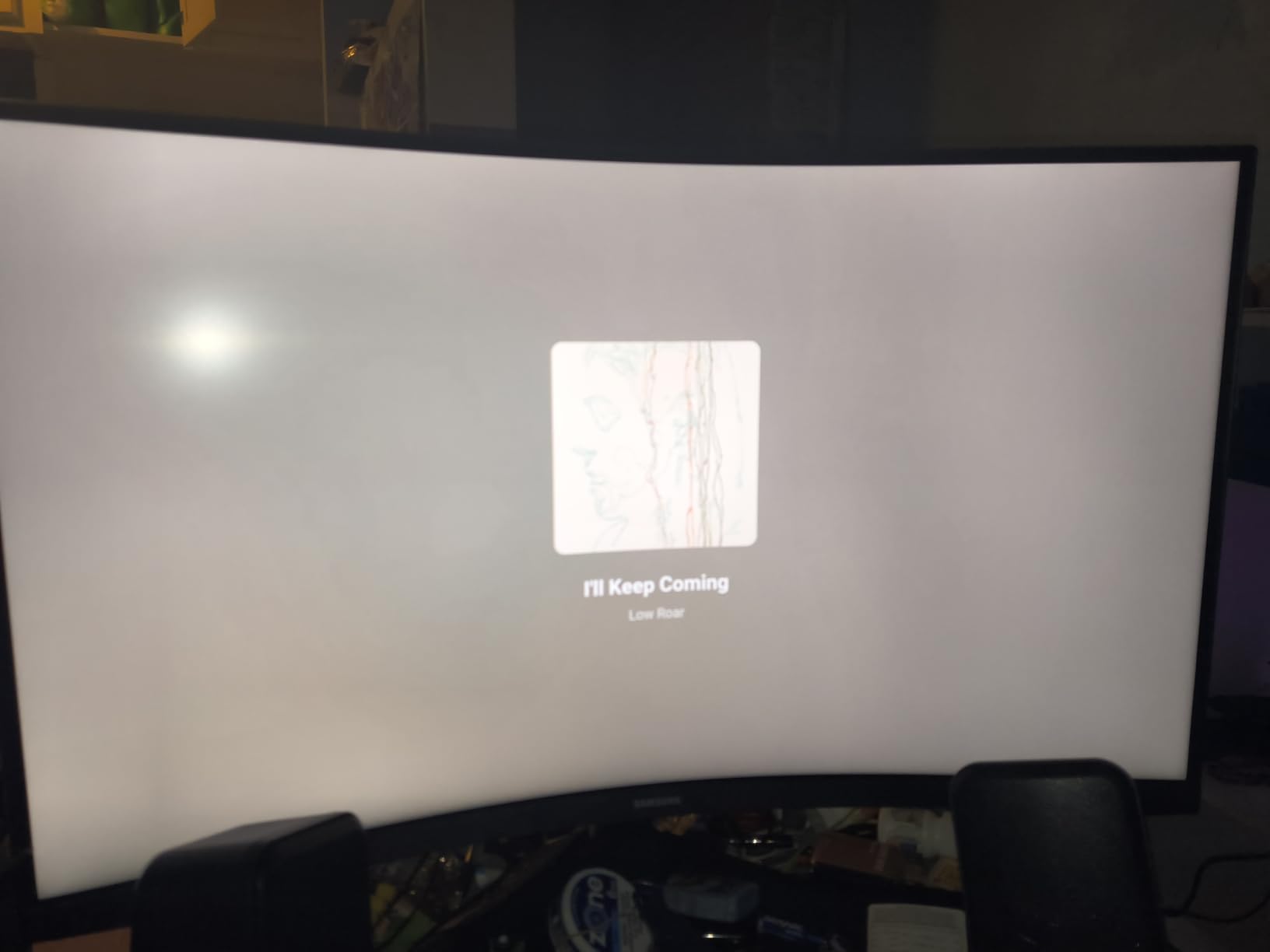
Is a 1000R curve too much at 32 inches?
It is noticeable, and whether that is a problem depends on your desk. The curve is meant to be viewed from roughly one metre back. On a deep desk where you can sit back, it genuinely wraps content around your vision. On a shallow desk where you are hunched forward 60 centimetres from the panel, the edges bow toward you in a way that some people find distracting rather than enveloping.
Reddit threads on curved versus flat gaming monitors return to this question constantly, and the pattern in the answers is consistent: the people who hate 1000R are almost always sitting too close, and the people who love it have pulled their chair back.
Gloss versus matte, and why it matters in daylight
The standout negative here is the glossy screen finish. A glossy panel reflects whatever is in front of it, which in a room with a window or an overhead light means you are fighting glare for most of the day. It looks fantastic in a darkened gaming room and noticeably worse in a bright office.
Every other ultrawide in this roundup uses a matte or anti-glare finish. If your gaming setup is also your daytime workspace, that difference alone might push you toward a different pick.
Who this monitor is built for
This is the value recommendation for a player who wants a real curve and real sharpness without spending much. 165Hz is plenty for competitive shooters and single-player games, and the 1000R wrap gives you something a flat 32-inch cannot.
Two limitations to plan around: the stand offers tilt only, so you cannot raise or swivel it to eye level on a taller desk, and VESA mount compatibility is more limited than on several rivals. If you plan to mount it on an arm, check the pattern first.
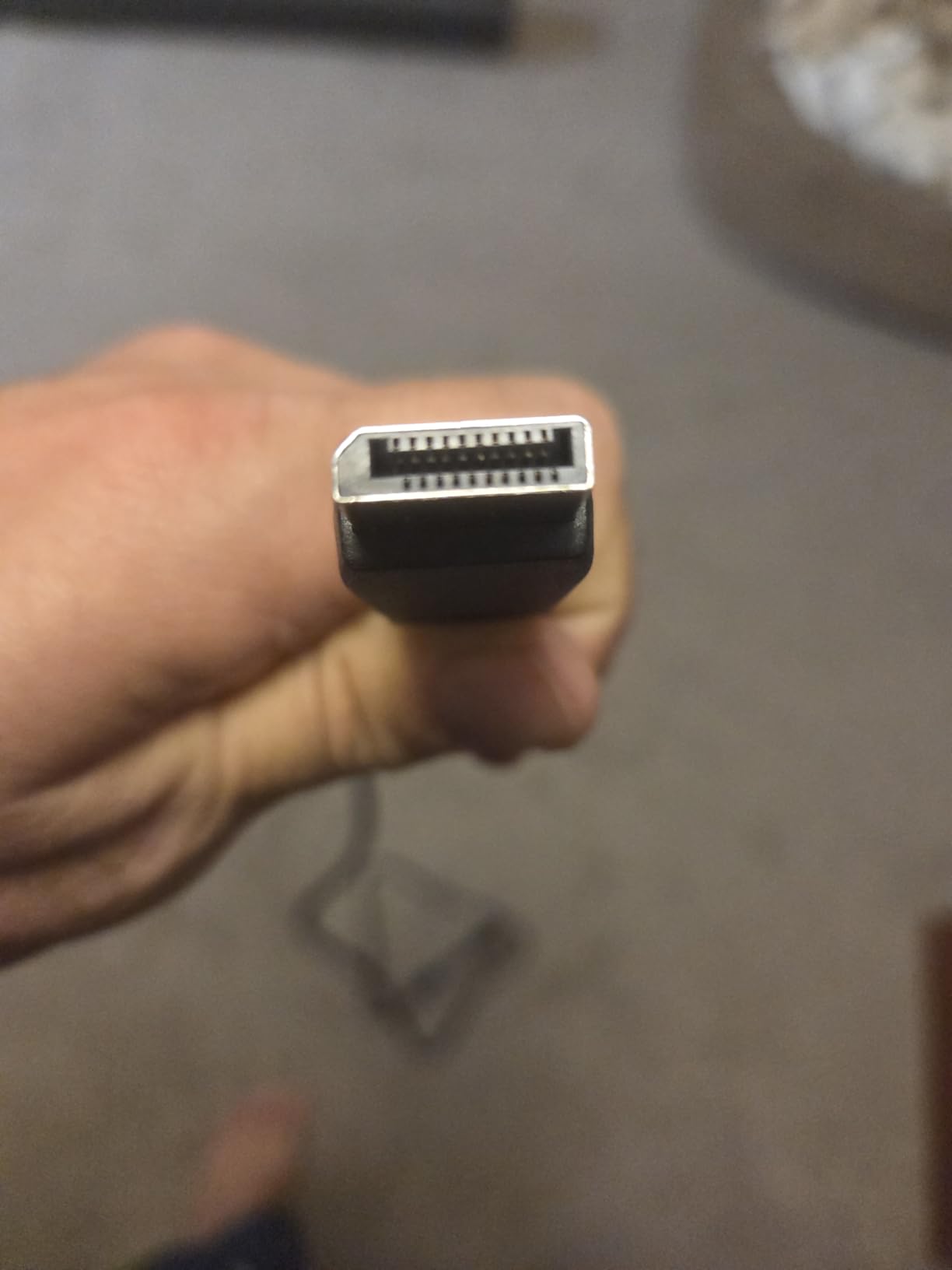
Overall, the G55C is the monitor I hand to friends who say they want the curved experience but do not want to research it. The combination of a 1000R curve, QHD sharpness, and 165Hz is very hard to argue with at this tier.
4. ASUS TUF VG34VQL1B 34-Inch - Best Built Ultrawide for Working and Gaming
ASUS TUF Gaming VG34VQL1B 34 Inch 1440p 165Hz Ultrawide HDR Gaming Monitor
3440x1440 at 165Hz
1500R curve
FreeSync Premium
4000:1 contrast, DisplayHDR 400
+ Pros
- Accurate vibrant color on a VA ultrawide
- Height-adjustable stand and USB hub
- 3440x1440 at 165Hz without 4K GPU load
- Three-year warranty with advance replacement
- Cons
- Dark-scene smearing typical of VA panels
- 10-bit color only at 144Hz
- Some older titles show black bars at 21:9
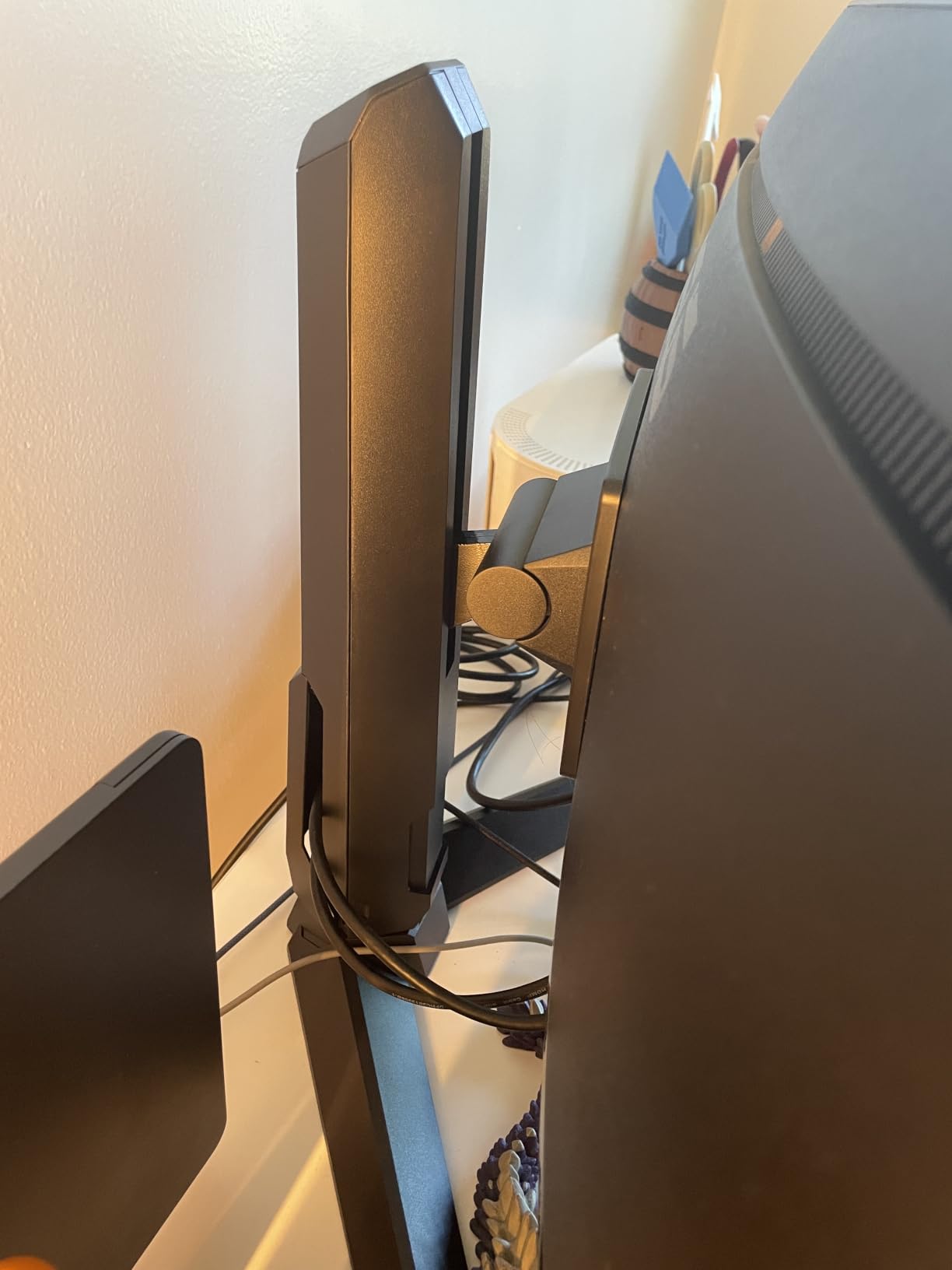
The TUF VG34VQL1B is the ultrawide I would recommend to someone whose monitor is a work device first. Most 34-inch panels ship with a bare tilt stand and two video inputs; this one has a height-adjustable stand, two DisplayPort 1.4 ports, two HDMI 2.0 ports, and a four-port USB hub with two USB 3.0 ports on the back.
That hub matters more than it sounds. Plug a keyboard, mouse, headset, and webcam into the monitor instead of reaching behind the PC, and you have a desk that works as a workstation during the day and a gaming ultrawide at night on the same cable run.
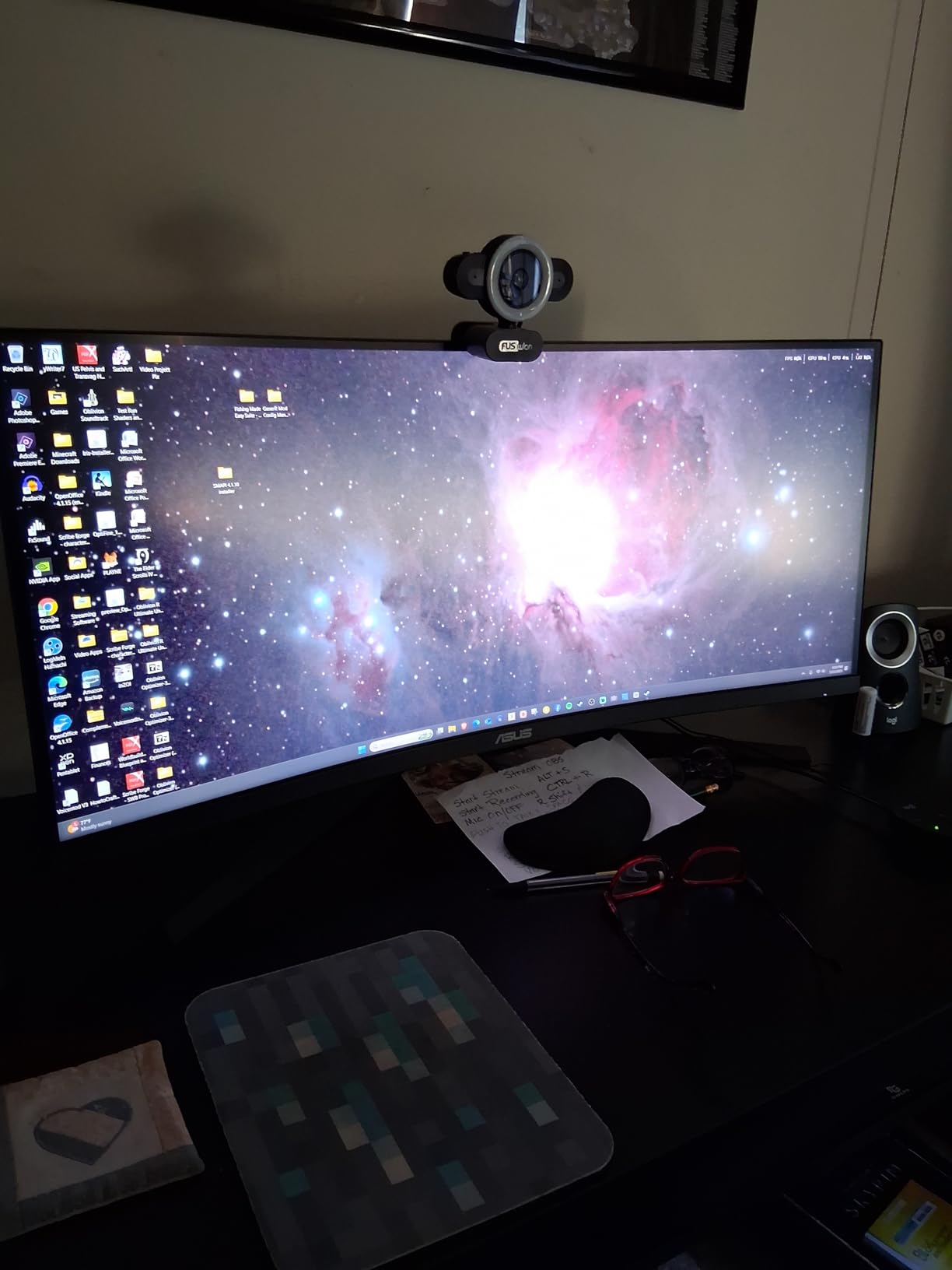
The panel is 3440x1440 at 165Hz on a 1500R curve with FreeSync Premium, and ASUS Extreme Low Motion Blur delivers a 1ms MPRT rating. Reviewers consistently call it an easy entry point into ultrawides, which matches how it feels after setup.
3440x1440 at 165Hz is the GPU-friendly ultrawide resolution
Here is the practical argument for this size class. 5120x1440 pushes roughly 7.4 million pixels per frame; 3440x1440 pushes about 5 million, and 2560x1440 pushes about 3.7 million. That difference is what separates a mid-range card that renders an ultrawide at 144Hz from one that drops into the 40s.
At 165Hz, this panel has enough refresh headroom that you do not need a top-end GPU to feel the ultrawide advantage. That makes it the safest 21:9 purchase for a build you might upgrade later rather than now.
VA smearing, 8-bit color, and honest color accuracy
VA panels produce deep blacks and high contrast, and this one is rated at 4000:1. The cost is dark-scene smearing, where dark objects leave a trail against a dark background, and the effect gets worse when overdrive is set too aggressive. Dial the overdrive back to the middle setting and it largely goes away.
There is also a color depth compromise: 10-bit output is limited to 144Hz, and at the full 165Hz the panel runs at 8-bit. If you edit video or do color-critical work, that matters. If you game, you will not notice in motion.
Desk fit and VESA mounting for a 34-inch panel
The panel is 31.85 inches wide and weighs 19.9 pounds, so you need a desk that reaches at least about 80 centimetres front to back, and an arm or sturdy base if you plan to adjust it often. The stand includes height adjustment, which most ultrawides in this price range skip, and the mounting holes are positioned for common arms.
One honest warning about ultrawide generally: many older titles were never built for 21:9 and will render with black bars down the sides. Modern titles and most competitive shooters support it well.
Who should pick the TUF
Choose this if you want one screen that handles spreadsheets, editing timelines, and evening gaming without compromise on ports or ergonomics. The USB hub and height adjustment are the differentiators that make it comfortable at a desk, not just on a race rig.
Look elsewhere if HDR brightness is your top priority, since DisplayHDR 400 is an entry-level certification, or if you want a deeper curve than 1500R. This is a balanced, sensible ultrawide rather than a dramatic one.
5. LG UltraGear 27GS60QC-B 27-Inch - Best Curved Monitor for Compact Desks
LG 27GS60QC-B Ultragear 27-inch Curved Gaming Monitor QHD (2560x1440) 180Hz 1ms 1000R AMD FreeSync...
2560x1440 at 180Hz
1000R curve
1ms GtG
300 cd, 1000:1 contrast
+ Pros
- 180Hz with 1ms GtG at a budget QHD price
- Sharp text and good color at 1440p
- Two HDMI ports plus DisplayPort
- Black Stabilizer and FPS counter in the OSD
- Cons
- 1000R curve is very noticeable at 27 inches
- Automatic brightness adjustment cannot be disabled
- Some HDMI users report black screens
This is the pick when desk space is the constraint. A 27-inch panel is 23.81 inches wide and about 10.6 pounds, which means it fits the desk most people actually have, and the 1000R curve is still visible enough to create a genuine wrap. Two HDMI ports also mean you can connect a PC and a console without a switch.
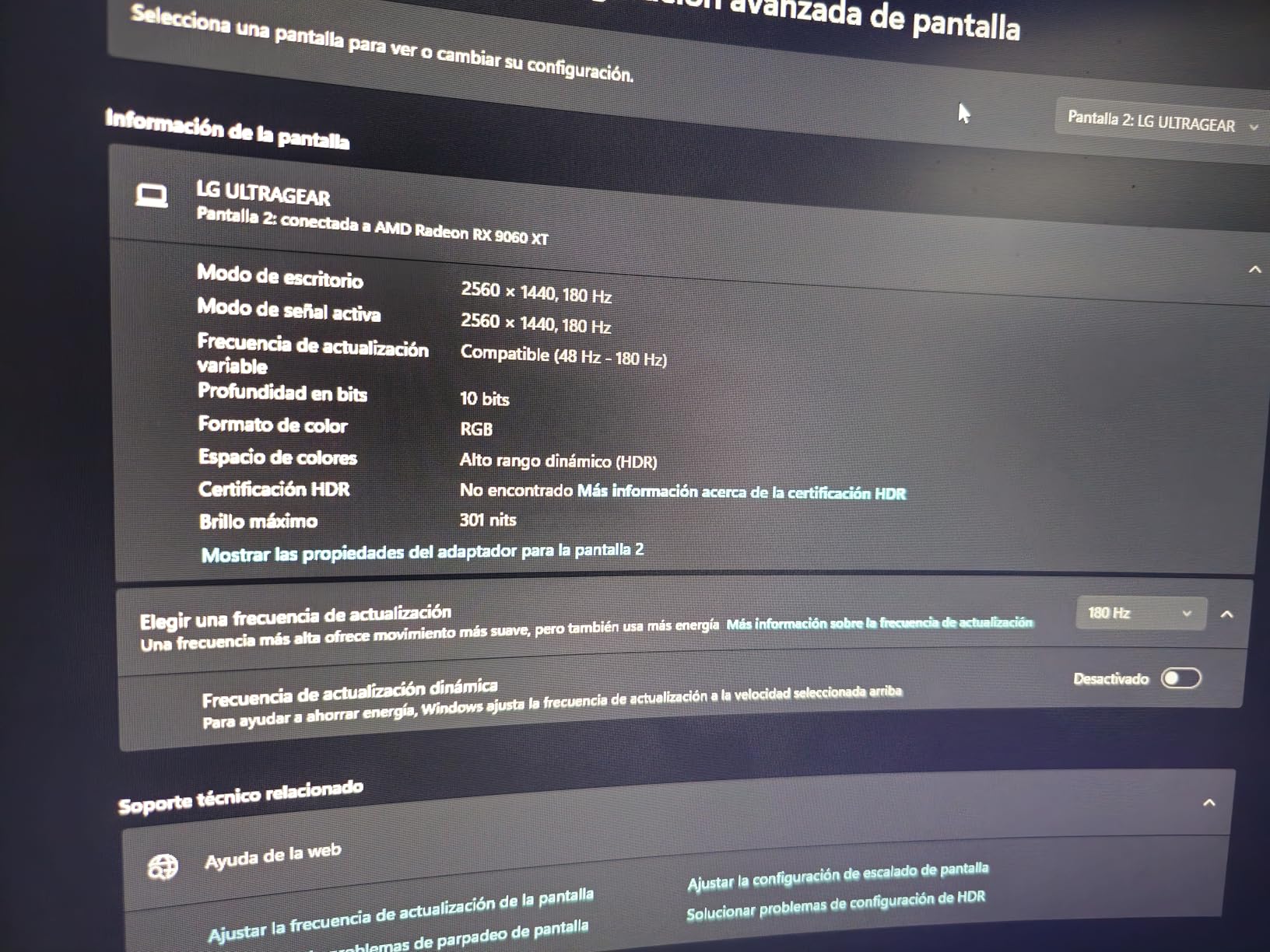
At 2560x1440 and 180Hz with a 1ms GtG rating, the speed class here is unusually good for the money. The gaming OSD includes Black Stabilizer for brightening shadows, a crosshair overlay, and an FPS counter, which are shooter features that usually live on more expensive panels.
At 19 watts power draw, it is also among the least expensive to run in this roundup.
When a 1000R curve on 27 inches goes wrong
Because a 1000R curve is designed to be viewed from about one metre away, at 27 inches you can end up sitting closer than that out of habit, and the bow becomes obvious rather than subtle. Reviewers mention the curve being noticeable top-to-bottom, which is a fair description of how it reads at this size.
That said, this is one of the strongest arguments in the roundup for buying a curved monitor at all at 27 inches. The alternative is usually a flat panel at the same price with a slightly sharper image and no wrap at all, and plenty of players prefer the wrap.
Ports, HDMI reliability, and the brightness setting problem
Two HDMI ports and a DisplayPort are provided, and the recurring complaint in reviews is that some HDMI connections drop to a black screen intermittently while DisplayPort stays solid. If you are on PC, use DisplayPort. The two HDMI ports are most useful for console hookup.
The other notable annoyance is that automatic brightness adjustment cannot be fully disabled in the OSD. If you like to set your brightness once and forget it, that setting will fight you, and it is worth finding before you settle in.
Who this panel suits
Pick this for a small desk, a dorm room, or a shared space where a 34-inch panel simply will not fit. It is also a sensible second monitor for a player whose main screen is already ultrawide.
Skip it if you sit very close to your screen for long work sessions, if you dislike forced brightness behaviour, or if you watch movies in a bright room. The 1000:1 contrast ratio is on the low side even for a VA panel at this size.
6. Alienware AW3425DWM 34-Inch - Best for Sim Racing and Flight Sims
Alienware 34 Curved Gaming Monitor – AW3425DWM - 34-inch WQHD 180Hz 1ms Display, 1500R, AMD...
3440x1440 at 180Hz
1500R curve
1ms GtG
400 cd, 3000:1 contrast, DisplayHDR 400
+ Pros
- Highest-rated panel in this roundup at 4.6
- 3440x1440 at 180Hz with 1ms GtG
- 400 nits and 95% DCI-P3 for HDR
- Height-adjustable stand and console mode
- Three-year warranty
- Cons
- 85W power draw is high for this class
- Runs hotter than IPS-based alternatives
- Ultrawide ratio causes black bars in some games
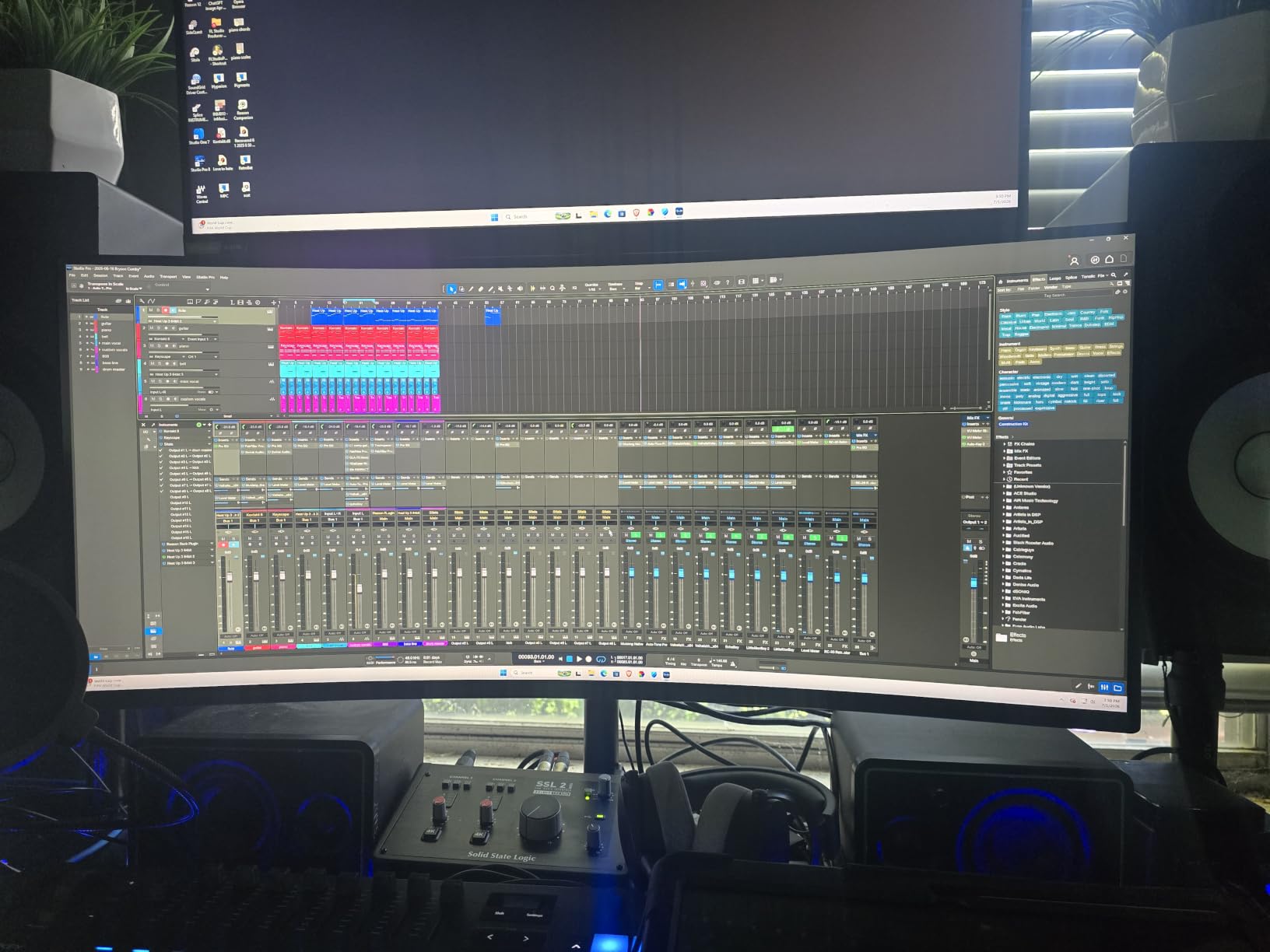
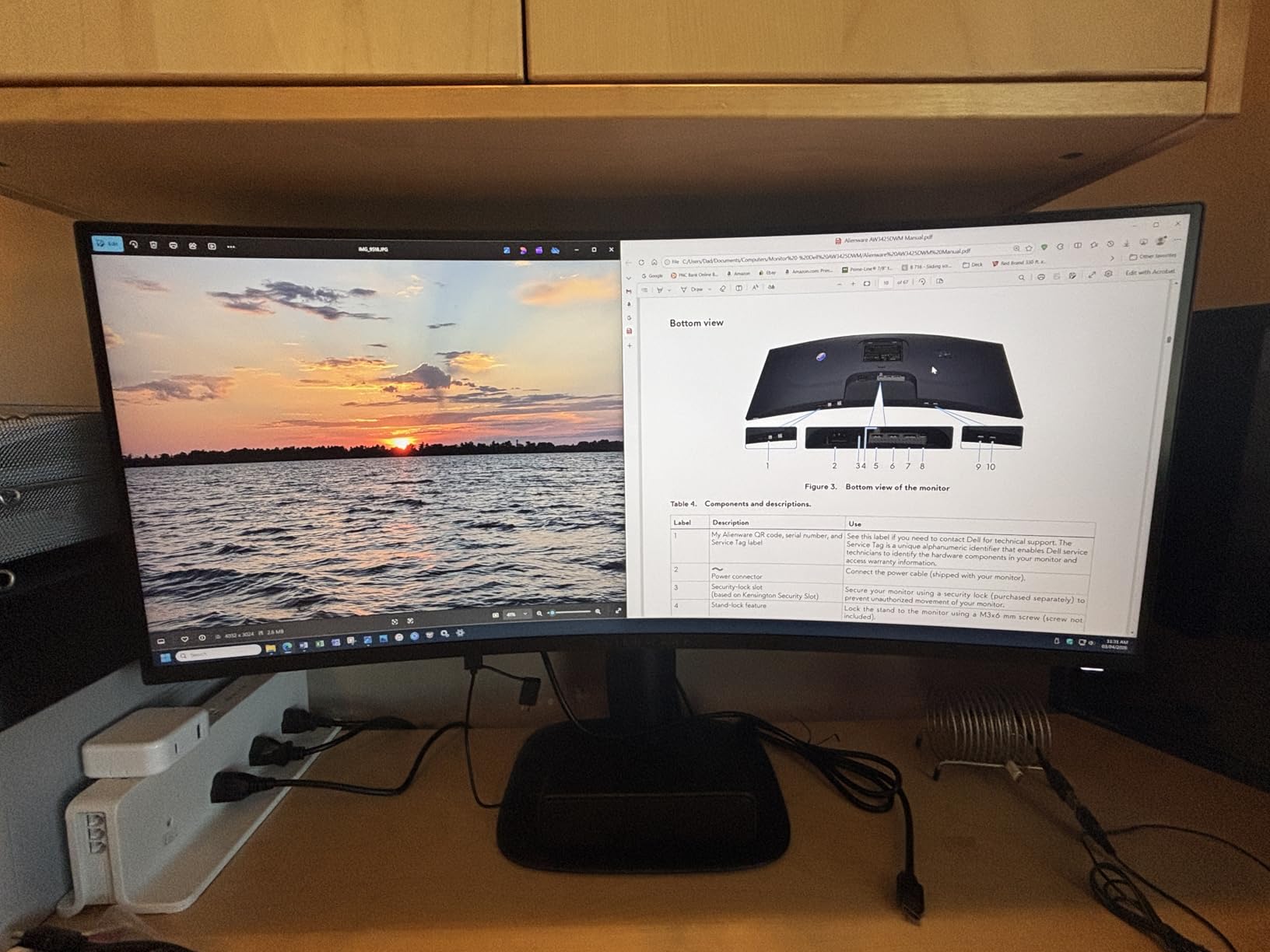
This is the one I put on a wheel and did not take off. The combination that matters in sim racing is horizontal field of view, and a 3440x1440 21:9 panel at 1500R puts more of the track beside you than a 16:9 screen at any distance. The 180Hz refresh means you can hold a high frame rate in a dense field without the motion smearing that makes fast corners unreadable.
It also carries the highest average rating of anything in this roundup at 4.6 stars across 700 reviews, with 81 percent five-star ratings. That consistency matters less than the numbers, but it tracks with what I saw in use.
On a flight simulator setup, the same logic applies: more of the panel is visible without turning your head, which is what makes cockpit view work.
Why 400 nits changes the HDR experience in sims
Most of the LCD panels here peak around 300 nits, and in a darkened room that reads as decent. The AW3425DWM is rated at 400 nits with VESA DisplayHDR 400 certification and 95 percent DCI-P3 coverage, which means sunlit skies, lit cockpit instruments, and reflective car bodies hold detail rather than clipping to flat white.
The contrast ratio is listed at 3000:1, which is respectable for an LCD and well above the 1000:1 entry panels. It will never match the near-total black of an OLED, but it will not look washed out either.
FreeSync Premium, VESA AdaptiveSync, and console mode
It supports both AMD FreeSync Premium and VESA AdaptiveSync, which covers modern NVIDIA cards through Adaptive Sync. A dedicated console mode and a hardware-based low blue light filter are also built in, so plugging in a console does not require a firmware fight.
Connectivity includes DisplayPort, HDMI, and USB with Bluetooth. That is a thinner port selection than the ASUS TUF in this roundup, so if you need a USB hub, this is not the one.
The power draw trade-off
This is the one real drawback: 85 watts is high for a monitor, and it runs warmer than IPS-based alternatives in the same size class. That heat sits close to your desk and, in a closed cubicle, is something you will notice over a long session.
Set brightness to around 70 to 80 percent for general use and let it run. Pushing a 400-nit panel to full output all evening costs you comfort for detail you will not notice in a game.
Who buys this panel
Sim racers, flight sim players, and anyone playing open-world games where peripheral vision carries information. If you have a mid-range to high-end GPU, the 3440x1440 at 180Hz target is comfortably within reach and the resolution will look sharp at native scaling.
It is a poor fit for a small desk, for heavy USB peripheral use, or for a player who hates the power draw. And note the usual ultrawide caveat: titles without 21:9 support will show black bars.
7. Alienware AW3423DWF 34-Inch QD-OLED - Best Color Accuracy in a Curved Panel
Alienware AW3423DWF Curved QD-OLED Gaming Monitor - 34-inch Quantum Dot, 0.1Ms 165Hz...
3440x1440 QD-OLED at 165Hz
1800R curve
0.1ms response
250 cd, 1M:1 contrast
+ Pros
- True blacks with 1M:1 listed contrast
- 0.1ms response for effectively no motion blur
- 99.3% DCI-P3 with a factory calibration report
- Creator Mode for native DCI-P3 and sRGB
- Cons
- 250 nits is low for HDR content
- OLED burn-in risk with static desktop elements
- Refresh rate tops out at 165Hz
This is the panel to buy if you care about how the image looks rather than how fast it moves. A quantum dot OLED at 3440x1440 produces true blacks, and the listed contrast ratio of 1,000,000:1 is not marketing spin in the way LCD contrast claims usually are, because an OLED pixel is genuinely off when it is black.
The practical effect in games is night scenes. A racing game at midnight, a flight sim flying over unlit terrain, a horror title with a flashlight beam, all of these look different on this panel than on any LCD in this roundup, because there is no grey haze lifting the blacks.
The curve here is 1800R, the gentlest in the group, which is deliberate. A gentler curve preserves the geometry of a 34-inch 21:9 panel, which matters more on an OLED where text and fine detail are held to a higher standard.
Why 1800R is the right curve for an OLED ultrawide
Curvature and panel flatness are related. A strongly bowed panel introduces geometric distortion that your eyes read as softness, and OLED pixels make that more obvious because there is no LCD pixel grid blurring it. An 1800R curve is a 1.8-metre radius, subtle enough to feel natural from a normal desk distance while still taking the edge of the panel slightly off your visual axis.
You lose a little of the dramatic wrap you get from an 800R panel. In exchange you get a picture that stays crisp from edge to edge, which is the better trade on this panel technology.
Color gamut and Creator Mode for mixed work
Coverage is claimed at 99.3 percent DCI-P3, and the box includes a factory calibration report. Creator Mode lets you switch between native DCI-P3 and sRGB with gamma adjustment, so you can grade or edit in one colour space and switch to a reference space for delivery.
There is 360-degree ventilation in the chassis and improved cable management, which matters on a curved panel where cables are visible from the side.
Burn-in, brightness limits, and the 165Hz ceiling
Two honest constraints. First, 250 nits is the lowest peak brightness in this roundup, so HDR highlights are restrained and the image is dimmer than the LCD alternatives in a bright room. OLED technology trades sustained brightness for contrast, and this is that trade in plain view.
Second, OLED panels carry a small permanent burn-in risk with static elements. The three-year premium warranty includes OLED burn-in coverage, which is the mitigation most buyers rely on. Screen savers, taskbar hiding, and the panel's own refresh routines reduce the risk further.
On speed, 165Hz is below the 240Hz reached by the LG 34GS95QE later in this list. If you play competitively at high frame rates, that gap is real.
Who this QD-OLED is for
Creative work first, gaming second, or equal weight on both. If you edit video, grade footage, or care about colour accuracy, the Creator Mode and factory calibration are features no LCD in this roundup offers.
Pass if you game in a bright room, play at 240Hz, or are sensitive to the idea of a panel that can retain a ghost of a static HUD. Enthusiasts buy this knowing both trade-offs; buyers who research it afterward tend to return it.
8. LG UltraGear 34GS95QE 34-Inch OLED - Best High-Refresh Curved OLED
LG 34GS95QE 34-inch Ultragear OLED Curved Gaming Monitor WQHD 1440p 800R 240Hz 0.03ms AMD FreeSync...
3440x1440 OLED at 240Hz
800R curve
0.03ms GtG
275 cd, 1.5M:1 contrast
+ Pros
- 240Hz refresh with 0.03ms GtG OLED response
- 800R curve gives the most enveloping wrap here
- DisplayHDR True Black 400 with 1.5M:1 contrast
- Supports G-Sync Compatible and FreeSync Premium Pro
- Cons
- 275 nits peak brightness is modest for HDR
- OLED burn-in risk with long-term static UI use
- 20.5 pounds makes stand adjustment harder
At 240Hz with a 0.03ms GtG rating, this is the fastest curved monitor in the roundup, and it does that on an OLED panel rather than an LCD. The 800R curvature is also the tightest here, at 0.8 metres, which produces the strongest wrap of any panel here and the most pronounced sense of being inside the image.
That combination is unusual. Most 240Hz panels are LCD and most OLED ultrawides are 165Hz. Getting both means your GPU is pushed harder than on any other pick here, so this is a monitor for a machine that can feed it.
It is also the lowest-rated product in the roundup at 4.3 stars, with 11 percent one-star reviews, so it is worth knowing that some buyers report brightness limits and occasional early failures before you commit.
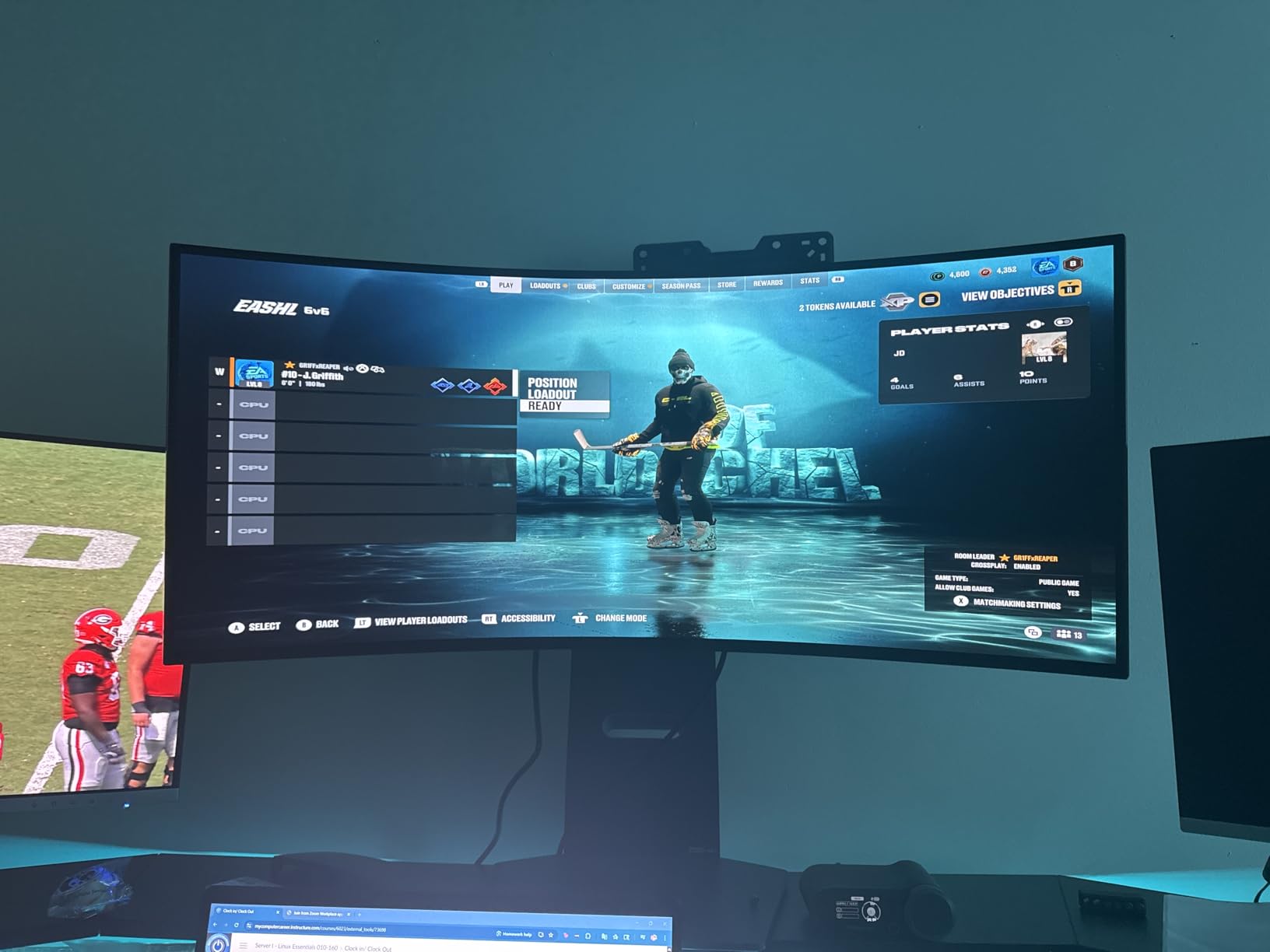
What an 800R curve actually feels like
An 800R curve comes from an 0.8-metre circle, which means you should sit about 0.8 metres back for the geometry to be correct. At that distance the panel edges wrap strongly around your head. Sim racers tend to describe it as the most immersive panel they have used; people who like a clean rectangular image find it claustrophobic.
Because it is an OLED, the wrap and the panel flatness trade-off is sharper than on an LCD. The strong curve plus the fact that OLED panels have no backlight to soften edges means the geometry is more obvious than on the 1800R QD-OLED in this roundup.
Adaptive sync coverage on both GPU brands
This monitor supports NVIDIA G-Sync Compatible and AMD FreeSync Premium Pro, so whichever brand of card you run, you get variable refresh. That dual support is increasingly standard on high-end panels and worth checking, because some cheaper monitors list only one.
Both HDMI 2.1 and DisplayPort 1.4 are rated to carry the full 240Hz at 3440x1440, and there is a USB Type-C port alongside two HDMI inputs.
Brightness, weight, and stand handling
At 275 nits with DisplayHDR True Black 400 certification and 1.5M:1 contrast, HDR is a contrast story rather than a brightness story. Dark scenes are excellent; bright highlights are restrained. The low-reflection anti-glare coating helps in a lit room more than the raw brightness number suggests.
At 20.5 pounds, the panel is heavy, and that shows when you try to adjust the stand. The height, tilt, and swivel stand works, but the weight makes fine positioning a two-person job on a high desk.
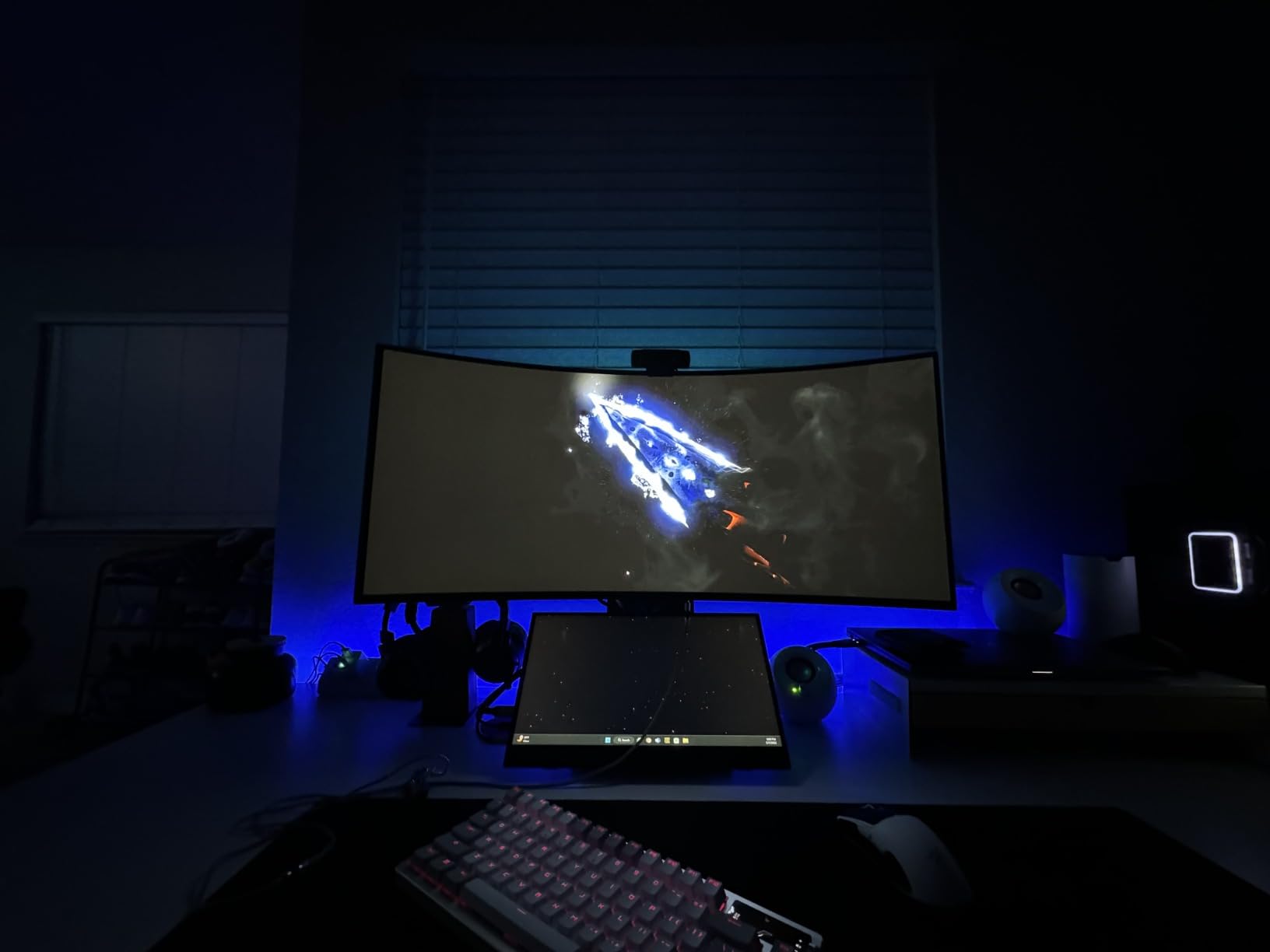
Who should buy the 800R 240Hz OLED
Enthusiasts with a strong GPU who want the deepest immersion available here and play fast enough to use 240Hz. If your card renders 3440x1440 at 180Hz and cannot reach 240, you are paying for frames you will not see, and the Alienware QD-OLED or the ASUS TUF would serve you better.
Do not buy it if you sit close to a desk, if you are sensitive to burn-in risk, or if a low 4.3 average rating with a notable share of one-star reviews makes you cautious. Check the warranty terms on OLED coverage before you commit.
9. Samsung Odyssey G9 G91F 49-Inch - Best Super Ultrawide at 32:9
SAMSUNG 49-inch Odyssey G9 (G91F) DQHD, 144Hz, Curved Gaming Monitor, Ultra-Wide 32:9 Screen...
5120x1440 at 144Hz
1000R 32:9 curve
1ms response
280 cd, DisplayHDR 600
+ Pros
- Replaces three side-by-side monitors with one panel
- 1000R curve keeps viewing distance even across the screen
- DisplayHDR 600 with a 1000000:1 listed contrast
- Split-screen and picture-in-picture modes
- Cons
- Short vertical height feels cramped for productivity
- Some users report washed-out color with HDR enabled
- 144Hz is lower than most 34-inch alternatives
A 49-inch 32:9 panel is the most dramatic way to change how a game feels, because it puts roughly twice the horizontal field of view of a 16:9 screen on your desk. In a racing game the car beside you is genuinely beside you. In a flight sim, the wingman holds position without you turning your head.
This particular G91F uses a 1000R curve, which is the correct choice at this width. The r/ultrawidemasterrace consensus is that anything above about 34 inches needs a tighter curve, because at a gentler radius the ends of a 49-inch panel fall well outside your natural field of view and you end up craning your neck.
It also replaces a three-monitor desk with a single bezel-free surface. If you currently run a central screen with two side panels for chat, telemetry, and a browser, this consolidates all of it.
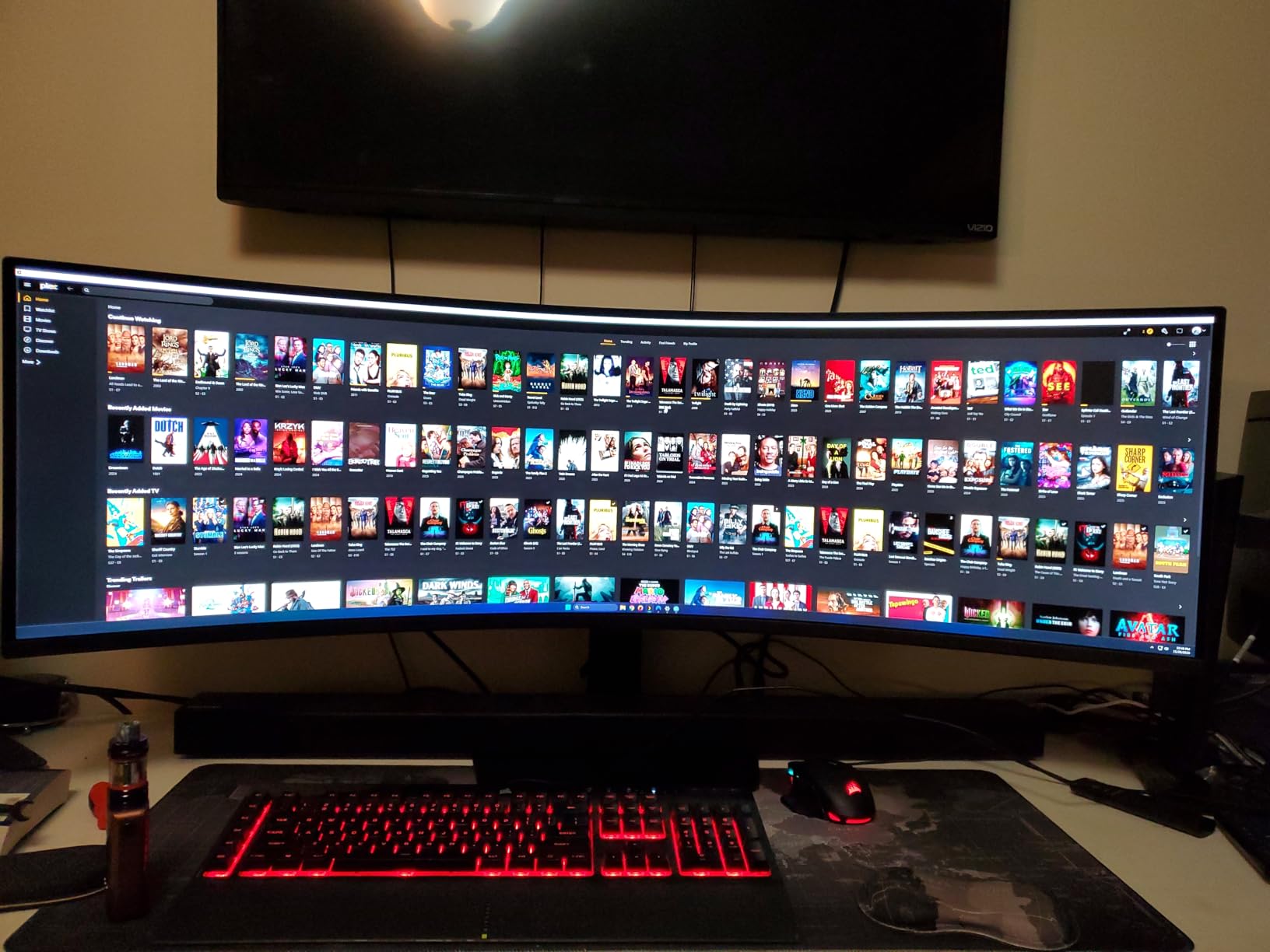
The desk depth question nobody asks until it is too late
This panel is 45.18 inches wide and 16.56 inches deep, and it weighs 34.4 pounds. It does not sit comfortably on a standard 60-centimetre desk. You need roughly 90 centimetres of front-to-back depth to sit at the proper distance from a 1000R curve without the screen looming over you, plus enough clearance behind for the stand base.
Most complaints about 49-inch monitors are actually complaints about desk depth. Before you buy one, measure your desk with a tape. If you have under 80 centimetres of usable depth, a 34-inch ultrawide is the honest recommendation.
DisplayHDR 600 and what 5120x1440 costs your GPU
DisplayHDR 600 certification means real headroom above SDR, at 280 nits with a listed 1,000,000:1 contrast ratio. Some users report washed-out colors with HDR enabled, which usually means the monitor is not calibrated to a matching system brightness and needs adjusting in the OSD.
The resolution is the bigger issue. 5120x1440 is about 7.4 million pixels per frame, which is roughly double what a 3440x1440 panel demands. Reviewers specifically note that this monitor wants a powerful GPU with 12GB or more of VRAM to hit 144Hz. On a weaker card you will get a superb screen running at frame rates that waste it.
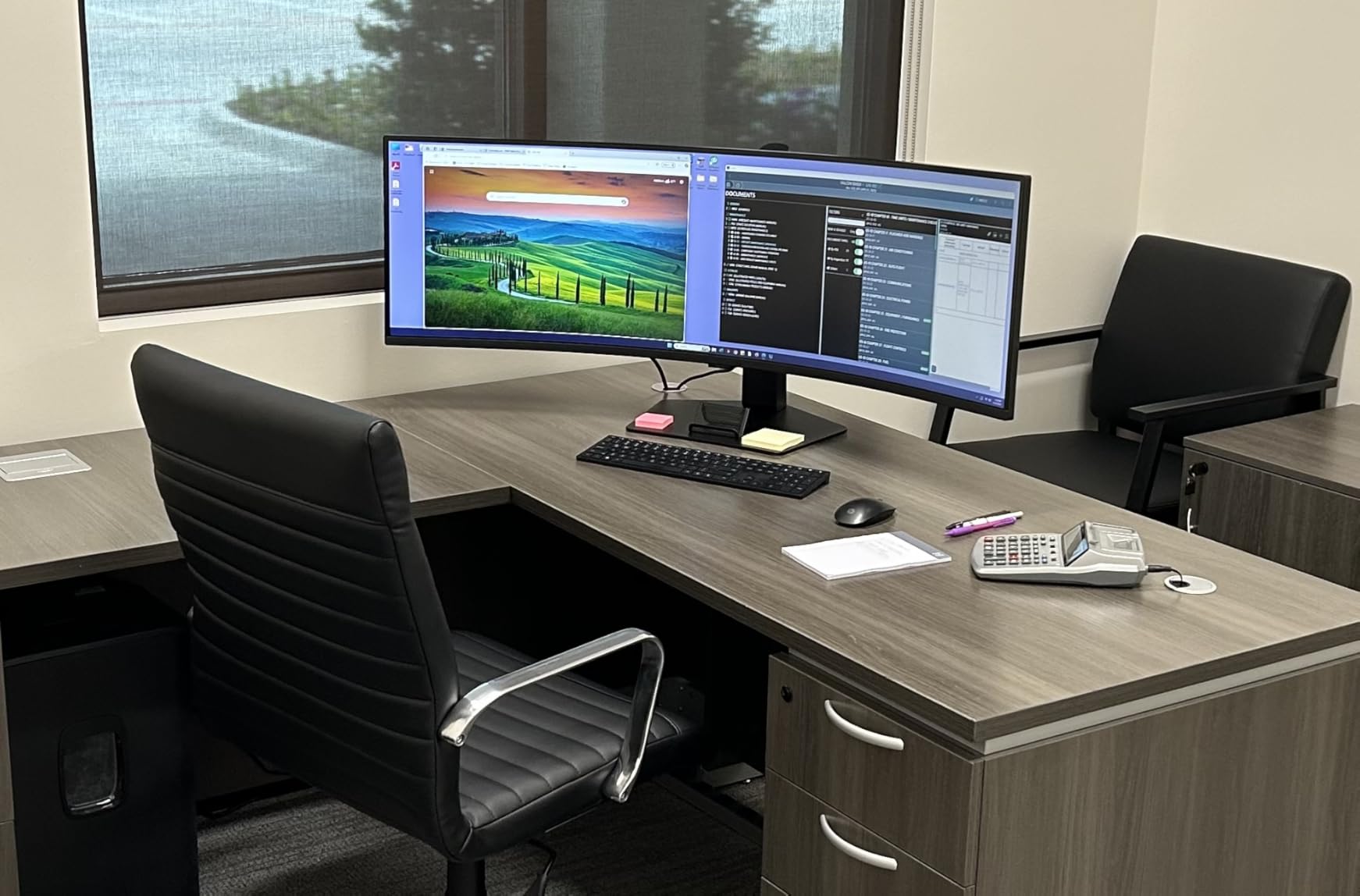
The vertical height problem, honestly
A 32:9 panel at 49 inches is wide but not tall. The short vertical dimension is why programmers and editors report that the screen feels cramped, and why productivity-focused users often end up stacking a second display above it.
There is a consolation: picture-in-picture and split-screen modes plus Auto Source Switch+ let you run a console or a second input in a corner of the panel, which is a genuinely useful way to keep a racing game running while you check something else.
Who this super ultrawide is for
Sim racers, flight sim players, and anyone who wants to retire a multi-monitor setup in favour of one seamless curve. Reviewers consistently describe it as superb for coding and racing games specifically.
It is not a first curved monitor for most people. The desk requirements are real, the GPU requirements are real, and at 144Hz it is slower than every 34-inch OLED here. Buy it when you have measured your desk and confirmed your GPU can drive it.
10. AOC CQ27G4H 27-Inch - Best Budget Curved QHD Pick
AOC 27" Curved Gaming Monitor 2K QHD 180Hz VA AMD FreeSync Premium, CQ27G4H
2560x1440 at 180Hz
1500R curve
0.5ms response
300 cd, 3000:1 contrast
+ Pros
- Ties the top rating in the roundup at 4.6
- 180Hz QHD at an entry price with 0.5ms response
- 3000:1 contrast gives punchy dark scenes
- DisplayPort plus dual HDMI and VESA mounting
- Cons
- Only runs 144Hz over HDMI
- Glossy finish reflects ambient light
- Basic stand with limited adjustment
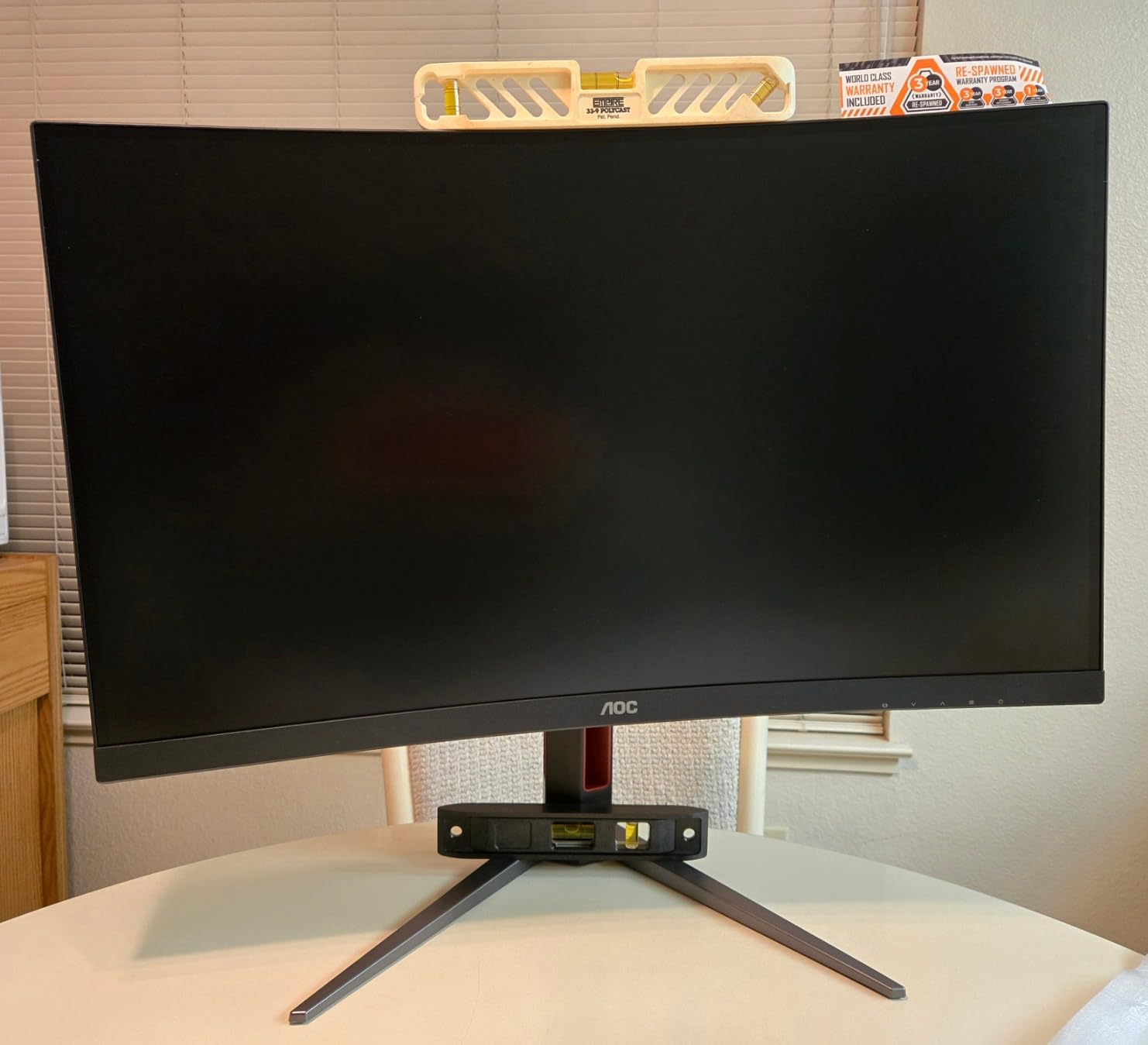
The AOC CQ27G4H pairs a 2560x1440 panel with a 180Hz refresh rate, which is a specification combination you rarely see at this end of the market. Add a 1500R curve, a 0.5ms response time, and a 3000:1 contrast ratio, and you have a monitor that punches well above what it costs.
Its 4.6 star average ties the Alienware AW3425DWM for the highest rating in the roundup, with 81 percent five-star ratings. The review count is much smaller at 148, so read that as a smaller sample rather than a longer track record.
This is the curved monitor I would suggest to someone whose last screen was a 60Hz flat panel and who wants a visible upgrade without researching the category.
180Hz over DisplayPort but 144Hz over HDMI
This is the detail most listings bury. The full 180Hz refresh is available over DisplayPort 1.4, while HDMI 2.0 tops out at 144Hz at this resolution. Connect with DisplayPort if you want the headline number.
Port selection is otherwise good: DisplayPort 1.4, dual HDMI 2.0, and an earphone out, with VESA mounting compatibility for an arm or a wall bracket. That is more than most monitors in this price range offer.
Why a 1500R curve is the right choice at 27 inches
This is the size band where curve choice matters most. A 27-inch panel viewed at a normal desk distance is too small for a 1000R curve to feel natural, and several players in this roundup report that an aggressive curve at this size becomes distracting rather than immersive. A 1500R is gentle enough to soften the edges of the image without bowing the geometry in a way you notice.
The 176-degree viewing angle and flicker-free low blue light modes round out an eye-care package that makes long evening sessions more tolerable.
Who should pick the AOC
A player on a mid-range GPU who wants QHD sharpness and high refresh without spending much. 3000:1 contrast is better than several pricier panels here, and the dark scenes in most modern games have real depth on it.
Two compromises: the glossy finish picks up reflections, and the stand offers only basic tilt adjustment. If you plan to use this as an all-day work display, look for a matte panel instead.
The bottom line on the value tier
Three of the picks in this roundup deliver QHD-class curved panels at 165Hz to 180Hz for well under what the OLEDs cost, and this is the sharpest spec sheet of that group. Curved gaming monitors stopped being a luxury some time ago; the differentiator now is panel technology and curve matched to size.
How to Choose a Curved Gaming Monitor Without Regretting It
Curvature is a tool, not a feature. These are the decisions that actually determine whether your purchase feels immersive or merely bowed, and all of them can be checked before you spend anything.
Curvature radius and the viewing distance formula
The R-value is the radius of the circle the panel is bent from, in millimetres. 1000R is a 1-metre circle, 1500R is 1.5 metres, 1800R is 1.8 metres. The practical rule, which matches the consensus in sim racing communities, is to sit at roughly the distance in metres that matches the R-value.
That rule resolves the endless 1000R versus 1500R debate cleanly. If your desk puts you about 1.5 metres back, a 1500R panel is geometrically correct and a 1000R panel is too tight. If your desk is deep and you sit far back, a 1000R panel wraps better and a 1500R will look almost flat.
It also explains why 27-inch panels work best at 1500R or gentler. You sit closer to a small screen, so a tight curve bends the image within your forward field of view, which reads as distortion rather than wrap.
Size, aspect ratio, and the resolution your GPU can feed
Three tiers cover almost everyone. A 27-inch 16:9 QHD panel fits a normal desk and works for shooters and esports. A 34-inch 21:9 ultrawide at 3440x1440 is the immersion sweet spot, because it adds horizontal field of view without demanding flagship GPU bandwidth. A 49-inch 32:9 panel at 5120x1440 doubles that field of view again but needs a serious GPU and a deep desk.
Do the pixel arithmetic before you buy. 2560x1440 is about 3.7 million pixels per frame, 3440x1440 about 5 million, and 5120x1440 about 7.4 million. That last number is where mid-range cards start falling below the panel's refresh rate.
Panel decoder: VA, IPS, and OLED for gaming
VA panels deliver high native contrast and dark blacks for cheap, which is why most 27-inch and 34-inch LCD ultrawides use them. Their weakness is dark-scene smearing, which shows up as trails behind dark objects on dark backgrounds and gets worse when overdrive is set to maximum.
OLED panels produce true blacks and near-instant response times, which makes them superb for dark, atmospheric games and for competitive play at high refresh. Their costs are lower sustained brightness, a permanent burn-in risk with static elements, and a higher price. QD-OLED adds a quantum dot layer that pushes colour coverage higher and improves brightness efficiency, at the cost of an even higher price.
Refresh rate and VRR, by genre
For competitive shooters, refresh rate matters more than resolution. Going from 144Hz to 240Hz is a visible difference in how much you can see and track. For sim racing and flight sims, resolution and field of view matter more than refresh above 165Hz, because you are reading a wide scene rather than flicking to targets.
For VRR, check that the monitor supports whatever your GPU prefers: AMD FreeSync Premium or Premium Pro, NVIDIA G-Sync Compatible, or VESA AdaptiveSync. All three appear in this roundup, and dual support on the LG 34GS95QE covers either card brand.
HDR, brightness, and why nits matter less than contrast
Peak brightness determines whether HDR holds up in a lit room. At 250 to 300 nits, HDR looks good at night and washed out at midday. At 400 nits with DisplayHDR 400, it holds up much better, and DisplayHDR 600 on the Samsung G9 gives genuine headroom.
Contrast is the other half. A 1000:1 LCD looks hazy in dark scenes next to a 3000:1 panel or an OLED with effectively infinite contrast, and most modern games are set at night often enough that this difference is not academic.
Ergonomics, ports, and the OSD
Check three things before checkout: does the stand adjust for height, is there a VESA pattern your arm uses, and does the monitor have the USB hub your peripherals need. A 34-inch panel at 19 to 21 pounds with a tilt-only stand is a frustrating desk object, and the TUF and Alienware 34 in this roundup both address it.
The on-screen display matters too. Black Stabilizer, a crosshair overlay, and an FPS counter are shooter features that belong in the OSD rather than in a separate utility, and the LG 27GS60QC-B includes all three.
Console gaming, and why ultrawide is not what you think
Current-generation consoles cap out around 120Hz, so a 240Hz curved monitor gains you nothing when you plug in a PlayStation or Xbox. More importantly, ultrawide resolutions are not natively supported by most console games, so you get either scaled output with performance cost or black bars down the sides.
Practically: buy a 16:9 curved panel at 27 or 32 inches if you game on console, and buy an ultrawide for PC. The Samsung G55C and the LG 27GS60QC-B both carry two HDMI ports for exactly this reason.
Curved versus flat, and why esports players skip both
This comes up constantly in forums, and the answer is about game design rather than image quality. Competitive shooters are balanced around a fixed field of view, and tournament rules frequently standardise on flat 16:9 displays so that every player sees an identical amount of information. A wider screen reveals more of the map, which competitive players consider an advantage.
That is why pro esports players overwhelmingly use flat, high-refresh 16:9 monitors. Immersion in a racing or flight sim is the opposite problem: the game is designed to reward peripheral awareness, so more visible area is the whole point.
OLED burn-in, and how to live with it
Modern OLED panels mitigate static-element burn-in with pixel refresh routines, but the risk is not zero over years of use. Practical habits help: use a screen saver, hide the taskbar, avoid leaving a bright static HUD on screen for hours, and keep the brightness moderate during long sessions.
The two OLED picks here both carry warranties that include burn-in coverage, which is the mitigation most buyers rely on rather than managing the risk entirely themselves.
Frequently Asked Questions
What is the best curved gaming monitor for gaming?
The SANSUI 34-inch is our top pick for immersive gaming because it pairs a 1500R curve with 3440x1440 at 200Hz, a combination nothing else in this roundup matches. The Alienware AW3425DWM is the best-rated option at 4.6 stars, with 400 nits for stronger HDR. For pure competitive speed, the SANSUI 32-inch 240Hz panel delivers the highest refresh rate at the lowest cost.
Are curved gaming monitors better for gaming?
For racing games, flight simulators, and open-world titles, yes. Curvature brings the screen edges closer to your natural field of view, so peripheral information is visible without turning your head. Below about 27 inches the benefit largely disappears, and competitive shooters with a fixed field of view gain little. The improvement is real, but it is size-dependent rather than universal.
Why don't pro gamers use ultrawide?
Competitive tournaments standardise on flat 16:9 displays so that every player sees an identical field of view, and shooters are balanced around a fixed view. A wider screen reveals more of the map, which tournament organisers treat as an advantage. Pro players who want immersion play on ultrawides at home, not on stage.
Is the 1500R curve better than the 1000R?
It depends entirely on your viewing distance. 1000R is a one-metre circle and 1500R is a 1.5-metre circle, so you should sit at roughly the matching distance for the geometry to look correct. On a shallow desk where you sit about 1.5 metres back, 1500R is right. On a deep desk where you sit further away, 1000R wraps better.
How far should I sit from a 49-inch curved monitor?
A 49-inch 32:9 panel needs roughly one metre of viewing distance to suit its 1000R curve, which means about 90 centimetres of front-to-back desk depth. A standard 60-centimetre desk leaves you sitting too close, and the screen edges loom into your forward vision instead of wrapping around it. Measure your desk before buying one.
Which Curved Gaming Monitor Should You Actually Buy?
If you play racing games or flight sims and your desk is deep enough, start with the SANSUI 34-inch 200Hz. It is our best curved monitor for immersive gaming because the curve, the resolution, and the refresh rate all land in the same place, and 3440x1440 keeps it within reach of a mid-range GPU.
If you want the sharpest picture and the best-rated panel in this roundup, take the Alienware AW3425DWM. Its 400 nits and 180Hz handle both HDR and competitive play, at the cost of a high 85W power draw and a thinner port selection than the ASUS TUF.
If your GPU is mid-range and you play shooters, the SANSUI 32-inch 240Hz is the honest choice. Full 240Hz at 1080p is something almost any modern card can feed, and speed beats sharpness when you are flicking to a target.
If you sit at a small desk, the AOC CQ27G4H or the LG 27GS60QC-B both fit, with the AOC offering the better contrast and the LG offering dual HDMI for console hookup.
If your job involves colour, the Alienware QD-OLED with Creator Mode is the only panel here that treats accuracy as a feature rather than a byproduct. If you want the deepest wrap available and have the GPU to feed it, the LG 34GS95QE at 800R and 240Hz goes further than anything else on this list.
Measure your desk depth before you order anything over 34 inches. That single check prevents more disappointment than any spec on this page, and it costs you a tape measure and thirty seconds.