
10 Best Propane Garage Heaters for Cold Winters (October 2026)
The best propane garage heater is not the one with the biggest number on the box. It is the one that still lights at 6am in January when the tank has been sitting in an uninsulated bay since October, and it does not fill the space with enough moisture to rust the tools you are trying to protect.
I have spent the last two winters working out of a two-car detached shop that drops to the high 20s on a still night, and I have cycled through enough propane heaters to know where each type fails. Forced air wins on whole-room heat. Radiant wins on your hands and your chest. Two units in this roundup need nothing but propane, and they are the ones that keep running when the power goes out.
This roundup covers 10 propane garage heaters picked for cold-weather performance first and output second. Every pick here has published review volume behind it, a real fuel connection, and a documented answer to the question that actually matters in December: does it start when everything is cold.
Two things I have learned that no spec sheet tells you. First, propane vapor pressure falls off a cliff as the temperature drops, and the cold-start problem is a tank problem far more often than it is a heater problem. Second, every gallon of propane burned makes water, and in a closed garage that water ends up on your tools. Both of those get their own section below because they decide the purchase as much as BTU does.
One more framing note. Most people run a garage heater with the door cracked or wide open, pushing warm air at the house rather than trying to make the whole bay comfortable. If that is your plan, the radiant units on this list make more sense than the marketing implies, and you can read our notes on the best propane tent heaters and propane fire pits for the same door-open philosophy in other settings.
Our Top 3 Propane Garage Heaters for Cold Winters
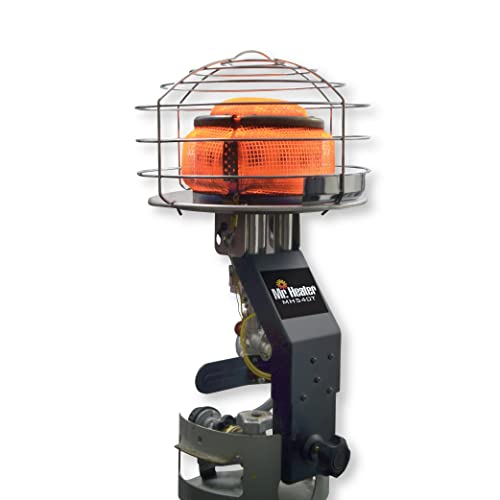
Mr. Heater 45,000 BTU Tank Top Radiant
- Mounts directly to a 20 lb propane tank
- 45000-36000-30000 BTU regulator settings
- 540-degree adjustable radiant head
- Tip-over safety shut-off switch
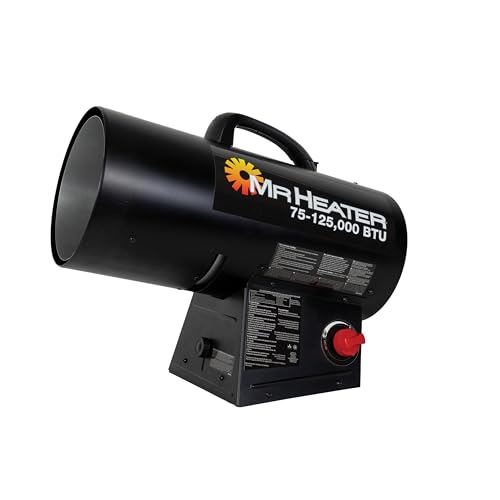
Mr. Heater 125,000 BTU Quiet Burner
- 125000 BTU forced air covering up to 3125 sq ft
- Quiet Burner Technology
- 10 ft hose and regulator included
- High-temperature limit switch
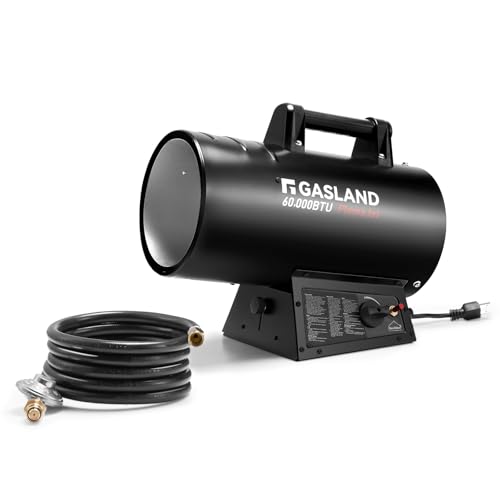
GASLAND FlameJet 60,000 BTU Forced Air
- 30000-60000 BTU variable output
- About 12 hours on a 20 lb propane tank
- CSA certified electronic ignition
- Overheat detection and safety valve
The editor's choice is the Mr. Heater tank top radiant heater, and the reason is durability rather than raw power. More than 5,000 ratings averaging 4.7 stars is the deepest well-tested product in this category, and a radiant unit that mounts straight to the tank has no igniter module, no fan motor and no electrical dependency to fail on a freezing morning.
Quick Overview: Every Propane Garage Heater in This Roundup
| Product | Key Specs | Action |
|---|---|---|
| Mr. Heater 45,000 BTU Tank Top Radiant |
|
Check Latest Price |
| Mr. Heater 125,000 BTU Quiet Burner Forced Air |
|
Check Latest Price |
| GASLAND FlameJet 60,000 BTU Forced Air |
|
Check Latest Price |
 Remington 60,000 BTU Forced Air Remington 60,000 BTU Forced Air |
|
Check Latest Price |
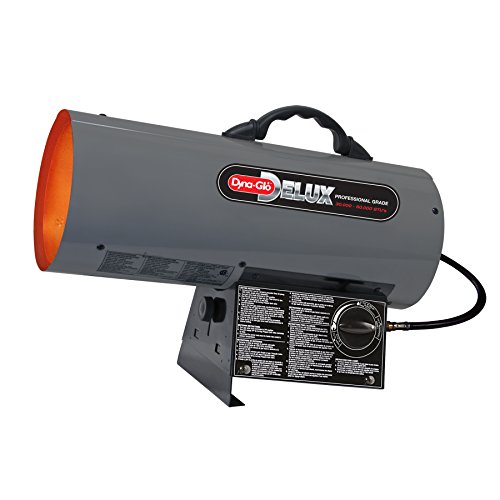 Dyna-Glo 30,000-60,000 BTU Forced Air Dyna-Glo 30,000-60,000 BTU Forced Air |
|
Check Latest Price |
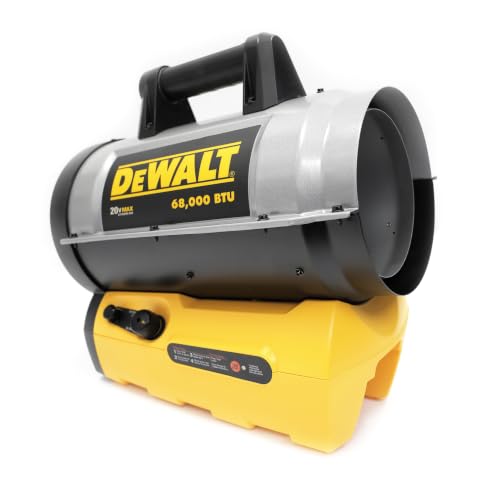 DEWALT 68,000 BTU Hybrid Forced Air DEWALT 68,000 BTU Hybrid Forced Air |
|
Check Latest Price |
 Flame King 60,000 BTU Stainless Forced Air Flame King 60,000 BTU Stainless Forced Air |
|
Check Latest Price |
 Habitio 60,000 BTU Torpedo Forced Air Habitio 60,000 BTU Torpedo Forced Air |
|
Check Latest Price |
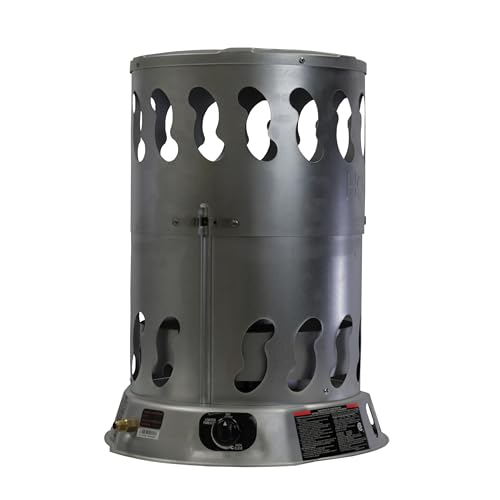 Mr. Heater 80,000 BTU Convection Mr. Heater 80,000 BTU Convection |
|
Check Latest Price |
 ProCom 25,000 BTU Ventless Infrared ProCom 25,000 BTU Ventless Infrared |
|
Check Latest Price |
For most people reading this in October, the honest answer is that the decision comes down to three questions: how big is your bay, is there a 120V outlet you can reach, and are you trying to heat the room or just the spot you are standing in. Everything else is refinement.
1. Mr. Heater 45,000 BTU Tank Top Radiant Heater - Best Overall for Cold Winters
Mr. Heater Original 540-Degree 45,000 BTU Tank Top Radiant Propane Heater
45,000/36,000/30,000 BTU settings
Mounts to a 20 lb tank
540-degree radiant head
Tip-over shut-off
Outdoor use only
+ Pros
- Highest rated heater in the roundup at 4.7 stars from more than 5000 ratings
- Mounts straight to a 20 lb tank with no hose or regulator
- 540-degree adjustable radiant head aims heat where you work
- Solid construction with a tip-over safety shut-off
- Three heat settings and about 9.5 hours on high
- Cons
- Outdoor use only
- Most heat radiates upward unless the head is tilted toward you
- First light needs the release button held until the emitter glows
- You carry the tank when you move it
This is the heater I keep reaching for in my own shop, and the reason has little to do with the 45,000 BTU figure on the label. It has everything to do with what is not there. No fan, no igniter board, no power cord, no regulator to freeze. You screw it onto a 20 lb tank, hold the button until the emitter glows, and it runs.
After the first lighting it becomes genuinely set-and-forget, which matters when the temperature outside is single digits and you do not want to troubleshoot a flame sensor before work. The 540-degree head is the part people underestimate. Set level, most of the output goes to the ceiling. Tilted down toward a bench, it puts that heat on your hands and the workpiece, which is the actual job.
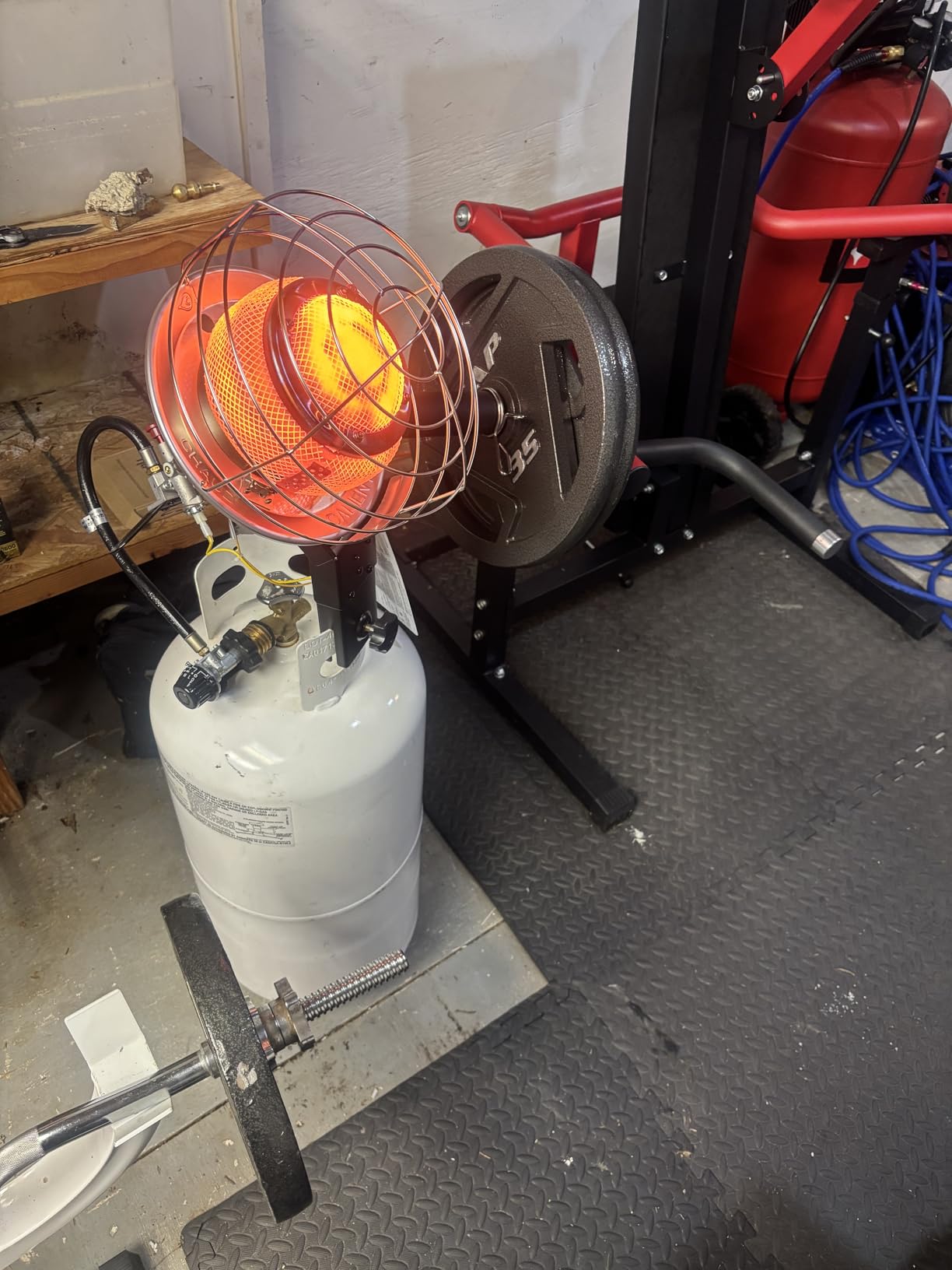
Run it with the garage door open and it behaves like a very large, very quiet workshop light. Run it in a sealed bay and you are using an outdoor-rated appliance indoors, which is not what the listing is certified for.
Why it survives the cold better than anything else here
The mechanical simplicity is the cold-weather advantage. There is no cold-sensitive electronics, no battery-backed igniter and no motor bearing to seize. The only moving part is the tip-over switch, and that switch is the reason this heater is safer than it has any right to be for something that throws 900 degrees Fahrenheit at you.
That emitter surface temperature is the honest caveat. 900 degrees Fahrenheit at the element means this is not a heater to leave unattended in a corner next to cardboard, sawdust or a workbench you care about. Point it away from combustibles, keep the bay clear around it, and it behaves.
Three settings and a real run-time number
The high-medium-low regulator puts out 45,000, 36,000 or 30,000 BTU. That is a genuinely useful range for a garage, because you will want the low setting on a 40F afternoon and the high setting on a 15F morning, and most forced air units on this list only give you a throttle knob that does not do much.
Rated run time is about 9.5 hours on high with a 20 lb tank. Real runtime tracks that closely as long as the tank is not sitting outside in the cold, which brings us to the single most important cold-weather fact in this entire article: the tank, not the heater, is what fails first.
Where the radiant approach pays off and where it does not
Radiant heat warms objects and people and does almost nothing to the air. In a shop where you are stationary at a bench, that is the correct physics. In a bay where you are walking the length of a car with a socket wrench, it is the wrong physics, because the warm air you are walking through is the air the heater never heated.
This is the one product on the list I would put in a woodshop, and it is also the one I would never use to try to bring a 24 by 24 space up to room temperature. Know which job you are hiring it for. If you want the same category of heat for a workbench or a small hobby corner, our picks for portable propane grills and propane fire pit tables run on the same fuel logic and the same open-air assumption.
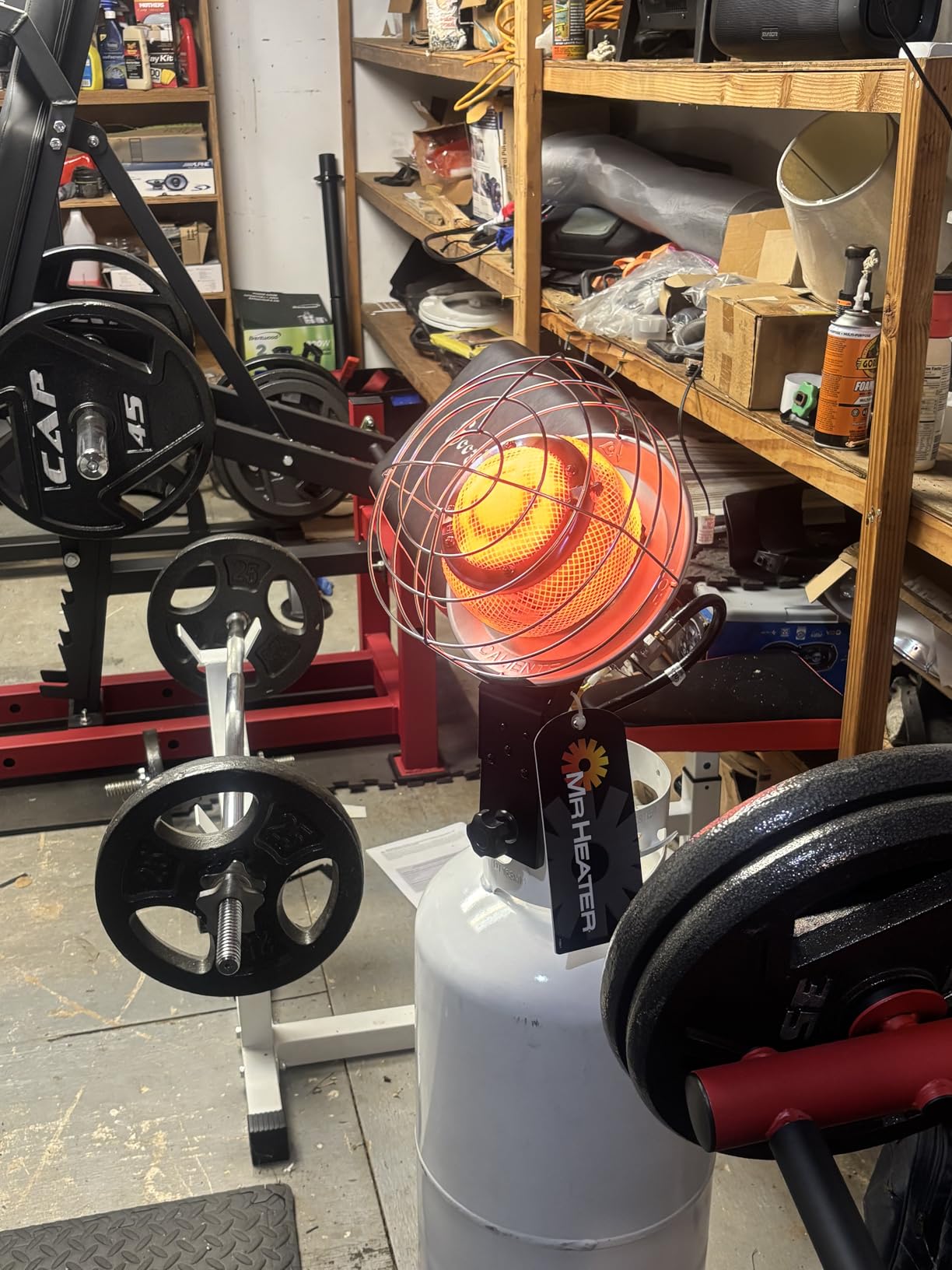
Two other things worth knowing before you buy. The first light takes practice, because you hold the release button down until the emitter turns red and most people let go too early. And if the tilt sensor ever decides the head is not where you think it is, the unit will refuse to ignite until you re-seat it level and then adjust.
2. Mr. Heater 125,000 BTU Quiet Burner Forced Air Heater - Best for Large Heated Shops
Mr. Heater 125,000 BTU Quiet Burner Technology Forced Air Propane Heater
125,000 BTU forced air
Up to 3,125 sq ft coverage
Quiet Burner Technology
17.3 pounds
10 ft hose and regulator included
+ Pros
- 125000 BTU heats attached garages and large shops quickly
- Quiet Burner Technology runs far quieter than a standard torpedo heater
- Split barrel design makes burner access straightforward
- Starts easily in cold weather per owners
- High-temperature limit switch and safety shut-off valve
- Cons
- No thermostat
- Arc starter keeps sparking after the unit lights
- Fan needs an electrical source in addition to propane
- Noticeable propane odor so ventilation is required
When a cold garage is a 1,600 square foot shop rather than a 400 square foot corner, radiant heat is a nonstarter and this is the unit to reach for. At 125,000 BTU it is the highest-output portable heater in this roundup by a wide margin, and owners running it in attached bays report the space coming up fast enough to work in rather than wait in.
The Quiet Burner Technology is the feature that actually changes daily life. Combustion roar is the thing that makes you hate a garage heater, not the fan. Cut that in half and you can hold a conversation, run a radio and keep working while it fires, which is the difference between a heater you tolerate and one you leave running.
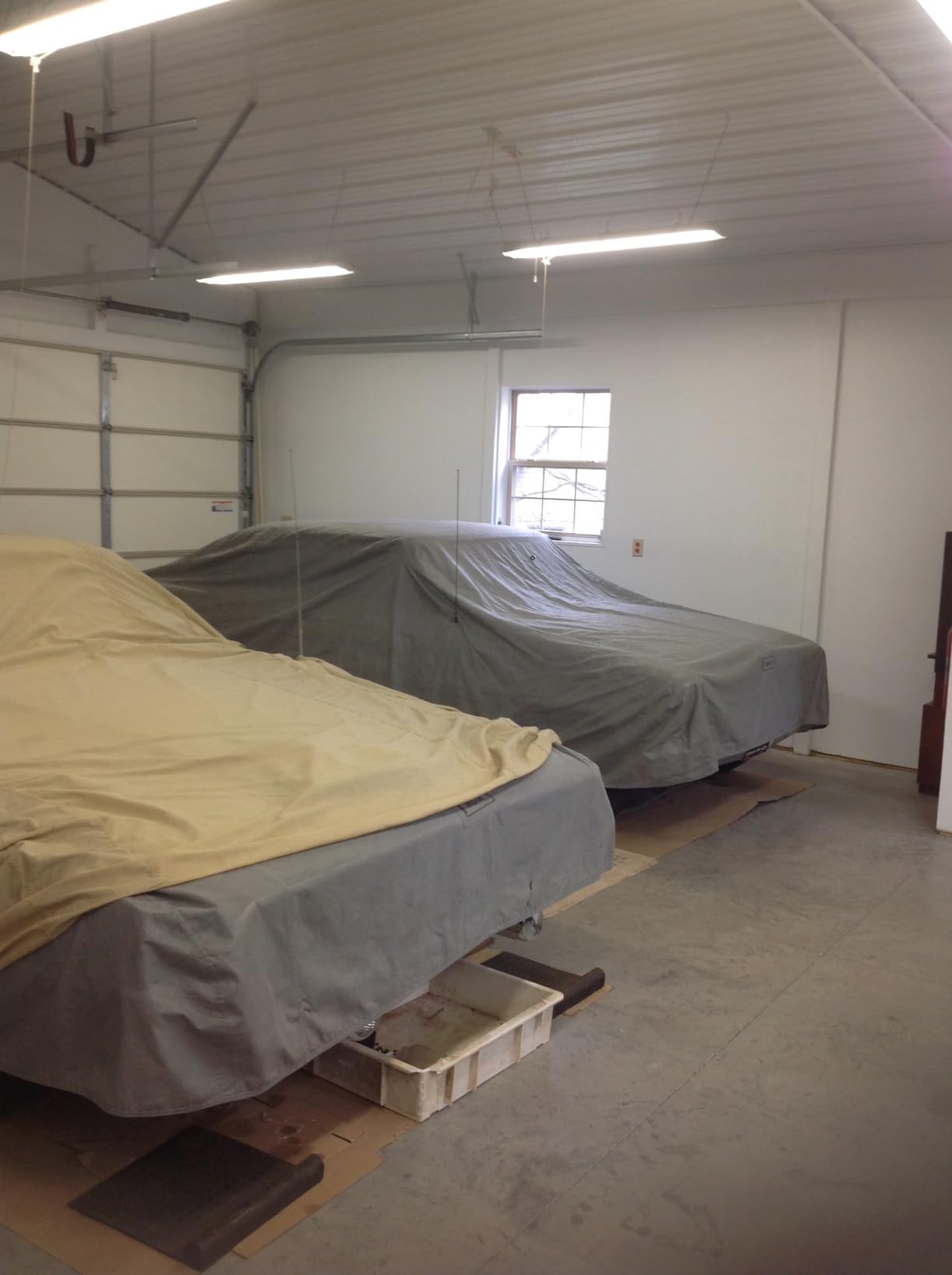
What 125,000 BTU actually means in a real bay
Manufacturer coverage for this model is listed at roughly 3,125 square feet. Take that number with a grain of salt, because coverage claims across this category imply anywhere from about 20 to about 40 BTU per square foot depending on the maker and how generously they assume you have insulated.
Do your own math on volume instead. A 24 by 24 bay with a 9 foot ceiling is about 5,180 cubic feet. Multiply your target BTU per cubic foot by that volume and you get a number you can defend. This heater has enough output to be the right call for a large insulated shop. In a bare 24 by 24 with a thin door and no ceiling insulation, it will be warm near the unit and cold near the back wall, and no amount of BTU fixes that.
The cold-start reality and the igniter quirk
Owners consistently report easy starting in cold weather, which is why it ranks this high for the target query. The caveat is the arc starter, which continues sparking after the burner is lit. It is a long-standing complaint in the reviews, and it is harmless but irritating, particularly in a dark shop where the repeated click becomes the soundtrack to your evening.
There is no thermostat. High and low are the only settings, and someone has to walk over and cycle it. If you are planning to hold a garage at 50F between projects rather than heat it to working temperature, budget for a remote switch or accept the manual cycle as part of the routine.
Ventilation, odor and the split barrel
Propane odor during operation is the most commonly cited drawback, and it is a ventilation problem rather than a defect. Crack the garage door, keep the bay from being airtight, and put a working carbon monoxide detector in the space regardless.
The split barrel design is worth a mention because it is the difference between a two-minute burner service and a shop visit. You can get at the burner assembly without pulling the whole heater apart, which matters a lot in a cold garage when something goes wrong at 6am.
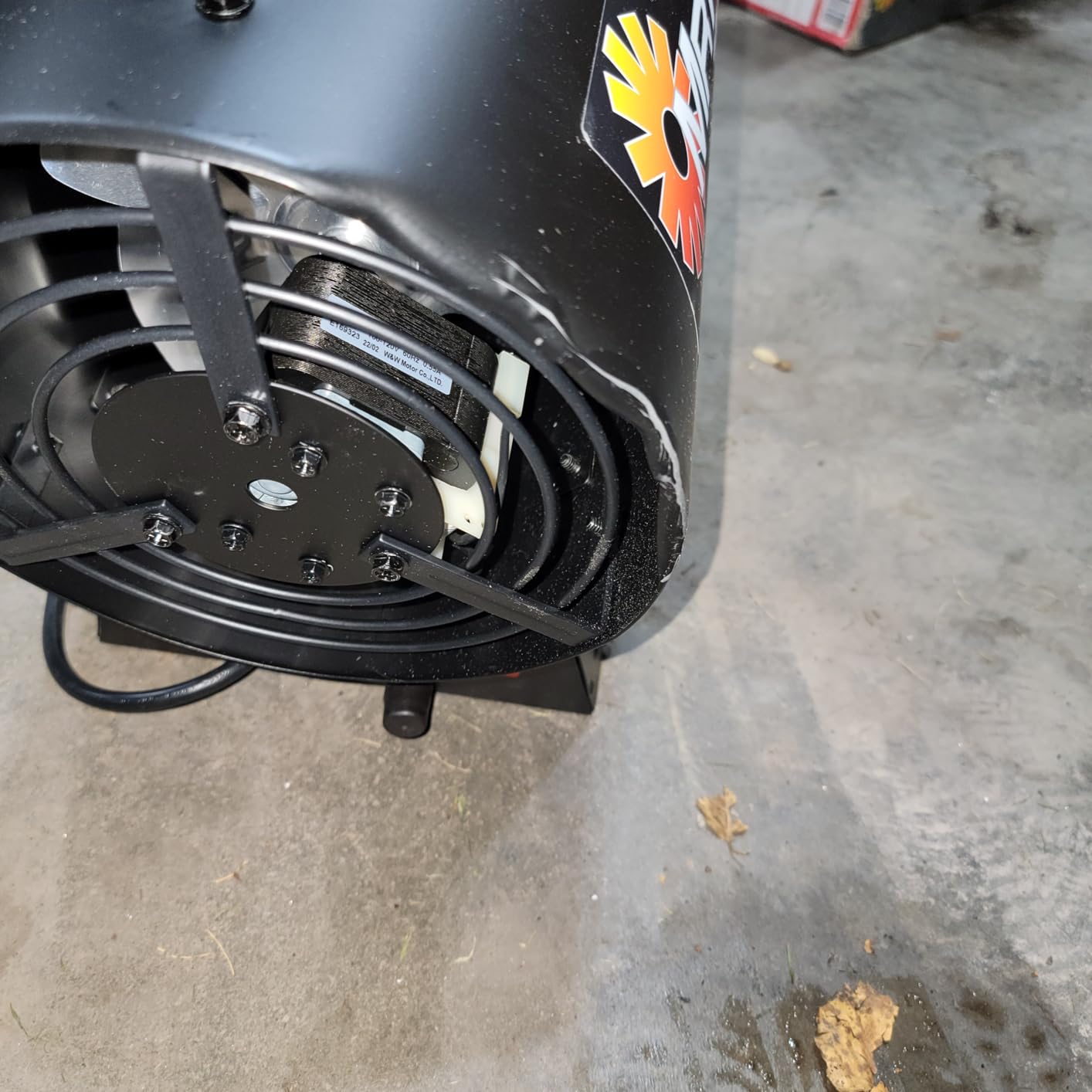
At 17.3 pounds with a heavy-duty handle and floor mount orientation, it is built for being moved between a shop and a job site rather than carried up stairs. Keep it out of the reach of a small child, keep it clear of combustibles, and understand that it heats air, not you, so position it where the fan is throwing across your work area.
3. GASLAND FlameJet 60,000 BTU Forced Air Heater - Best Value for a Two-Car Garage
GASLAND 60,000 BTU Propane Force Air Heater for Garage, Heat Up 1,500 Sq.Ft
30,000-60,000 BTU variable output
Up to 1,500 sq ft
About 12 hours on a 20 lb tank
CSA certified
10.8 pounds
+ Pros
- Variable output from 30000 to 60000 BTU with adjustable heat angle
- 10 ft hose and regulator included with about 12 hours of run time on a 20 lb tank
- CSA certified with continuous electronic ignition and overheat detection
- Thermo-electric safety valve
- Light enough to move between bays
- Cons
- Variable output is manual rather than thermostat controlled
- No forced air distribution control beyond the angle adjustment
- Not rated for enclosed indoor use without ventilation
This is the one I recommend to friends who ask for a single recommendation, because it does the ordinary job well. 60,000 BTU of forced air, a real 10 foot hose and regulator in the box, continuous electronic ignition, and enough review history at 4.5 stars across more than 1,500 ratings that the failure modes are well documented rather than mysterious.
The 30,000 to 60,000 BTU variable output is the feature that makes it more versatile than the fixed-output units lower on this list. A 60,000 BTU heater in a small bay is genuinely uncomfortable to stand near. Being able to throttle down when you only need to take the chill off is the difference between using it daily and using it twice a season.
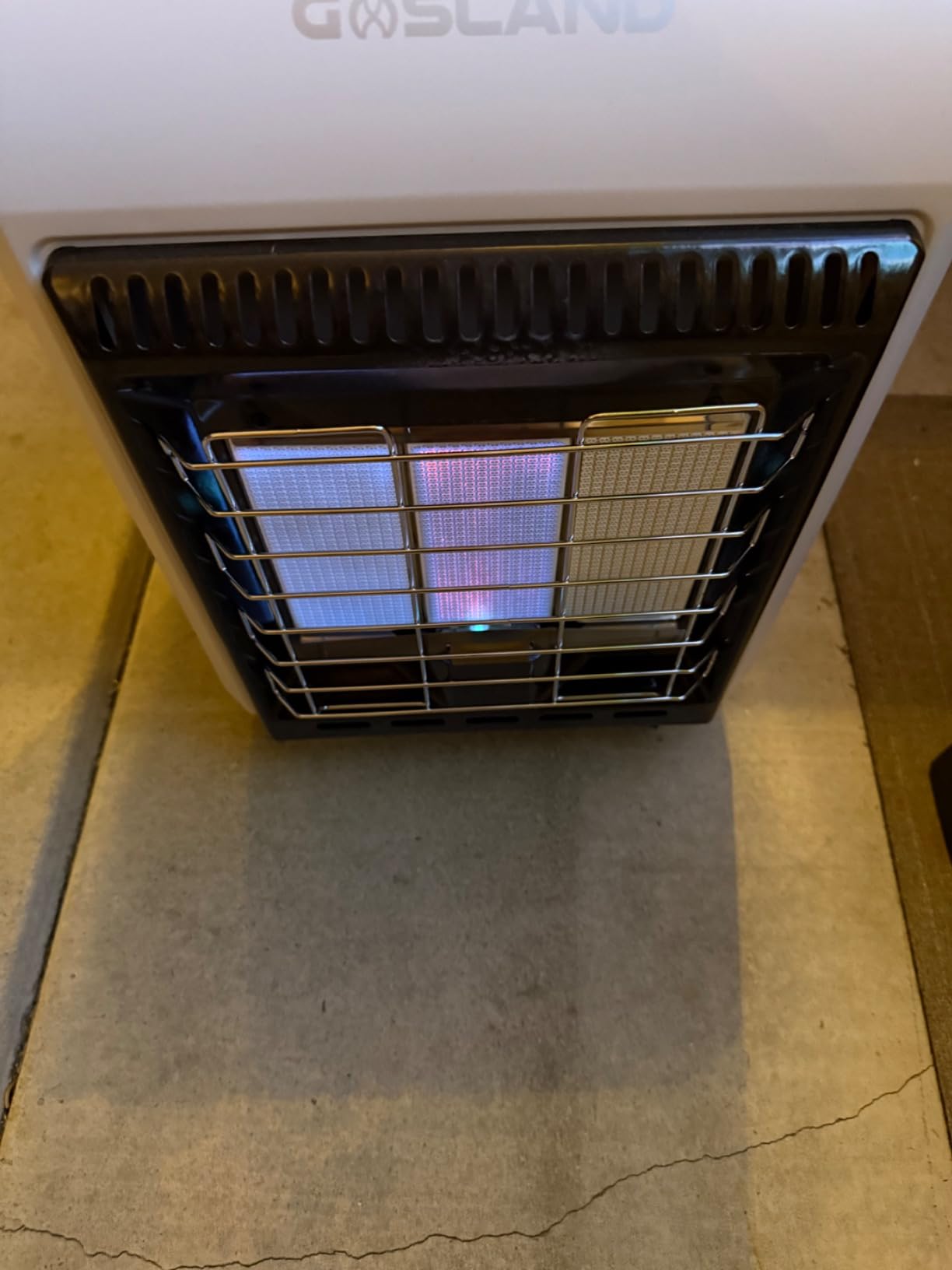
Cold-start and electronics in a freezing bay
Continuous electronic ignition is a real cold-weather advantage over a piezo igniter. Piezo systems rely on a spring-loaded crystal strike, and repeated failed strikes in the cold are a common reason budget heaters will not light. An electronic module retries on a consistent cycle, which is why this unit starts reliably when the bay is at its coldest.
That said, an electronic module is also a component that can fail, and cold is hard on electronics generally. If you are buying for a detached building where the temperature genuinely drops, keep a backup plan. The habit of warming the tank and the hose before you try to light anything, which I will cover in the cold-weather section, solves most of this.
Runtime, fuel use and what a 20 lb tank really gives you
Rated runtime is about 12 hours on a standard 20 lb tank, and that figure assumes moderate output. Run it flat out on 60,000 BTU and expect noticeably less; run it on the low end of the variable range and you can stretch well past that. This is the difference between a heater that heats one Saturday of projects and one that covers a whole winter of evenings.
The adjustable heat angle is a small touch that pays off. Instead of blasting the far wall, you can aim the output across the bay so the fan throws warm air through the space you are working in rather than out the door behind you.
What the CSA listing does and does not tell you
CSA certification covers the appliance itself, its clearances and its safety systems. Overheat detection and a thermo-electric safety valve are both present, and both are the layers that shut the gas off if something goes wrong internally.
What certification does not do is make the heater safe in a sealed room. Forced air propane heaters of this class are unvented, which means combustion products and water stay in the space. That is workable with the door cracked. It is not workable in a closed attached garage, and no safety certification changes that physics.
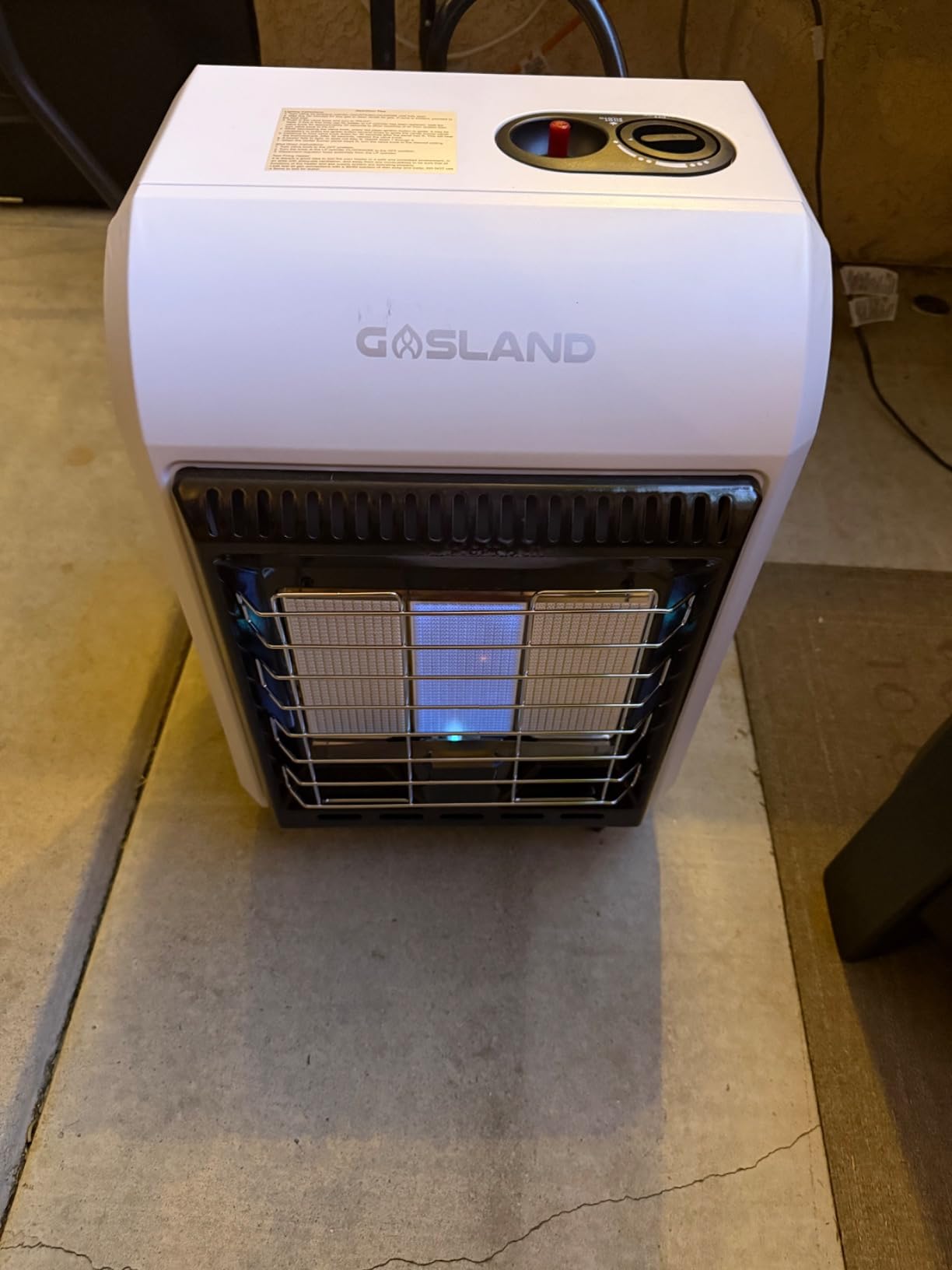
At 10.8 pounds and 17 by 8.8 by 14 inches, it is the easiest unit here to carry between the shop and the back of the truck, and it is one of the more attractive units to look at, which matters if it lives in a space you also use for other things. A wattage note: at 115 volts and 2 amps, any standard household outlet will power the fan.
4. Remington 60,000 BTU Forced Air Heater - Best Steel Build for Jobsite Use
Remington LP Forced Air Heater, Portable 60,000 BTU Space Heater for up to 1500 Square Feet - Liquid...
60,000 BTU forced air
Up to 1,500 sq ft
11 pounds steel body
Thermocouple and flame-out cut-off
Adjustable height
+ Pros
- Heats a two-car garage in roughly 10 minutes and distributes heat evenly
- Heavy-duty steel construction at only 11 pounds
- Simple setup with electronic ignition and included hose and regulator
- Heat-sensitive indicator sticker shows when the tube has cooled
- Full safety stack including thermocouple and flame-out cut-off
- Cons
- Very loud while running
- Extremely short power cord
- Output is too strong to be moderated effectively
- Faint propane scent during operation
- A few reports of units that would not stay lit
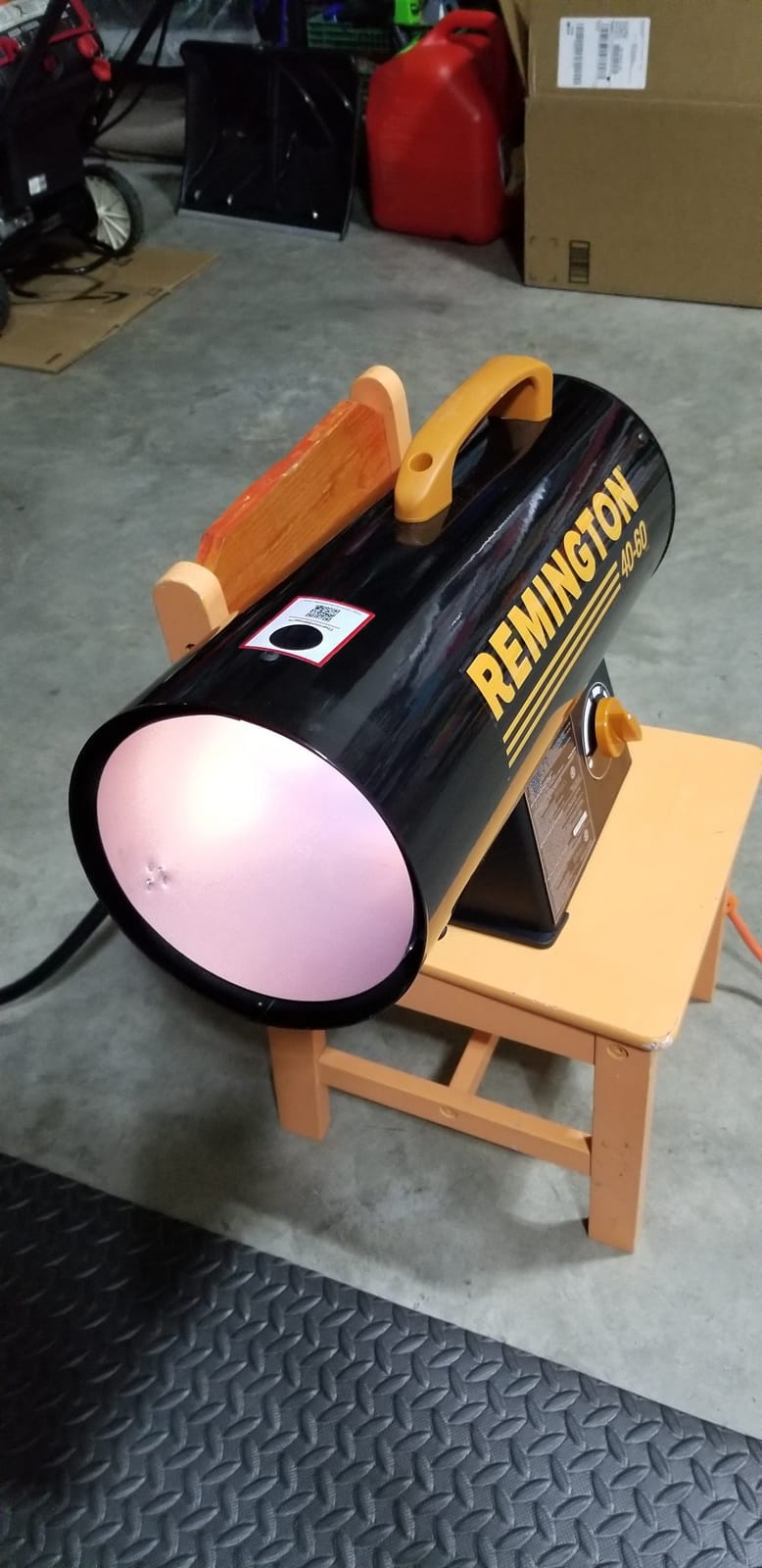
The Remington is the pick for anyone who moves heaters around. Heavy-duty steel construction at 11 pounds is an unusual combination, because most steel torpedo heaters weigh considerably more, and it is the difference between carrying one to a job site and dreading carrying one to a job site.
Owners report a two-car garage going from cold to workable in about 10 minutes, with even distribution through an open space. That is the honest test for a forced air heater in this class, and this one passes it consistently across 736 reviews averaging 4.5 stars.
The safety stack is the reason to pick this one
Thermocouple monitoring, high-temperature limit shut-off and flame-out fuel cut-off is the full set of gas shutoff layers, and having all three means a burner that goes out for any reason closes the valve rather than letting propane continue to feed a dead flame. For a heater you might run for hours unattended in a cold shop, that redundancy is worth more than a feature that saves a dollar.
Variable heat settings and adjustable height are both present. The settings, though, are the weak point: owners note that the output is so strong that moving from one setting to the next makes little practical difference, and cycling the unit on and off is the more effective way to control temperature.
Noise and the short cord, honestly
Very loud is the word reviews use, and it is the most common complaint by a wide margin. If you plan to spend a full day at a bench next to this heater, ear protection or a quieter unit is the sensible choice. The alternative on this list is the Flame King further down, which is specifically noted for being quiet enough to hold a conversation.
The power cord is extremely short, in practice under a foot, which means an extension cord is effectively required. Plan your outlet layout before you unbox it, and use a properly rated outdoor-rated extension rather than a household one if the run is long.
Variable output versus fixed output in real cold
There is no thermostat here, so control is entirely manual. In a cold snap that is workable because you are present. If you want to hold a temperature between projects without returning to the garage, look at the ProCom at the end of this list, which is the only unit here with real thermostat control.
The heat-sensitive indicator sticker is a small touch that tells you the barrel is safe to touch before you move the heater. It sounds trivial. It matters when you are moving a hot steel heater across a concrete floor with a full tank attached.
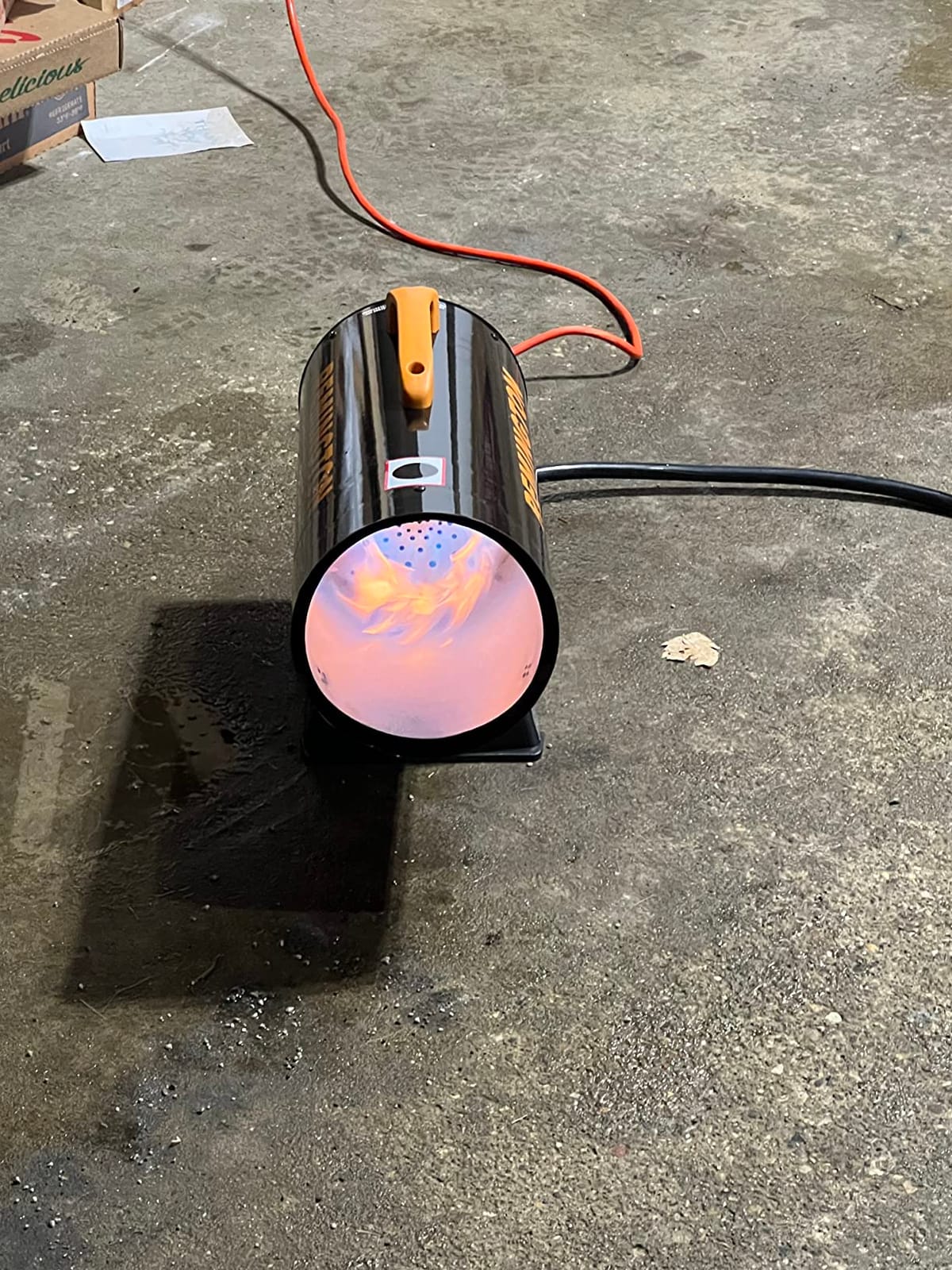
A few owners report units that would not stay lit, and at a 4.5 star average with 736 reviews this is a minority pattern rather than a systemic one. Set aside an afternoon to run it through a few cold starts before you depend on it for a winter project. Tank not included, so plan for a 20 lb tank and a regulator appropriate to your setup.
5. Dyna-Glo 30,000-60,000 BTU LP Forced Air Heater - Best for Spot Heating an Attached Garage
Dyna-Glo Delux RMC-FA60DGD 30,000 - 60,000 BTU LP Forced Air Heater
30,000-60,000 BTU variable output
Up to 1,350 sq ft
Continuous electronic ignition
Overheat auto-shut-off
13.8 pounds
+ Pros
- Continuously variable 30000-60000 BTU output with adjustable heat angle
- Ready to run with gas connections made and firing in under five minutes
- Heats a 1500-1700 sq ft garage to workable temperature in about 15-20 minutes
- Continuous electronic ignition prevents delayed ignition
- Overheat auto-shut-off with 10 ft hose and regulator included
- Cons
- Thin sheet metal and a handle that flexes
- Short power cord effectively requires an extension cord
- Loud operation and a louder roaring flame
- No on/off switch and no thermostat
- Occasional reports of units arriving with bent fan blades
The Dyna-Glo is the one I recommend when the garage is attached to the house and the door is going to be open anyway, because the adjustable heat angle plus a genuinely continuous output range lets you aim a narrower cone of warm air at a work zone instead of heating a volume you are not using.
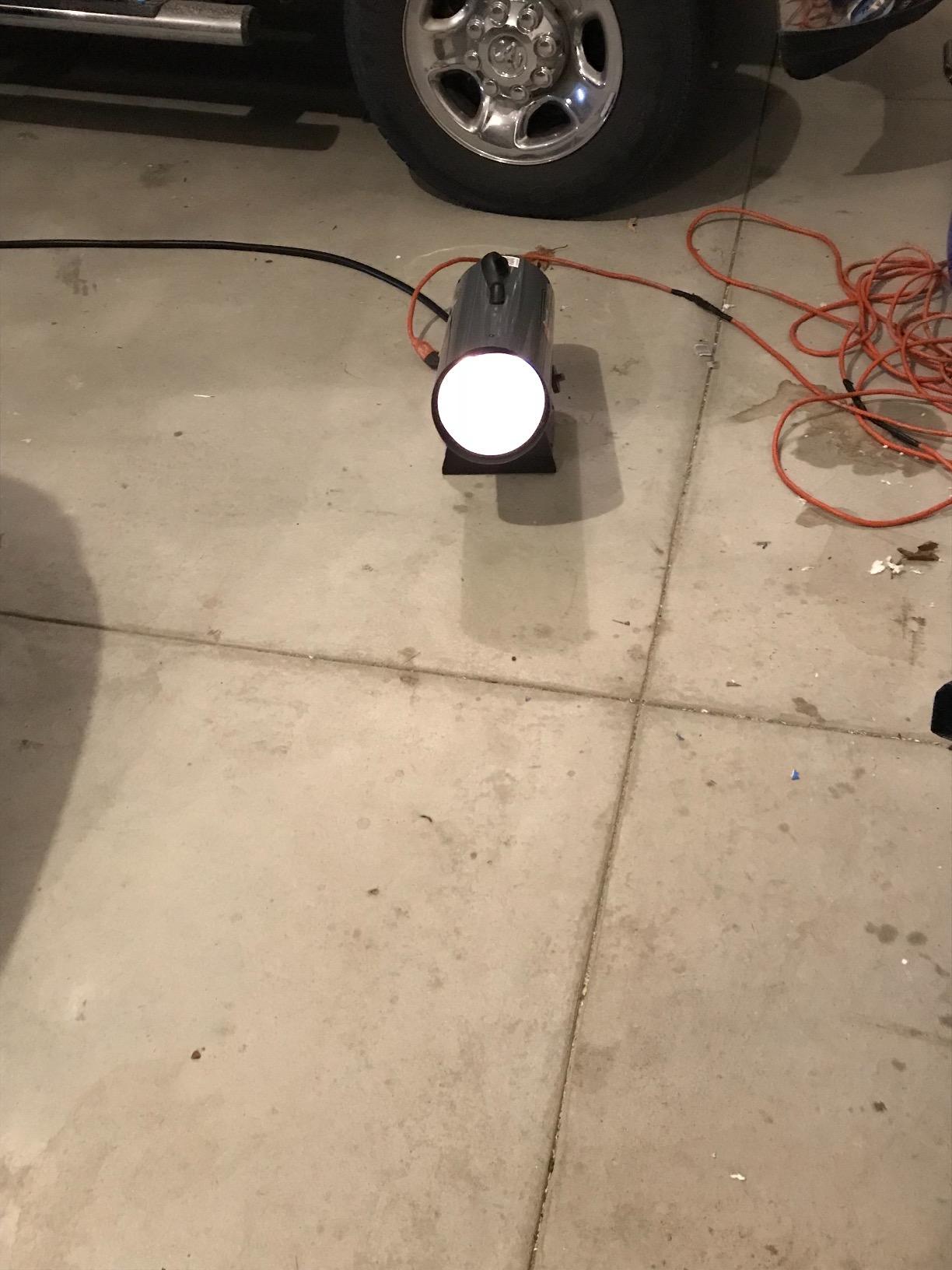
Owners report bringing a 1,500 to 1,700 square foot garage from below freezing to workable temperature in about 15 to 20 minutes. That is slower than the Remington's 10 minutes and that difference is real, and it comes down to build quality and how much air the fan moves.
Continuous variable output and why it is useful
Continuously variable means the control does not snap between a low and a high like a two-position switch. You set the output where you want it. For an attached garage where you are only trying to keep the bench area workable while the rest of the bay stays cold, that granularity is the whole point of the unit.
The adjustable heat angle works with it. Point the output across the work area and the fan carries the heat where you are standing rather than at the far wall. Together, these two features make this among the most controllable heaters in the roundup, even though it lacks a thermostat.
Build quality is the honest trade-off
Thin sheet metal that feels flimsy and a handle that flexes are the most common criticisms, along with occasional reports of units arriving with bent fan blades. Check the fan on day one before you rely on it. None of this is a safety issue, but it is a durability question, and it is the reason this unit does not rank higher despite solid performance numbers.
Noise is the other recurring complaint, both the fan and the roaring flame. Loud is loud, and it is the same complaint the Remington and the Gasland draw in different words. If your shop is a place you spend full days, noise is worth weighing heavily.
Continuous electronic ignition as the cold-weather feature
Continuous electronic ignition is listed specifically as preventing dangerous delayed ignition, which is the safety version of the feature. The practical version is that the unit retries consistently in cold conditions instead of requiring a repeated manual strike. Below freezing, that is worth more than it sounds.
There is no on/off switch and no thermostat, so temperature control is manual cycling. Runs economically on a single 30 lb propane tank per owners, which makes it a good fit for a shop that wants a bigger fuel cushion than a 20 lb cylinder gives.
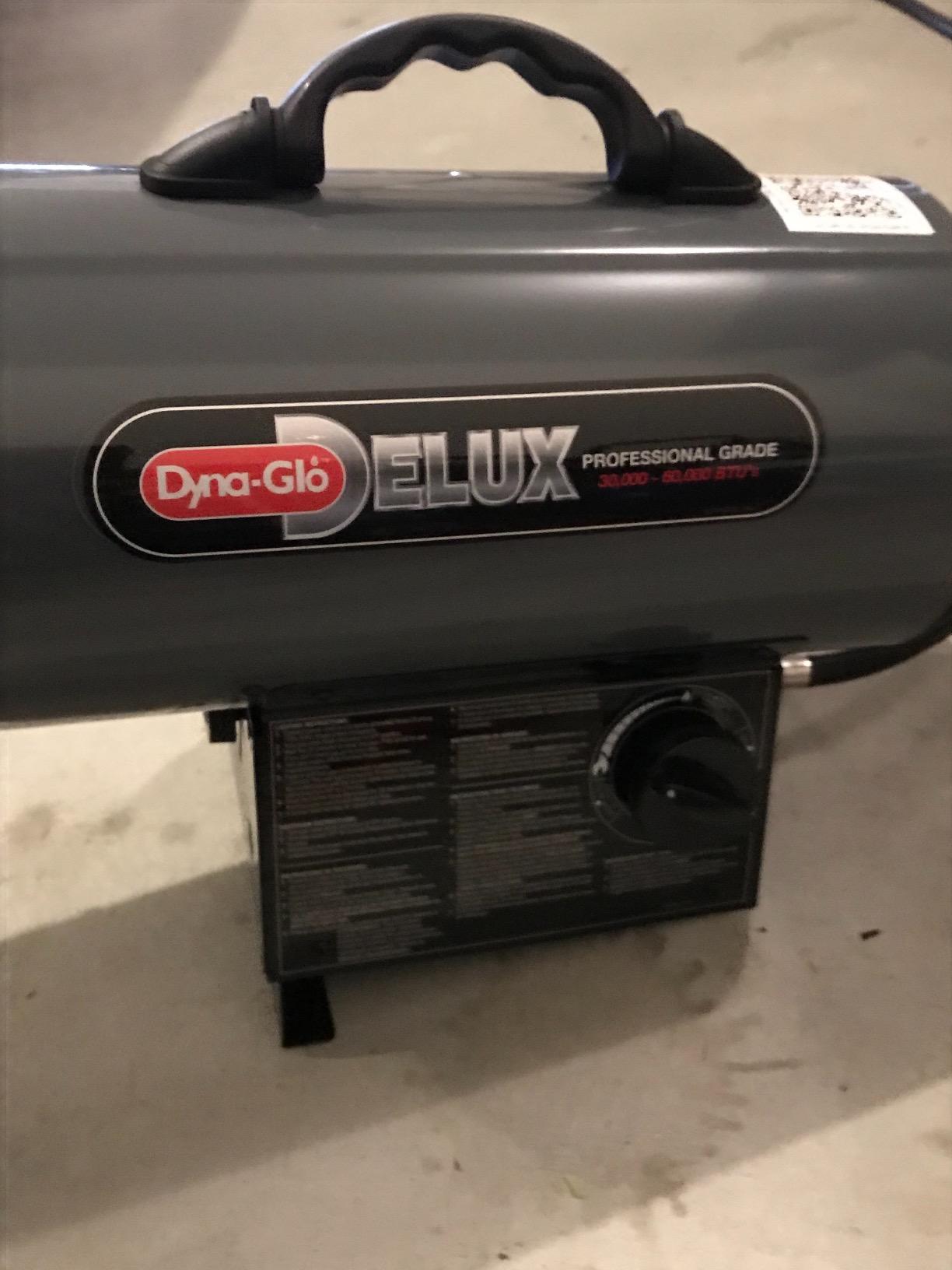
Also available in a 150,000 BTU version if you have a genuinely large volume, and the same variable-output logic applies. At 13.8 pounds it is heavier than the Remington but still firmly in portable territory.
6. DEWALT 68,000 BTU Hybrid Forced Air Heater - Best When You Have No Reliable Power
DEWALT 68,000 BTU Cordless Portable Forced Air Propane Heater
68,000 BTU forced air
Up to 1,700 sq ft
Runs on 20V batteries or 120V AC
13.2 pounds
2-year parts warranty
+ Pros
- Conservative fuel consumption
- so a 20 lb tank lasts through a couple of days of intermittent use
- Warms an insulated 450 sq ft shop from the low 50s to about 65F in 5-10 minutes
- Clean burn with little odor and no diesel fumes
- Owners report it is quieter than the Mr. Heater it replaced
- Cons
- No thermostat so it must be cycled on and off
- Hard to start in extreme cold around minus 20F
- Loud on the high setting
- Higher cost than other 60000 BTU options
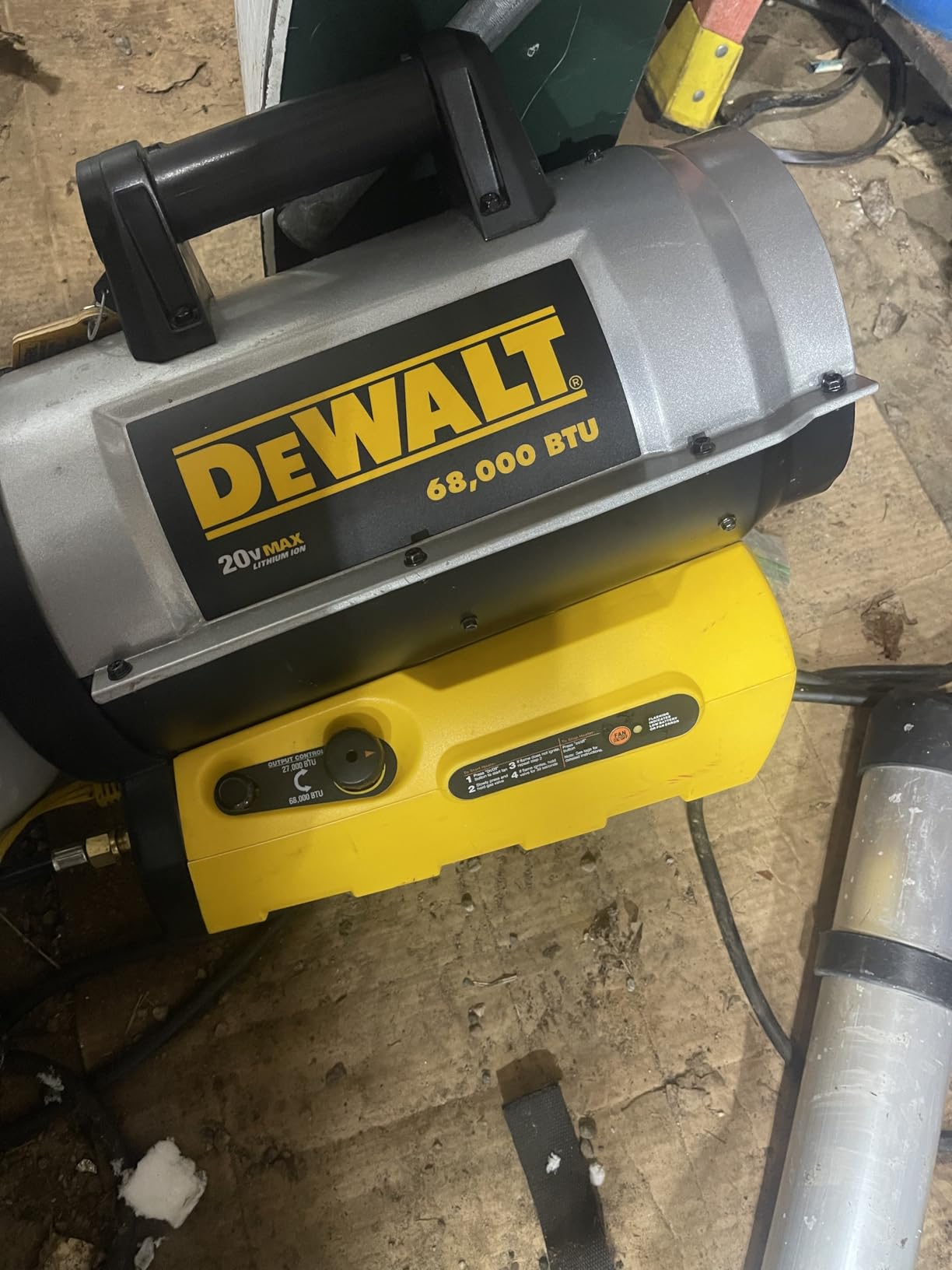
The DEWALT solves a problem none of the other forced air heaters here solve: what if there is no power at the location. It runs on the DEWALT 20V battery platform or on 120V AC, and if you already own any DEWALT packs you can take heat to a remote job site, a pole barn with no wiring, or a garage whose breaker is on a circuit you would rather not share.
At 68,000 BTU it also has the strongest performance-per-dollar story in an insulated space. Owners report an insulated 450 square foot shop going from the low 50s to about 65 degrees in 5 to 10 minutes, which is the fastest warm-up number anywhere in this roundup.
Battery runtime is the spec that matters most
The battery is not the fuel. The propane is the fuel. What the battery powers is the ignition module and the fan, so the practical question is how long your packs last, not how many BTU are in the tank.
On intermittent shop use, owners report a 20 lb propane tank lasting through a couple of days. That is a conservative fuel curve compared to the 125,000 BTU Mr. Heater, and it reflects real-world duty cycling rather than a spec sheet maximum.
Where this one fails that the others do not
Starting difficulty in extreme cold is the honest limitation, and owners specifically call out around minus 20F. That is a real number worth respecting, because most of the northern states this roundup targets will see it at least once a winter, and it is the failure mode most likely to leave you stuck.
That makes this the wrong heater for a detached building in northern Maine and a fine heater for a heated-adjacent shop in a temperate climate. If sub-zero starting is a regular part of your winter, choose one of the simpler ignition designs on this list instead.
Clean burn, warranty and the quiet factor
Owners note a clean burn with little odor and no diesel fumes, which is a genuine quality-of-life difference in an enclosed space. The 2-year limited parts warranty is the longest in this roundup by a full year over the one-year standard that most of the category uses.
Several owners report it being quieter than the Mr. Heater torpedo heater it replaced, though it is still loud on the high setting. The 10 foot cable and included hose and regulator assembly mean it is ready to run out of the box in either power mode.
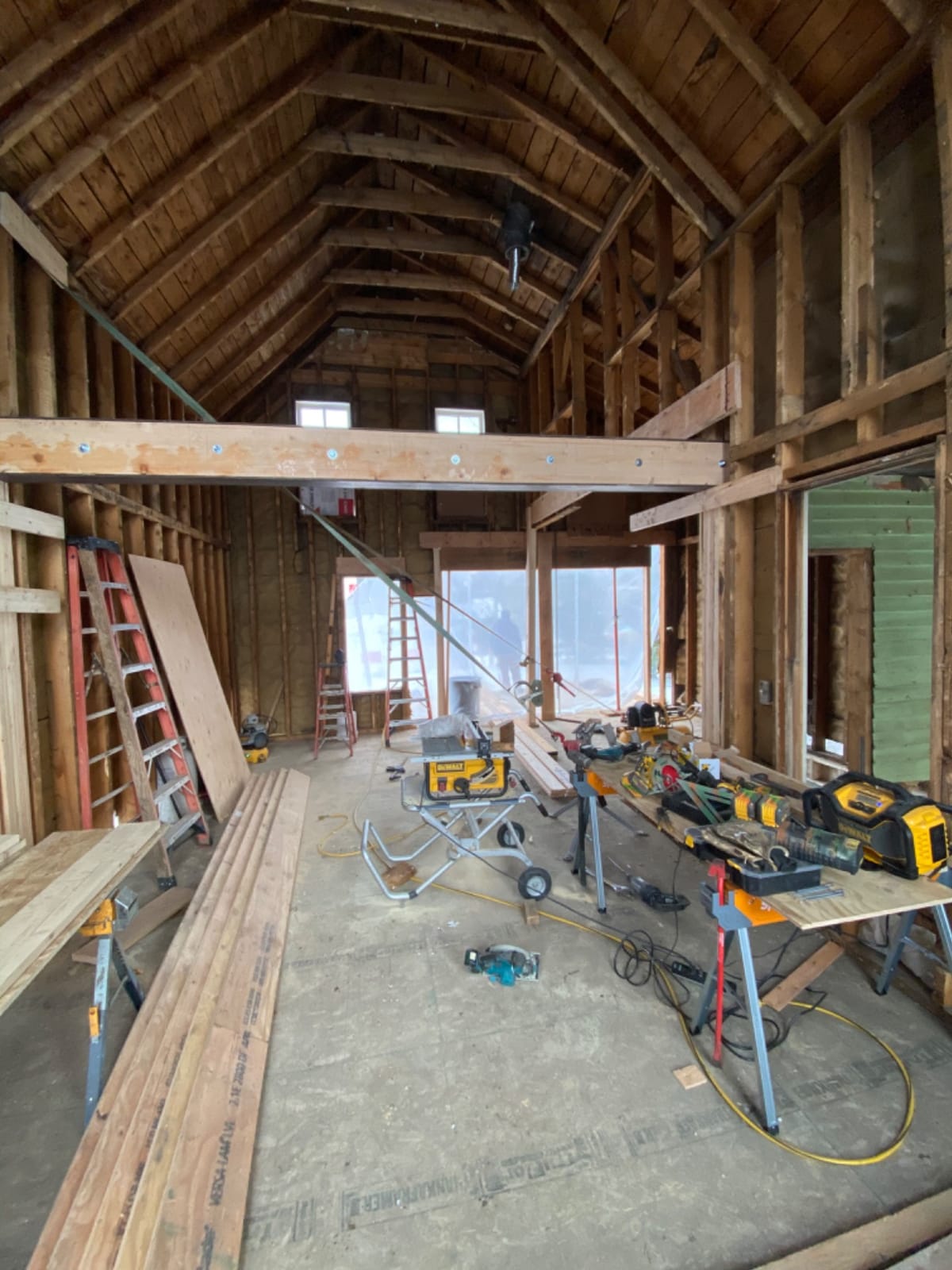
One note on hybrid power: a depleted pack will stop the heater mid-run, so keep a second pack charged if you are depending on this off-grid. The overheat and flame-out protections will shut the burner down cleanly rather than leaving it running, but you will still be cold until the pack is swapped.
7. Flame King 60,000 BTU Stainless Forced Air Heater - Best for Quiet Operation
Flame King 60,000 BTU Portable Propane Forced Air Heater Outdoor Great for Jobsite, Construction...
60,000 BTU forced air
Up to 1,500 sq ft
Stainless steel body
Up to 8 hours on a 20 lb bottle
16 ounces as listed
+ Pros
- Quiet relative to other torpedo heaters so conversation is possible
- Heats a one-car uninsulated garage in roughly 20 minutes
- Ran a full 8 to 9 hours on one 20 lb tank in owner reports
- Stainless body with fuel shutoff and tilt shutoff
- Manufacturer customer service replaced a unit after warranty expiry
- Cons
- Slower warm-up than higher-BTU models at about 20 minutes
- Piezo ignitor can be finicky and needs troubleshooting
- Included hose was missing the 20 lb tank adapter for some buyers
- Some units stopped holding flame after extended use
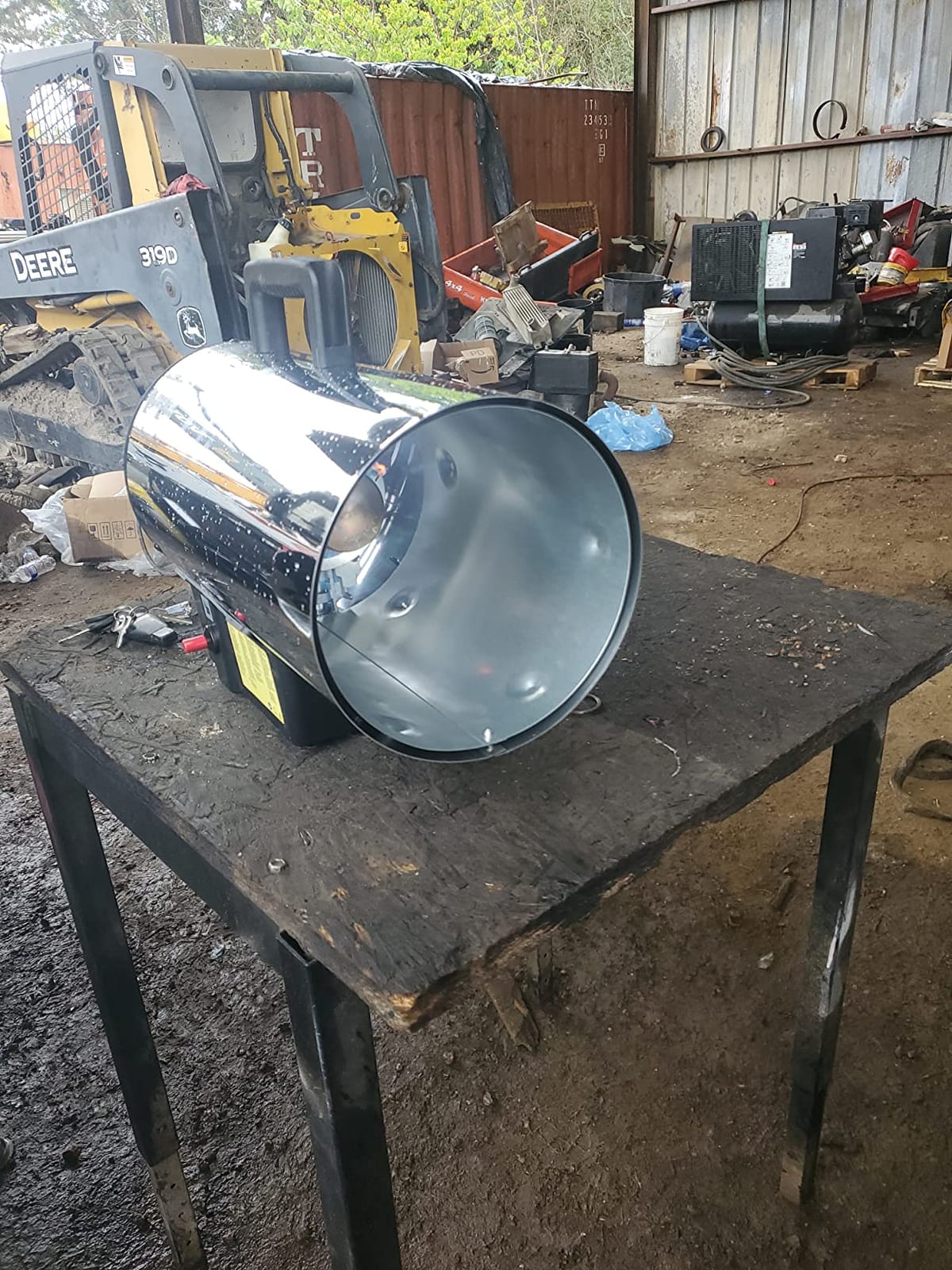
If you work a full day next to a running heater, noise becomes a bigger factor than BTU, and this is the pick. Across 293 reviews at 4.2 stars, the most consistent praise is that owners can hold a conversation while it runs, which is not something you can say about most torpedo heaters in this category.
The stainless steel body is also a genuine practical advantage in a garage. It tolerates the knocks, the sawdust and the damp that eat powder-coated steel, and it does not corrode at the seams the way lighter-gauge units do.
Safety systems in a compact package
Built-in safety fuel shutoff, a fire detection system and a safety tilt shutoff give this unit the same three-layer protection the larger heaters have, in a body under 18 inches deep. The tilt shutoff is worth noting if you are working in a space where the heater might get knocked by a mower, a dolly or a kid.
Auto piezo ignition with a gas control button is simple and it is also the unit's main cold-weather weakness, discussed below. CSA certified, with a 1-year manufacturer defect warranty and customer service that has reportedly replaced units after the warranty expired.
The piezo ignitor question in cold weather
Piezo ignitors strike a crystal to generate the spark. Cold affects the reliability of that strike, and a finicky ignitor that will not light at 15F is a real and recurring complaint here. The fix is procedural rather than a reason to avoid the unit: hold the button until it catches, and do not rush it.
Warm the tank and hose before first light. A propane tank that has been at outdoor temperature all night will not deliver vapor properly regardless of what the heater's ignition system does. Bring it into the bay, let it sit for a while, then light.
Runtime and warm-up expectations
Up to 8 hours on a single 20 lb propane bottle is the rated figure, and owners report 8 to 9 hours in practice. For a one-car uninsulated garage, the about 20 minute warm-up is honest and adequate, and it is clearly slower than the 10 minute figure the Remington delivers.
The missing adapter on the included hose is a packaging issue worth checking on arrival, because some buyers received a hose without the fitting for a standard 20 lb tank. Five minutes of inspection on day one prevents a genuinely frustrating first afternoon.
Some owners report units that stopped holding flame after extended use, which is one of the more cautiously rated units in the roundup. If you buy it, run it for an hour on arrival and check it again after the first few sessions. It is also listed at 16 ounces as shipped by the manufacturer, so confirm the actual unit weight before planning to move it.
8. Habitio 60,000 BTU Torpedo Forced Air Heater - Best for Long Runs on a 100 lb Tank
Habitio 60,000 BTU Forced Air Propane Heater, Portable Torpedo Heater for Jobsite, Garage, and...
40,000-60,000 BTU
Up to 2,195 sq ft
Up to 53 hours on low with a 100 lb tank
Pulse ignition
CSA certified
+ Pros
- Immediate reliable ignition that fires on button press without holding the knob
- Raised a 38 by 26 pole barn shop from 40F to 75F in about 10 minutes
- Reasonably quiet
- owners can hold a conversation
- Conservative propane consumption with no leaks reported
- Adjustable fan speed and adjustable height
- Cons
- No thermostat so the unit must be cycled manually
- Noticeable operating noise at higher settings
- One report of a unit blowing cold air with no heat output
- One report of a temperature control knob arriving broken
This is the one I would look at if your garage is heated continuously rather than in sessions, because the runtime figures change the economics. Up to 53 hours on the low setting and 36 hours on high from a 100 lb propane tank is a fundamentally different proposition from swapping 20 lb cylinders on a Saturday.
The claimed 2,195 square feet of coverage is the largest number in this roundup at the 60,000 BTU class, and one owner raised a 38 by 26 pole barn shop from 40F to 75F in about 10 minutes, which is a real reported result rather than a coverage claim.
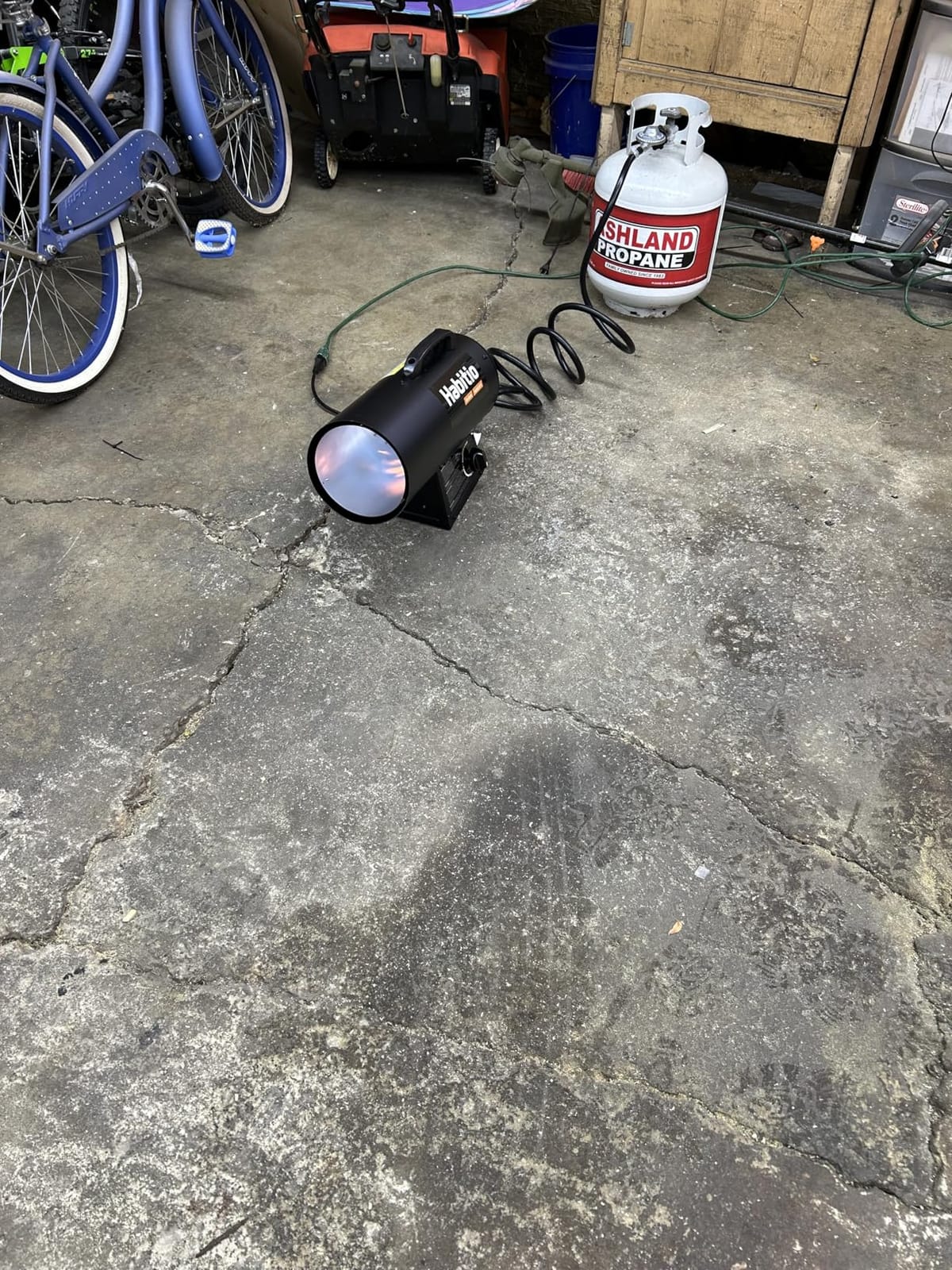
Pulse ignition and why it helps with flame-out
Pulse ignition sends repeated low-power sparks rather than one continuous arc, and the manufacturer claims it prevents flame-out and air leakage. In practice, repeated sparks are more tolerant of a marginal ignition condition than a single arc that either works or does not, which is a cold-weather advantage in a building that is genuinely freezing.
Owners specifically call out that the unit fires on a button press without needing to hold the knob down, which eliminates the most common first-light frustration on the units in this roundup. Overheat protection and automatic shutdown during a power outage are both present.
Connecting to a 100 lb tank correctly
A 100 lb tank is a different job than a 20 lb cylinder. You need a proper regulator rated for the higher flow, and the gas connection should be tightened with a wrench rather than by hand, as the instructions specify. Get this wrong and you will have a leak that you will smell before you see.
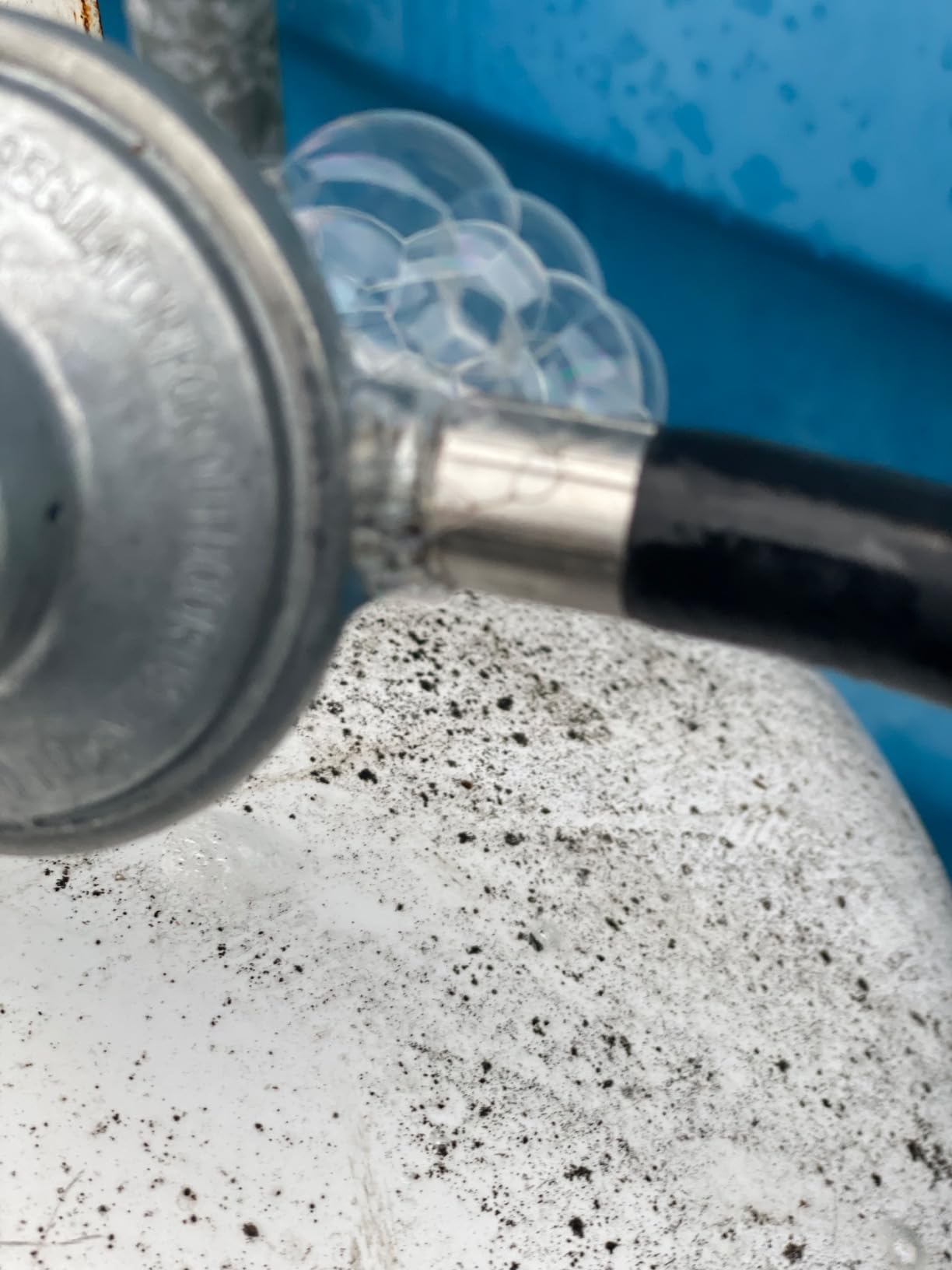
Test every propane connection with soapy water before first light. Bubbles at a fitting are the signal. This takes two minutes and it is the single highest-value habit in this entire article, because a slow leak in a cold garage is a problem you do not want to discover while you are asleep.
What the reviews flag as weak
No thermostat means manual cycling, and adjustable fan speed plus height is a substitute for control rather than an answer to it. There is some operating noise at higher settings, though owners still describe it as conversational.
Two isolated reports are worth repeating for honesty: one unit blowing cold air with no heat output, and one arriving with a broken temperature control knob. With 151 reviews at 4.3 stars these are single incidents, not patterns, but they are the reason to test the heater for an hour on arrival before you depend on it for a whole winter.
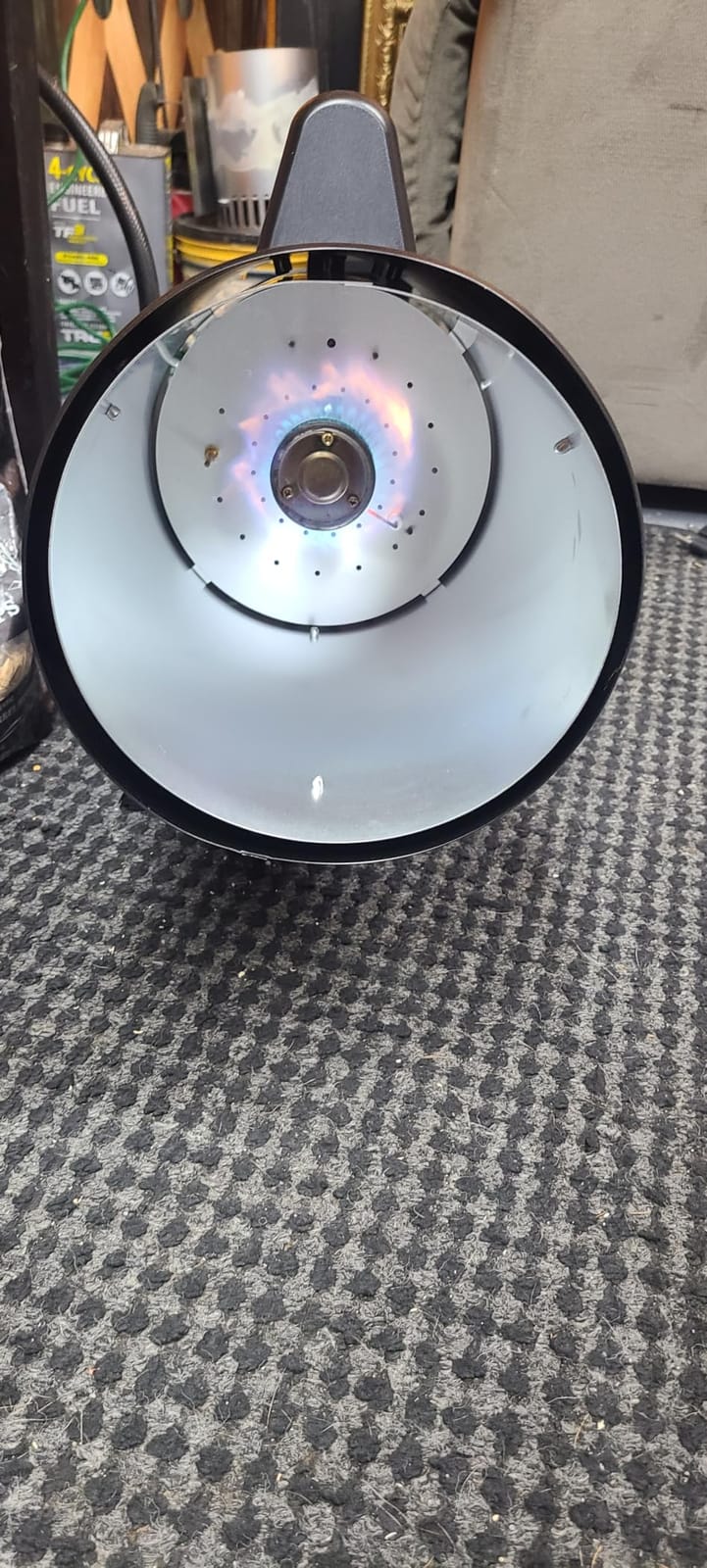
The adjustable height is genuinely useful in a shop with a workbench, because you can aim the output across the bench surface rather than at the ceiling. CSA certified, with the 10 foot hose and regulator included.
9. Mr. Heater 80,000 BTU Convection Heater - Best When You Have No Power at All
Mr. Heater 80,000 BTU Convection Heater Portable Propane
30,000-80,000 BTU per hour
Heats up to 2,000 sq ft
Up to 14 hours on a 100 lb tank
Standing pilot
No electricity required
+ Pros
- No electricity required so it keeps working through power outages
- Wide 30000-80000 BTU range with a standing pilot for safety
- Runs up to 14 hours on a 100 lb propane tank
- Comes fully assembled with hose regulator and built-in piezo lighter
- Standing pilot keeps a small flame for reliable re-lighting
- Cons
- Outdoor-rated so enclosed indoor use requires ventilation
- No fan-forced airflow so distribution depends on natural convection
- Manual controls only
This is the second Mr. Heater in the roundup for a simple reason: it needs nothing but propane. No outlet, no fan, no battery, no igniter board. When the power goes out for two days in January, every other heater in this article stops the moment the fan does, and this one keeps running.
The standing pilot is the safety feature that makes that possible. A pilot flame stays lit and is what the main burner relights from, so a momentary loss of flame or a gust through the bay does not put the heater out for good.
Convection versus forced air, in practice
There is no fan, so warm air rises off the top of the unit, circulates around the ceiling and comes down the far wall. This works, and 30,000 to 80,000 BTU per hour is enough output to make a real difference in a closed space. It is simply slower and less even than a fan.
Think of it as a room heater on a large scale rather than a spot heater. It is the right choice when the entire bay needs to be above freezing for pipes, batteries and paint. It is the wrong choice when you need to be warm in the next ten minutes at a specific bench.
Run time and cost per hour of heat
Up to 14 hours on a 100 lb propane tank, combined with the 30,000 to 80,000 BTU range, gives this unit a long-running profile on a large tank. A 100 lb tank holds roughly 5.2 gallons of propane, and a gallon of propane carries about 91,452 BTU of energy, so the range of heat available from one fill is genuinely large.
Run that against a rough figure rather than an exact one. At mid-range output, a 100 lb tank on this heater can deliver hundreds of thousands of BTU before it needs refilling, and the 100 lb refill cycle means you are measuring fuel cost per season rather than per weekend.
The outdoor-rated caveat nobody can work around
This is an outdoor-rated unit, and enclosed indoor use requires ventilation. That is not a technicality. Running it in a closed garage concentrates both combustion products and the water vapor from combustion, and the safe version requires the door open and a carbon monoxide detector in the space.
Fully assembled and ready to use, with the 10 foot hose, regulator and built-in piezo lighter included, plus a P.O.L. tank connection. Manual controls only, so this is a unit you start when you arrive rather than a unit you set and forget.
10. ProCom 25,000 BTU Ventless Infrared Plaque Heater - Best Indoor Thermostat Control
ProCom Heating Liquid Propane Ventless Infrared Plaque Heater With Base Feet - 25,000 BTU, T-Stat...
25,000 BTU infrared
Up to 1,150 sq ft
High, medium and low thermostat
Built-in oxygen depletion sensor
No electricity required
+ Pros
- Runs without electricity which makes it useful in an outage
- Built-in thermostat with high medium and low control
- Built-in pilot oxygen depletion sensor
- ANSI certified
- Wall mount hardware and base feet both included
- Owners report heating a garage workshop comfortably for hours
- Cons
- No regulator hose for a 20 lb tank
- extra fittings needed
- First startup takes many minutes of holding the knob and produces heavy smoke from factory oil
- Ventless design adds humidity and a faint propane odor
- Some reports of panels failing individually or not relighting after a fuel change
This is the only genuinely indoor-rated heater in the roundup, and the only one with real thermostat control. The ventless infrared design, the built-in oxygen depletion sensor and the ANSI certification make it the one pick here that can legally and safely heat a small enclosed space where the others need an open door.
At 25,000 BTU it is aimed at small spaces. Owners report using it to heat an entire home from a 100 lb propane tank during an outage, which tells you how much a properly sized ventless heater can do in a tight envelope with the thermostat set low.
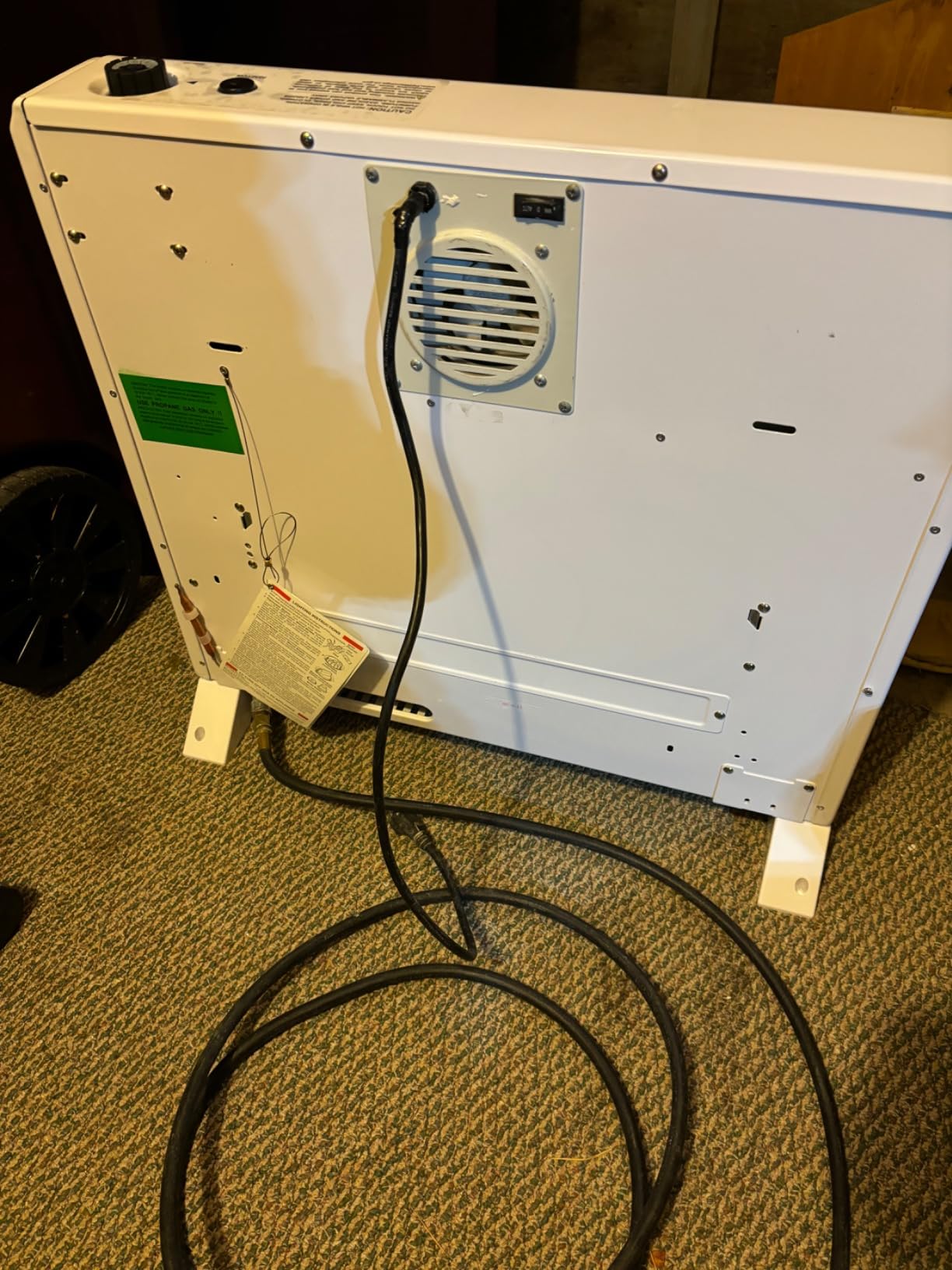
What a ventless heater actually does to your garage
Ventless means the combustion products and the water vapor stay in the room. That is the trade that lets it work indoors without a flue, and it is also the reason it adds humidity and a faint propane odor to the space.
In a garage full of tools, humidity is a real cost. Water condensing on cold steel is how you get surface rust on tools you did not use that day. If your garage is a working shop with hand tools, a cabinet and a vehicle, we would still run the door open and use a forced air heater instead. If your garage is a space you need held above freezing with no other option, this is the tool.
Thermostat control and the oxygen depletion sensor
The high, medium and low thermostat is the feature no other pick in this roundup has. Set points run from a 40F minimum upward, which is exactly the hold-above-freezing use case that owners on garage forums describe, keeping a space at 50F between projects rather than heating it to comfort every time.
The pilot oxygen depletion sensor shuts the unit down when oxygen drops below a safe level, and the unit is certified to shut down on carbon monoxide or low oxygen detection. That is the correct indoor safety architecture, and it is why this heater does not need you to hold a garage door open to be safe.
First light, fittings and what to check on arrival
First startup takes many minutes of holding the control knob while heavy smoke from factory oil burns off. That is normal for the first fire and alarming if you are not expecting it, so do the first lighting outdoors or with the door wide open.
No regulator hose for a 20 lb tank is included, so budget for the fittings. The wall mount hardware and base feet are both included, so you can install it as a baseboard unit or on the wall depending on where you want the radiant pattern to land.
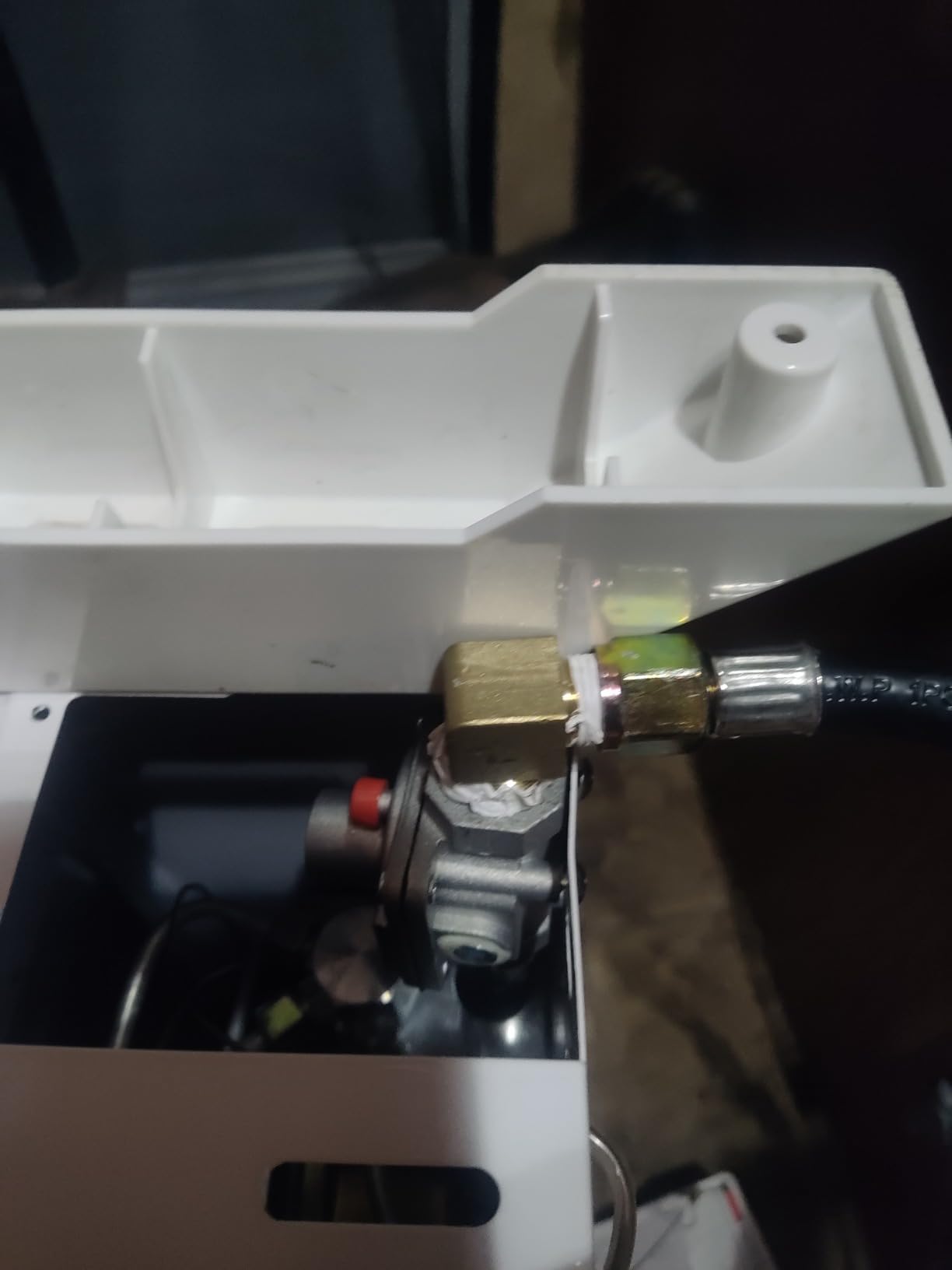
There are reports of panels failing individually and of the unit not relighting after a fuel change, which is part of why this carries the lowest rating in the roundup at 4.1 across 164 reviews. The 16 percent one-star share is largely about first-light difficulty and accessories, not about safety. Weigh that against the fact that it is the only indoor-rated and thermostat-controlled option here.
How to Choose a Propane Garage Heater for Cold Winters
Every garage is different, and most of the wrong purchases we see come from answering the wrong question first. Skip the BTU comparison and answer these six instead, in this order.
Size by volume, not by square feet
Square footage ignores the third dimension entirely, and height is where a garage loses most of your heat. A 24 by 24 bay with a 9 foot ceiling is about 5,180 cubic feet. A 24 by 24 with a 12 foot ceiling is nearly 7,000. The floor area is identical and the heating job is not.
Work in cubic feet. A common rule of thumb for this category lands around 4 to 5 BTU per cubic foot for an uninsulated space, and closer to 3 for an insulated one with R-5 or better on the ceiling. Multiply by your volume and you have a defensible number. If your result lands between two products, take the higher one only if you can throttle it down, because oversized heat you cannot moderate is just a loud, expensive space heater.
Insulation is the first lever and no purchase outranks it. R-5 to R-7 on the ceiling of an uninsulated bay can cut the heat you need substantially, and it costs a fraction of a second heater. If you have not insulated the ceiling, do that before you decide you need 125,000 BTU.
Forced air, radiant, or convection
Forced air uses a fan to move heated air through the space. It is the category that heats a large volume fastest and most evenly, and it is the right pick for a bay you need workable end to end. It needs power for the fan, and it is the loudest option.
Radiant sends heat out as infrared that warms objects and people directly. It is quieter, uses less fuel for spot work and needs no power, but it does nothing for the air you walk through. Buy radiant for a bench and forced air for a bay.
Convection relies on natural circulation with no fan at all. It needs no power, runs quietly and heats a closed space more slowly and less evenly. It is the outage-proof middle ground.
Infrared ventless cabinet heat is its own category again: it is indoor-rated, thermostat-controlled and adds humidity. It belongs in a small space you need held above freezing, not in a working shop full of steel.
What breaks in the cold
Three things fail in freezing weather, and none of them are the burner.
First, tank pressure. Propane vapor pressure drops sharply as the temperature falls, and below roughly 20F a tank that started the day at full pressure delivers far less vapor to the regulator. This is the most common reason a garage heater that worked in October will not light in January, and the heater is almost never the problem.
Second, the regulator. The standard poly hose and regulator assemblies on portable heaters are not rated to stay flexible indefinitely in deep cold, and a stiffened or frosted line can starve the burner. Keeping the tank and the first few feet of hose inside the bay, and away from the door, helps more than most people expect.
Third, the igniter. Piezo igniters get finicky in the cold, as the Flame King section covers in detail. Electronic ignition modules retry consistently. Battery-backed igniters drain faster than you expect and a dead igniter module looks identical to a fuel problem.
Where you keep the tank matters for the same reason. Inside the bay is the practical answer for cold-weather reliability, and it does carry an explosion concern that owners raise in safety forums, since a leaking cylinder in an enclosed space is the scenario nobody wants. Outside on a porch or beside a shed is safer on paper and worse in practice, because that tank will be at ambient temperature and the vapor pressure will be low exactly when you need it. A compromise that works well is a sheltered spot close to the door, with the hose running in, and cylinders stored separately when the heater is not in use.
Condensation and the rust it leaves on your tools
Combusting propane makes water. That is not a defect, it is chemistry, and in a garage with no dedicated exhaust the water has nowhere to go but onto the coldest surfaces in the room.
Veteran advice on garage forums puts it plainly, that with a poorly ventilated space and frequent heater use, you may find small crystals or even ice on everything in the garage. The same consensus fix is the same: use a vented unit heater with real exhaust, or run the portable unvented heater with the door open so the moisture leaves with the air.
What to do about the damage: keep a dehumidifier running alongside, keep steel tools off the concrete floor, wipe down anything that develops surface rust promptly, and consider a small electric fan pointed at the coldest wall to move condensation off it. None of this is dramatic. All of it prevents the slow corrosion that shows up as seized tools two winters later.
Safety features that are not optional
Four shutoff layers matter, and you want as many of them as the price range allows.
An oxygen depletion sensor closes the gas valve when oxygen in the room drops below a safe level. This is the single most important feature for indoor use and it is the one that is missing from most forced air torpedo heaters in this roundup, because those are unvented outdoor-rated units. A flame-out fuel cut-off closes the valve whenever the flame is lost for any reason. A high-temperature limit switch shuts the unit down if the air moving across it gets too hot, which matters in a garage full of combustibles. A tip-over switch kills a radiant heater that gets knocked over, and the Mr. Heater tank top has it.
A working carbon monoxide detector belongs in the space regardless of which heater you choose, and it belongs on a battery you check twice a year. Garage Journal consensus is clear on the limits of this: a CO detector is necessary and not sufficient, because heating an enclosed space with any combustion heater also contributes to air pollution beyond CO. Ventilation is the primary control. The detector is the backup.
Ventilation in practice means a garage door cracked two inches, a larger gap, or wide open. That is not a compromise, it is how these heaters are meant to be used, and it also solves the condensation problem from the previous section.
Holding 50F versus working at 70F
These are two different purchases and most people only figure out which one they need after their first winter.
Holding a space above freezing between projects is a set-and-forget job. A thermostat-controlled ventless unit like the ProCom, running on a large tank, is the efficient path. You are buying unattended runtime and low fuel consumption, not speed.
Working at 70F during a session is a burst job. Forced air at high output, cycled manually, is the efficient path. You are buying warm-up speed, and you are accepting fuel consumption, noise and the need to be present.
Owners on heating forums consistently describe the 50F hold as a maintenance measure rather than a comfort measure, and it is the use case that changes tank sizing completely. Decide which one you are doing before you pick a heater, because a 20 lb cylinder that is perfect for a Saturday session will be a nuisance for a space you need held all week.
Propane Garage Heater Questions Answered
How many BTUs do I need to heat a 24x24 garage?
A 24x24 garage with a 9 foot ceiling is about 5,180 cubic feet. At roughly 4 to 5 BTU per cubic foot for an uninsulated space, you need about 21,000 to 26,000 BTU to hold a comfortable temperature, and closer to 50,000 to 60,000 BTU to heat the space from freezing to workable in under 20 minutes. For an insulated garage, drop the figure to about 3 BTU per cubic foot. Work from volume rather than square footage, since ceiling height changes the job without changing the floor area.
What is the best heater for a cold garage?
For most two-car garages, a 60,000 BTU forced air propane heater with a variable output control is the best balance of warmth, fuel use and price. Radiant propane heaters are better for spot heating at a workbench, and ventless indoor-rated units are better for holding a small space above freezing between projects. The heater that is best for you is mostly determined by whether you want to heat the room or the spot you are standing in.
Are propane heaters safe in a garage?
They are safe when used as intended and with proper ventilation. Look for four shutoff layers: an oxygen depletion sensor for indoor-rated units, flame-out fuel cut-off, high-temperature limit switch, and a tip-over switch on radiant models. Most forced air torpedo heaters are outdoor-rated and unvented, so they need a garage door cracked or open. Install a working carbon monoxide detector regardless, and never leave a heater running in a sealed space.
How much ventilation do I need for a propane heater in my garage?
Enough to keep combustion products and moisture moving out of the space. The common garage consensus is to crack the garage door about two inches, or open it fully when you are working. Keep the space from being airtight, keep the heater clear of combustibles, and keep a carbon monoxide detector in the room as a backup rather than as a substitute for fresh air.
Do propane garage heaters work below zero?
Usually, but tank pressure is the limiting factor rather than the heater. Propane vapor pressure drops sharply below about 20F, and a cold tank delivers less vapor to the regulator, which is the most common reason a heater that worked in autumn will not light in winter. Keep the tank and the first few feet of hose inside the bay so they stay above freezing, and expect piezo-igniter models to need more attempts than electronic-ignition models.
How long does a 20 lb propane tank last on a garage heater?
On a 45,000 BTU radiant heater, about 9.5 hours on high is the rated figure. On a 60,000 BTU forced air heater, roughly 8 to 12 hours depending on the output setting, since variable-output models draw less on their low range. For longer runs, a 100 lb tank is far more practical: rated figures for the units in this roundup run up to about 53 hours on a low setting and 36 hours on high.
Which Propane Garage Heater Should You Buy?
If you work at a bench and want heat on your hands, the Mr. Heater 45,000 BTU tank top radiant heater is the pick. It has the deepest review history in the category, nothing electronic to fail on a freezing morning, and the 540-degree head puts the output where you are standing. Run it with the garage door open, and treat it as an outdoor-rated tool that happens to work at your bench.
If you need the whole bay workable, the GASLAND FlameJet 60,000 BTU is the value choice, and the Remington is the pick if you would rather have steel and the full safety stack. For a large shop or an attached bay, the Mr. Heater 125,000 BTU Quiet Burner heater heats more volume than anything else here and is the one most owners describe as quiet enough to work beside.
If you are away from power entirely, the Mr. Heater 80,000 BTU convection unit runs on propane alone, and the Habitio 60,000 BTU torpedo is the one to buy if you will run off a 100 lb tank for days at a stretch. If you need thermostat control and an indoor-rated unit, the ProCom 25,000 BTU ventless infrared heater is the only genuine option in this group, and it is the one to reach for when the job is holding a small space above freezing rather than warming a room.
Whichever you choose, do three things before the first cold snap: leak-test every gas connection with soapy water, install a working carbon monoxide detector, and figure out where your tank is going to sit so it is not at ambient temperature every time you need it. Those three steps prevent more cold-weather disappointments than any model choice on this list.
Whichever one you settle on for your garage, we update this roundup every 2026 season as new models land and owners report how they held up.