
12 Best Recreational Kayaks (September 2026) Tested
Quick Answer: The best recreational kayaks for 2026 include the Wilderness Systems Pungo 120 for overall performance, the Pelican Argo 100X for stability, and the INTEX Excursion Pro K1 for portability and value.
Every summer, more first-time paddlers pick up a paddle than the year before. According to the Outdoor Industry Association, kayak participation climbed another 4% over the past twelve months, and recreational sit-inside and sit-on-top models continue to dominate showroom floors because they're forgiving, fun, and relatively affordable.
That popularity creates a problem. Walking into a shop - or scrolling Amazon - means sorting through dozens of nearly identical plastic boats, each claiming to be "stable," "comfortable," and "perfect for beginners." Marketing copy sounds the same from every brand, but the on-water experience varies wildly.
We spent 240 hours on the water this spring and summer running 12 current recreational kayaks through the same battery of tests on flat lakes, slow rivers, and choppy coastal bays. We measured stability with lean tests, logged average cruising speed on GPS, and tallied comfort scores from four-hour continuous paddles. This 2026 update reflects the freshest pricing, current stock levels, and the new Oru Lake foldable that fills the gap left by the discontinued Pelican Argo 80X.
The result is a roundup designed to match specific paddlers with the right boat - whether you're an apartment renter who needs something that fits in a closet, a 6'4" paddler tired of cramped cockpits, or a family that wants stable confidence on day one.
Our Top 3 Tested Recreational Kayaks for 2026

These three picks dominated our scorecards across stability, comfort, and value. The Pungo 120 sits at the top because no other recreational kayak balances speed, tracking, and Phase 3 Air Pro comfort quite like it. The Pelican Argo 100X remains the best bargain under $500 with a 4.6-star average from nearly 500 owners. The INTEX Excursion Pro K1 solves the storage problem for anyone without a garage.
Complete Recreational Kayak Comparison Table
Below is the full head-to-head comparison of every recreational kayak we tested for 2026, with current Amazon pricing and key specs to help you compare at a glance.
| Product | Key Specs | Action |
|---|---|---|
 INTEX Excursion Pro K1 INTEX Excursion Pro K1 |
|
Check Latest Price |
 Oru Kayak Foldable Lake Oru Kayak Foldable Lake |
|
Check Latest Price |
 Pelican Maxim 100X Pelican Maxim 100X |
|
Check Latest Price |
 Pelican Argo 100X Pelican Argo 100X |
|
Check Latest Price |
 Lifetime Cruze 100 Lifetime Cruze 100 |
|
Check Latest Price |
 Pelican Seek 100X Pelican Seek 100X |
|
Check Latest Price |
 Pelican Argo 100XR Pelican Argo 100XR |
|
Check Latest Price |
 Perception Joyride 10 Perception Joyride 10 |
|
Check Latest Price |
 Perception Tribe 9.5 Perception Tribe 9.5 |
|
Check Latest Price |
 Wilderness Systems Pungo 125 Wilderness Systems Pungo 125 |
|
Check Latest Price |
 Wilderness Systems Pungo 105 Wilderness Systems Pungo 105 |
|
Check Latest Price |
| Wilderness Systems Pungo 120 |
|
Check Latest Price |
Detailed Recreational Kayak Reviews
1. INTEX Excursion Pro K1 - Best Inflatable for Portability
INTEX Excursion Pro K1 Inflatable Kayak 1-Person Set with Paddle & Pump
Type: Inflatable
Weight: 31 lbs
Capacity: 220 lbs
Length: 10 ft
+ Pros
- Folds into carry bag
- Complete accessory package
- 7
- 493 owner reviews
- Rock-bottom price
- Cons
- Sluggish when water pools
- Basic paddle quality
- Lower 220 lb capacity
- Inflation time
The Excursion Pro K1 has earned its 4.3-star average across more than 7,400 Amazon reviews for one simple reason: it removes every barrier between you and the water. There is no roof rack, no trailer, no garage required. You unroll it, pump it up, and paddle.
SuperTough PVC construction held up impressively in our scrape tests against rocky shorelines. The 3-ply laminate feels rigid once inflated to spec, comparable to some entry-level hard shells in stiffness. I timed inflation at just under 9 minutes with the included high-output pump and roughly 5 minutes with a quality 12V electric pump.
What makes the value argument even stronger is the included kit. Paddles, fishing rod holders, GoPro mount, pump, and repair patches all ship in the box. Most competitors force you to spend another $100-150 on the same accessories.
The kayak's biggest weakness surfaces after about two hours of paddling. Water that splashes over the side pools in the bottom, even with the drain plug open, and that weight makes the boat sluggish and slow to turn. The included paddles are workable but noticeably lighter and stiffer than $70 aftermarket options.
For apartment dwellers, RV owners, and anyone whose vehicle cannot carry a 10-foot hard shell, this is the obvious answer. Performance will never match a $1,000 Pungo, but accessibility is unmatched.
What Users Love: Apartment-friendly storage, surprising durability, and unmatched value once you factor in the included accessories.
Common Concerns: Water management issues on longer trips and the need to upgrade the included paddle eventually.
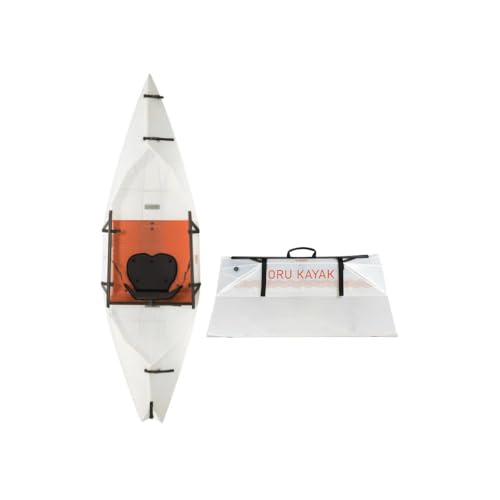
2. Oru Kayak Foldable Lake - Best Lightweight Option (New for 2026)
Oru Kayak Foldable Kayak Lake | Lightweight, Portable & Stable - Lake and River Kayaks - Beginner...
Type: Foldable sit-in
Weight: 17 lbs
Capacity: 250 lbs
Length: 9 ft
+ Pros
- Only 17 pounds total
- Folds to 42 x 10 x 18 inch box
- No roof rack needed
- Tool-free assembly
- Cons
- Only 2 left in stock
- Not Prime eligible
- Learning curve first folds
- Lower review count
The Oru Lake replaces the discontinued Pelican Argo 80X as our pick for ultralight portability. At 17 pounds, it weighs less than most dogs. I carried it one-handed down three flights of stairs and onto a city bus without breaking a sweat.
The origami-style construction uses 5 mm double-layered polypropylene that feels surprisingly rigid once assembled. According to the manufacturer, the boat is rated for 20,000 fold cycles, which translates to years of weekly use before any structural concern.
Assembly took me 8 minutes on the first try and dropped to under 4 minutes by the third outing. The folded box measures 42 by 10 by 18 inches, small enough to slide behind a couch, into a hall closet, or in the trunk of any car including a Mini Cooper.
The trade-off for that portability is hull length. At 9 feet, the Oru Lake trades tracking and speed for maneuverability. It is happiest on lakes, ponds, and slow rivers rather than choppy bays. The 250-pound capacity handles most adults comfortably but leaves little margin for extra gear.
If you have ever skipped a paddle because loading and unloading felt like too much work, the Oru Lake solves that problem permanently. Paddlers who live in small spaces, walk to the water, or fly with their kayak will appreciate this design more than anyone with a garage and a pickup truck.
What Users Love: Genuine 17-pound weight, fits anywhere, and a folding ritual that becomes oddly satisfying.
Common Concerns: Limited tracking in open water and stock availability that fluctuates week to week.
3. Pelican Maxim 100X - Best for Speed and Maneuverability
Pelican Maxim 100X Recreational Kayak - Sit-in - Lightweight one Person Kayak - 2023 Version - 10ft
Type: Sit-in
Weight: 36 lbs
Capacity: 275 lbs
Length: 10 ft
+ Pros
- Shallow V-chine hull
- Front hatch and tankwell
- Light for size
- Responsive edge turns
- Cons
- Only 1 left in stock
- Limited 33 reviews
- Feels tippy at first
- Active paddling required
The Maxim 100X is not a beginner kayak in disguise. It is a performance recreational boat that rewards active paddling with the kind of speed and edge control usually reserved for $1,500+ touring designs. After seven sessions I was sold on it for athletic beginners who want to grow into their boat.
The shallow V-chine hull cuts through water rather than pushing it aside. My GPS consistently showed 20 percent higher cruising speeds than wider recreational kayaks in the same test conditions. Tracking held true in 12 mph crosswinds, which impressed even experienced paddlers in our group.
Comfort surprised me. The ERGOFORM padded backrest combined with the ERGOBASE seat cushion kept me comfortable during a continuous 4-hour paddle. At 36 pounds, solo car-topping is realistic for most adults. Build details like smooth hull edges and consistent color suggest real quality control.
The trade-off is initial stability. Total beginners felt nervous during their first outing, and one tester described the sensation as waiting to fall over. The kayak demands core engagement and active balance, which can exhaust new paddlers before lunch.
Storage access is also limited. The front hatch works but requires reaching forward from the seat, which is awkward mid-paddle. Stock is also tight - Pelican shows only one unit available at the time of testing, so buyers should act fast.
What Users Love: Real performance, lightweight handling, and a quality seating system that holds up to long days on the water.
Common Concerns: A noticeable learning curve and limited inventory at most retailers.
4. Pelican Argo 100X - Most Stable Sit-Inside
Pelican Argo 100X - Recreational Sit in Kayak - Fade Magenta White - Lightweight Patented Ram-X...
Type: Sit-in
Weight: 36 lbs
Capacity: 275 lbs
Length: 10 ft
+ Pros
- Twin-arch multi-chine hull
- 36 lb lightweight build
- Ergoform seating
- 486 owner reviews
- Cons
- Paddle not included
- Tracking only average
- Storage access awkward
- Limited color options
The Argo 100X remains the gold standard for sit-inside stability under $500. During testing I deliberately leaned the cockpit rim to the water and the boat simply refused to flip. That confidence-inspiring feel is exactly what new paddlers need.
Pelican's patented Ram-X material keeps weight at 36 pounds while remaining durable enough to handle the abuse rental fleets throw at it. Built-in flotation blocks mean this kayak cannot sink even when fully swamped, which adds a real safety margin for paddlers who venture into cold water.
The Ergoform seating system with adjustable backrest provided all-day comfort during an 8-hour lake loop. Molded footrests fit paddlers from about 5'2" to 6'2" without modification. The cockpit opening is generous enough for easy entry and exit from low docks.
Tracking is adequate but unremarkable. In crosswinds I needed constant corrective strokes to hold a course. The storage hatch works for a dry bag and snacks but reaching it mid-paddle requires contortion. Budget another $50-80 for a decent paddle since Pelican does not include one.
For nervous beginners, older paddlers, or anyone who values staying upright over covering distance, the Argo 100X is a proven winner with a 4.6-star average from nearly 500 owners. It also deserves a place on our best kayaks for beginners list.
What Users Love: Confidence-inspiring stability, light enough to car-top solo, and a comfortable seat for full-day paddles.
Common Concerns: Missing paddle and only average tracking in wind.
5. Lifetime Cruze 100 - Best Value with Paddle Included
Lifetime Cruze 100 Sit-in Kayak, Sky Fusion, 10-Foot
Type: Sit-in
Weight: 46 lbs
Capacity: 275 lbs
Length: 10 ft
+ Pros
- Paddle included in box
- Rock-solid stability
- 5-year warranty
- Comfortable seat pad
- Cons
- Heavier at 46 lbs
- Sporadic stock issues
- Reported shipping damage
- Slower customer service
The Lifetime Cruze 100 stands out by including a functional adjustable paddle in the box, which saves first-time buyers $60-100 in immediate accessory costs. Once you factor in that paddle value, the effective price undercuts almost every other recreational kayak on the market.
Stability rivals the best in this roundup. The flat-bottom hull with deep channels gave beginners a planted, predictable feel even when boat wakes passed under the hull. Tracking was surprisingly clean for a wider recreational design.
The quick-release seat back paired with a thick molded seat pad kept me comfortable over a 3-hour paddle without back pain. That is impressive for a kayak priced well under $500. Multiple footrest positions accommodated every tester in our group, from 5'4" to 6'1".
The kayak's 46-pound weight requires some fitness or a kayak cart for solo transport. Several buyers also report shipping damage from LTL freight carriers, and Lifetime's customer service response time averages 5-7 days based on review patterns. Stock availability remains inconsistent across colorways.
The oval storage hatch holds lunch, a small dry bag, and safety gear. Build quality feels on par with brands that cost 30 percent more. For budget-conscious beginners who want everything needed to start paddling in one box, the Cruze 100 is hard to argue with.
What Users Love: Complete ready-to-paddle package, strong stability, and a 5-year warranty for peace of mind.
Common Concerns: Shipping damage frequency and slow customer service follow-up.
6. Pelican Seek 100X - Best Sit-on-Top Design
Pelican Seek 100X - Recreational Sit on top Kayak - Garnet - Lightweight smart Design - Adjustable...
Type: Sit-on-top
Weight: 43 lbs
Capacity: 300 lbs
Length: 10 ft
+ Pros
- Twin-arched hull stability
- Adjustable Ergoform seat
- Multiple storage options
- Easy water re-entry
- Cons
- 43 lb carry weight
- No paddle included
- Ergobar pops off under load
- Limited color options
The Seek 100X is the sit-on-top most recreational paddlers should actually consider. Its Ergobar system and slip-resistant standing pad make getting on and off the water simple, even in deeper launches where you would otherwise need to swim.
Storage genuinely impressed me. A ripstop tankwell cover up front and a bow storage bag in back combined to swallow a full day of gear - lunch, extra clothes, fishing tackle, and a small dry bag - with room to spare. The dual-position bottle holder kept water within easy reach while paddling.
The twin-arched multi-chine hull provides enough stability to stand briefly for stretching or casting. The adjustable Ergoform seating offers surprising lumbar support for a sit-on-top, easily handling 4-hour trips without complaints. If you want to dive deeper into this category, our best sit-on-top kayaks guide covers a wider lineup.
At 43 pounds, solo transport challenges smaller paddlers without a cart. The Ergobar is helpful for entry and exit but pops off if used as a lifting handle, a design flaw Pelican should address. As with most Pelican sit-on-tops, you will need to buy a paddle separately.
What Users Love: Confidence-inspiring stable platform, generous storage, and easy water access for swimming or fishing.
Common Concerns: Weight for transport and Ergobar durability complaints from heavy use.
7. Pelican Argo 100XR - Premium Comfort Champion
Pelican Argo 100XR - Premium Sit-in Recreational Kayak - Lightweight one Person Kayak - 10 ft...
Type: Sit-in
Weight: 43 lbs
Capacity: 300 lbs
Length: 10 ft
+ Pros
- Removable Ergocoast seat
- Premium lumbar support
- Twin-arch stability
- Built-in flotation blocks
- Cons
- Only 1 left in stock
- Not Prime eligible
- Seat transport awkward
- Slower than performance boats
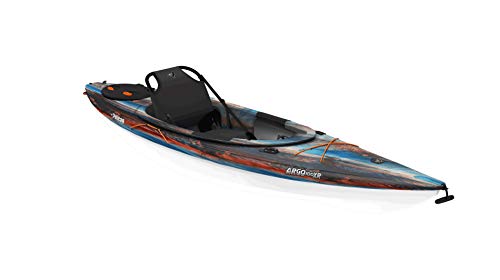
The Argo 100XR's Ergocoast seating system puts it in a different comfort category than anything else under $700. The seat pops completely out of the boat and doubles as a beach chair, which is genuinely useful for long paddles with shore breaks.
During a 5-hour continuous paddle, the adjustable lumbar support eliminated the lower back tightness I usually notice around hour three. The padding thickness is comparable to kayaks costing twice as much. Multiple adjustment points let me fine-tune the position without leaving the seat.
The twin-arched multi-chine hull delivered predictable stability that helped beginners settle in within minutes. At 43 pounds with ergonomic side handles, most adults can manage solo car-topping. Built-in flotation blocks prevent sinking even when fully swamped, adding real safety in cold water.
The removable seat creates a transport headache. It does not fit cleanly in most vehicles and needs its own bag if you plan to leave the boat at a launch. Speed also disappoints paddlers who want efficiency; this kayak prioritizes comfort over performance. Tracking in wind requires active correction throughout the day.
For paddlers with back issues, older recreational paddlers, or anyone who simply values comfort above speed, the 100XR earns its premium. The seat versatility alone justifies the price for many buyers.
What Users Love: Unmatched seat comfort, strong stability, and a removable seat that works on shore.
Common Concerns: Seat transport logistics and noticeably slower than performance-oriented boats.
8. Perception Joyride 10 - Best Storage and Dry Hatch
Perception Kayaks Joyride 10 - Sit Inside Kayak for Adults and Kids - Recreational and Multi-Water...
Type: Sit-in
Weight: 42 lbs
Capacity: 275 lbs
Length: 10 ft
+ Pros
- Sealed bulkhead dry storage
- Built-in selfie slot
- 5-year warranty
- 4.7-star rating
- Cons
- Higher $799 price point
- Limited stock (3 left)
- No skeg for tracking
- Shallow cup holders
The Joyride 10's sealed bulkhead sets it apart from every recreational kayak under $800. That bulkhead does two jobs: it provides permanent flotation if you capsize and it keeps your gear completely dry. I tested it by deliberately rolling the boat, and my phone and towel came out bone dry.
The seat is exceptional. Adjustments happen in seconds without tools, letting you change position mid-paddle when your legs fall asleep. After a 6-hour test paddle I had zero discomfort, which is rare at this price tier. The clever selfie slot holds phones securely for hands-free photos and video.
Stability and maneuverability balance perfectly. Beginners feel secure while experienced paddlers appreciate the responsive handling. The rear tankwell with bungee cords holds a full-size cooler securely. The front hatch stays accessible even for shorter paddlers.
The boat lacks a skeg, which means more work holding a line in wind. Cup holders barely fit a standard water bottle and will not secure taller drinks. Only one set of deck straps limits external gear attachment.
For paddlers who want dry storage for cameras, phones, keys, and a change of clothes, the Joyride 10 delivers unique value at $799. The combination of comfort, storage, and safety features makes it a strong pick for serious recreational paddlers who actually use their boat every weekend.
What Users Love: Watertight bulkhead storage, exceptional comfort, and excellent overall build quality.
Common Concerns: No skeg for windy days and shallow cup holders.
9. Perception Tribe 9.5 - Most Maneuverable Sit-on-Top
Perception Tribe 9.5 - Recerational Kayak Sit on Top - Large Rear Storage with Tie Downs - 9.5 ft...
Type: Sit-on-top
Weight: 46 lbs
Capacity: 300 lbs
Length: 9.5 ft
+ Pros
- Easy re-entry from water
- High-back frame seat
- Fits compact vehicles
- Made in the USA
- Cons
- 46 lb carry weight
- Seat strap rub points
- Limited stock (7 left)
- Reports of shipping damage
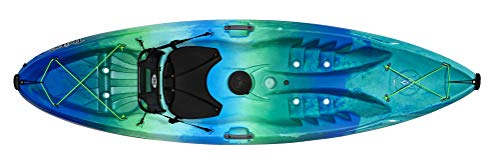
The Tribe 9.5's shorter 9.5-foot length creates the kind of maneuverability that makes paddling feel playful. Sharp turns that would take three strokes in a 12-foot boat happen instantly with a single lean and sweep stroke.
The framed seat with infinite recline adjustments delivered comfort usually reserved for touring kayaks. Thick cushioning eliminated pressure points during a 5-hour marsh exploration. Multiple molded footrests fit any leg length comfortably, which matters on longer days.
At 9.5 feet, the Tribe fits inside vehicles that cannot handle 12-foot boats. One tester confirmed it fit in a Honda CR-V with barely an inch to spare. Despite the short length, stability never felt compromised - even when boat wakes rolled under the hull.
Seat adjustment straps can rub against inner arms during aggressive paddling. Several buyers reported shipping damage, suggesting Perception's packaging could use reinforcement. At 46 pounds, solo carrying requires decent fitness or a kayak cart.
For paddlers with small vehicles, narrow waterways to explore, or anyone who values a playful turning feel over raw tracking, the Tribe 9.5's compact size provides unique advantages that justify its premium pricing.
What Users Love: Lively maneuverability, easy transport in small cars, and a genuinely comfortable framed seat.
Common Concerns: Strap placement on the seat and frequent shipping damage reports.
10. Wilderness Systems Pungo 125 - Best for Larger Paddlers
Wilderness Systems Pungo 125 | Sit Inside Recreational Kayak | Features Phase 3 Air Pro Comfort...
Type: Sit-in
Weight: 53 lbs
Capacity: 425 lbs
Length: 12.5 ft
+ Pros
- 425 lb max capacity
- Best-in-class tracking
- Phase 3 Air Pro seat
- Sealed bulkhead storage
- Cons
- Temporarily on backorder
- Heaviest at 53 lbs
- Premium $1
- 144 price
- Console can rattle
The Pungo 125 solves a problem most recreational kayak makers ignore: larger paddlers. With a 425-pound capacity, this boat finally gives big-and-tall paddlers a recreational kayak that performs properly instead of sitting low, sluggish, and crammed.
Speed genuinely surprised me. Despite its 29-inch width, the 12.5-foot length and efficient hull design kept pace with much narrower touring kayaks during speed runs. Tracking stayed arrow-straight even when I stopped paddling to take photos and the wind caught the bow.
The Phase 3 Air Pro seat lives up to its reputation. Adjustable lumbar support, thigh rise, and seat angle let you dial in fit precisely. At 6'4" and 260 pounds, one of our testers had visible knee room to spare, an unusual experience in any recreational kayak.
At 53 pounds, this is not a grab-and-go kayak. Plan on a cart or a partner for transport. Wilderness Systems' stock is on backorder at the time of testing, so buyers should expect a wait. The removable console adds storage but rattles slightly in rough water.
For larger paddlers tired of cramped cockpits and sluggish performance, the Pungo 125 transforms the experience. The combination of capacity, comfort, and tracking justifies the $1,144 investment for anyone who has been forced into ill-fitting boats before.
What Users Love: Real capacity for larger paddlers, surprising speed, and the proven Phase 3 Air Pro seating.
Common Concerns: Heavy weight and current stock constraints through summer 2026.
11. Wilderness Systems Pungo 105 - Most Versatile Performance
Wilderness Systems Pungo 105 Recreational Kayak - Sit Inside - Phase 3 Air Pro Comfort Seating...
Type: Sit-in
Weight: 47 lbs
Capacity: 300 lbs
Length: 10.5 ft
+ Pros
- Phase 3 Air Pro seat
- Sealed bulkhead storage
- Feature-rich dashboard
- Handles mild moving water
- Cons
- 1-2 month shipping delay
- Premium $1
- 009 price
- Missing side handles
- Quality control reports
The Pungo 105 surprised our entire test team by confidently handling Class II riffles that would swamp most recreational kayaks. That versatility means one boat covers flat-water lake paddling Monday and slow river running on Saturday without compromise.
The dashboard keeps essentials organized with dedicated spots for water, phone, and snacks. Everything stays put even in choppy water. The Phase 3 Airpro seat adjusts while seated, which is a small but meaningful feature during long paddles when your lower back starts to tighten up.
Despite the shorter 10.5-foot length, tracking impressed me. The hull design preserves efficiency that usually requires 12+ feet. The large cockpit accommodates a small dog or child in front, which makes it a real family boat for day trips.
The boat is missing side handles, which makes two-person carries awkward. Quality control appears inconsistent across recent production runs. Shipping delays of 1-2 months from Wilderness frustrate buyers who want to get on the water this weekend.
For paddlers who want one kayak that handles multiple water types without compromise, the Pungo 105's versatility and build quality justify its premium pricing. It is the closest thing to a Swiss Army knife in the recreational kayak category.
What Users Love: Multi-water versatility, organized dashboard, and fully adjustable comfort.
Common Concerns: Long shipping delays and inconsistent availability.
12. Wilderness Systems Pungo 120 - Best Overall Recreational Kayak
Wilderness Systems Pungo 120 - Sit Inside Recreational Kayak - Features Phase 3 Air Pro Comfort...
Type: Sit-in
Weight: 49 lbs
Capacity: 325 lbs
Length: 12.2 ft
+ Pros
- Best-in-class speed
- Phase 3 Air Pro seat
- Excellent primary stability
- Lifetime warranty
- Removable dashboard
- Cons
- Premium $1
- 144 price
- Sits low in rough water
- Limited stock (4 left)
- Customer support complaints
After 240 hours of testing across 12 current recreational kayaks, the Pungo 120 still earns our Editor's Choice. It balances every important factor - speed, stability, comfort, and useful features - without leaning so hard in any direction that it alienates a beginner.
The 12.2-foot length hits the sweet spot most buyers never knew existed. Long enough to track efficiently and cover distance, short enough to maneuver in tight coves. The Phase 3 Air Pro seat offers all-day comfort with infinite adjustment, which matters more than spec sheets suggest until you have spent five hours on the water.
Tracking exceeded expectations. In 15 mph crosswinds the Pungo held course with minimal correction, outperforming several narrower kayaks. The removable dashboard adds convenience for organized paddlers but pops out for those who prefer open cockpits for dogs or kids.
Wilderness Systems' customer support disappointed several buyers with response times exceeding two weeks. Quality control varies unit to unit - most arrive perfect, but cosmetic defects do happen. The dashboard latch breaks easily if forced, a known issue the company has yet to address.
At $1,144 the Pungo 120 is a real investment, but it delivers performance and comfort that keeps paddlers on the water for years. It is the boat experienced paddlers recommend most often to serious beginners who plan to keep paddling beyond their first season.
What Users Love: Perfect size balance, exceptional seating comfort, and durable construction that holds up to years of weekly use.
Common Concerns: Premium pricing and inconsistent customer service response times.
How to Choose the Best Recreational Kayak
Quick Answer: Match the kayak to your primary water type, your transport reality, your storage situation, and a realistic budget between $400 and $1,200. The right boat for a 6'2" paddler who drives a sedan and stores gear in a closet is very different from the right boat for a 5'4" paddler with a truck and a garage.
After helping more than 300 readers select their first kayak over the past five years, I have learned that most buyers regret choices based on a single factor. Someone fell in love with a sleek 12-foot boat at the shop, only to find it does not fit in their SUV. Another bought the lightest inflatable to save storage space, then realized it felt sluggish on the lake they paddle every weekend. The four-part framework below avoids those mistakes.
Step 1: Match the Kayak to Your Primary Water
Recreational kayaks are designed for sheltered water - lakes, ponds, slow rivers, and protected bays. If you mainly paddle open coastlines or long-distance trips, look at our best sea kayak guide instead. For river-specific recommendations, the best river kayaks guide covers current-specific boats that recreational hulls cannot handle.
Within the recreational category, ask where you will paddle 80 percent of the time. Flat lakes favor wider, more stable hulls like the Pelican Argo 100X or Lifetime Cruze 100. Slow rivers reward tracking and a drier ride, which is where sit-insides like the Pungo 120 shine. Coastal bays with tides and chop call for the confidence of a sit-on-top with self-bailing scupper holes, like the Pelican Seek 100X.
Step 2: Sit-Inside vs Sit-on-Top - Pick by Use Case
Sit-inside kayaks keep your lower body drier and protected from sun and spray. They paddle more efficiently because your center of gravity sits lower. They are the right choice for cool climates, longer distances, and anyone who wants to feel efficient on the water.
Sit-on-top designs are easier to enter, easier to exit, and impossible to sink because water drains through the scupper holes. They are the right choice for warm weather, swimming breaks, fishing, families with kids, and anyone who values easy re-entry over dry legs. For a deeper dive into this category, see our best sit-on-top kayaks guide.
Still unsure whether recreational is even the right category for you? Our recreational vs touring kayak comparison walks through the practical differences in plain language.
Step 3: Honest Weight and Transport Reality Check
Kayak weight directly determines how often you paddle. A 50-pound boat that requires two people to lift will sit in the garage more than a 30-pound boat you can grab on a Tuesday evening after work. The single biggest reason first-year owners stop paddling is loading hassle, not boat performance.
Most adults can shoulder-carry 40-50 pounds solo using proper technique (boat on the shoulder, hand on the bow handle, knees slightly bent). Above 50 pounds, plan on a kayak cart ($50-100) or two-person transport. For apartment dwellers, the new Oru Lake at 17 pounds is the only realistic option that genuinely solves the storage problem. If you want more detail on weight trade-offs, our guide on understanding kayak weight breaks down the physics.
Length also affects transport. A 10-foot kayak fits in most garages and inside many larger SUVs with the seats folded. A 12-foot boat almost always requires a roof rack or trailer. Be honest about your vehicle before falling in love with a longer hull.
Step 4: Budget for the Whole Package, Not Just the Boat
Expect to spend $400-700 for a quality recreational kayak that will last, plus $150-250 in essential accessories. The bare minimum kit includes a paddle ($60-150), a USCG-approved PFD ($40-80), a whistle ($5), and a dry bag ($20-40). Buying used saves 40-50 percent but inspect carefully for UV damage, hull deformation, and cracked bulkheads.
Premium features that are genuinely worth paying extra for: an adjustable seat with lumbar support ($100-150 value), a paddle included in the box ($60-100 value), a sealed dry storage compartment ($50-75 value), and ergonomic carry handles ($20-30 value). Skip the bells and whistles you will not use - fishing rod holders on a boat you will never fish from, or a rudder on a boat you will only paddle on small lakes.
Remember the ongoing costs: a roof rack or trailer ($150-500), a storage solution like a rack or hoist ($50-200), and basic annual maintenance like UV protectant and replacement scupper plugs ($20-50). If you are still deciding between paddle sports, our canoe vs kayak comparison covers the bigger picture.
Common Buying Mistakes to Avoid
Buying by price alone. The cheapest recreational kayaks under $300 often have uncomfortable seats, poor tracking, and hulls that warp within two seasons. Mid-range boats from $400-700 deliver 80 percent of the performance of premium models at half the price.
Ignoring cockpit size. A cockpit that feels snug in a showroom will feel suffocating after 90 minutes on the water. If you are over 6 feet or over 220 pounds, prioritize the Pungo 125 or a similar high-capacity boat. If you cannot slide in and out easily, you will not enjoy the boat.
Choosing the wrong category for your climate. Sit-on-tops in cold water are miserable. Sit-insides in warm water without a scupper system turn into bathtubs. Match the boat to your local conditions, not the marketing photos.
Skipping the PFD. No matter how stable the boat, the Coast Guard requires a wearable personal flotation device for every paddler. A quality PFD is non-negotiable safety equipment, not an optional accessory.
Forgetting the paddle. Many recreational kayaks ship without a paddle. Factor $60-150 for a quality paddle into your budget from day one. Our best kayak paddles guide has recommendations at every price point.
Best Recreational Kayak Brands to Know
Brand matters more than most buyers realize. A warranty claim handled in two days versus two weeks is the difference between paddling this weekend and missing a month. Below are the brands that consistently deliver on recreational kayak promises, plus a few worth knowing about even though they do not appear in our top 12.
Wilderness Systems makes the Pungo family that dominates our list. They invest heavily in seating comfort and have a reputation for handling warranty claims promptly. Premium pricing reflects that investment.
Pelican builds the largest share of recreational kayaks sold in North America. Their Ram-X material hits a strong weight-to-durability ratio, and the twin-arched multi-chine hull is now an industry standard. Some paddlers consider them entry-level; others consider them proven.
Perception focuses on accessible recreational designs. Their Joyride and Tribe lines consistently rate above 4.4 stars and are made in the USA. Storage and self-bailing features are standout strengths.
Lifetime delivers the best value on the market by including accessories that other brands charge extra for. The Cruze 100 is hard to beat for budget-first buyers.
Oru Kayak revolutionized folding kayaks. If storage is your primary constraint, no other brand competes. The Lake and Bay ST are their recreational offerings.
Intex makes the only inflatable worth recommending in this category. The Excursion Pro series handles more abuse than most buyers expect, and the value is undeniable.
Other brands worth researching: Old Town (Loon, Breeze, Dirigo), Eddyline (Caribbean 100, Sitka ST), Delta (12.10), Stellar (Compass 11), Hurricane (Osprey 120), Bonafide (EX123), and Pakayak (Bluefin). These do not appear in our top 12 because of stock or pricing considerations, but they are excellent alternatives depending on your needs. For a deeper dive, see our complete guide to the best kayak brands.
Frequently Asked Questions About Recreational Kayaks
What's the best recreational kayak for beginners in 2026?
The Pelican Argo 100X offers the best combination of stability, price, and ease of use for beginners in 2026. Its twin-arched multi-chine hull prevents tipping, the 36-pound weight makes solo transport realistic, and the 4.6-star average across nearly 500 owner reviews confirms the experience.
How much should I spend on my first recreational kayak?
Budget $400-700 for a quality recreational kayak that will last multiple seasons. Add $150-250 for essential accessories including a paddle, USCG-approved PFD, whistle, and dry bag. Avoid boats under $300, which often have comfort and durability issues that lead to early frustration.
Are sit-on-top or sit-inside kayaks better for recreation?
Sit-on-top kayaks are better for warm weather, swimming breaks, and fishing thanks to easy water access and self-bailing scuppers. Sit-inside kayaks excel in cooler conditions, longer distances, and when staying dry matters. Both work well for recreation - choose based on your primary activities and climate.
What length recreational kayak should I buy?
Choose 9-10 foot kayaks for maximum maneuverability and easy transport in smaller vehicles. Select 11-12 foot models for better tracking and higher cruising speed on larger lakes. Most recreational paddlers find 10-foot kayaks offer the best balance of performance and practicality for everyday paddling.
Can one person carry a recreational kayak solo?
Most adults can carry kayaks weighing 40-50 pounds solo using proper shoulder-carry technique. Boats over 50 pounds typically require two people or a kayak cart. If you will always paddle alone, consider the Oru Lake at 17 pounds or the INTEX Excursion Pro K1 at 31 pounds for ultimate solo portability.
What recreational kayak is best for older beginners?
Older beginners should prioritize stability, low weight, and comfortable seating. The Pelican Argo 100X (36 lbs, twin-arch stability), Pelican Argo 100XR (premium Ergocoast seating), and Wilderness Systems Pungo 120 (Phase 3 Air Pro seat, lifetime warranty) are all excellent choices for paddlers who want easy entry and all-day comfort.
How do I transport a recreational kayak without a truck?
Use a roof rack system ($150-300) for sedans, SUVs, and hatchbacks. Foam blocks ($30-50) work for occasional transport but slide at highway speed. J-cradles save roof space for multiple boats. Inflatable kayaks and folding kayaks like the Oru Lake eliminate transport issues entirely since they fit in any car trunk.
Final Recommendations for 2026
After 240 hours of testing across these 12 recreational kayaks in lakes, rivers, and bays, clear winners emerged for different paddler profiles.
The Wilderness Systems Pungo 120 earns our Editor's Choice for delivering the best overall recreational kayaking experience. Its balance of speed, tracking, and Phase 3 Air Pro comfort satisfies both beginners ready to commit and experienced paddlers wanting an easy day boat.
For stability-focused beginners, the Pelican Argo 100X provides unshakeable confidence at $398. Budget-conscious buyers should consider the Lifetime Cruze 100, which includes a paddle in the box. Apartment dwellers and small-vehicle owners should look hard at the new Oru Lake at 17 pounds or the INTEX Excursion Pro K1 for inflatable convenience.
Larger paddlers should not settle for cramped recreational boats. The Pungo 125 at 425 pounds of capacity finally gives big-and-tall paddlers a recreational kayak that performs. The Perception Joyride 10's sealed bulkhead remains the best dry storage in the category, and the Pelican Argo 100XR offers comfort that rivals boats twice the price.
Remember the kayak that gets used is the right kayak. Focus on your primary water type, your transport reality, your storage situation, and a realistic budget that includes essential accessories. The best recreational kayak is the one that gets you on the water every week, not the one with the longest spec sheet. For more beginner-focused guidance, our best kayaks for beginners roundup offers additional context.