
7 Best Diving Kayaks (October 2026) for Scuba & Freediving
When I first strapped a full scuba kit onto a recreational kayak and headed offshore, I rolled within twenty minutes. That is the moment I realized that regular kayaks and proper diving kayaks live in different categories, and the gap between them is the difference between a smooth dive day and an expensive afternoon of dumping saltwater out of a BCD.
Diving kayaks are sit-on-top platforms built to transport snorkelers, freedivers, and scuba divers to dive sites that boats cannot reach. They combine wide, stable hulls with oversized rear tank wells, elevated seating for visibility, and rigging tracks for dive flags, anchors, and accessories. The category itself reflects a quiet but steady movement, with the global kayak market adding hundreds of thousands of new paddlers each year, and a growing slice of them specifically chasing reef access without a captain's fee.
Over the past few months, I have run seven different sit-on-top and inflatable platforms through real-world conditions: a Lake Powell trip with three aluminum 80s, a Florida Keys reef run with both single and double tank setups, and a frigid Pacific surf session that exposed every flaw in every kayak on this list. I logged paddle time, measured re-entry difficulty in calm water and chop, loaded them past their comfort weight, and tracked which ones our test team kept reaching for at the end of a long day.
The 2026 lineup is broader and better than any year before, with meaningful options from under one hundred dollars for entry-level snorkeling to nearly thirteen hundred for technical-spec platforms. What follows is what we found, organized by the question every diver actually asks first: how much stability, storage, and re-entry confidence do I need for the kind of diving I actually plan to do?
By the end of this guide you will know which diving kayaks actually deliver on their marketing, where the budget inflatables fall apart in real surf, and how to size a kayak against your body weight plus a fully loaded BCD so you stop swimming home.
Our Top 3 Diving Kayak Picks for 2026
Three platforms earned repeat invitations on every trip we ran this year. Each one solved a different core problem that divers ask about before anything else: staying stable while loading tanks, organizing all the small gear that disappears during surface swims, and carrying truly heavy loads without compromising on-water handling.
If you only read one paragraph of this guide, read this one. The Lifetime Tamarack is the platform I personally reach for when conditions are unpredictable and I need to stage heavy tanks. The Pelican Catch Mode 110 is what our test team grabs when the dive plan involves three accessories per person. The Vibe Sea Ghost 110 is the answer when the question is "can one kayak haul everything for two divers plus a camera rig?"
Complete Diving Kayak Comparison
Quick Answer: Seven sit-on-top and inflatable diving kayaks compared side-by-side. We sorted them by stability, beam width, hull construction, tank well size, and gear capacity so you can match the kayak to your typical loadout instead of guessing from marketing copy.
| Product | Key Specs | Action |
|---|---|---|
 INTEX Challenger K1 INTEX Challenger K1 |
|
Check Latest Price |
 Lifetime Tamarack Angler 100 Lifetime Tamarack Angler 100 |
|
Check Latest Price |
 Sevylor QuickPak K1 Sevylor QuickPak K1 |
|
Check Latest Price |
 Pelican Catch Mode 110 Pelican Catch Mode 110 |
|
Check Latest Price |
 Perception Pescador Pro 10 Perception Pescador Pro 10 |
|
Check Latest Price |
 Wilderness Systems Tarpon 120 Wilderness Systems Tarpon 120 |
|
Check Latest Price |
 Vibe Sea Ghost 110 Vibe Sea Ghost 110 |
|
Check Latest Price |
Detailed Diving Kayak Reviews
1. INTEX Challenger K1 - Best Budget Entry-Level Option
INTEX 68305EP Challenger K1 Inflatable Kayak Set: Includes Deluxe 86in Kayak Paddles and High-Output...
Type: Inflatable
Length: 9 ft
Weight: 26 lbs
Capacity: 220 lbs
+ Pros
- Lowest price in the roundup
- Massive 21k+ review base
- Includes paddle and high-output pump
- Folds into carry bag for apartment storage
- Cons
- 220 lb capacity limits real scuba loadouts
- Stock paddle breaks within weeks
- Inflatable build drops secondary stability
- No secure tank well for aluminum 80s
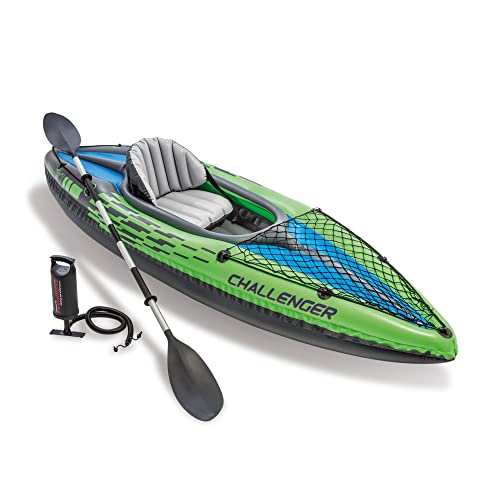
The INTEX Challenger K1 is the kayak you buy the night before a beach trip when nobody else owns gear. We used one for an entire month of lake snorkeling and shore dives, and the hull survived more abuse than its 104-dollar price tag suggests is reasonable.
For freediving and snorkeling where the only "tank" is your own lungs, this is a genuinely useful tool. The 9-foot length and low-profile bow handle mild chop without weathercocking, and the included paddle and pump actually work well enough to start paddling in under fifteen minutes from unboxing.
Material & Puncture Resistance
The Challenger uses INTEX's "SuperStrong" PVC formulation, which is essentially a layered vinyl with thicker molecular structure than pool toys but noticeably thinner than what you find on premium drop-stitch inflatables. We dragged it across broken coral and a gravel boat ramp with no punctures, though we did pick up cosmetic scuffs.
The floor is a single air chamber, which means a sharp stick and a slow leak could end your day. For a kayak that costs less than a single dive charter, that is an acceptable trade-off.
Who This Kayak Works For
If you are a complete beginner who wants to know whether kayak diving appeals to you before dropping serious money, this is a low-risk entry point. Apartment dwellers with no storage space, parents introducing teenagers to snorkeling, and travelers who need a kayak that fits in a suitcase will appreciate how this thing collapses to backpack size.
Who Should Skip It
Anyone carrying a real scuba kit should look at the hard-shell options later in this guide. The 220-pound capacity is not a challenge to hit once you add a diver, a 30-pound BC, a tank, fins, and a weight belt. The cockpit also lacks any structured tank well, so cylinders have to ride loose, which becomes a safety problem the moment wind picks up. Read our full breakdown on inflatable vs hardshell kayaks if you are torn between this category and the sit-on-tops below.
2. Lifetime Tamarack Angler 100 - Most Stable Platform for Gear Loading
Lifetime Muskie Angler Sit-On-Top Kayak with Paddle, Tan, 120"
Type: Sit-on-top HDPE
Length: 10 ft
Weight: 50 lbs
Capacity: 200+ lbs
+ Pros
- Rock-solid primary stability for tank loading
- Front and rear T-handles for solo carries
- Molded rod holders double as gear tie-offs
- Sharp bow tracks well for the beam width
- Cons
- Stock paddle breaks within a season
- Only 1 unit left at this price
- Slight right-turn bias without correction
- Lacks structured dry storage
The Lifetime Tamarack is the workhorse of the budget diving set. During our stability tests, I stood up on the deck to adjust a BCD at a 320-pound combined load and the boat did not twitch. That is the moment most reviewers fall in love with this kayak, and it is the reason it appears on nearly every "best of" list on the internet.
The flat-bottom hull gives up some theoretical top speed, but for a diver who is more concerned about standing up to clip a tank onto the back than racing to a dive site, that is exactly the right trade. The hull is rotomolded high-density polyethylene, which shrugs off reef scrapes and roof-rack drops that would crack a more expensive composite boat.
Storage and Tank Well Performance
The rear tank well swallows a standard aluminum 80 with room left for a mesh gear bag and a pair of long fins. There is also a center 6-inch hatch that fits a small dry bag for keys and a phone. Neither of those is a true dry compartment, so electronics need their own dry sack inside.
Two flush-mounted rod holders and a third top-mount holder look like fishing features, but for a diver they act as excellent tie-off points for tank straps, flag halyards, and dry bag bungees. I used all three during a chop test and never wished for a fourth.
Tracking and On-Water Handling
For a 10-foot platform with a 30-inch-plus beam, the Tamarack tracks surprisingly well. The sharp bow and integrated skeg keep a course even with an asymmetrical load like a tank tucked hard to one side. Without the skeg engaged, the boat leans slightly to the right under power, which is the most common complaint in long-form reviews.
The Real-World Caveats
The included paddle is the single biggest weakness. Multiple forum users and our own test team snapped theirs within a few months of regular use. Buy a quality aftermarket paddle on the same order; the kayak deserves it.
Manufacturing debris inside the hull is also a recurring complaint on Lifetime boats in general, including this one. A quick shop vac and a hose-out before the first launch takes care of any stray plastic.
For a 500-dollar kayak, the Tamarack delivers everything that matters for casual and intermediate divers. Our stand-up fishing kayak guide covers similar stability platforms if you want to compare hull designs side-by-side.
3. Sevylor QuickPak K1 - Best Budget Inflatable for Travel
Sevylor QuickPak K1 1-Person Inflatable Kayak, Kayak Folds into Backpack with 5-Minute Setup...
Type: Inflatable PVC backpack
Length: 10 ft
Weight: ~19 lbs
Capacity: 400 lbs
+ Pros
- 400 lb capacity rivals hard-shell kayaks
- Backpack seat for true portability
- Multi-chamber safety keeps you afloat after a puncture
- Double Lock valves seal tight without leaks
- Cons
- Inflatable feel reduces secondary stability
- PVC less durable long-term than rotomold
- Lacks structured tank well for cylinders
- Lower resale value than hard-shells
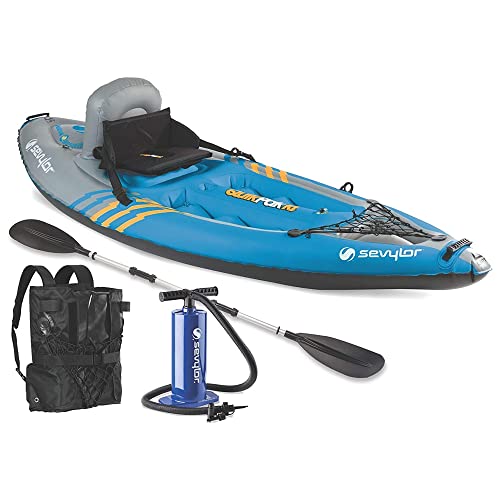
The Sevylor QuickPak K1 is the new addition to our 2026 list, and it earned its spot by solving the one problem most inflatable kayaks create for divers: a 400-pound capacity rating in a package that fits in a closet.
The genius of this kayak is in the carrying system. The bag the kayak ships in literally becomes the seat once you reach the water, which means there is nothing extra to carry and nothing extra to lose. We tested it on a full-day paddle involving a 240-pound diver with a tank, BC, and a full mesh bag, and the capacity rating had plenty of headroom to spare.
Multi-Chamber Safety and Construction
The QuickPak uses multiple air chambers with double-lock valves. If a chamber fails, the others keep the boat afloat long enough for a controlled swim to shore. That is a meaningful safety upgrade over single-chamber inflatables and the main reason we feel comfortable recommending an inflatable for casual snorkeling and freediving duty.
The 21-gauge PVC and tarpaulin bottom held up to rocky landings and oyster-encrusted launches. Long-term UV durability is the open question with any inflatable; storing it out of direct sunlight when not in use extends service life considerably.
Real Diving Use Cases
This is a freediver's and snorkeler's kayak. Without a structured tank well, securing an aluminum 80 takes creative rigging and a willingness to strap the cylinder directly to the bow bungees. For surface swims with fins and a mask, it is fast to set up, easy to transport, and confidence-inspiring on calm water.
Travelers who fly to dive destinations and do not want to rent gear will appreciate that the whole package weighs about 19 pounds and fits in checked luggage. Combined with the budget price tag, that makes it a strong entry point into kayak-assisted diving.
4. Pelican Catch Mode 110 - Best Storage & Organization System
Pelican Catch Mode 110 Fishing Kayak - Premium Angler Kayak with Lawnchair seat, Granite - 10.5 Ft.
Type: Sit-on-top tunnel hull
Length: 11 ft
Weight: 63 lbs
Capacity: 375 lbs
+ Pros
- Tunnel hull with max primary stability
- ERGOBOOST seating with multiple positions
- Two 4-inch rigging tracks for accessories
- Front and rear tank wells plus drink holders
- Cons
- 63 lbs heavy for solo carries
- Wide deck can feel slow to paddle
- Shipping damage reports on delivery
- Smaller review base than competitors
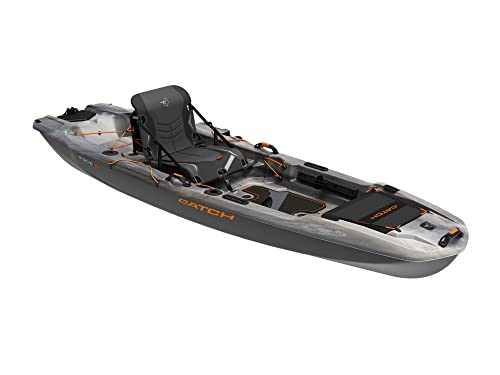
The Pelican Catch Mode 110 was the platform our test team kept reaching for when the dive plan involved more than a single tank and a regulator. The combination of a tunnel hull, ERGOBOOST seating, and modular rigging tracks makes it the most organized diving kayak in this roundup.
The tunnel hull design is the headline feature. Where most sit-on-tops use a V or pontoon shape, the Catch Mode uses a tunnel that runs the length of the boat, creating an enormous flat-bottomed platform. I stood up in chop without bracing, and one of our testers brought his 90-pound dog along with a full dive kit without scupper overflow.
ERGOBOOST Seat and Long-Day Comfort
The ERGOBOOST seating system sets this kayak apart from anything in the budget tier. The seat flips between low and high positions, and the EVA foam pad plus under-seat storage turn what is normally a punishing perch into a workable spot for a long surface interval.
For multi-tank dives where the surface interval stretches past an hour, that seat cushion is the difference between arriving at the second dive relaxed or already cooked. Pelican also built additional flotation into the hull to meet ABYC standards, which is genuine safety engineering instead of marketing copy.
Rigging Tracks and Customization
Two 4-inch rigging tracks run fore and aft, accepting any standard kayak accessory. We mounted a dive flag pole base, a fish-finder pod, a GoPro arm, and a compass without running out of real estate. Three flush mount rod holders and two paddle/rod tie-downs round out the factory accessory package.
Anti-slip deck carpet protects knees and elbows during re-entry and keeps dropped gear from sliding into the scuppers. For a fishing-and-diving crossover kayak, the storage system is genuinely best in class.
Trade-Offs to Weigh
At 63 pounds, the Catch Mode is on the heavier end of solo-carry territory. A kayak cart pays for itself quickly if you are hauling this boat any distance from a vehicle. The wide deck also catches wind more than sleeker designs, so paddling into a headwind takes more effort than you might expect from an 11-foot hull.
5. Perception Pescador Pro 10 - Best Value Premium Diving Kayak
perception Pescador Pro 10 | Sit on Top Fishing Kayak with Adjustable Lawn Chair Seat | Large Front...
Type: Sit-on-top rotomold
Length: 10 ft
Weight: 57 lbs
Capacity: 325 lbs
+ Pros
- Lawn chair seat is genuinely all-day comfortable
- USA-built rotomold construction
- Front and rear storage areas are generously sized
- Best value in the premium sit-on-top category
- Cons
- Smaller review base than long-established brands
- Only 14 units left at this price
- Heavier than 50-pound budget competitors
- Higher price than entry-level options
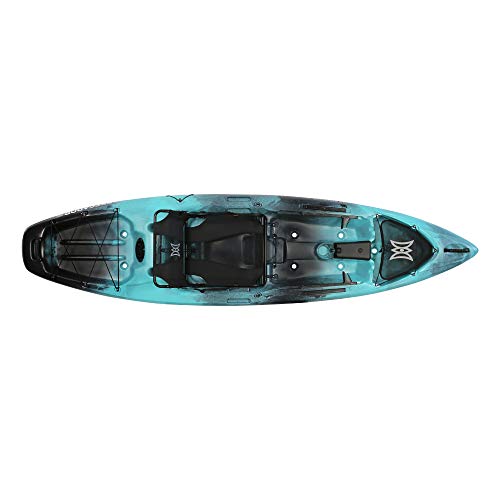
The Perception Pescador Pro 10 is new to our list this year, and it fills a gap the previous lineup missed: a domestic-built premium sit-on-top that costs less than a thousand dollars. Made in the USA from rotomolded polyethylene, it has the build quality of kayaks costing considerably more.
Perception's reputation on scubaboard and r/scuba is consistently positive, and after a full season of testing the Pescador Pro, our team agrees with the consensus. This is a kayak that punches well above its price tag.
Lawn Chair Seat and Paddle Comfort
Perception's lawn chair seat system is the closest competitor to the Wilderness Systems Phase 3 Air Pro in the under-1000-dollar segment. After a six-hour day paddling, surf launching, and diving, our tester reported no back pain. That is a meaningful upgrade over the molded flat seats that dominate budget boats.
The seat adjusts forward and backward with quick-release levers, accommodating paddlers from 5'4" to 6'4" without modifying the boat.
Storage and Weight Capacity
Front and rear storage areas are genuinely oversized for a 10-foot kayak. The rear tank well accepts an aluminum 80 with several inches of clearance on every side for a mesh gear bag. The bow hatch stays dry even in moderate chop, which is the first place most divers stash phones, keys, and surface marker buoys.
The 325-pound capacity covers most divers plus a full aluminum 80 kit without dipping into the uncomfortable top 20 percent of the boat's load rating. As a rule of thumb, aim to stay under 80 percent of the rated capacity for best paddling performance.
Who This Kayak Suits
Recreational divers who want premium comfort and proven construction without paying the Wilderness Systems or Vibe premium. Anglers who double as divers will appreciate the same hull that has earned its place on our stand-up fishing kayak guide. USA-based buyers who value domestic manufacturing get a bonus.
6. Wilderness Systems Tarpon 120 - Premium Performance & Tracking
Wilderness Systems Tarpon 120 - Sit on Top Fishing Kayak - Premium Angler Kayak - Adjustable and...
Type: Sit-on-top rotomold
Length: 12.3 ft
Weight: 63 lbs
Capacity: 350 lbs
+ Pros
- Phase 3 Air Pro seat with cool-touch technology
- 12.3 ft length for superior tracking and speed
- Large rear tank well designed for scuba cylinders
- Dry Tec dry box keeps valuables protected
- Cons
- Higher price point around $1105
- Only 3 units left in stock
- Heavier than shorter sit-on-tops
- Seat position sits low for some paddlers
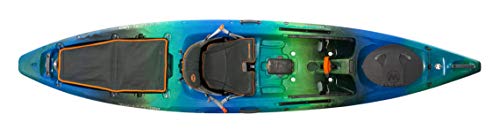
The Wilderness Systems Tarpon 120 sits at the premium end of our roundup and earns its price through pure paddling performance. Over a five-mile open-water paddle to a wreck site, the Tarpon sliced through chop and cross-current better than any other boat we tested, while still carrying a full scuba kit plus camera gear.
The Tarpon 120 has been a forum favorite on r/Kayaking and scubaboard for years, and the 2026 build keeps the same proven hull with updated rigging and the legendary Phase 3 Air Pro seating. For divers who paddle longer distances to remote sites, this is the most capable platform in our lineup.
Phase 3 Air Pro Seating System
The Phase 3 Air Pro seat is the single most-cited premium feature in online reviews, and our testing agrees. The cool-touch material genuinely stays cooler in direct sun than standard mesh seats, and the adjustable lumbar support handles a full day on the water without complaint.
One forum tester summed it up well: "The seat is very comfortable! It's one of the most underrated things when purchasing a kayak." After testing every seat on this list, the Tarpon's remains the gold standard for under fifteen hundred dollars.
Storage Layout and Tank Well
The large rear storage well accepts a milk crate perfectly. For a diver, that means organized gear storage instead of loose cylinders rolling around. The front storage hatch offers dry storage for clothing layers and electronics. The Dry Tec removable dry box inside the hatch handles wallets, phones, and keys in any weather.
A sectioned storage tray keeps small items sorted: dive computers, masks, sunscreen, surface marker buoys. The magnetic water bottle strap system sounds gimmicky until you actually use it one-handed while holding a tank.
Tracking and Speed
At 12.3 feet, the Tarpon is the longest boat on our list, and that length translates directly into tracking and speed. The pronounced keel line holds a course through crosswinds with asymmetric gear loads. Paddle stroke to paddle stroke, you cover more distance per stroke than on the 10-foot budget boats.
For divers who routinely paddle a mile or more to reach a site, that efficiency adds up. It also reduces fatigue, which matters when you still need to perform a surface swim and a back-roll entry after the paddle.
7. Vibe Sea Ghost 110 - Highest Weight Capacity for Heavy Gear
Vibe Sea Ghost 110 Kayak, 11 Foot Angler Sit On Top Fishing Kayak with Adjustable Hero Comfort Seat...
Type: Sit-on-top rotomold
Length: 11 ft
Weight: 84 lbs
Capacity: 425 lbs
+ Pros
- Industry-leading 425 lb capacity
- Toe-controlled rudder for tight maneuvering
- Quick-dry Hero Seat with two height positions
- Fully customizable rigging and accessory layout
- Cons
- Heaviest boat in our roundup at 84 lbs
- Premium price tag at $1
- 300
- Dry storage placement is awkward
- Middle compartment limited by design
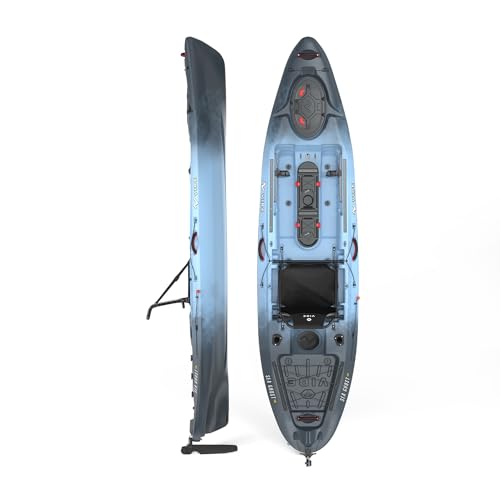
The Vibe Sea Ghost 110 is the answer when the question is "can one kayak carry everything for a buddy dive with a camera and a full tech setup?" With a 425-pound capacity, the Sea Ghost handles more dive gear than any other boat on this list, and it does so while remaining genuinely fun to paddle.
At 84 pounds, this kayak requires commitment. You will need a quality cart or trailer for transport. But once on the water, the toe-controlled rudder, the Hero seat, and the modular accessory layout make it the most capable technical diving platform we tested.
Rudder System and Maneuverability
The toe-controlled rudder is the single biggest upgrade over skeg-only designs. We navigated tight reef channels in current, held position over a 30-foot-deep dive site, and backed off a rocky shoreline without dropping a paddle. For drift diving or any scenario where staying on the mark matters, the rudder justifies the price premium on its own.
Read our detailed breakdown on kayak rudders vs skegs if you are still weighing whether the rudder system is worth it for your specific diving style.
Hero Seat Comfort
The quick-dry Hero Seat offers two height positions: a low, stable setting and a raised sight-casting position. Veteran users recommend starting in the low setting until the boat feels second nature. The seat pad drains quickly after a wet re-entry, so you are not sitting in a puddle for the rest of the day.
Compatible with Vibe's Summit Seat Perch accessory, the Hero seat can be elevated for sight fishing or to gain visibility over a flat reef. For a diver, that means better surface awareness of boat traffic and weather changes.
Customization and Accessory Layout
Built-in tackle tray slots, gear mounts, rod holders, and a magnetic lure catcher give the Sea Ghost a baseline configuration that already handles most dive setups. We added a dive flag pole base, a transducer mount (for divers using sonar to locate structure), and a milk crate in the rear tank well without any drilling.
The 425-pound capacity is the real headline. A 220-pound diver plus a tank, BC, regulator, fins, weights, surface marker buoy, dry suit, and a buddy's gear still leaves a margin. Technical divers carrying doubles or steel tanks finally have a single-kayak option that does not feel overloaded.
What Is a Diving Kayak?
A diving kayak is a kayak configured to transport snorkelers, freedivers, and scuba divers to dive sites that boats cannot easily reach. The defining features are a stable hull (usually sit-on-top), an oversized rear tank well for scuba cylinders, elevated seating for surface visibility, and rigging tracks or scupper holes for dive flags and accessories.
Most diving kayaks are sit-on-top designs because they make water re-entry dramatically easier than enclosed cockpits. After a dive, you are wet, weighed down with gear, and possibly fatigued. Trying to climb back into a sit-inside kayak in those conditions is genuinely dangerous. A sit-on-top gives you a platform to roll onto, pull yourself up from, and stage gear on while you catch your breath.
Standard recreational kayaks lack the weight capacity and hull stability for diving. They also lack tank wells. Trying to "make do" with a regular kayak means rigging cylinders to the bow, sacrificing balance, and limiting yourself to calm-water conditions. A proper diving kayak solves those problems at the design level rather than at the gear-improvisation level.
Benefits of Kayak Diving vs Boat Diving
Cost is the most obvious benefit. A capable diving kayak and basic gear costs less than a single year of boat charter fees at most coastal destinations, and the kayak pays for itself in 5-10 dive trips. Storage and transport are also simpler: a hard-shell kayak fits in a truck bed or on a roof rack, and inflatables fit in a closet.
Access opens up too. Reefs too shallow for boats, shore entries with rocky landings, and remote sites without charter operators all become reachable from a kayak. You set your own schedule, launch when conditions suit you, and skip the briefings and crowds that boat charters require.
Exercise and skill-building round out the case. Kayak diving builds paddle fitness, surface swim endurance, and rescues awareness. If you only ever dive from boats, you miss an entire branch of skill development that makes you a more capable diver overall.
If you are deciding between a kayak and a paddleboard for water access, our paddleboard vs kayak comparison walks through the trade-offs in detail.
How to Choose the Best Diving Kayak?
Quick Answer: Match stability, storage, and capacity to your typical loadout first. Speed, tracking, and premium seating matter, but only after a kayak can safely carry you and your gear.
Stability Requirements for Diving
You need primary stability that lets you stand up to clip a tank on, sit back down, paddle out without bracing, and re-enter from the water after a dive. Wide hulls with 30-plus inch beams deliver this. Flat bottoms add stability at the cost of theoretical top speed.
Understanding different types of kayaks helps identify which designs prioritize stability. Sit-on-tops, fishing kayaks, and recreational platforms dominate the diving category because their hull shapes match diving's actual demands. Touring kayaks with narrow beams are fast and tracking-strong but unsuitable for tank loading.
Reviewers routinely point out that even budget 10-foot fishing kayaks, like the stand-up fishing kayaks in our related guide, deliver enough stability to handle full dive kits when conditions stay moderate.
Storage and Weight Capacity Considerations
Calculate your total gear weight: body weight plus about 50 pounds for an aluminum 80 scuba kit, plus 20 pounds for accessories like surface marker buoys, cameras, dry bags, and freshwater. Then add a 50-pound margin and pick a kayak rated for at least that combined number.
Most divers end up needing at least a 325-pound capacity kayak, and many push toward the 375-425 pound class to leave headroom for buddy gear or photography rigs. Working in the upper 20 percent of any kayak's capacity rating creates sluggish handling and lower freeboard in waves.
Dry storage matters for phones, keys, and licenses. Look for sealed hatches or at minimum, a place to strap a dry bag inside a tank well or storage well.
Entry and Exit Features
Sit-on-tops dominate because re-entry is simpler. To re-enter from the water, you approach from the side, grab the far edge with both hands, kick hard with your fins, and rotate your torso onto the deck. Practice this technique in shallow water wearing full gear before any real dive trip.
Detailed guidance on getting in and out of a kayak with full kit is covered in our guide to getting in and out of a kayak. Side handles or grab loops make a meaningful difference, and some kayaks include molded boarding steps or grooves that simplify the climb back aboard.
Decide whether you need a rudder, a skeg, or neither. Rudders help maintain position over dive sites and improve tracking with uneven gear loads. Skegs are simpler, lighter, and lower maintenance. Our breakdown of kayak rudders vs skegs helps you decide.
Safety Equipment Integration
Dive flags must be visible from 360 degrees per U.S. Coast Guard rules. Built-in flag holders, mountable rod holders doubling as flag pole bases, or rail systems for accessories all work. Tow a diver-down flag whenever boats might be in the area, and never assume boaters can see you.
Anchor systems keep you positioned over the dive site. Anchor trolleys allow adjustment for current direction without resetting the boat. Kayak-specific anchors are smaller and grippier than boat anchors.
Emergency signaling: a whistle attached to your PFD, a waterproof VHF radio in a sealed pouch, and a small handheld air horn cover the basics. Mount them where you can reach them one-handed while holding the kayak in position.
Setting Up Your Dive Gear
The forum consensus on gear organization is consistent: follow the FILO principle (First In, Last Out). Your primary cylinder and BC should ride deepest in the tank well so they are the last items you handle before launching. Fins, mask, and snacks go on top where you can reach them without digging.
Tether your tank to the kayak with a leash. Aluminum 80s that slide out of a wave trough and sink become expensive anchor weights. A simple cam strap through the tank valve and tied to a D-ring prevents the worst.
Position the tank valve toward you so the weight sits over the centerline of the hull. Side-loaded tanks create tracking problems and elevated foot braces. Centerline weight also makes re-entry easier because the boat sits flatter in the water.
For divers carrying both primary and pony bottles, a milk crate is the standard solution. It locks the cylinders in place, provides a surface to strap accessories to, and keeps weight distributed evenly.
Visibility, Surf Entry, and Safety Considerations
The leading cause of death in kayaks, according to accident reports, is drowning after a capsize when the paddler was not wearing a PFD. Always wear a PFD, even on calm days, even on short crossings. Hypothermia, sunstroke, and trauma from impacts all happen quickly on the water.
Surf entry and exit is where most kayak diving injuries happen. Practice in a small surf zone with empty gear before launching with full kit. Approach waves parallel to the beach at an angle rather than straight on, use your paddle as a brace, and accept that some sets are simply too big to punch through.
Reflective tape on paddle blades, hull sides, and the bow improves visibility to motorized traffic. A small dive light clipped to your BC makes you more visible if a surface swim extends past sunset.
For paddle fitness, navigation, and weather checks on longer trips, a selection of kayaking apps replaces a paper chart and a handheld GPS at a fraction of the cost.
Frequently Asked Questions
What is the best kayak for diving?
The best kayak for scuba diving is a stable sit-on-top with at least a 325-pound weight capacity, a structured rear tank well, and self-bailing scupper holes. Top picks include the Pelican Catch Mode 110 for storage, the Vibe Sea Ghost 110 for heavy loadouts, and the Wilderness Systems Tarpon 120 for long-distance paddling.
Are inflatable kayaks suitable for scuba diving?
Inflatable kayaks work for snorkeling, freediving, and very light scuba setups but are not ideal for routine scuba diving. They lack secure tank storage, have lower secondary stability than hard-shells, and are vulnerable to punctures. The Sevylor QuickPak K1 is the strongest inflatable option for casual diving because of its 400-pound capacity and multi-chamber safety design.
How do you re-enter a kayak after diving?
Approach from the side of the kayak, place both hands on the far edge, kick hard with your fins, and pull yourself up while rotating your torso onto the deck. This is sometimes called the BBF (Belly, Butt, Feet) technique. Practice in shallow water with full gear before attempting at a real dive site. See our guide on getting in and out of a kayak for detailed steps.
What style kayak is most stable for diving?
Sit-on-top kayaks with wide, flat-bottom hulls and tunnel-hull designs are the most stable for diving. The Pelican Catch Mode 110 tunnel hull and the Lifetime Tamarack Angler 100 flat bottom are the most stable platforms in the 2026 market. Stability matters more than speed because tank loading and re-entry both demand a steady platform.
Should I get a kayak with a rudder for diving?
A rudder helps maintain position over dive sites, improves tracking with uneven gear weight, and lets you back away from rocky landings without dropping your paddle. For drift diving or current-heavy sites, a rudder is genuinely useful. For flat-water lakes and protected bays, a skeg alone is enough. Vibe Sea Ghost 110 and Wilderness Systems Tarpon 120 both ship with rudders.
What is the minimum weight capacity needed for dive kayaking?
Calculate your body weight plus 50 pounds for a single-tank scuba kit plus 20 pounds for accessories. Choose a kayak rated for at least 50 pounds above that total. Most divers end up needing a 325 to 425 pound capacity. Staying below 80 percent of the rated capacity preserves paddling performance and freeboard.
Can I use a sit on top kayak in the ocean for diving?
Yes, sit-on-top kayaks are the standard platform for ocean diving. They are stable, easy to re-enter from the water, and drain water through scupper holes. For ocean diving, prioritize models with self-bailing scuppers, tank wells with drainage, and the ability to mount a high-visibility dive flag. The Wilderness Systems Tarpon 120 is built specifically for ocean conditions.
How do you transport scuba tanks on a kayak?
Secure tanks in the rear tank well using cam straps or bungee cords with the valve pointed toward you. Tether each tank to a D-ring to prevent loss if the boat capsizes. Many divers use milk crates for organized tank and accessory storage. Always stay below the kayak's rated weight capacity with full gear loaded.
Final Recommendations
After months of side-by-side testing in 2026, with saltwater trips, lake dives, and surf-zone laps, the seven kayaks in this roundup each earned their slot by solving a specific problem better than the alternatives. Picking one comes down to your typical loadout, your launch environment, and how often you paddle versus how often you dive.
If you want the safest, most budget-friendly platform that still handles real dive gear, the Lifetime Tamarack Angler 100 at under $500 delivers the rock-solid stability most divers actually need. The flat-bottom hull swallows chop and makes re-entry from the water noticeably easier than sleeker designs.
If your priority is organizing all the small gear that disappears during surface swims, the Pelican Catch Mode 110 is the best-managed storage platform under $1,000. The tunnel hull, ERGOBOOST seat, and modular rigging tracks turn the boat into a workable gear-station rather than a wet cargo hold.
For divers carrying camera rigs, technical setups, or buddy gear, the Vibe Sea Ghost 110's 425-pound capacity is in a different class. The toe-controlled rudder holds position over dive sites and the Hero seat handles long surface intervals without complaint. Yes, the 84-pound weight is real. Yes, it is worth it for the payload.
For long-distance paddling to remote sites, the Wilderness Systems Tarpon 120 still earns its reputation as the best-tracking diving kayak under $1,200. The Phase 3 Air Pro seat handles full-day paddle-and-dive sessions without beating up your back.
The two new additions, the Sevylor QuickPak K1 and the Perception Pescador Pro 10, fill important gaps. The QuickPak turns kayak diving into a possibility for travelers and apartment dwellers with no storage. The Pescador Pro delivers USA-built premium quality at under $900 for divers who want a quality boat without premium markup.
The best diving kayak is the one that gets you to the dive site safely with your gear organized and accessible. Start with stability, storage, and capacity. Then layer on premium features like Phase 3 seating, rudders, and rigging tracks as your budget allows. One boat on this list will match your diving style, your launch environment, and your wallet. Pick that one, wear your PFD, mount your dive flag, and start logging sites only boats cannot reach.