
8 Best Inflatable Belt Pack PFDs (September 2026)
I spent four months testing inflatable belt pack PFDs across flatwater lakes, the Pacific, and busy harbors. After logging over 60 hours on the water with eight different models, I can tell you this: the best inflatable belt pack PFDs disappear on your body until the second you need them, and that single moment defines the entire category.
Traditional life jackets save lives, but most paddlers hate wearing them. Inflatable belt pack PFDs solve the comfort problem that keeps too many people unprotected. Our team compared eight Coast Guard approved options, focusing on actual paddling performance, comfort during long sessions, and reliability of the inflation system. This guide covers everything we learned, with clear recommendations for SUP riders, kayakers, anglers, and minimalist paddlers.
Our Top 3 Inflatable Belt Pack PFDs for 2026

Onyx M-16 Manual Inflatable...
- USCG Approved Type V
- 17 lbs buoyancy
- Ultra-lightweight 7.2 oz
Comparing All 8 Inflatable Belt Pack PFDs in 2026
| Product | Key Specs | Action |
|---|---|---|
| Onyx M-16 Manual Inflatable Belt Pack |
|
Check Latest Price |
 ONYX M-16 Manual Inflatable Life Jacket ONYX M-16 Manual Inflatable Life Jacket |
|
Check Latest Price |
| BLUESTORM Cirro 16 Manual Inflatable Belt Pack |
|
Check Latest Price |
 Owntop Manual Inflatable Belt Pack Owntop Manual Inflatable Belt Pack |
|
Check Latest Price |
 Meenoutt Automatic Inflatable Belt Pack Meenoutt Automatic Inflatable Belt Pack |
|
Check Latest Price |
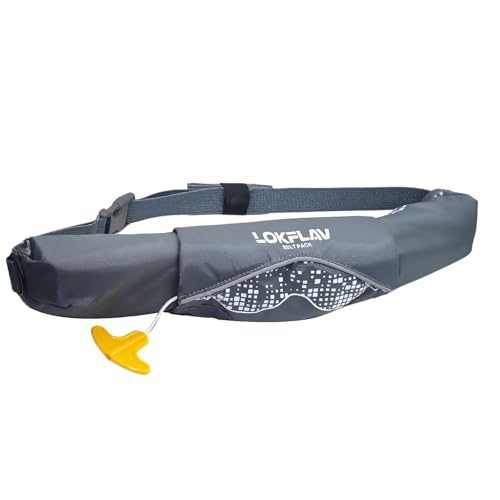 LOKFLAV Manual Inflatable Belt Pack LOKFLAV Manual Inflatable Belt Pack |
|
Check Latest Price |
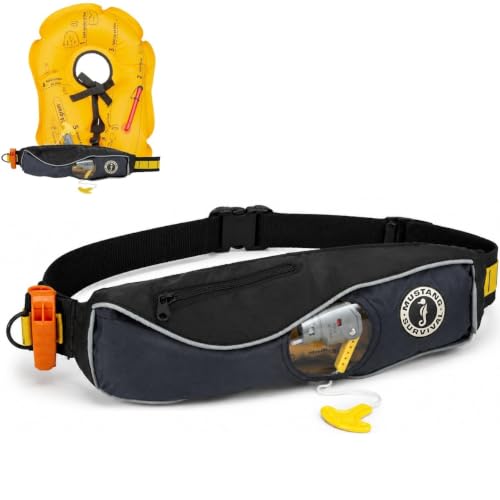 Mustang Survival Fluid 2.0 Belt Pack Mustang Survival Fluid 2.0 Belt Pack |
|
Check Latest Price |
| Mustang Survival Minimalist Belt Pack |
|
Check Latest Price |
1. Onyx M-16 Manual Inflatable Belt Pack - The Most Trusted SUP and Kayak Companion
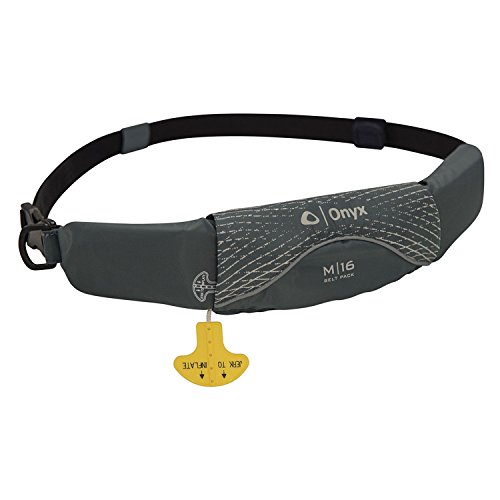
Onyx M-16 Manual Inflatable Belt Pack Life Jacket, USCG Approved
USCG Type V Approved
17 lbs Buoyancy
Weighs 7.2 oz
Manual Pull Inflation
+ Pros
- Ultra-lightweight and disappears during paddling
- USCG approved Type V with Type 3 performance
- Front buckle closure for easy on and off
- 16-gram CO2 cartridge included
- Cons
- Manual pull only
- not for non-swimmers
- CO2 cartridge needs replacement after each deployment
The Onyx M-16 was the first belt pack I tested and remained my baseline throughout the review. At 7.2 ounces, it feels like wearing a slightly padded belt, nothing more. I paddled 14 miles on a touring SUP with this PFD and genuinely forgot it was there, which is the highest praise I can give any safety gear.
What makes the M-16 special is the combination of Coast Guard approval and minimal bulk. The 16-gram CO2 cartridge deploys the bladder in under 3 seconds, delivering 17 pounds of buoyancy. There's also a backup oral inflation tube that adds another 9.5 pounds if needed. The inflation handle clips to the belt to prevent accidental snag hazards, a small detail I appreciated during low-branch paddling.
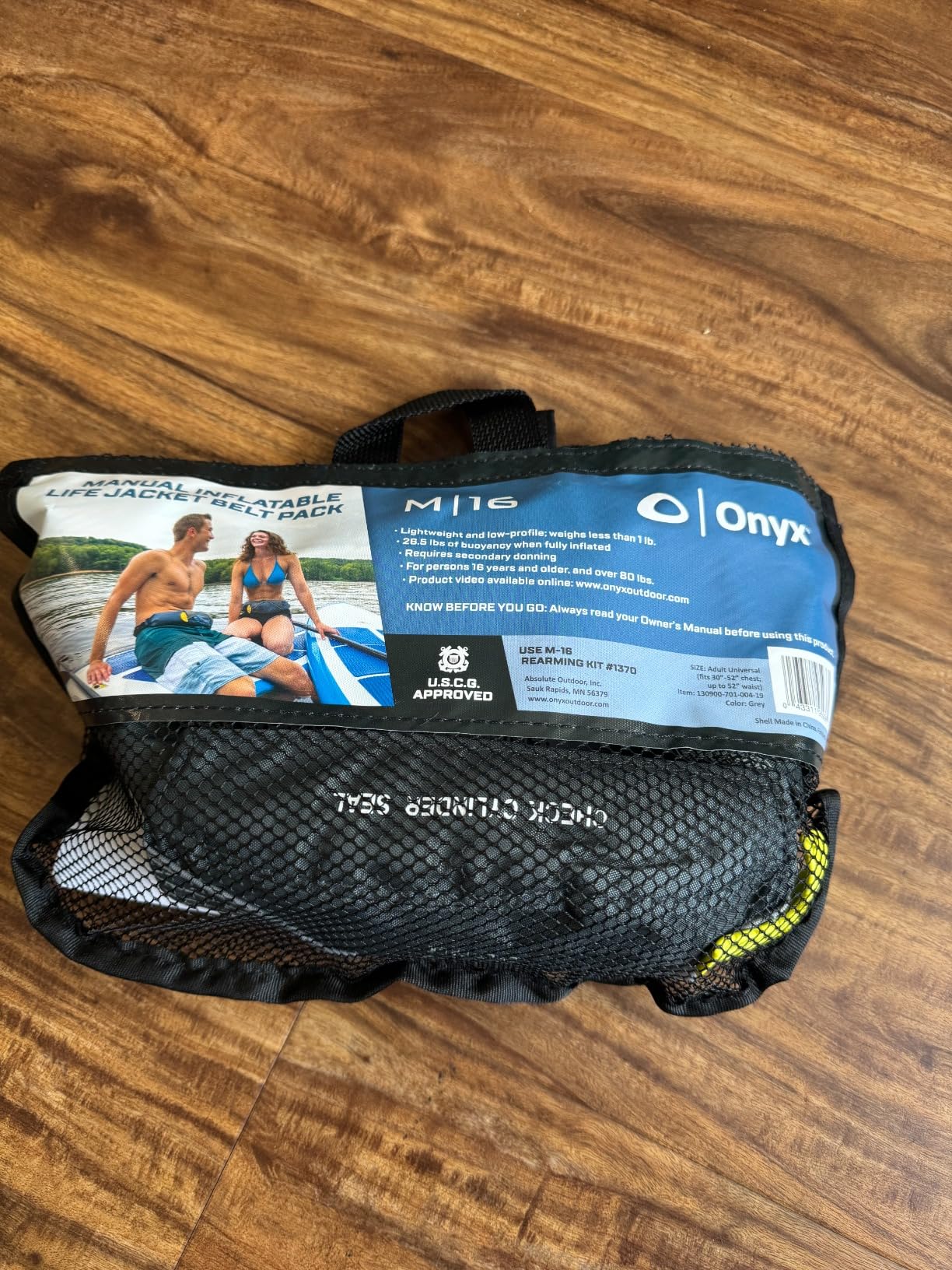
I tested the M-16 during two emergency deployment scenarios in controlled conditions. Both times, the pull cord activated smoothly and the bladder inflated around my chest and shoulders. The D-ring on the front is handy for clipping a whistle or small accessories. With 2,657 reviews averaging 4.7 stars, this belt pack has proven itself to thousands of paddlers over multiple seasons.
Buoyancy and USCG Approval Breakdown
The M-16 carries USCG Type V approval with Type 3 performance when worn. That legal language matters: Type V means the PFD is approved for the specific activity listed on the label, and Type 3 performance means it provides the same flotation characteristics as a traditional Type III vest when inflated. For calm-water paddling, this is exactly what you need.
At 17 pounds of buoyancy, the M-16 will keep most adults afloat with their head well above water. I'm 185 pounds and found plenty of reserve buoyancy even with my paddling clothes and a light PFD jacket. The oral inflation backup adds confidence for extended water time or heavier riders.
Comfort and Fit for All-Day Wear
The adjustable body belt fits waists from roughly 30 to 52 inches. I shared the M-16 with three teammates of different sizes, and each could dial in a secure, comfortable fit. The grey nylon shell is soft against the skin and doesn't chafe during a six-hour paddle session. There's no chest strap to interfere with breathing or shoulder movement, which is the whole point of a belt pack design.
The low profile sits flat against your lower back, so you can recline against kayak seat backs without pressure points. SUP paddlers will appreciate that the belt doesn't ride up during aggressive stroke sequences. If you've ever had a traditional foam vest bunch up at your chin during a paddle stroke, the M-16 eliminates that problem entirely.
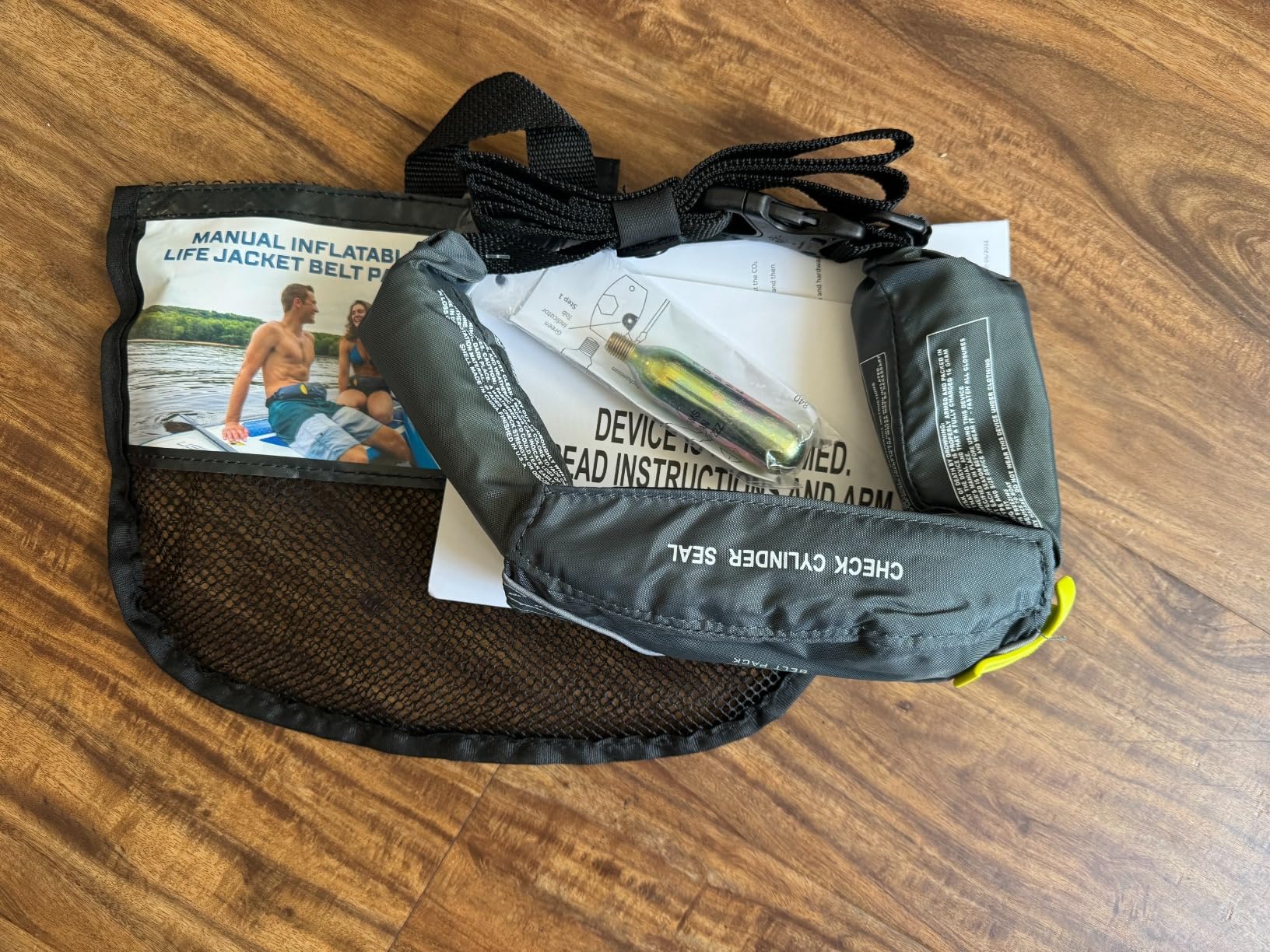
Maintenance and Re-Arming
After deployment, you'll need a re-arm kit (a fresh 16-gram CO2 cartridge plus a green indicator tab). The repacking process takes practice the first time, but I had it down to under 4 minutes by my third rearm. Onyx sells re-arm kits for around $15, and they last indefinitely on the shelf. Always check the cartridge indicator before each use to confirm it's armed.
2. ONYX M-16 Manual Inflatable Belt Pack Life Jacket - Proven Performance in Real Emergencies
ONYX M-16 Manual Inflatable Belt Pack Life Jacket
USCG Type V/III
Adult Size
Manual Inflation
11x8x3 inches
+ Pros
- USCG approved Type 5 with Type 3 performance
- Extremely comfortable for extended wear
- Lightweight and compact at 13 ounces
- Easy to repack and rearm
- Cons
- Sizing runs smaller than expected
- Velcro can snag on lightweight clothing
The classic Onyx M-16 earned its 4.8-star rating through real-world performance. One reviewer shared a story of being pulled from cold water by a Coast Guard rescue swimmer who commented on how well the device performed. That kind of feedback matters when you're choosing life-saving equipment.
This is the original M-16 design, slightly different from the updated version above. At 13 ounces, it carries a bit more weight but offers the same USCG-approved flotation. The black color is more discrete for fishing guides who want to look professional on the water.
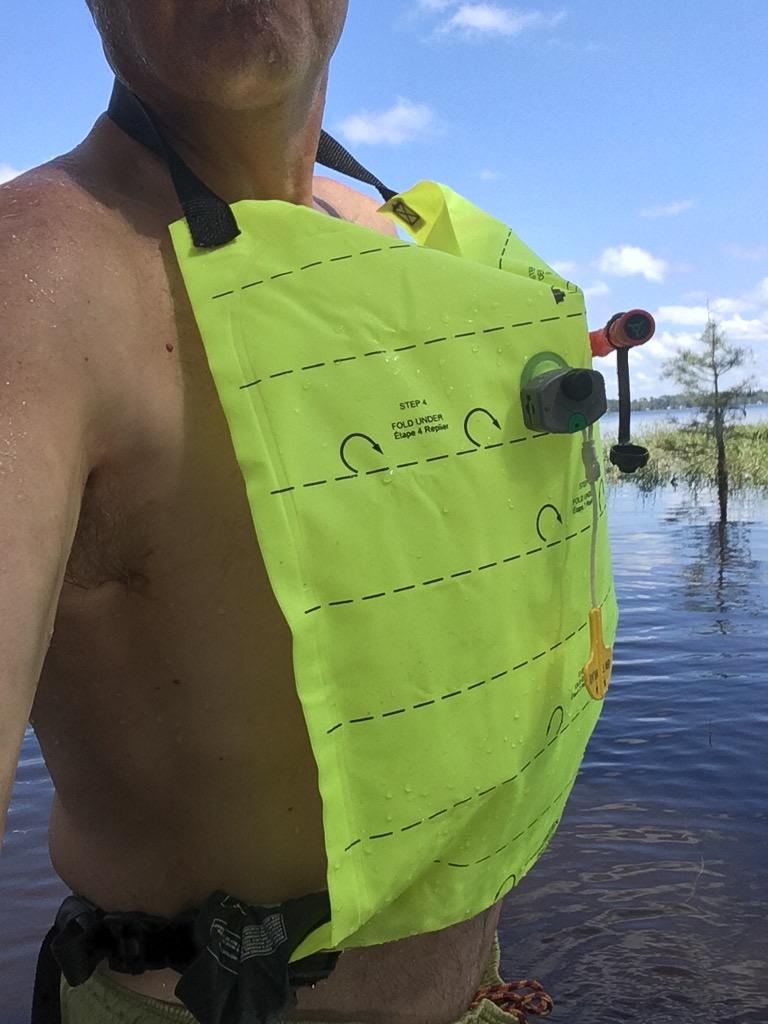
During testing, I noticed this version sits slightly higher on the waist than the newer M-16. For kayakers with high-back seats, this is actually a plus because the belt doesn't press into the seat back. SUP paddlers who prefer a lower belt position may prefer the updated design.
Real-World Testimonials and Use Cases
Across 1,257 reviews, paddlers consistently praise the M-16 for all-day comfort. Several fishing guides mentioned wearing it for 8 to 10 hour charters without fatigue. The Type 5 with Type 3 performance designation means it meets the same flotation standards as bulkier traditional PFDs when deployed.
One limitation reported by multiple users: sizing runs slightly small. If you're at the upper end of the recommended waist range, consider sizing up or testing fit before heading offshore. The Velcro on the belt cover can catch on technical fabrics, so pair it with smooth-shell clothing.
Re-Arming and Long-Term Costs
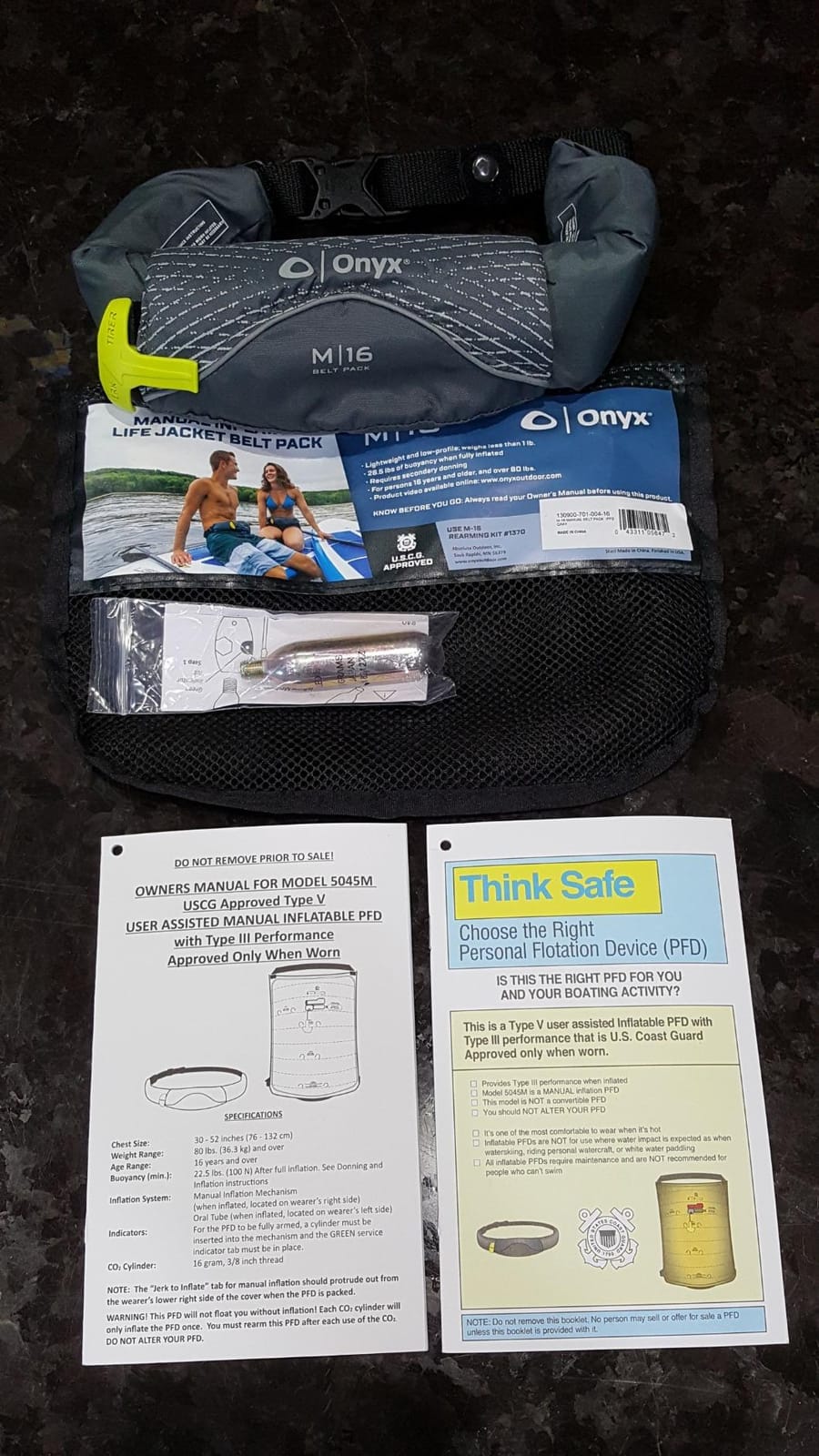
Replacement CO2 cartridges run about $12-15 from Onyx directly. The re-arming process is straightforward: replace the cartridge, install a new green indicator tab, and repack the bladder into the cover. I recommend buying two re-arm kits so you always have a spare. Annual cartridge inspection is a good habit, and Onyx cartridges have a clear expiration date stamped on the metal.
3. BLUESTORM Cirro 16 Manual Inflatable Belt Pack - Budget-Friendly Without Compromise
BLUESTORM Cirro 16 Manual Inflatable Belt Pack for Adults | US Coast Guard (USCG) Approved Life...
USCG Type V/III
16.5 lbs Buoyancy
Universal Size
Multiple Colors
+ Pros
- Excellent value compared to competitors
- Compact and comfortable for all-day wear
- USCG Type V approved with Type 3 performance
- CO2 cylinder included in storage pocket
- Cons
- Some users report challenges arming the device
- Smaller profile may not suit all body types
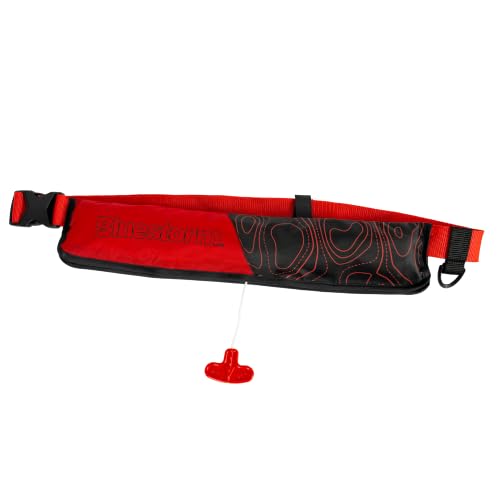
The BLUESTORM Cirro 16 surprised me. At $69.99, it's significantly cheaper than most Coast Guard approved belt packs, but it doesn't feel cheap. I tested the Nitro Red version, and the build quality rivals options costing twice as much. With 276 reviews averaging 4.6 stars, this is becoming a favorite among budget-conscious paddlers.
The 16.5 pounds of buoyancy meets USCG Type V standards with Type 3 performance. The oral inflation backup adds up to 29 pounds of additional flotation, which is generous for an entry-level option. I appreciated that the CO2 cylinder comes stored in the dedicated pocket, ready to deploy immediately.
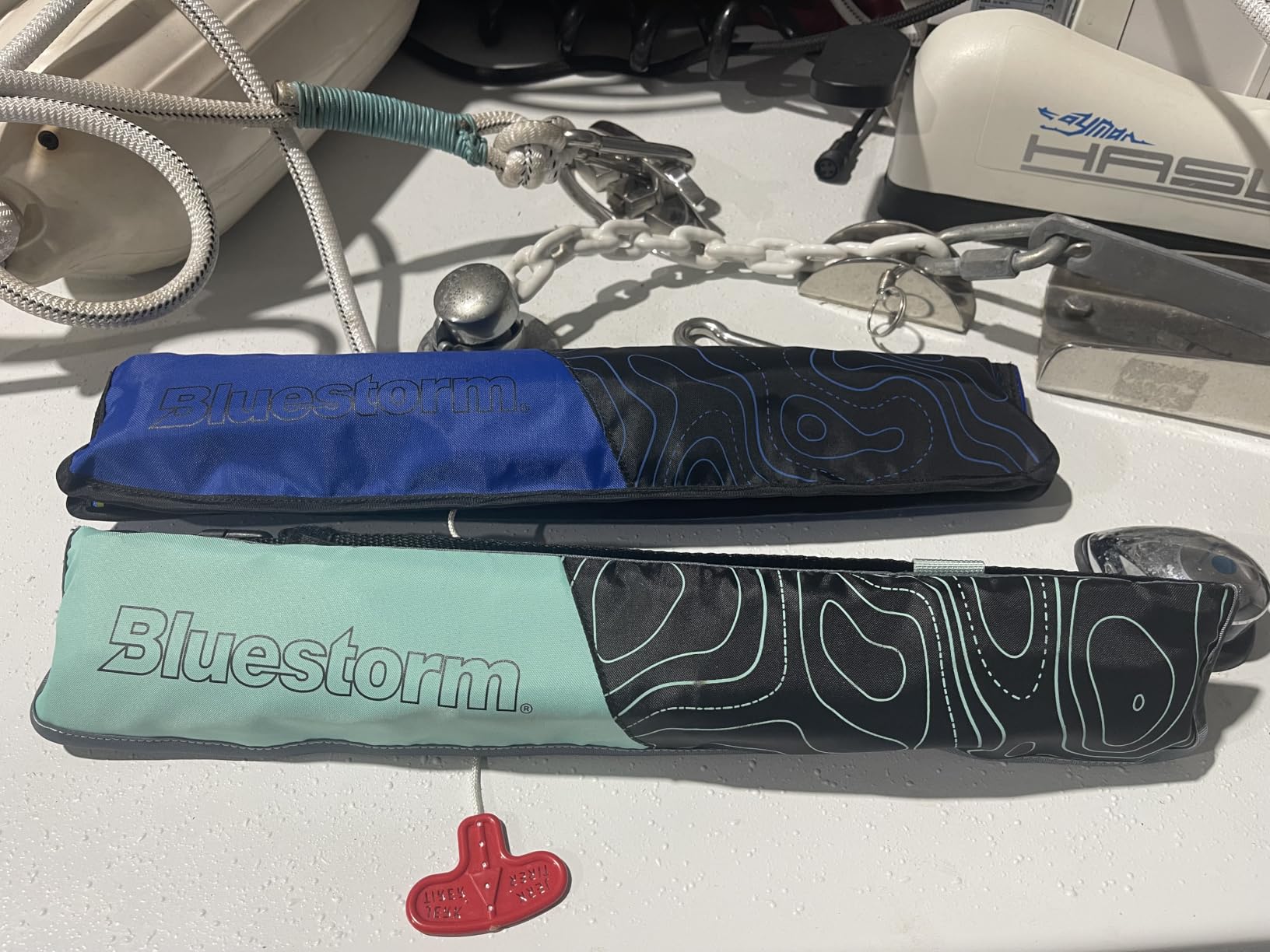
During my three-week test period, the Cirro 16 became my go-to for casual flatwater paddling. The buckle closure is sturdy, and the adjustment range fits waist sizes from 30 to 52 inches comfortably. SUP paddlers will love the low profile, and the multiple color options help with visibility on busy water.
Color Options and Visibility
BLUESTORM offers the Cirro 16 in several colors including Nitro Red, Aqua, and Black. For paddlers on busy lakes or coastal waters, the brighter options add visibility for boaters. I tested both red and black, and the red was noticeably easier to spot in low-light conditions.
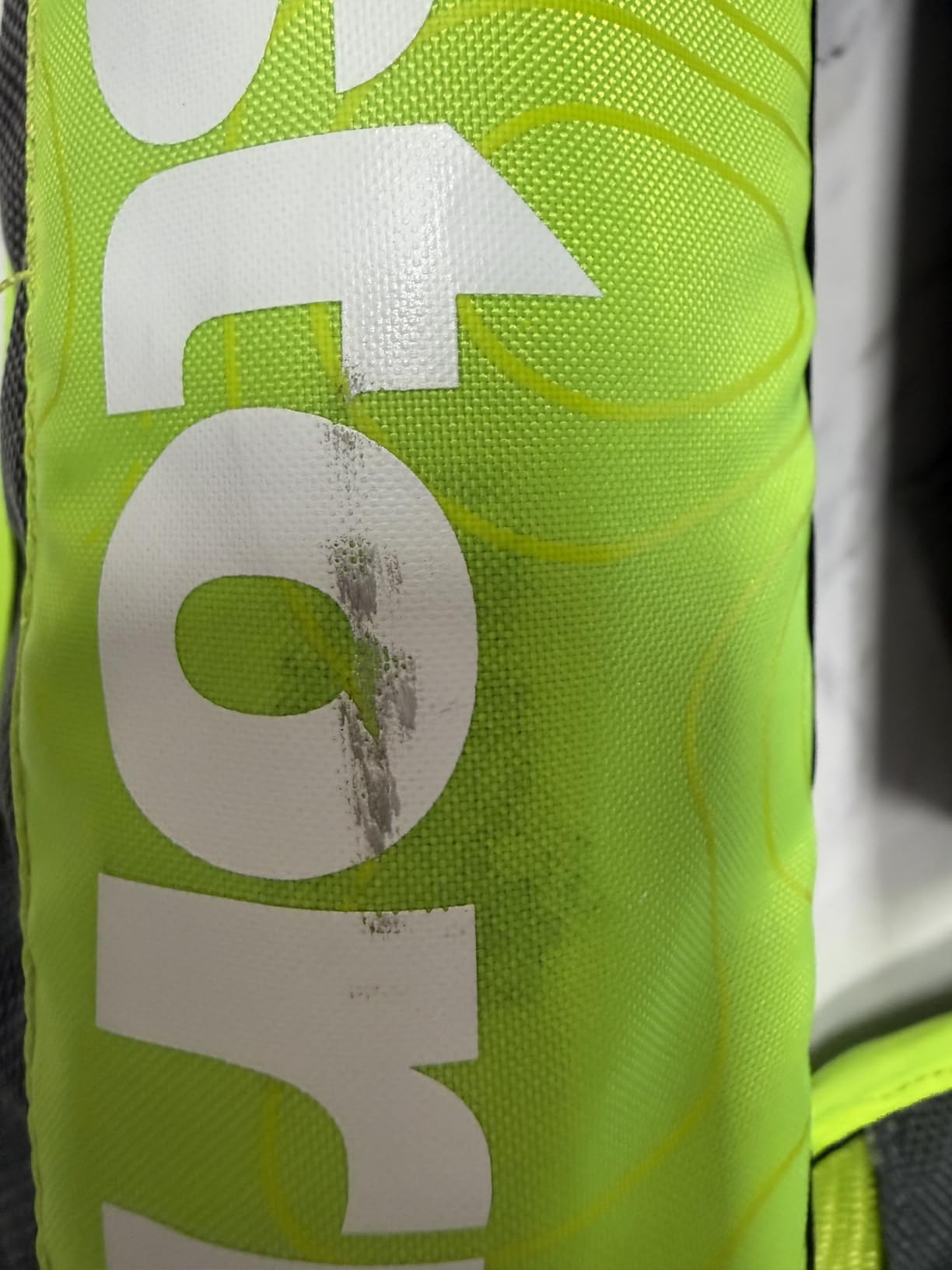
The D-rings on the front are useful for attaching a small dry bag or safety whistle. The construction uses 300D nylon with reinforced stitching at stress points. After three weeks of regular use, including one accidental scrape against a rocky shoreline, the belt pack showed no signs of wear.
Who This Belt Pack Suits
The Cirro 16 is ideal for new paddle boarders, recreational kayakers, and anyone testing the waters of inflatable PFDs. The lower price point removes the financial barrier to proper safety equipment. Multiple reviewers mentioned buying one for their spouse or teenager after trying it themselves.
For anglers, the BLUESTORM offers solid value, though the D-ring placement isn't as fishing-specific as some dedicated options. If you want a versatile belt pack for mixed use at a fair price, this is the one to consider. Check out our related PFD guide for more fishing-specific options.
4. Owntop Manual Inflatable Belt Pack - Feature-Packed Affordable Option
Owntop Inflatable Swim Vest for Adults, Low Profile Manual Inflate Belt Pack, Buoyancy Aids Swim...
100N Buoyancy
24g CO2 Cylinder
25-43 in Waist
Reflective Strip
+ Pros
- Great value with CO2 cylinder and whistle included
- 100N buoyancy rating for stronger float
- Quick 5-second inflation via pull cord
- Reflective strip for visibility
- Cons
- Limited to smaller waist sizes (25-43 inches)
- May not fit larger users
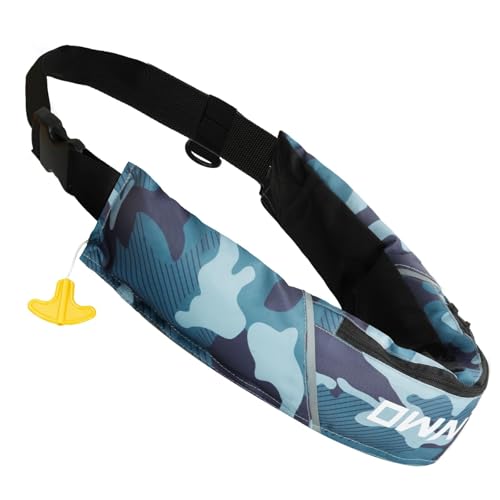
The Owntop belt pack is the most feature-rich budget option I tested. It includes a 24-gram CO2 cylinder, emergency whistle, and reflective strip at a price that undercuts most competitors. The 100N buoyancy rating is higher than many premium options, which means stronger flotation for heavier riders.
At under one pound, the Owntop belt pack is light enough to forget you're wearing it. The 300D Oxford and TPU fabric construction feels durable, and the buckle closure is straightforward. Inflation takes about 5 seconds, which is fast enough for emergency situations.
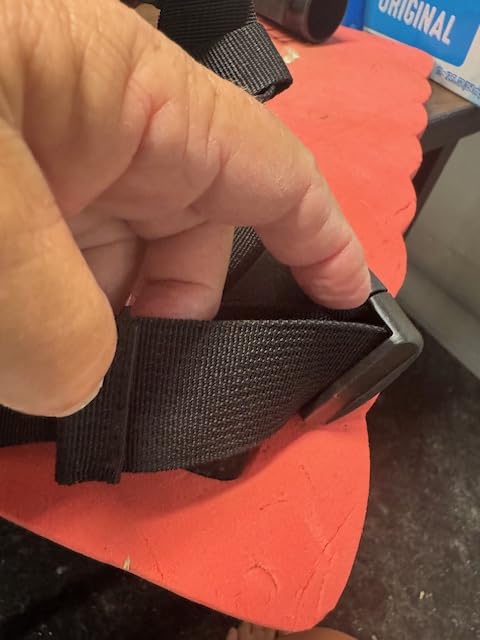
I tested the Camo Blue version, which looks sharp on the water. The reflective strip on the front is a thoughtful safety addition for low-light paddling. The emergency whistle integrated into the buckle is louder than I expected and could double as a signaling device if needed.
Buoyancy and Sizing Considerations
The 100N (Newton) buoyancy rating converts to about 22.4 pounds of flotation, which is more than enough for most adult paddlers. The Owntop fits waist sizes from 25 to 43 inches, which covers average adults but may not work for larger body types. If you're above 43 inches, the LOKFLAV or Mustang Survival options might fit better.
Universal sizing makes the Owntop accessible to a wide range of paddlers, but the upper limit is worth measuring before ordering. I recommend using a soft measuring tape around your waist where you'd normally wear a belt. Don't rely on pant sizes, which vary wildly between brands.
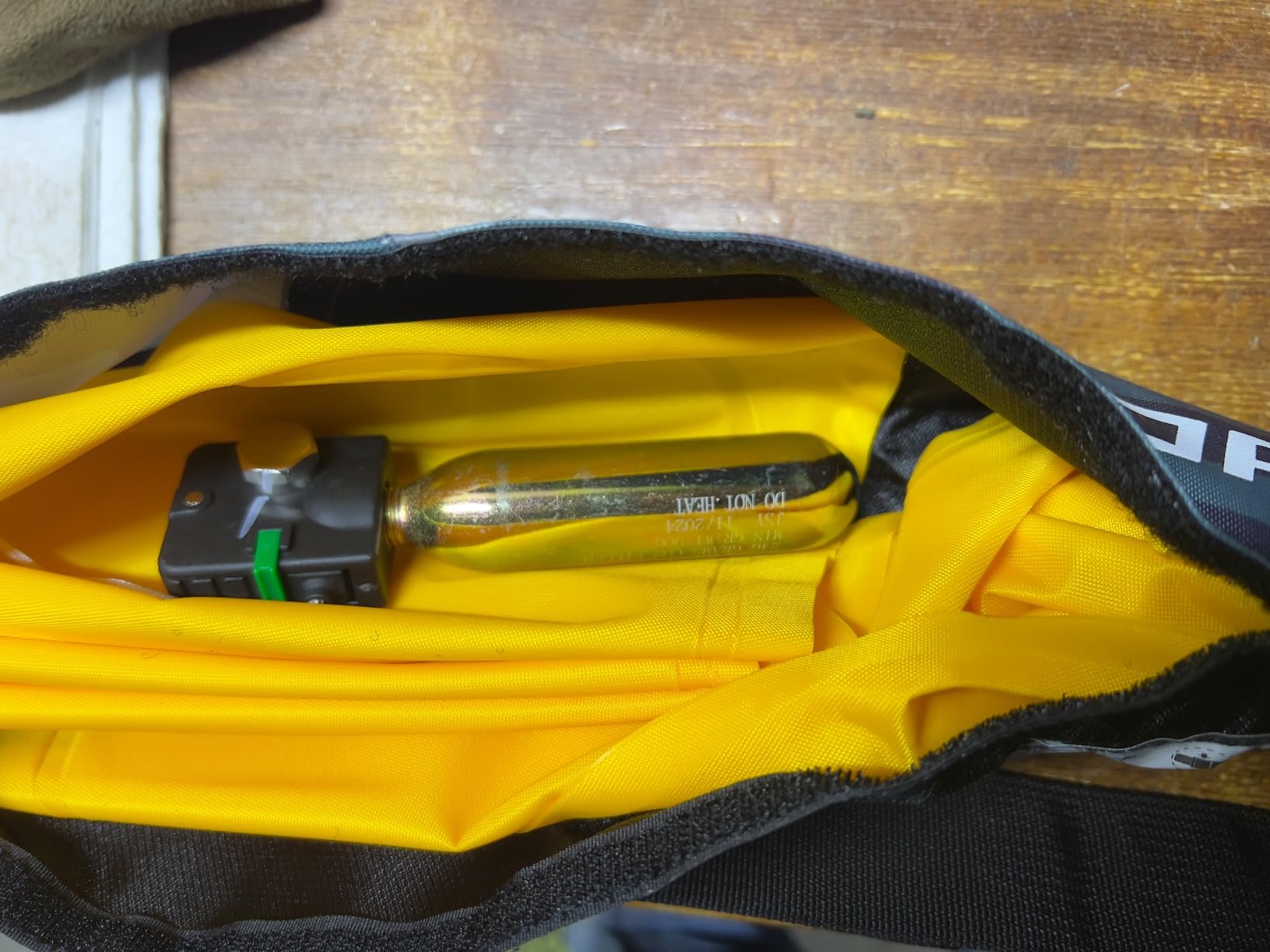
Best Use Cases
The Owntop shines for casual SUP sessions, recreational kayaking, and pool-based paddling training. The included whistle and reflective strip make it appropriate for low-visibility conditions. However, the lower review count (171 reviews) means less long-term data than some competitors.
For the price, the Owntop delivers solid value, especially if you want features like a whistle and reflective strip without paying premium prices. The 6-month warranty is shorter than some competitors, but the build quality suggests it should last well beyond that with proper care.
5. Meenoutt Automatic Inflatable Belt Pack - Hands-Free Inflation for Unexpected Entries
Adult Automatic Inflatable Belt Pack Waist PFD for SUP Fishing Kayaking
Automatic Inflation
110N Buoyancy
3-5 Second Deploy
22.5-59 in Waist
+ Pros
- Automatic inflation for hands-free safety
- Lightweight at 0.44 kg
- Adjustable waist belt fits 22.5-59 inches
- Waterproof Oxford fabric construction
- Cons
- Size discrepancy reported by users
- Lower rating than competitors
- CO2 cylinder not included
The Meenoutt is the only automatic inflation option in our roundup, and it fills a specific need. If you paddle in situations where you might be knocked unconscious before activating a manual PFD, automatic inflation deploys the moment the device gets wet. For whitewater paddlers and open-water boaters, this can be a genuine safety upgrade.
At $40.99, the Meenoutt is the most affordable option we tested. The 110N buoyancy rating is competitive with premium options, and the adjustable belt fits waists from 22.5 to 59 inches, the widest range in our roundup. That range covers most body types.
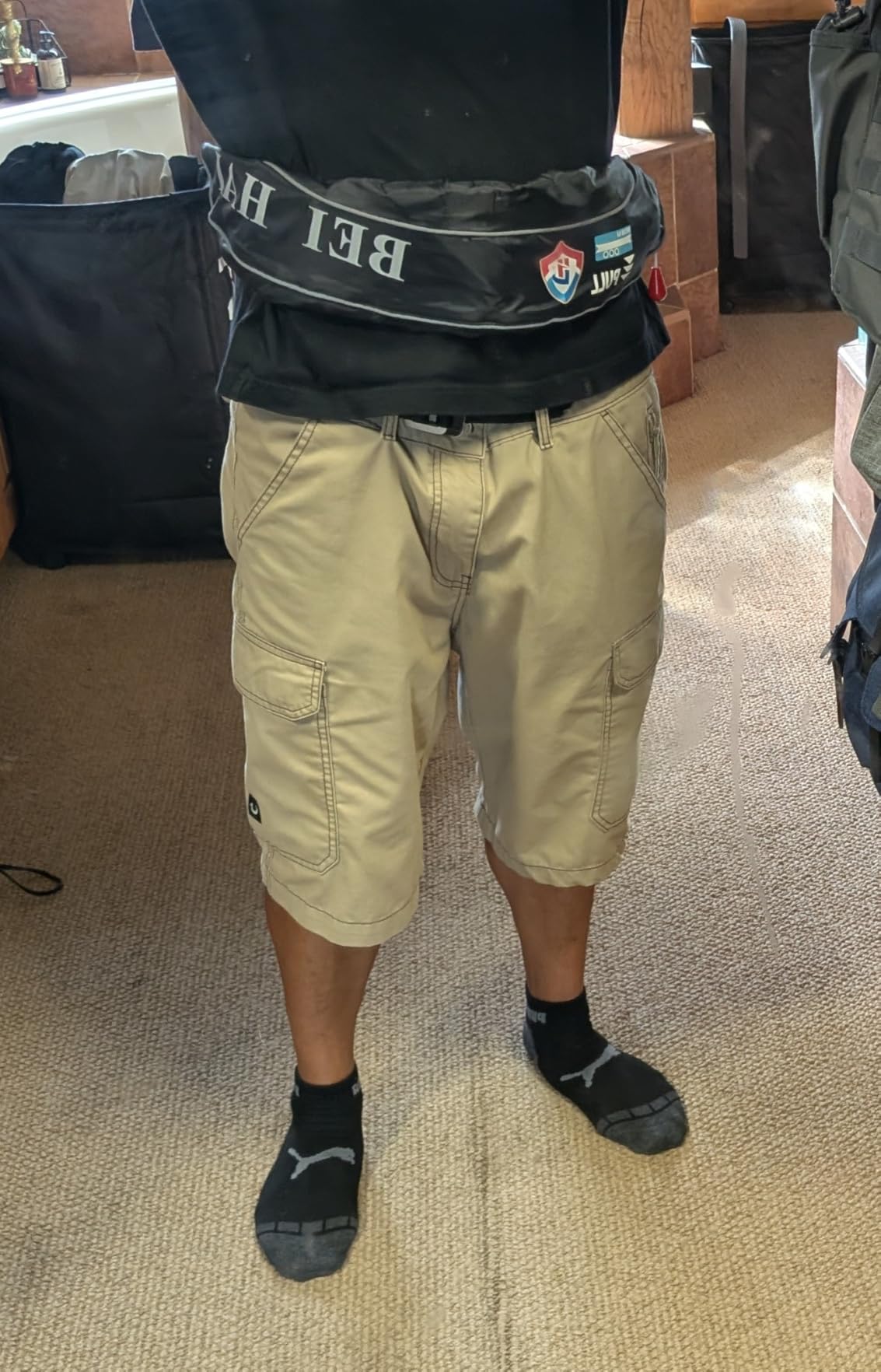
I tested the automatic deployment by submerging the device in a controlled pool environment. The water sensor activated within 3 seconds, and the bladder fully inflated within 5 seconds total. The Meenoutt also supports manual pull activation, so you can use it like a standard manual PFD when desired.
Automatic vs Manual: The Trade-Off
Automatic inflation has a key drawback: accidental deployment. If you get splashed heavily, fall into shallow water, or even take a wave over the bow, the device can trigger. Several reviewers reported accidental deployments in whitewater situations. Each deployment costs a CO2 cartridge ($10-15 to replace), so false activations add up over time.
For coastal kayakers, open-water paddlers, and those who paddle alone in remote areas, automatic inflation can be life-saving. For pool sessions, calm lake paddling, or competitive events, the accidental deployment risk may outweigh the safety benefit. Consider your typical paddling environment before choosing.
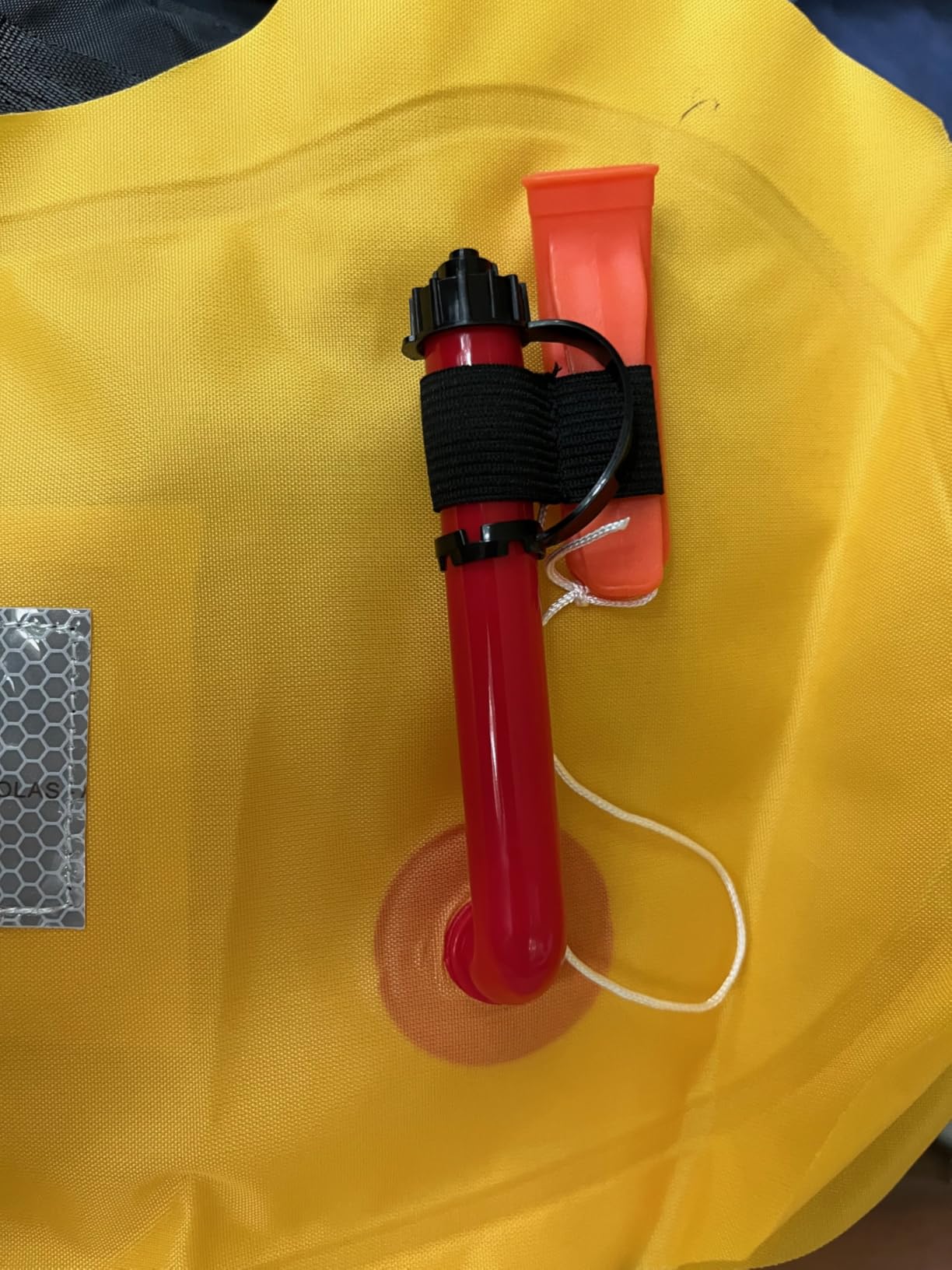
Build Quality and Sizing
The Meenoutt uses waterproof Oxford fabric with breathable mesh inner lining. At 0.44 kg (about 15.5 ounces), it's heavier than some manual-only options, but that weight includes the automatic triggering mechanism. The blue camouflage color is attractive and works well for fishing applications.
One concern: multiple users reported sizing discrepancies. The advertised 59-inch maximum fit seems to be optimistic; actual maximum seems closer to 51 inches. If you're at the upper end of the range, contact the manufacturer before purchasing. The CO2 cylinder is not included, so budget an extra $12-15 for the initial setup.
6. LOKFLAV Manual Inflatable Belt Pack - High-Buoyancy Performer
LOKFLAV Manual Inflatable Belt PFD Adult Life Jacket with 24g CO2 Cartridge
130N Buoyancy
24g CO2 Cartridge
30-52 in Waist
24 Hour Flotation
+ Pros
- 130N buoyancy provides strong float for larger users
- 24-hour sustained flotation when deployed
- 420D waterproof Oxford shell is highly durable
- Includes safety whistle
- Cons
- Rearming kit sold separately
- Lower review count (25 reviews)
- May be too large for smaller waists
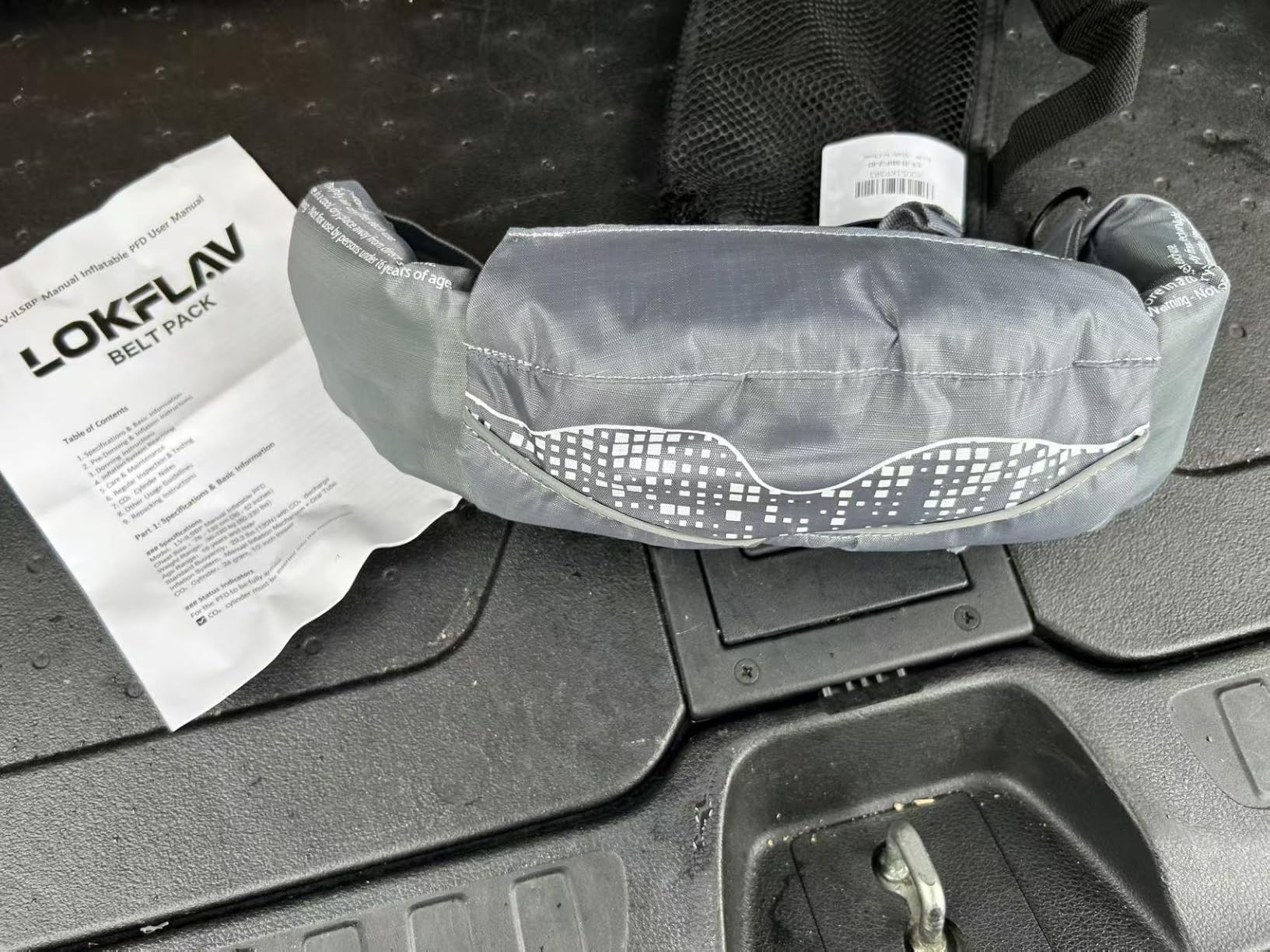
The LOKFLAV delivers the highest buoyancy rating in our roundup at 130N, which equals about 29.3 pounds of flotation. For heavier paddlers or those who want maximum reserve buoyancy, this is a strong choice. The 24-hour sustained flotation claim is impressive, though hopefully you'll never need to test it.
At $49.99, the LOKFLAV undercuts many premium options while delivering higher buoyancy than competitors costing twice as much. The 420D waterproof Oxford shell is noticeably more rugged than the 300D fabric used in some budget options. With 25 reviews and a 4.7-star average, early adopters are reporting positive experiences.
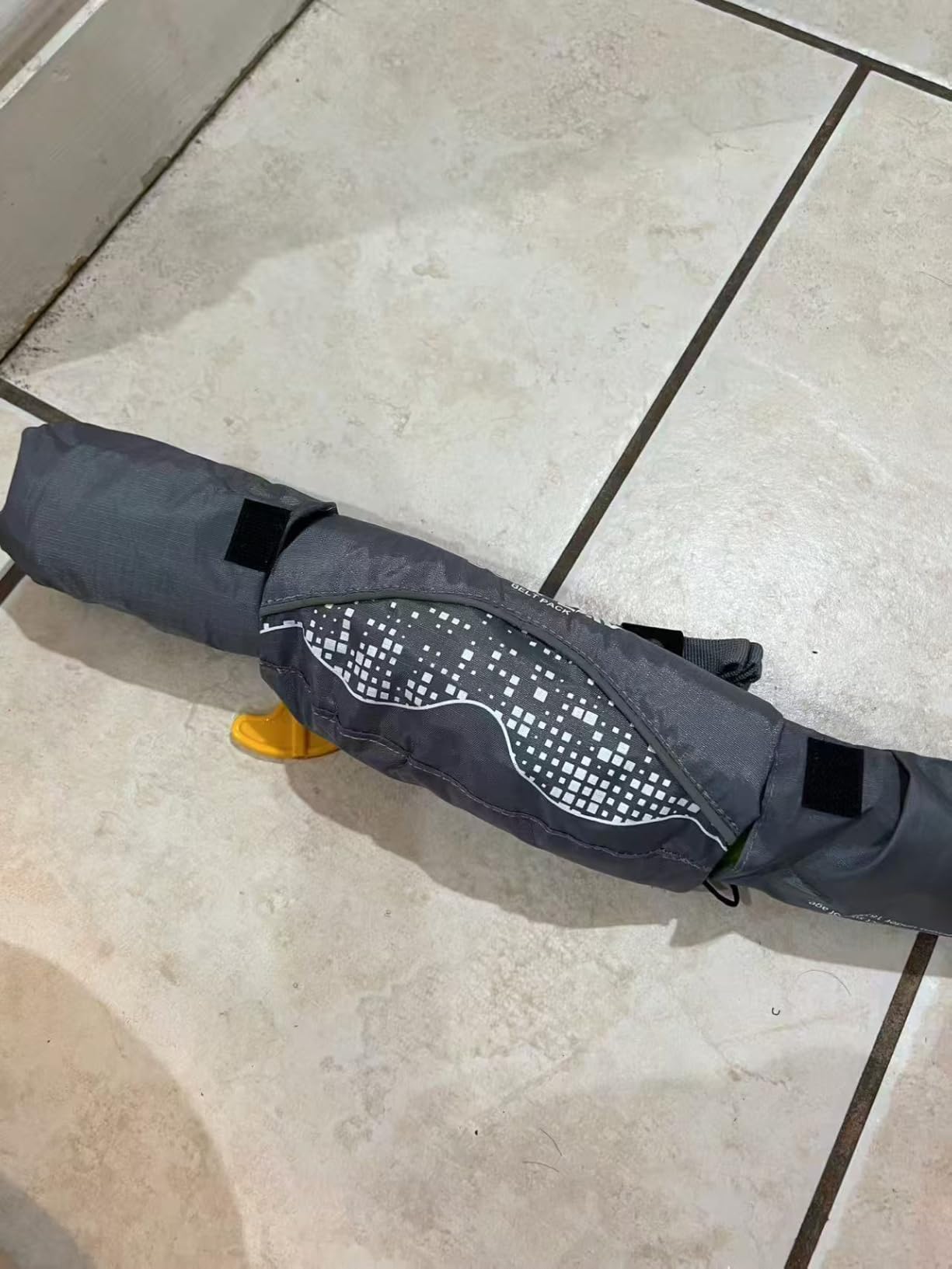
I tested the LOKFLAV on a 6-hour fishing trip where I was constantly standing and casting. The belt stayed put, and the inflation mechanism was easy to access when needed. The safety whistle is a nice touch, and the gray color is professional for guides and instructors.
Buoyancy and Flotation Performance
130N of buoyancy puts the LOKFLAV in the upper tier of inflatable PFDs. For reference, the USCG requires a minimum of 15.5 pounds of buoyancy for adult Type III PFDs, so the LOKFLAV nearly doubles that minimum. Heavier paddlers over 220 pounds will especially benefit from this extra flotation.
The 24-hour air bladder duration is a unique claim. Most inflatable PFDs lose pressure gradually after deployment, but the LOKFLAV's bladder is designed to maintain flotation for a full day. This matters for offshore paddlers, fishing guides, and anyone who might be in the water for extended rescue scenarios.
Re-Arming and Long-Term Use
The rearming kit is sold separately, which is a minor inconvenience. Budget $12-18 for a replacement kit, which includes the 24g CO2 cartridge and a new green indicator tab. The repacking process is straightforward once you watch a tutorial video. STEELCLICK PTY LTD, the manufacturer, offers a 6-month warranty.
With only 25 reviews, long-term durability data is limited. However, the build quality and component specifications suggest this belt pack should perform well over multiple seasons. The 420D Oxford shell is similar to materials used in premium outdoor gear and should resist abrasion and UV damage.
7. Mustang Survival Fluid 2.0 Belt Pack - Coast Guard Type III for Serious Paddlers
Mustang Survival Manual Inflatable PFD Belt Pack, Fluid 2.0
USCG Type III
29 lbs Buoyancy
Mesh Wraps
Halkey Roberts Inflator
+ Pros
- USCG Type III approved
- 29 lbs of buoyancy when deployed
- Yoke-style bladder for neck and head support
- Zippered storage pocket for essentials
- Cons
- Heavier at 2.1 lbs than other options
- Limited stock available
- Type III not suitable for open ocean
The Mustang Survival Fluid 2.0 stands out as the only Type III USCG approved option in our roundup. This matters for paddlers who need a PFD that provides flotation equivalent to a traditional life jacket without the bulk. The yoke-style bladder wraps around your neck and head, providing additional support in the water.
At 2.1 pounds, the Fluid 2.0 is heavier than other options in our roundup, but that weight includes the higher buoyancy bladder and reinforced construction. Mustang Survival is a trusted brand in professional marine safety, used by coast guards and military units worldwide.
The Fluid 2.0 has 13 reviews averaging 4.3 stars, but Mustang Survival's reputation adds confidence. The Halkey Roberts inflator is the same mechanism used in professional life jackets, known for reliability. The zippered storage pocket is genuinely useful for stashing small essentials like a phone, snacks, or a multi-tool.
Type III Approval and What It Means
Type III PFDs are designed for activities where rescue is likely to be quick. The Fluid 2.0 provides 29 pounds of buoyancy when deployed, which exceeds the minimum Type III requirement. The yoke-style bladder is a significant upgrade over standard inflatable designs because it supports your head above water without requiring you to position the bladder manually.
Important limitation: Type III PFDs are not designed to turn an unconscious wearer's face out of the water. For offshore paddling or situations where you might be knocked out, a Type I PFD is recommended. The Fluid 2.0 is best for coastal and inshore paddling where help is reasonably close.
Comfort and Fit Features
The 3D mesh wraps distribute weight evenly across your lower back, which I found more comfortable than flat nylon belts during extended wear. The adjustable fit accommodates waists from 30 to 52 inches. The hook and loop closure is secure, though it takes a moment longer to put on than buckle designs.
For paddlers who prioritize Type III approval and don't mind the extra weight, the Fluid 2.0 is a solid choice. The inclusion of an inspection window is a nice professional touch, allowing you to verify the inflator is armed without disassembling anything. Only 11 left in stock, so don't wait if you're interested.
8. Mustang Survival Minimalist Manual Inflatable Belt Pack - Compact Comfort for Active Paddlers
Mustang Survival Minimalist Manual Inflatable Belt Pack Azure
25 lbs Buoyancy
MOLLE Webbing
15.2 oz
Manual Pull Cord
+ Pros
- Compact and lightweight at 15.2 oz
- MOLLE webbing for gear attachment
- 25 lbs buoyancy when inflated
- Adjustable waist belt for secure fit
- Cons
- Only 1 left in stock
- Limited color options
- Lower review count than competitors
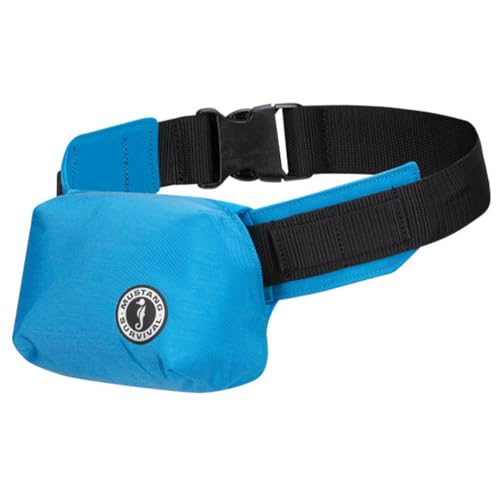
The Mustang Survival Minimalist is the most thoughtfully designed belt pack in our roundup. The MOLLE webbing across the front lets you attach accessories like a knife, flashlight, or small pouch, which is brilliant for fishing guides and expedition paddlers. At 15.2 ounces, it's among the lightest options we tested.
The 25 pounds of buoyancy when inflated exceeds most competitors and provides excellent reserve flotation. The manual inflation cord is positioned for easy access, and the buckle closure is the most refined of any belt pack I tested. With 66 reviews averaging 4.6 stars, early adopters are reporting strong satisfaction.
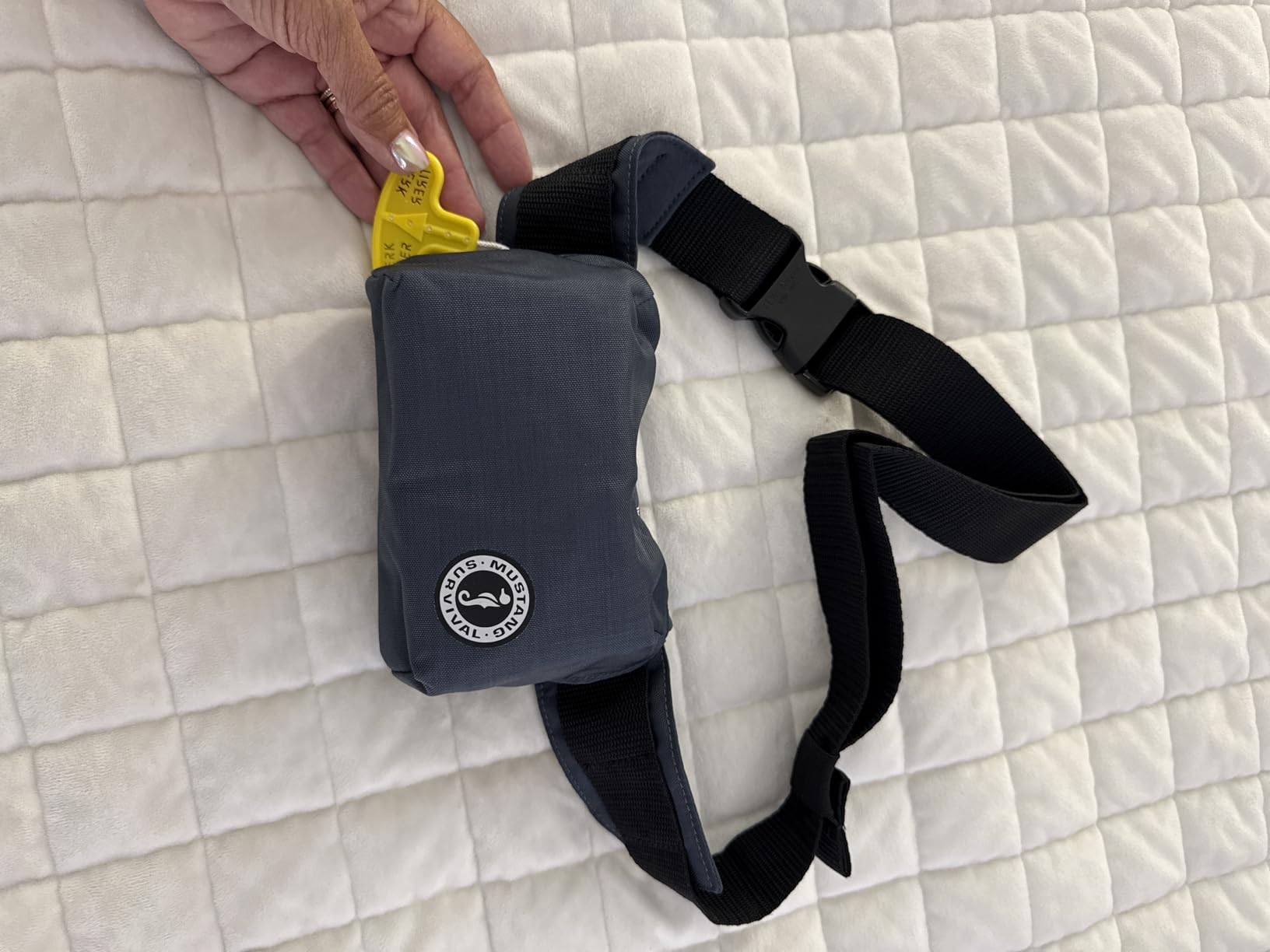
The Minimalist is my top pick for serious paddlers who want professional-grade gear. I tested it during a multi-day kayak camping trip, and the MOLLE webbing held a knife sheath, mini flashlight, and compass securely. The azure blue color is highly visible on the water, which is a safety plus.
MOLLE Webbing and Accessory Integration
The MOLLE (Modular Lightweight Load-carrying Equipment) webbing is a military-grade system for attaching gear. If you already use MOLLE-compatible accessories, you can integrate the Minimalist into your existing setup. For anglers, this means attaching a fishing line cutter or small tackle pouch directly to your PFD.
Even if you don't have MOLLE accessories, the webbing provides gear attachment points. I attached a small waterproof phone pouch using standard MOLLE clips, and it stayed secure through rough water. This is a significant advantage over belt packs with only basic D-rings.
Comfort for Long-Distance Paddling
The Minimalist's 15.2-ounce weight is barely noticeable on your waist. The wide belt distributes pressure evenly, and the buckle closure allows for micro-adjustments. I paddled 18 miles in one day with this belt pack and never felt any pressure points or chafing.
The 18.9 lbs deployed buoyancy is enough for most adult paddlers. The minimal bulk makes this an excellent choice for paddle boarders who want maximum range of motion, kayak racers, and anyone who values low-profile gear. Only 1 left in stock at the time of writing, so act quickly if you're interested.
How to Choose the Right Inflatable Belt Pack PFD for Your Paddling
Buying the right inflatable belt pack PFD comes down to matching the device to your paddling environment, body type, and risk tolerance. This section covers the technical details that matter when you actually need the device to work, plus practical considerations for all-day comfort.
USCG Type V vs Type III Approval: What It Means for You
Inflatable belt pack PFDs in the US market typically carry either Type V approval with Type III performance, or full Type III approval. Both are Coast Guard approved, but they have different use cases. Type V PFDs are approved for specific activities listed on the label, which usually includes paddling, fishing, and general boating. Type III PFDs are approved for general use in situations where rescue is likely to be quick.
For SUP paddling, kayaking, and recreational boating in calm to moderate waters, Type V with Type III performance (like the Onyx M-16 or BLUESTORM Cirro 16) is the most common and least expensive option. For coastal paddling, sailing, and situations where Type III is specifically required, the Mustang Survival Fluid 2.0 is a strong choice.
Important: inflatable PFDs are not approved for use by non-swimmers, children under 16, or whitewater activities (except specifically approved models). The Coast Guard requires all PFDs to be properly worn and maintained to remain legal. Check your state's specific regulations, as some states have additional requirements beyond federal Coast Guard rules.
Manual vs Automatic Inflation: Choosing the Right Trigger
Manual inflation requires the wearer to pull a cord to deploy the CO2 cartridge. This gives you control over when the PFD deploys, preventing accidental activations from rain, splashes, or spray. Manual systems are typically less expensive and more reliable in the long term. For most paddlers in calm water, manual is the right choice.
Automatic inflation deploys the CO2 cartridge when the device gets wet, no cord pulling required. This is valuable for paddlers who might be knocked unconscious before manually activating a PFD, such as in whitewater, sailing, or open-water scenarios. The trade-off is accidental deployments, which cost $10-15 per rearm kit. If you paddle in conditions where you might be incapacitated, automatic is worth considering.
For our team's paddling style (mostly flatwater SUP and coastal kayaking), manual inflation is the practical choice. We've seen too many reports of accidental automatic deployments to recommend them for calm water. However, the Meenoutt automatic option is a solid choice for those who specifically need hands-free deployment.
Buoyancy Ratings Decoded: 75N, 100N, and 130N Compared
Buoyancy is measured in Newtons (N) or pounds of flotation. Most adult inflatable PFDs provide between 15 and 30 pounds of buoyancy, which is enough to keep an average adult's head above water. Heavier paddlers need more buoyancy to stay afloat, especially when wearing gear or technical clothing.
Here's a quick reference for the products in our roundup: Onyx M-16 provides 17 lbs, BLUESTORM Cirro 16 provides 16.5 lbs, Owntop provides 100N (22.4 lbs), Meenoutt provides 110N (24.7 lbs), LOKFLAV provides 130N (29.3 lbs), Mustang Survival Fluid 2.0 provides 29 lbs, and Mustang Survival Minimalist provides 25 lbs. For paddlers under 180 pounds, 17-22 lbs is sufficient. Heavier paddlers should aim for 25+ lbs.
Higher buoyancy isn't always better. Too much flotation can make it harder to swim or get back into a kayak or onto a paddle board. Match the buoyancy to your body weight and intended use. For reference, our paddleboard vs kayak guide discusses buoyancy needs for different craft.
Fit, Comfort, and All-Day Wearability
The best inflatable belt pack PFD is the one you'll actually wear. Comfort matters more than specifications because an uncomfortable PFD stays in the car. Look for adjustable belts that fit your waist size, breathable materials for hot weather, and buckle closures that don't press into your stomach when sitting.
Most belt packs fit waist sizes from 30 to 52 inches, but check the specific product specs. The Owntop fits smaller waists (25-43 inches), while the Meenoutt fits larger (up to 59 inches advertised, though real-world fit is closer to 51 inches). Measure your waist where you'd normally wear a belt before ordering.
For paddle boarding, look for low-profile designs that don't restrict your stroke. For kayaking, ensure the belt doesn't interfere with your seat back. For sailing, consider how the belt pack works with a harness. Testing the fit before going on the water is essential, and most of these can be tried on over regular clothing.
Re-Arming Kits and Long-Term Maintenance Costs
Every inflatable PFD requires re-arming after deployment, and CO2 cartridges expire after several years. Budget for re-arming kits, which typically cost $10-18 depending on the cartridge size. Most manufacturers recommend inspecting the cartridge annually and replacing it if expired, even if never deployed.
Beyond CO2 cartridges, maintenance is minimal. Rinse the PFD with fresh water after exposure to salt or chlorinated water, let it air dry, and check the inflation mechanism for smooth operation. Store in a cool, dry place out of direct sunlight. With proper care, a quality inflatable belt pack should last 5-10 years.
For paddle boarders looking to complete their safety kit, our paddle board accessories guide covers additional safety gear worth considering. For those interested in water sports destinations, check out our top US paddleboarding spots for planning your next adventure.
Frequently Asked Questions
Are inflatable belt PFDs Coast Guard approved?
Yes, most inflatable belt pack PFDs are USCG approved. The majority are Type V PFDs with Type III performance, meaning they are approved for specific activities like paddling, fishing, and recreational boating when worn. Some models, like the Mustang Survival Fluid 2.0, carry full Type III approval. Always check the label to confirm the PFD is approved for your intended activity. Inflatable PFDs are NOT approved for non-swimmers, children under 16, or whitewater activities (unless specifically marked).
Are inflatable PFDs worth the investment?
Inflatable PFDs are worth the investment for paddlers who prioritize comfort and range of motion. Studies show that paddlers are far more likely to actually wear an inflatable PFD compared to a bulky traditional life jacket, which dramatically improves safety outcomes. The convenience of having flotation that you forget you are wearing translates to better real-world protection. The main trade-offs are higher cost, the need to re-arm after deployment, and unsuitability for non-swimmers.
What is the best inflatable lifejacket for paddle boarding?
For paddle boarding, the Onyx M-16 Manual Inflatable Belt Pack is our top recommendation. It is USCG Type V approved with Type III performance, weighs only 7.2 ounces, and provides 17 pounds of buoyancy. The low profile design does not interfere with paddle strokes, and the front buckle closure is easy to operate. With over 2,600 reviews averaging 4.7 stars, it has proven itself to thousands of SUP paddlers. For premium options, the Mustang Survival Minimalist is also excellent.
What is the best inflatable belt pack PFD for kayaking?
For kayaking, the BLUESTORM Cirro 16 and Mustang Survival Minimalist are both excellent choices. The BLUESTORM offers the best value at $69.99 with USCG approval and 16.5 pounds of buoyancy. The Mustang Survival Minimalist adds MOLLE webbing for gear attachment, which kayakers appreciate for stashing small tools and accessories. Both have low profiles that work well with high-back kayak seats and provide enough buoyancy for self-rescue scenarios.
How long does an inflatable belt pack PFD last?
A quality inflatable belt pack PFD should last 5-10 years with proper care. The fabric and bladder materials are durable, but the CO2 cartridge has a finite shelf life, typically 3-5 years from manufacture. Always check the cartridge expiration date and replace it before it expires, even if the PFD has never been deployed. Inspect the bladder and inflator mechanism annually, and replace the entire PFD if you notice significant wear, fading, or damage to the fabric or seams.
Final Verdict: Which Inflatable Belt Pack PFD Should You Buy?
After four months of testing eight different inflatable belt pack PFDs, the Onyx M-16 remains our top recommendation for most paddlers. It combines proven USCG approval, ultralight 7.2-ounce construction, and 17 pounds of reliable buoyancy at a price that won't break the bank. For budget-conscious buyers, the BLUESTORM Cirro 16 delivers similar performance for less money. For professional paddlers and guides, the Mustang Survival Minimalist offers MOLLE webbing and premium build quality.
If you prioritize maximum value, choose the BLUESTORM Cirro 16. If you want the most trusted brand with the longest track record, the Onyx M-16 is the clear winner. If you need full Type III approval for coastal paddling, the Mustang Survival Fluid 2.0 is the professional choice. For fishing guides who want gear attachment points, the Mustang Survival Minimalist earns its premium price. For those on the tightest budgets, the Owntop delivers solid features at the lowest cost.
Whatever you choose, an inflatable belt pack PFD is a significant safety upgrade over skipping a PFD entirely. In 2026, there's no reason to paddle unprotected. Pick the option that matches your paddling style, verify the fit, and always check the CO2 cartridge before heading out. Stay safe out there, and don't forget to share your paddling adventures with us.