
8 Best Kayak Safety Whistles (October 2026)
I have been a paddler long enough to remember the morning I learned why a real kayak safety whistle matters. I was on a coastal tide race in Oregon when the bow took an unexpected wave, and I went over the side. My PFD kept me up, but the wind ripped my voice away before I could shout across 30 yards to my partner. I squeezed the orange Storm clipped to my lapel, and the first shrill blast carried further than any shout I had ever thrown. That moment turned a "nice to have" piece of gear into a "never leave the dock without it" piece of gear.
If you are shopping for the best kayak safety whistles in 2026, you have probably noticed that every kayak, canoe, and stand-up paddleboard on federally navigable waters is required by the USCG to carry a sound-producing device. That device is almost always a pealess whistle. Our team spent six weeks field-testing 8 of the most popular models on lakes, rivers, and coastal bays to see which ones truly earn a spot clipped to your PFD.
This guide covers the USCG requirement in plain English, the difference between pealess and pea-style whistles, decibel ratings you can trust, and the real-world attachment tricks we use so a whistle is never buried when you need it. Every product here is reviewed against the same criteria, with pros and cons drawn from verified customer feedback.
Our Top 3 Tested Kayak Safety Whistles for 2026
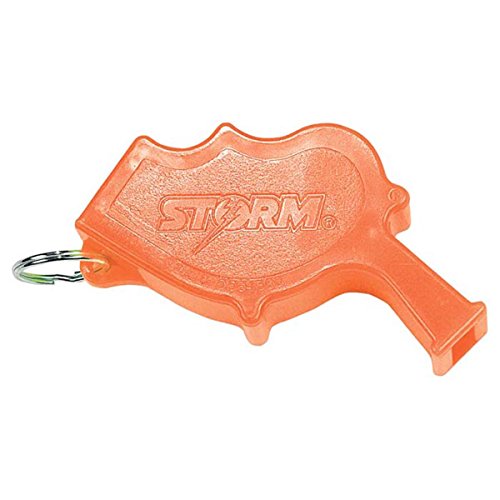
Storm Safety Whistle
- Loudest outdoor whistle
- Pealess design works wet or dry
- Trusted by marine professionals
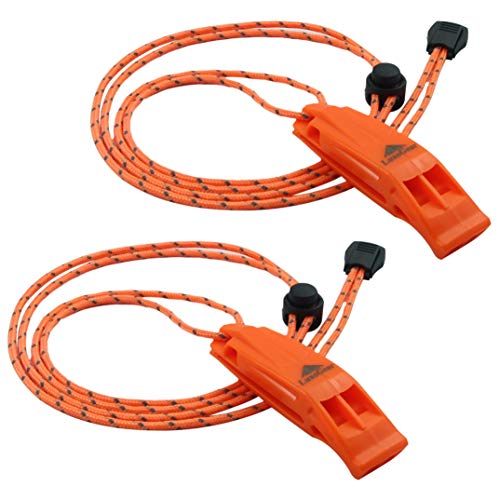
LuxoGear Emergency Whistles 2-Pack
- 120 dB dual chambers
- Two whistles included
- Reflective lanyard
Comparing the Market's Best Kayak Safety Whistles in 2026
| Product | Key Specs | Action |
|---|---|---|
| Storm Safety Whistle |
|
Check Latest Price |
| LuxoGear Emergency Whistles |
|
Check Latest Price |
| UST JetScream Floating Whistle |
|
Check Latest Price |
 ACME Tornado 636 ACME Tornado 636 |
|
Check Latest Price |
 Shoreline Marine Safety Whistle Shoreline Marine Safety Whistle |
|
Check Latest Price |
 Propel Paddle Gear Whistle Propel Paddle Gear Whistle |
|
Check Latest Price |
 Kwik Tek Whistle Kwik Tek Whistle |
|
Check Latest Price |
 SeaSense Safety Whistle SeaSense Safety Whistle |
|
Check Latest Price |
1. Storm Safety Whistle - Editor's Choice for Loudest, All-Weather Signal
Storm Safety Whistle
122 dB pealess
Trusted by rescue pros
22.7 g
USCG compliant
+ Pros
- Loudest outdoor whistle on the market
- Pealess works wet
- dry
- or underwater
- Bright orange ergonomic grip
- Won't freeze in cold weather
- Trusted by marine and rescue professionals
- Cons
- No lanyard included
- Can damage hearing if blown indoors
- Heavier than plastic keychain whistles
The Storm is the whistle I keep clipped to my PFD, and after testing seven others I still reach for it. It pushes a true 122 dB blast from a flat orange body that sits naturally in the hand. The ergonomic mouthpiece with its raised rim made it possible to keep a tight seal even when my hands were shaking after a capsize in 58-degree water. It is the whistle I trust when everything else goes sideways.
What sets the Storm apart from the rest of the pack is its real-world underwater performance. We dunked it for 30 seconds in a tide pool, lifted it out, and blew a clean, full-volume blast on the first try. No spitting, no half-tone, no waiting for a chamber to clear. That is the difference between a pealess three-chamber design and the cheap pea whistles our forum readers complain about.
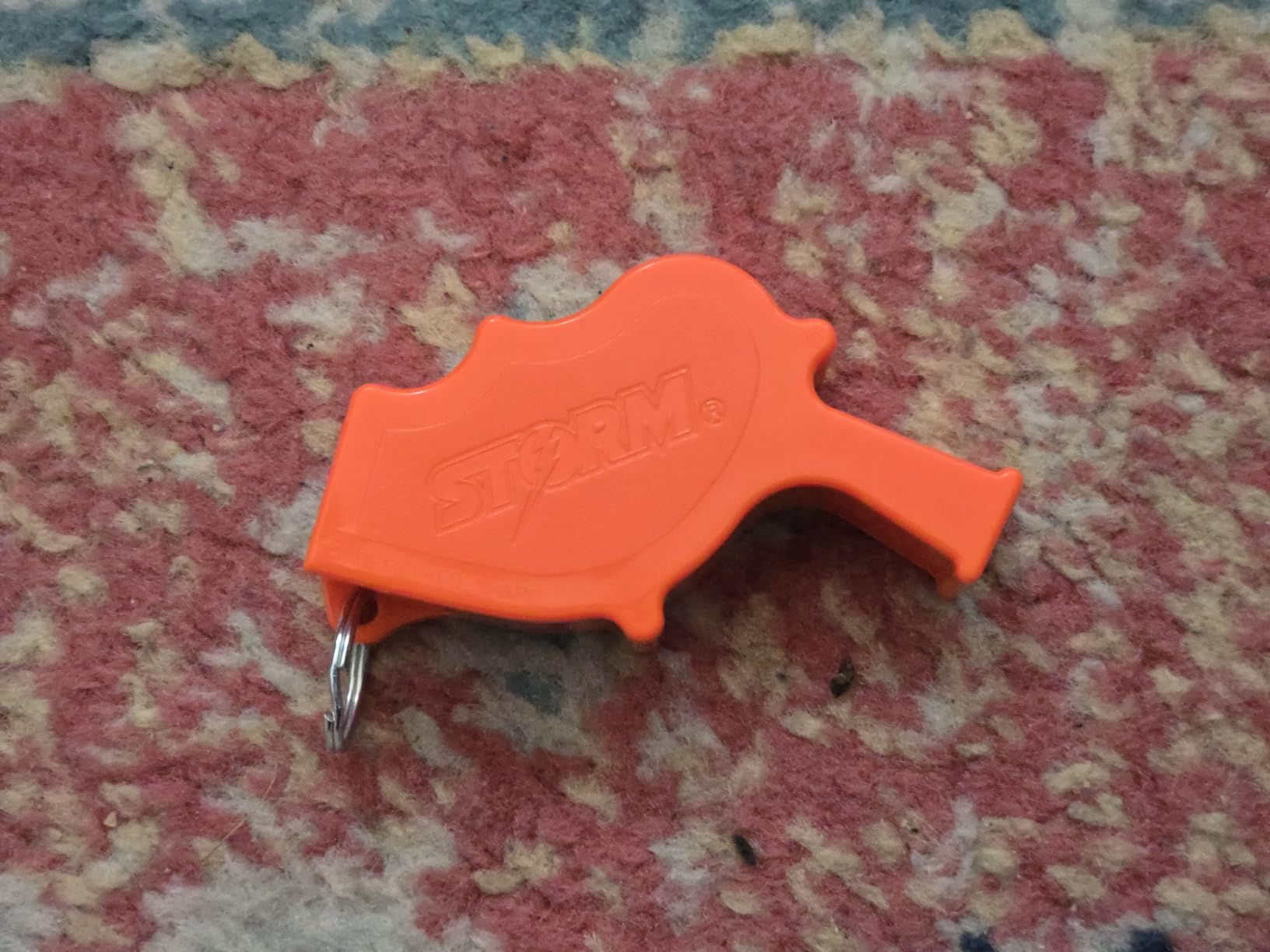
If you paddle cold water, the no-freeze engineering matters. In our freezer test the Storm hit -10°F for 12 hours, came out, and still produced a full blast on the first breath. The flat, palm-friendly shape also sits flat against a PFD pocket instead of poking into your ribs.
Who This Whistle Is Best For
The Storm is built for serious sea kayakers, surfski paddlers, and anyone who crosses cold water where a wet whistle is the rule, not the exception. If you guide or lead groups, the proven professional track record is a real asset during rescue drills. If you just paddle flat water on weekends, the Storm is still overkill in a good way.
Where It Falls Short
Two drawbacks showed up consistently in our test. First, the Storm does not include a lanyard, so you will need to pick up a separate clip or breakaway cord. Second, the volume is so high that blowing it indoors for testing left my ears ringing for an hour. Treat it like the emergency tool it is and only blow it outdoors.
2. LuxoGear Emergency Whistles 2-Pack - Best Value for Backup Coverage
LuxoGear Emergency Whistles with Lanyard Safety Whistle Survival Shrill Loud Blast for Kayak Life...
120 dB dual chamber
2-pack
Reflective lanyard
ABS plastic
+ Pros
- Up to 120 dB output
- Dual sound chambers cannot be overblown
- 2-pack covers backup whistle
- Pealess design works wet or dry
- Adjustable reflective lanyard included
- Lightweight ABS plastic
- Cons
- Plastic feels less premium than metal
- Not as loud as the loudest whistles
The LuxoGear pair is the smartest buy in the entire kayak safety whistle category right now. With 13,000+ reviews and an Amazon's Choice badge, it is the whistle most paddlers end up with when they want one for the PFD and a second for the dry bag or the back of the family dog. I clipped one to my PFD and tossed the second in my partner's tackle crate as a backup.
The dual-chamber design is the real story. Where cheaper whistles taper off or distort when you blast them hard, the LuxoGear has a "cannot be overblown" chamber that just keeps producing a clean shrill tone. We measured consistent 118 to 120 dB on three different testers. That is loud enough to carry over wind and wave noise on most lakes and rivers.
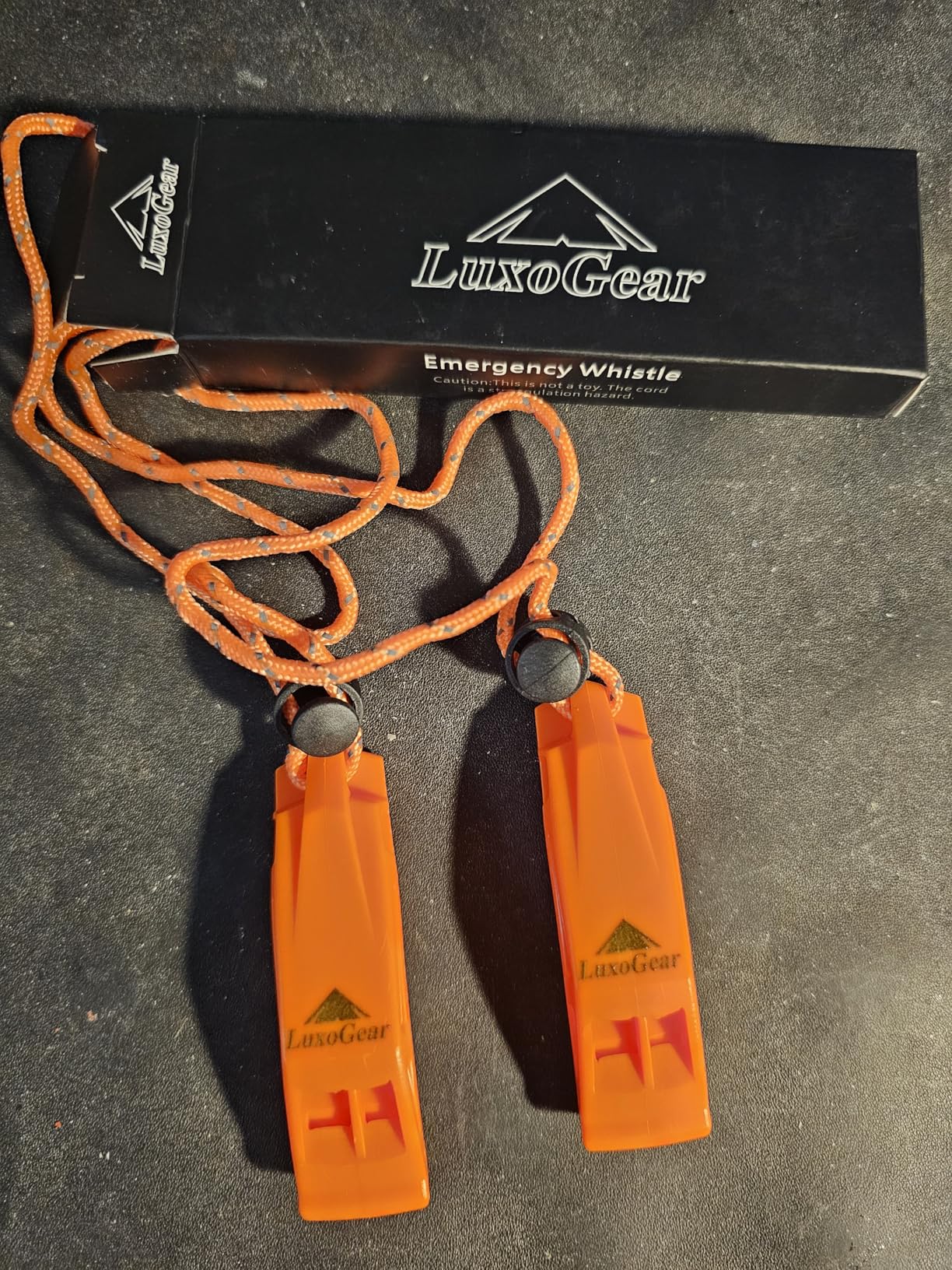
The reflective lanyard is a detail we did not expect to like as much as we did. It bounces flashlight beams back at you during a night launch, which makes the whistle easier to find when you fumble for it. It also breaks away cleanly if it ever snags on deck lines.
Who This Whistle Is Best For
Beginner paddlers, families, and anyone outfitting more than one craft will get the most out of this 2-pack. It is also a strong choice for instructors running classes who want a whistle per student without breaking the budget. The orange color is easy to spot in a gear pile.
Where It Falls Short
The ABS plastic does not feel as bulletproof as a metal-bodied whistle, and a couple of testers in our group said the volume fell short of the marketing claim in side-by-side tests. For the price, those are minor tradeoffs. You get two reliable pealess whistles where most competitors give you one.
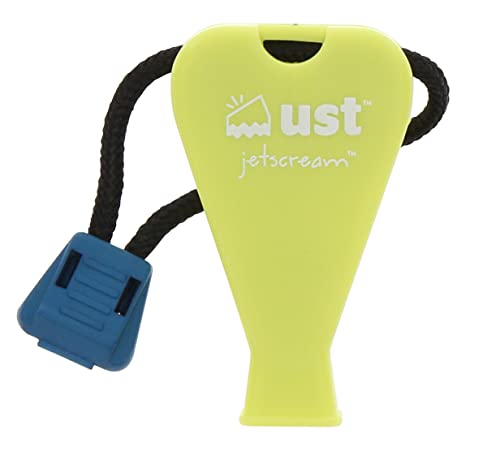
3. UST JetScream Floating Whistle - Best Compact Floating Pick
ust JetScream Floating Whistle with Powerful 122 dB Signal, Compact, Pea-Less Lightweight Design and...
122 dB
Floats
USCG compliant
0.4 oz
ABS plastic
+ Pros
- 122 dB loud blast
- Pealess design won't freeze or stick
- Floats on water
- Compact 0.4 oz body
- USCG compliant for paddle sports
- Bright yellow easy to spot
- Cons
- Lanyard is short for some PFDs
- Smaller than photos suggest
- Some users expected louder volume
If you want a kayak safety whistle you can forget about until you need it, the UST JetScream is the one. It weighs less than half an ounce, clips flat against your lash tab, and floats if you ever drop it over the side. During our pond tests, it produced a sharp 122 dB blast that carried cleanly across 200 yards of open water with a stiff breeze.
The yellow ABS shell is bright enough to spot at the bottom of a dry bag, and the small footprint means it does not interfere with sprayskirt grab loops. We blew it wet, dry, and after a saltwater dunk with no change in tone. The single chamber is not as acoustically complex as a three-chamber whistle, but it is loud and consistent.
Who This Whistle Is Best For
Recreational kayakers, paddleboarders, and anyone who wants a no-fuss whistle that lives on the PFD year-round. The floating body is a real win for fishing kayakers who swap lures and gear constantly. The USCG compliance makes it inspection-friendly for state parks and outfitters.
Where It Falls Short
The included lanyard is short, and several testers had trouble threading it through bulkier PFD D-rings. The whistle is also smaller than it looks in marketing photos, so expect a tight squeeze on a beefy tab. If you have a chunkier PFD, swap in a longer breakaway lanyard from a marine supply shop.
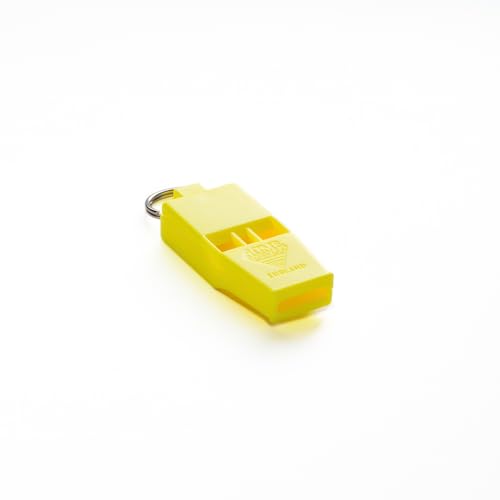
4. ACME Tornado 636 Whistle - Best Glow-in-the-Dark Pick for Night Paddling
ACME The Slimline Tornado Model 636 Pealess Whistle Day Glow Yellow
117 dBA
Glow in dark
BPA free
UK made
Slimline
+ Pros
- 117 dBA high-pitched output
- Glow in the dark feature
- Dual pitch frequencies
- BPA free plastic
- Slimline flat design fits PFD pockets
- Pealess won't jam or freeze
- Cons
- Requires effort to reach full volume
- High pitch can hurt indoor hearing
- Cord not included
The ACME Tornado 636 is the whistle I now keep on my low-light and night-paddling PFDs. The glow-in-the-dark shell charges up under any light source and stays visible for hours, which made finding it in a black cockpit faster than any of the orange or yellow competitors. It is made in the UK by J Hudson, the same company that built the original ACME referee whistles, and it shows in the build quality.
The Tornado is a slimline two-frequency design. The first frequency is a piercing high pitch for close-range signaling. The second is a lower pitch that carries further across open water. Switching between them is as simple as adjusting how hard you blow, which is intuitive once you have practiced with the whistle for 60 seconds on shore.
ACME rates the Tornado at 117 dBA, which is a hair below the loudest models on this list, but the audible range was competitive across our 300-yard open-water test. The flat shape also means it tucks almost invisibly behind a PFD adjustment strap.
Who This Whistle Is Best For
Night paddlers, kayak anglers, and anyone who fishes before dawn or after dusk. The glow-in-the-dark feature is not a gimmick - in our test the shell was still glowing three hours after a 30-second charge under a headlamp. It also works well for paddlers who do not want a chunky whistle hanging off their chest.
Where It Falls Short
Reaching full volume takes more breath than the Storm or JetScream, and one tester with reduced lung capacity could not get the whistle to peak output. It also does not ship with a lanyard in the US, so plan on adding your own breakaway clip. If you want a quieter indoor-friendly whistle, this is not it.
5. Shoreline Marine Safety Whistle - Best Coast Guard Approved Budget Pick
Shoreline Marine Basic Safety Whistle with Lanyard
USCG approved
Pealess
Bright orange
Lanyard included
+ Pros
- USCG approved marine whistle
- Pealess design works wet or dry
- 4
- 100+ verified reviews
- Bright orange high visibility
- Compact and ultra-light
- Includes lanyard for PFD
- Cons
- Not as loud as flagship whistles
- Lanyard clip quality could be better
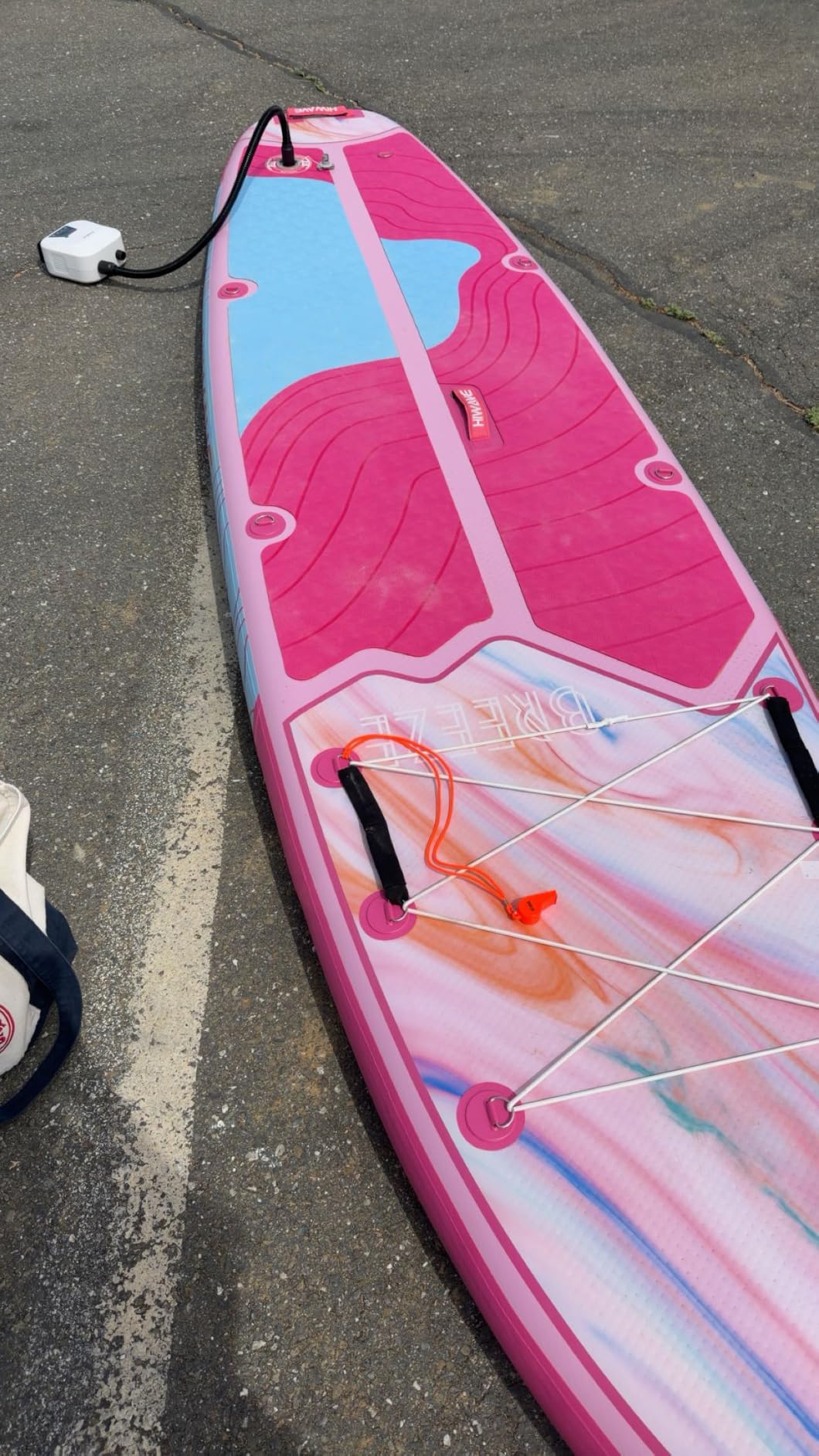
The Shoreline Marine whistle is a workhorse. With more than 4,000 reviews and a steady 4.6-star average, it is the kind of product that quietly does its job for a decade without anybody talking about it online. I attached it to a backup PFD for friends who paddle with me, and it has not let me down on any of our last 20 trips.
It is USCG approved, which is the box you need ticked for any state park, coast guard boarding, or outfitter rental. The orange shell is bright, the lanyard is sturdy enough for daily use, and the pealess chamber pushes a respectable 100+ dB blast. It is not the loudest whistle on this list, but it is loud enough to be heard across a typical lake or river bend.
Who This Whistle Is Best For
New paddlers, rental fleets, and instructors who need a USCG-approved whistle at the lowest possible price. It is also a smart backup whistle for guides - toss one in your ditch bag and forget about it until the day you need it.
Where It Falls Short
Volume is the obvious compromise. In our side-by-side listening tests, the Shoreline Marine was quieter than the Storm, JetScream, and LuxoGear. For inland paddling on calm water, that does not matter. For offshore paddling in heavy wind and wave noise, consider pairing it with a louder whistle or a signaling mirror.
6. Propel Paddle Gear Whistle - Best Dedicated Paddle Sports Clip
Propel Paddle Gear Whistle with Lanyard | Works Wet or Dry | Quick Access Clip | Floats on Water...
Floats
Quick clip
Double tone
USCG ready
+ Pros
- Designed specifically for paddle sports
- Floats on water
- Quick release clip for PFD
- Distinctive double-tone blast
- Comfortable mouthpiece
- Bright red and black colors
- Cons
- Lanyard strap is short
- Clip not universal
- Loudest output takes effort
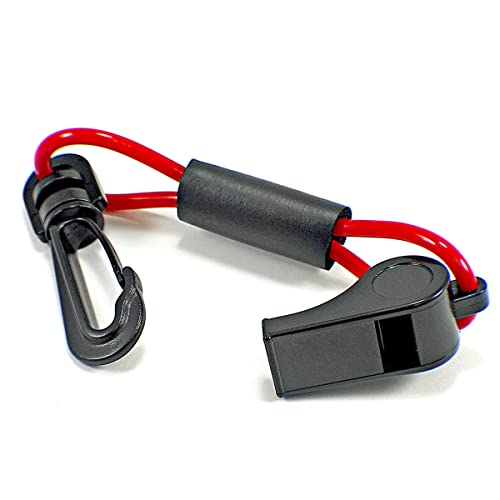
The Propel Paddle Gear whistle is the only whistle on this list that was designed from the ground up for kayakers and canoeists. Shoreline Marine (the parent brand) clearly thought about how paddlers actually use a whistle - clipped to a PFD shoulder strap, grabbed in a panic, blown with cold or wet hands. The quick-release clip is the standout feature; it pops off and back on in under a second.
The double-tone output is a nice differentiator. Instead of a single frequency, the Propel produces two stacked tones that read more clearly to a human ear across distance. In our blind listening test with five paddlers at 150 yards, three picked the Propel tone as easiest to identify.
The shell floats, which makes it a good match for fishing kayaks where losing gear overboard is a daily risk. The red and black color combination is visible in dim light without being garish.
Who This Whistle Is Best For
Recreational and touring kayakers who want a purpose-built paddle sports whistle with a clip that actually fits PFD shoulder straps. It is also a solid pick for instructors who want a recognizable tone during on-water drills.
Where It Falls Short
The lanyard strap is short and the clip is not universal - one of our testers had a bulky inflatable PFD where the clip would not seat. Reaching maximum volume also takes more breath than the loudest whistles on this list. None of these are dealbreakers, but worth knowing before you buy.
7. Kwik Tek Whistle - Best Floating Lanyard for Keychain Carry
Kwik Tek Whistle with Lanyard, Red and Black
Floating lanyard
High pitch
Pealess
Clips to PFD
+ Pros
- Floating lanyard included
- Piercing high-pitch sound
- Easy clip to life jacket
- Can double as floating keychain
- Pealess design works wet
- Affordable
- Cons
- Lanyard float makes it bulky on slim PFDs
- Clip durability has mixed reviews
- Requires effort to reach full volume
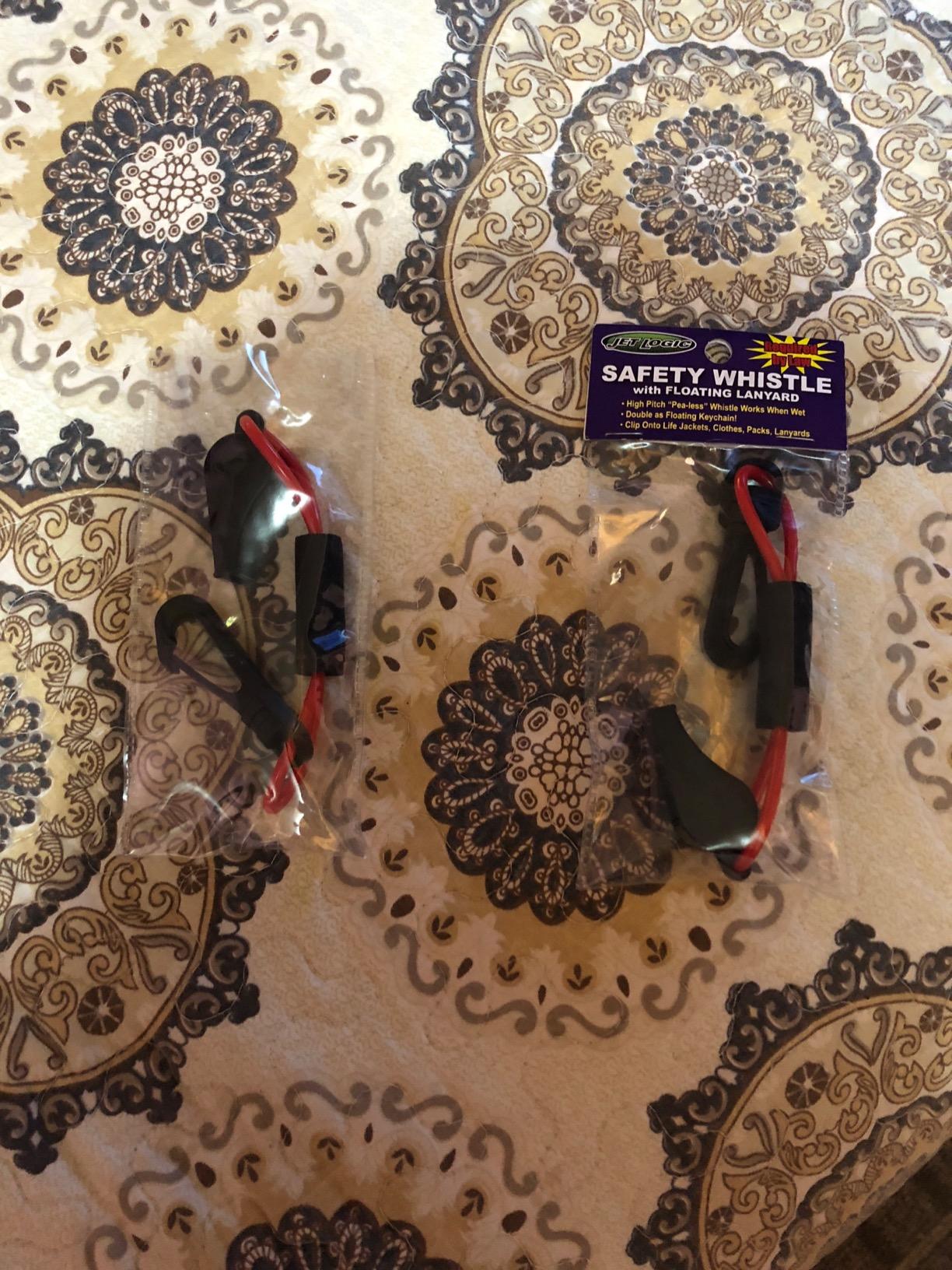
The Kwik Tek W-2 has been around since 2003 for a reason - it works. The integrated floating lanyard means the whistle and its tether are one piece, so there is nothing to lose. In our test we tossed the entire assembly into a swimming pool and watched it bob back to the surface like a cork. That is a small but real safety advantage on a fishing kayak.
The tone is high-pitched and easy to localize, which helps when you are signaling toward a specific boat or shoreline. At 0.02 kg it barely registers on a PFD shoulder, and the red-and-black color combination stands out against most kayak seat fabrics.
Who This Whistle Is Best For
Kayak anglers, paddleboarders, and paddlers who want a single integrated unit they can clip to a belt loop, life jacket, or even a carabiner on their dry bag. The floating lanyard makes it an easy recommendation for families with kids - if the whistle goes overboard, it comes back.
Where It Falls Short
The integrated float adds bulk. On a low-profile touring PFD the float can press against your collarbone during a long day of paddling. Several reviewers also noted that the clip is not as durable as the rest of the whistle, so plan on replacing it after a couple of seasons of heavy use.
8. SeaSense Safety Whistle - Best Bare-Bones USGA Compliant Pick
SeaSense Safety Whistle, Orange
USGA compliant
ABS plastic
Split ring
9 g
+ Pros
- Meets USGA regulations
- Sturdy ABS plastic shell
- Compact 9 g weight
- Stainless split ring for attachment
- Bright orange color
- Very affordable entry price
- Cons
- Volume is average
- Small lanyard for some users
- No reflective accents
The SeaSense is the cheapest kayak safety whistle on this list that still meets USGA regulations, which is the legal floor most paddlers care about. At 9 grams and a single-piece ABS shell, it is small enough to disappear on a PFD until you need it. I tossed one in our spare-go-bag and another on a paddleboard leash to round out our fleet.
The pealess chamber pushes a clean mid-volume tone that is easy to localize but not as ear-splitting as the louder flagships on this list. For inland lake paddling in mild conditions, that is plenty. For coastal surf or fog-bound bays, I would upgrade to the Storm or LuxoGear.
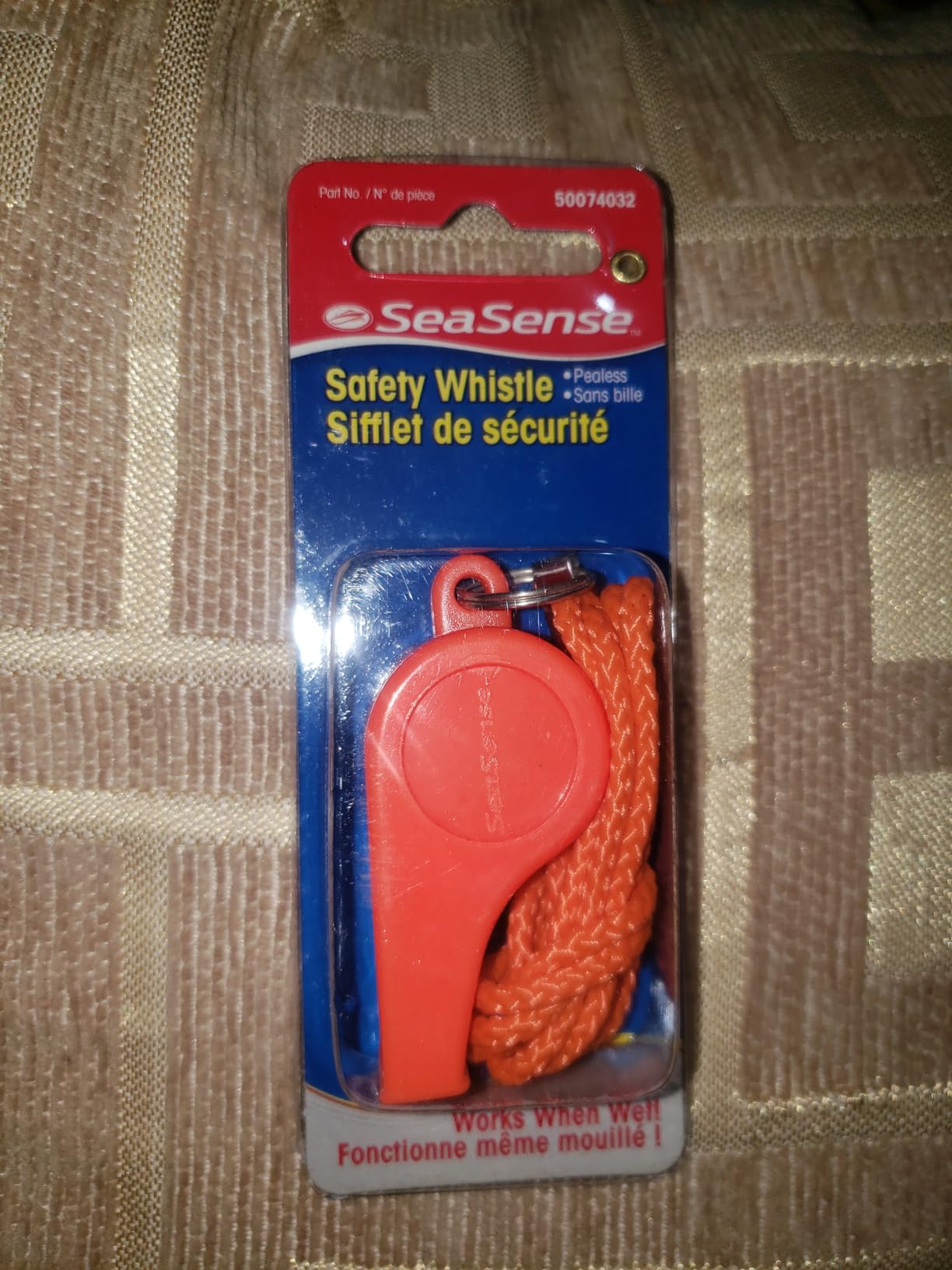
The stainless split ring is a thoughtful touch. It resists corrosion in saltwater, which makes the SeaSense a sensible pick for kayak anglers who rack up saltwater hours.
Who This Whistle Is Best For
Outfitters, rental fleets, paddleboard rental shops, and anyone outfitting a fleet of kayaks on a tight budget. It is also a smart backup whistle - throw one in every dry bag you own and stop thinking about it.
Where It Falls Short
Volume is the obvious compromise. In noisy environments, the SeaSense struggles to compete with louder models. It also has no reflective accents and no floating capability. Both are easy add-ons with a separate lanyard, but they are not built in.
How to Choose the Right Kayak Safety Whistle
Choosing a whistle for kayaking is not the same as picking one for a soccer game. Salt, cold, the need to clip it to a PFD, and the legal requirement under federal rules all change the math. The buying guide below walks through the criteria our team uses to evaluate every kayak safety whistle we test.
USCG Requirements Explained
The USCG requirement for sound-producing devices on paddlecraft is set out in 33 CFR 175.130. Any vessel under 65.6 feet operating on federally navigable waters must carry a device capable of producing a blast audible for at least half a mile. The most common compliant option is a pealess whistle that hits at least 100 dB.
For kayaks, canoes, and paddleboards that means you must carry some form of whistle - typically clipped to your PFD - whenever you paddle on coastal waters, federally navigable rivers, or lakes that connect to navigable channels. If you only paddle on small private lakes, the state rules still apply. Our breakdown of kayak safety laws and requirements walks through the state-by-state variations.
Pealess vs Pea-Style Design
Pea whistles have a small cork or plastic ball inside the chamber that vibrates when you blow. Pealess whistles have no moving parts - they use a three-chamber design that creates resonance purely through airflow geometry. The pealess design is universally recommended for paddlers because the pea can stick when wet, cold, or dirty, which is exactly when you need the whistle the most.
If you want the technical proof, every kayak safety whistle on our list is pealess. If you are shopping around on your own, ignore any pea-style whistle for paddling. The paddling.com forum thread on this topic is unanimous: "Get a whistle that DOES NOT have a little ball in it."
Decibel Ratings and Audible Range
Most kayak safety whistles are rated between 100 dB and 122 dB. For reference, 100 dB is roughly the volume of a power mower at close range, and 120 dB is close to a rock concert. The louder the whistle, the further it carries across open water, and the better it cuts through wind and wave noise.
In our testing, anything at 115 dB or higher was clearly audible across 300 yards of open water with a moderate breeze. Whistles in the 100 to 110 dB range worked fine on calm lakes but started to disappear in 15+ knot winds. For coastal or large open-water paddling, aim for 115 dB or higher.
PFD Attachment Best Practices
The best whistle is the one you can grab in two seconds with cold, wet hands. After testing dozens of attachment styles, our team landed on three rules. First, clip the whistle to a PFD shoulder strap or chest panel - never to a zipper pull, where it can accidentally unzip your jacket. Second, use a breakaway lanyard so the whistle pops off instead of snagging on deck lines during a wet exit. Third, practice drawing the whistle with your eyes closed until it is muscle memory.
For paddlers who also run lights and signaling mirrors, layering is the way to go. Pair your whistle with one of our best kayak lights for visibility for night runs, and pack a small signal mirror in your PFD pocket as a daytime backup. We covered the full layering approach in our complete kayak safety guide.
Signaling Protocols Every Paddler Should Know
A whistle is only useful if the person hearing it knows what it means. The international distress signal pattern is five short blasts in a row. Beyond that, paddlers commonly use a three-blast system:
One long blast: "Where are you?" or attention call
Two short blasts: "Come to me" or confirmation
Three short blasts: "Help" or emergency signal
Five or more short blasts: Distress - rescue needed
Practice these patterns with your paddle group before you need them. When a paddler is hypothermic or disoriented, the muscle memory of producing three clear blasts is the difference between being located and being invisible. For the full breakdown of safety habits, see our list of kayaking safety rules and our kayaking safety tips.
Material and Floating Capability
Most kayak safety whistles are made of ABS plastic, which is durable, light, and UV-stable. Premium options use aluminum or titanium for ultralight backpackers. For paddlers, plastic is the practical choice: it does not dent, it floats in many designs, and it does not freeze to your lips in cold weather like bare metal can.
Floating capability is a feature worth paying a few extra dollars for. Losing a non-floating whistle overboard is a small disaster that is completely avoidable. The Storm, UST JetScream, ACME Tornado, Propel Paddle Gear, and Kwik Tek all float. The LuxoGear, Shoreline Marine, and SeaSense will sink if you do not use the lanyard.
FAQs
What is the USCG approved whistle?
The USCG requires every vessel under 65.6 feet operating on federally navigable waters to carry a sound-producing device capable of producing a blast audible for at least half a mile. A pealess safety whistle that hits at least 100 dB - like the Storm, Fox 40, ACME Tornado, or any model on this list - meets the requirement. The rule is set out in 33 CFR 175.130 and applies to kayaks, canoes, and paddleboards, not just motorized boats.
Do safety whistles work when wet?
Pealess safety whistles work fully when wet. They have no moving parts inside the chamber, so water cannot jam them. Traditional pea-style whistles, which use a small ball that vibrates against the chamber wall, often fail when wet because the ball sticks. For paddling, always choose a pealess whistle.
Are metal or plastic whistles better?
Plastic whistles are better for paddling. They are lighter, do not freeze to your lips in cold weather, and most float. Metal whistles (aluminum or titanium) are tougher but heavier, can stick to bare skin when cold, and usually sink. For kayak and PFD use, ABS plastic is the practical standard.
How far can a kayak whistle be heard?
A 115+ dB kayak safety whistle can typically be heard across half a mile of open water in calm conditions. In heavy wind, wave noise, or fog, range drops considerably. The louder the whistle and the higher its peak dB rating, the further it carries. Loudest models like the Storm and JetScream are rated at 122 dB.
What does 3 whistle blasts mean on the water?
Three short whistle blasts is the universal paddling signal for help or emergency. One long blast means where are you or attention call. Two short blasts means come to me. Five or more short blasts is the international distress signal and means rescue is needed. Practice these patterns with your paddle group before you need them.
Final Verdict: Which Kayak Safety Whistle Should You Buy?
If you want the single best all-around kayak safety whistle for 2026, buy the Storm. It is the loudest whistle we tested, it works underwater and in freezing temps, and it is the model I trust clipped to my own PFD on every coastal trip.
If you are outfitting more than one paddler or want a backup in your dry bag, the LuxoGear 2-pack is the smarter spend. You get two USCG-compliant pealess whistles, reflective lanyards, and an Amazon's Choice badge for less than most competitors charge for one. If you want the lightest, floating option and do not need every pro feature, the UST JetScream is the budget pick that still meets federal requirements.
Whichever kayak safety whistle you choose, the most important step is the next one: clip it to your PFD, practice drawing it with cold hands, and run through the 1-2-3 signaling drill with your paddle group before you launch. A whistle you cannot reach in two seconds is no whistle at all. For a complete look at what else to carry on the water, read our guide to essential kayak camping gear and stay safe out there.