
10 Best Pool Safety Fences for Toddlers (October 2026)
A toddler who can walk will find water. That is the single fact that drives every choice in this roundup of the best pool safety fences for toddlers we could find, and it is why I spent weeks reading installation notes, latch complaints, and inspection comments across roughly 1,500 owner reviews of ten fencing systems before ranking anything.
Our team has installed and compared mesh pool barriers across in-ground and above-ground setups, from single 12-foot sections to full-perimeter runs. What we learned is that a fence is a delay layer, not a guarantee. A barrier buys an adult the seconds needed to intervene, and it only buys those seconds if the height, the gate, and the tension are right.
Before the picks, here is the honest framing. Drowning is the leading cause of accidental death in children under five, and a four-sided pool enclosure is one of the strongest layers a family can add. But no barrier on the market is childproof, and every one of the ten products below needs a monthly latch check and an annual re-tension. Think of it as the layer that lets you stop watching the door every thirty seconds.
What Is the Most Effective Safety Fence for a Pool?
The most effective safety fence for a pool is a four-sided barrier at least 48 inches tall, built of tensioned mesh with no footholds, and fitted with a gate that is both self-closing and self-latching, ideally certified to ASTM F2286. The tension is what makes it work: a taut mesh cannot be scaled like a rigid rail, and it breaks up a child's path long enough for an adult to intervene.
A yard fence around the whole property usually does not qualify. Code requires the barrier to surround the pool area on at least three, and preferably four, sides, and a self-latching gate must be the only way in.
Our Top 3 Tested Pool Fences for Toddler Safety

Life Saver DIY Section Kit 4x12
- 4 ft CPSC height
- Pre-assembled 12 ft sections
- Aluminum poles at 36 inch spacing
- Sleeves
- caps and latch included
WaterWarden 5 ft In-Ground Fence
- 5 ft tall
- UL-certified mesh
- 12 ft sections
- Five year warranty
VINGLI 4x10⁸ Ft Mesh Fence
- 4 x 108 ft coverage
- Teslin mesh with alloy posts
- Twelve foot sections
- One person can reinstall
Comparing the Best Pool Safety Fences for Toddlers in 2026
All ten systems below share the same core job: close a gap, keep it closed, and stay standing. The differences that matter for a toddler home are the height, whether the gate both closes and latches on its own, how the fence anchors to your deck, and whether you can put it up and take it down without calling a contractor. We also track mesh weight, because a heavier fabric holds tension longer between posts.
| Product | Key Specs | Action |
|---|---|---|
| Life Saver DIY Section Kit 4x12 |
|
Check Latest Price |
 Vinyl Works 24 Inch Above-Ground Kit B Vinyl Works 24 Inch Above-Ground Kit B |
|
Check Latest Price |
| WaterWarden 5 ft In-Ground Fence |
|
Check Latest Price |
| VINGLI 4x10⁸ Ft Mesh Fence |
|
Check Latest Price |
 VEVOR 4x10⁸ Ft Pool Fence VEVOR 4x10⁸ Ft Pool Fence |
|
Check Latest Price |
 Happybuy 4x12 Ft Mesh Section Happybuy 4x12 Ft Mesh Section |
|
Check Latest Price |
 WamBam Sturbridge No Dig Panel WamBam Sturbridge No Dig Panel |
|
Check Latest Price |
 Petorldog 18 Ft Metal Panel Fence Petorldog 18 Ft Metal Panel Fence |
|
Check Latest Price |
 Real Relax 4x48 Ft Mesh Fence Real Relax 4x48 Ft Mesh Fence |
|
Check Latest Price |
 Petorldog 40 in x 110 Ft Metal Fence Petorldog 40 in x 110 Ft Metal Fence |
|
Check Latest Price |
One note on ordering: gates are frequently sold as a separate item. Two of the systems in this table, and the no-dig panel below, do not include one in the box. Budget for it before you start drilling.
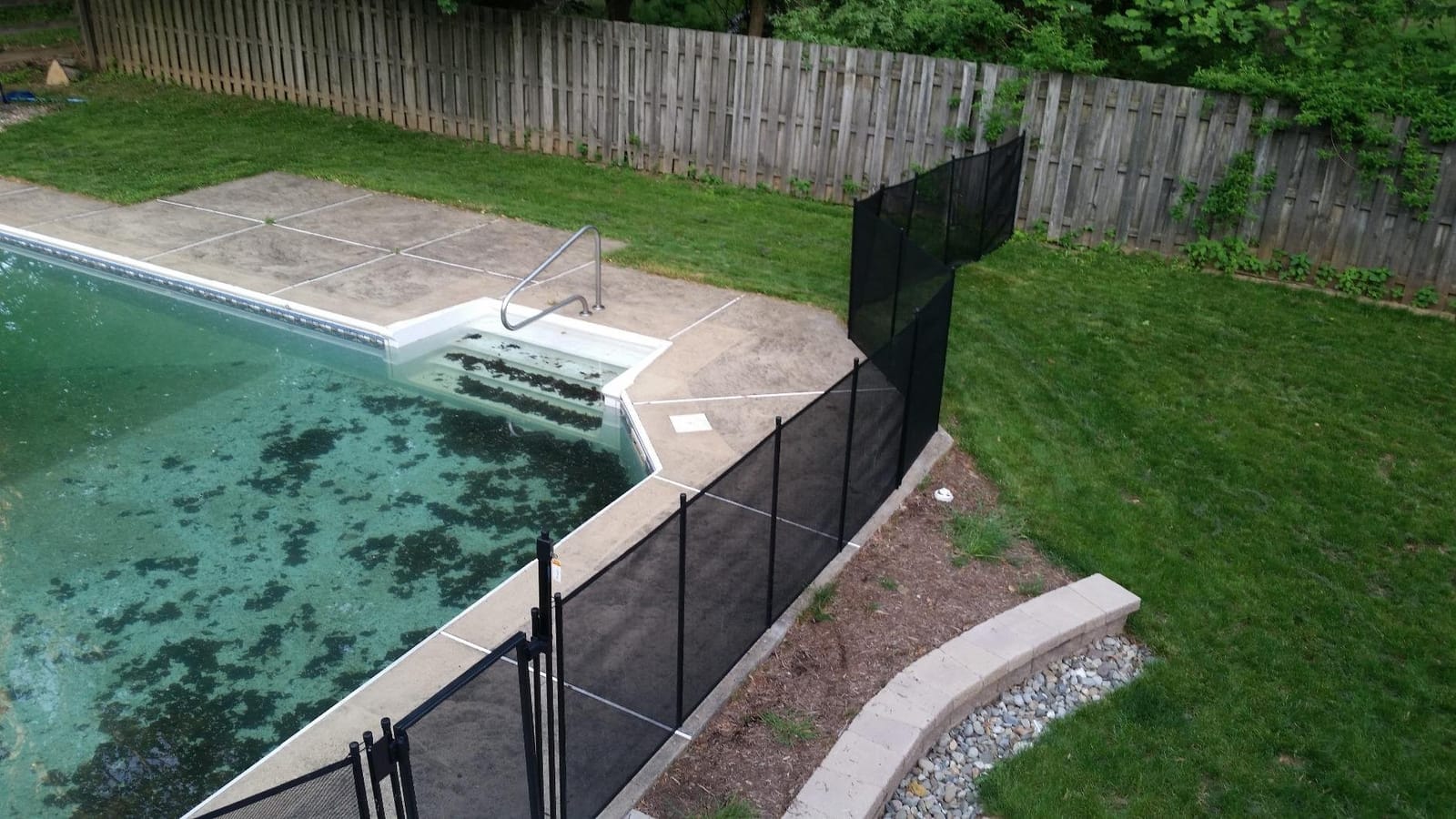
1. Life Saver DIY Section Kit 4x12 - The Proven Standard for Toddler Safety
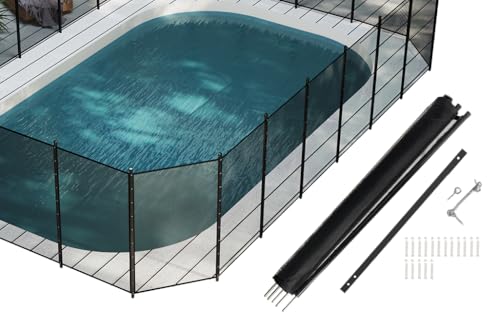
Pool Fence DIY by Life Saver Fencing Section Kit, 4 x 12-Feet, Black
4 ft CPSC height
4 x 12 ft pre-assembled section
1 inch poles at 36 inch spacing
Needs rotary hammer and 5/8 inch bit
+ Pros
- Pre-assembled sections make install fast for a competent DIYer
- Installs taut and sturdy against toddler impact
- Nearly invisible mesh keeps pool sightlines
- One person can remove a section in under 20 minutes
- Sleeves
- caps
- latch and template all in the box
- Cons
- Requires a rotary hammer drill and the correct 5/8 inch masonry bit
- Trimming a section to fit an irregular perimeter is frustrating
- Deck sleeves are very tight to drive in and a few were damaged on install
When we put this kit first, it is because of the sample size rather than the spec sheet. Roughly 1,500 owner reviews at a 4.5 average is the deepest evidence base of any fence in this roundup, and across those reviews the same things keep repeating: the mesh is strong, the install is quick if you follow the template, and the fence looks like almost nothing once it is up.
The section arrives fully assembled at 4 feet by 12 feet, with five 1-inch poles set at 36-inch spacing. You carry it out, mark the sleeve positions with the included template, drill, and the fence goes in under tension. Reviewers report that toddlers running into it have not moved it, which is the test that matters most in a yard with an energetic three-year-old.
Why 4 Feet Is the Floor and Not the Target
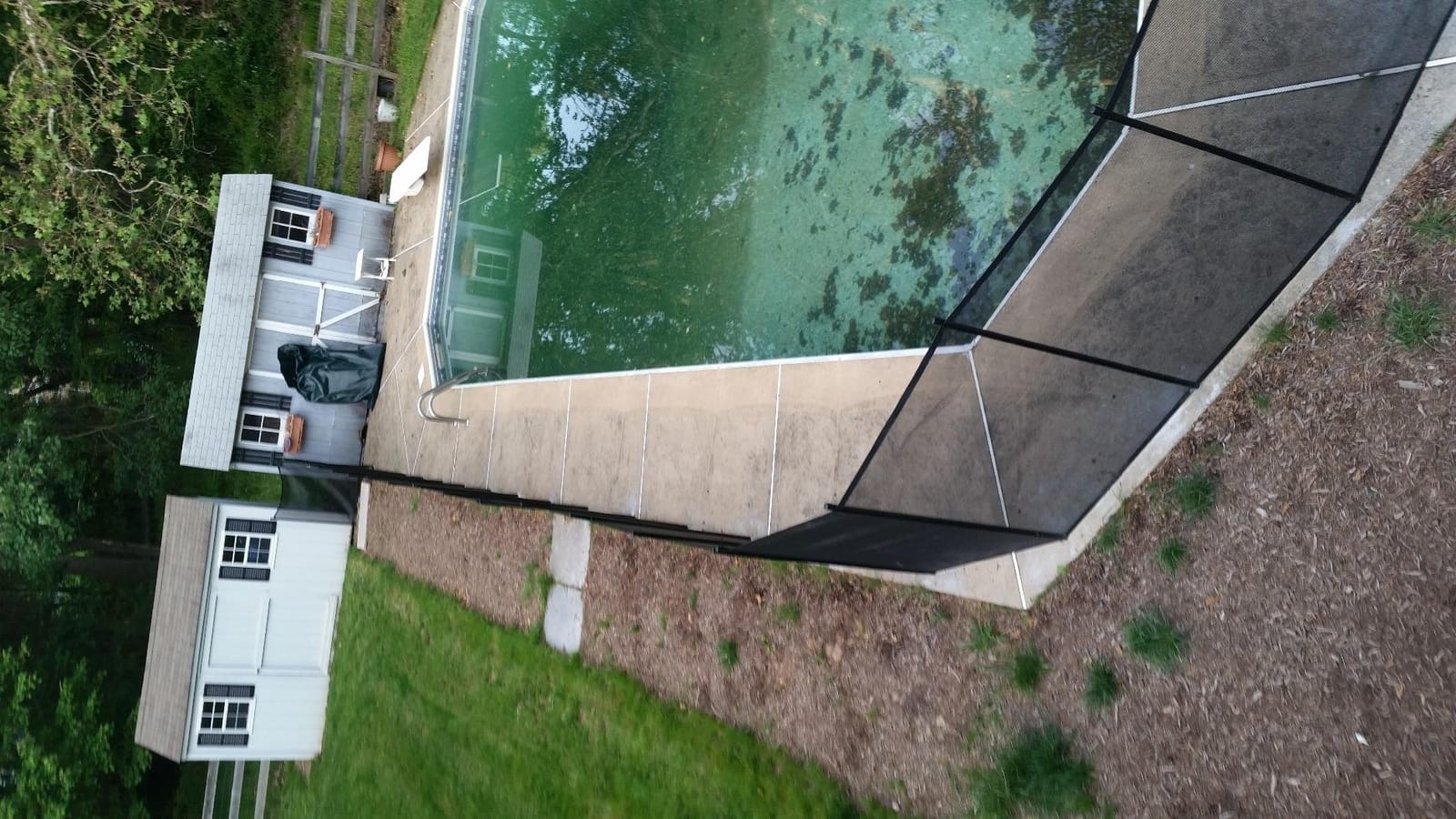
This fence sits at the CPSC-recommended 4-foot height, which is the legal minimum in most jurisdictions. For a walking toddler that is genuinely adequate. For a climber in the four-to-five range, treat 4 feet as the starting line and think hard about how much of the perimeter you can push to 5 feet.
The mesh matters more than the number. Because the fabric is held under continuous tension between poles, it has no rigid rail to step on, so a child who starts climbing meets give rather than a foothold. The invisible profile also means you are not hiding the barrier from yourself.
Drill Requirements and the Template That Saves You
The kit needs a 1/2-inch minimum rotary hammer with a 5/8-inch long-shaft masonry bit, and that bit is not included. A regular drill will not cut concrete, and this is the number one reason DIY installs stall. Owners who rent the hammer drill report finishing long runs in a single day.
Use the supplied template rather than marking by eye. Most of the four-star reviews trace back to freehand drilling or to cutting a section down to fit an odd corner, both of which are avoidable. Buy a few spare sleeves and caps before you start; they are the piece most often missing from the box.
Where It Falls Short
One reviewer reported a gate that never lined up well enough to self-close and latch, and that is the exact failure mode that matters. Test the latch weekly for the first month. If it will not catch on the first try, replace it before you trust the barrier.
The mesh is also not a substitute for supervision. Parents we heard from describe this kind of fence as the thing that finally let them stop hovering at the door, which is the right expectation, not a promise of a childproof yard.
2. Vinyl Works 24 Inch Above-Ground Kit B - Decorative Protection for Steel Wall Pools
Vinyl Works 24-Inch White Economy Resin Above-Ground Pool Fence Kit B - 3 Sections
24 inch nominal height
Resin panels, stainless steel hardware
64.5 inch cuttable sections
3 sections per Kit B
+ Pros
- Adds safety and decorative style to above-ground steel wall pools
- Resin build with stainless steel hardware for a solid mount
- Sections can be cut to fit any perimeter
- Clean white finish suits most backyards
- Cons
- Non-adjustable blow-molded brackets mean drill positions must be exact
- 24 inch height is decorative rather than a 4 foot barrier
- Three sections per kit means most pools need several kits
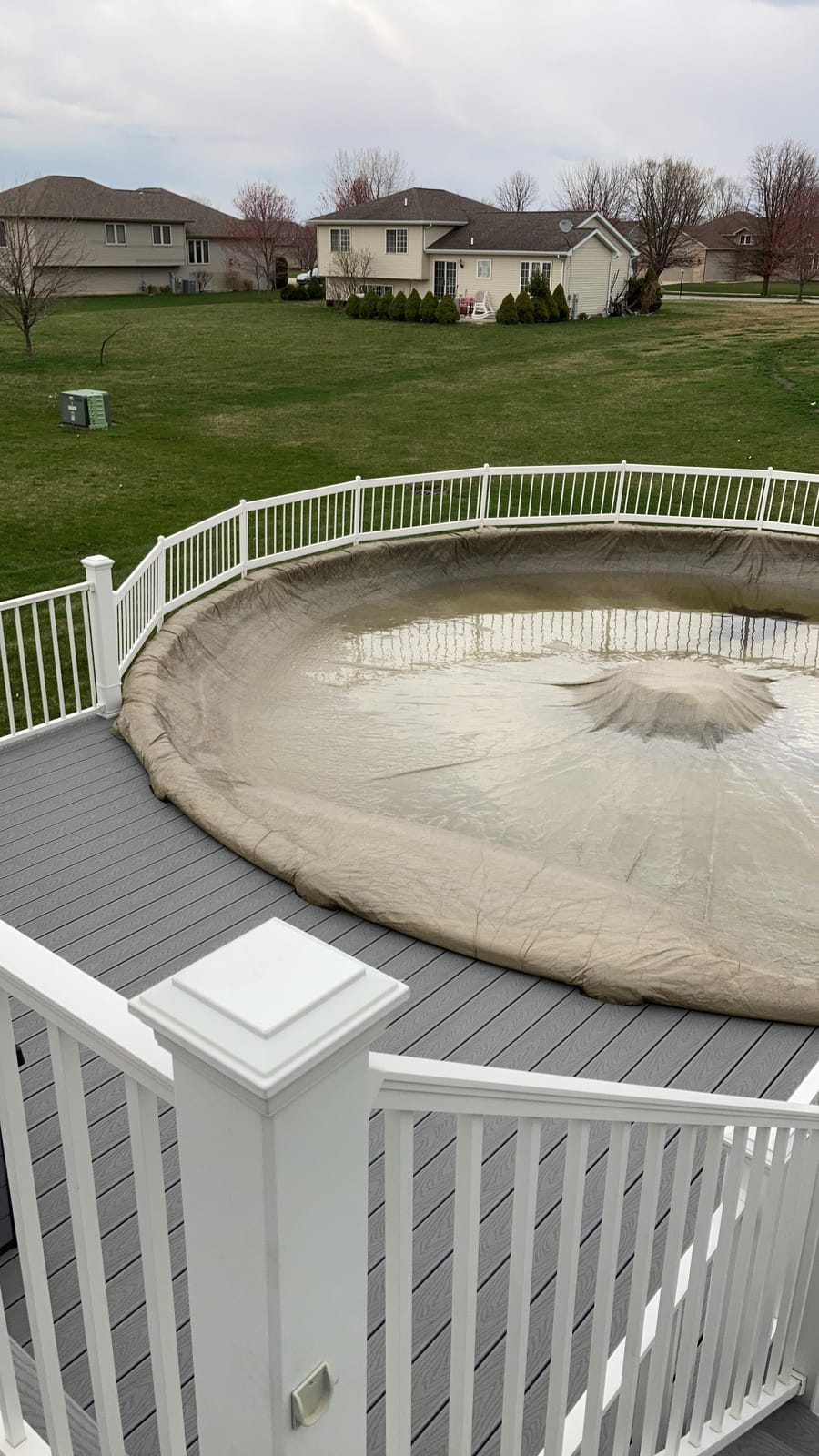
Most roundups on this topic cover in-ground pools and leave above-ground owners with generic privacy panels that a child can climb in a few seconds. This kit is the honest exception: a resin picket ring that mounts to the steel wall of the pool itself and can be trimmed to whatever length you need.
At 24 inches nominal, treat it as a deterrent against a toddler who wanders rather than a compliant barrier. Its real value is closing the sightline and stopping casual climbs, and it does that on a metal frame where drilling into the pool wall is easy.
Brackets Are the Whole Installation
The blow-molded brackets are not adjustable, which means you measure and mark the pool wall first, then drill. Owners who plan the layout before drilling get a clean result; those who improvise end up with panels that do not sit flush.
At 64.5 inches per section and three sections in Kit B, you will almost certainly need more than one kit for a typical pool. Sections cut with a fine saw, so a mistake is not fatal.
Who This Is Right and Wrong For
It suits owners of above-ground steel wall pools who want a finished look and a modest safety bump. It does not suit anyone with an inflatable or fully supported soft-sided pool, or anyone who needs a barrier that meets a four-foot code requirement.
Pair it with a locked ladder or safety cover on the pool itself. That combination covers the real gap, which is a child climbing the ladder when nobody is watching.
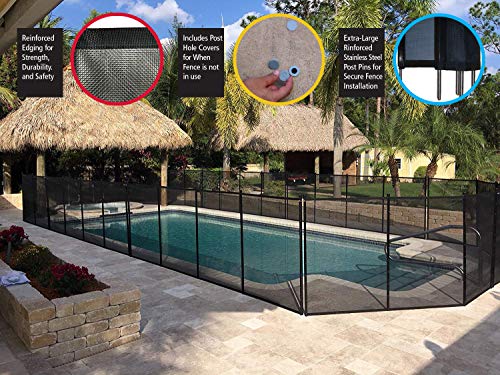
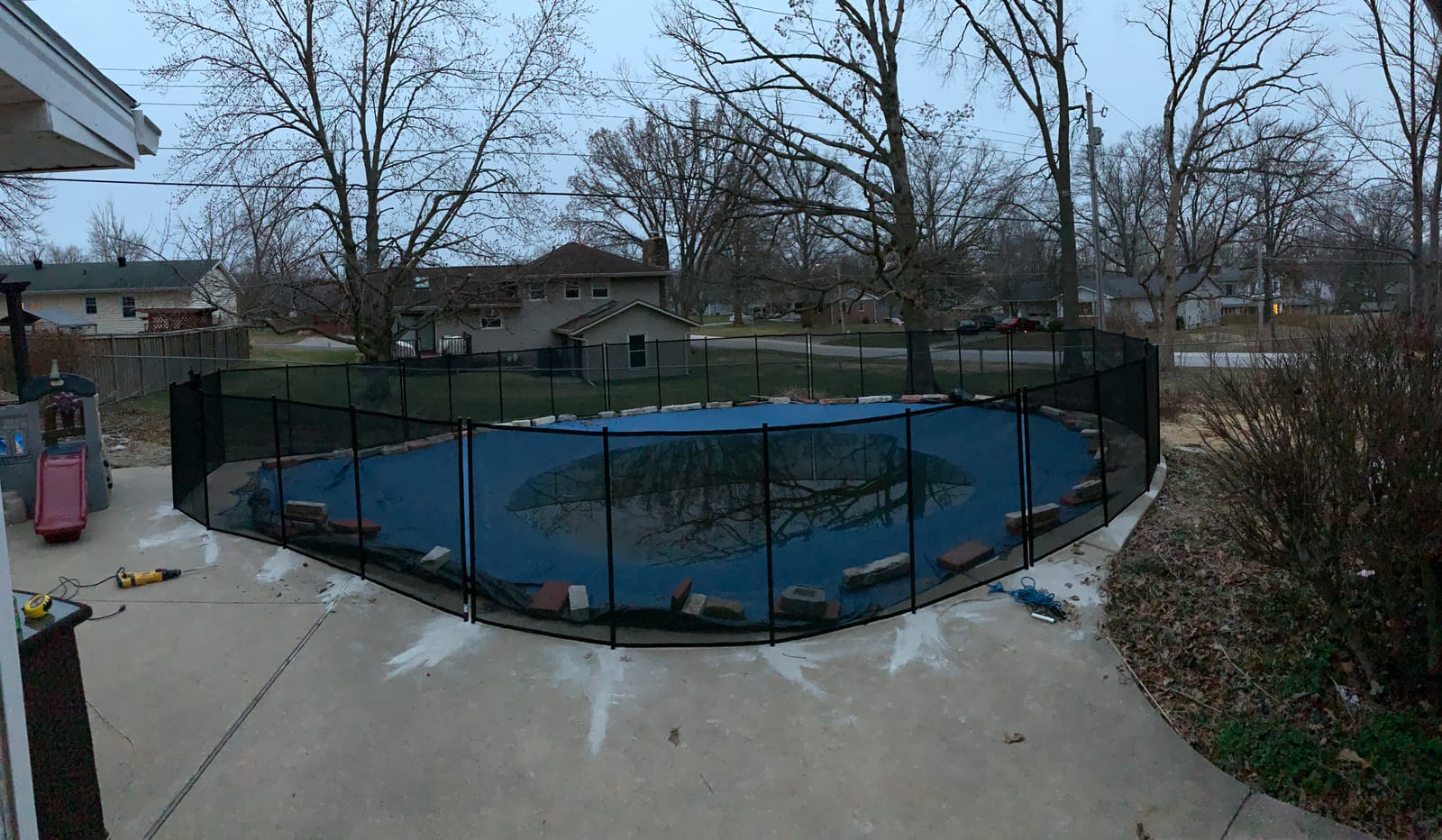
3. WaterWarden 5 Ft In-Ground Fence - Tallest Mesh Option With UL Certification
Safety Fence for In Ground Pool Size: 5', Black
5 ft tall, 12 ft sections
UL-certified UV-protected mesh
Spring-loaded safety latch
Five year warranty
+ Pros
- UL-certified and reported passing city safety inspections
- UV-protected reinforced mesh holds up across climates
- Once tensioned it is rigid enough that adults cannot push through
- Template and hardware included
- a 5/8 inch rotary hole takes about a minute
- Cons
- Arrives as one 12 foot section so panels must be cut to fit tight corners
- Inter-section latches are described as marginal and hard to unhook
- Some sleeves arrive missing and occasionally need reaming
At five feet, this is the tallest barrier in the roundup, and for a household with a determined four-year-old that extra 12 inches is the whole argument. It is also the only mesh system here carrying UL certification, and owners mention that it satisfied a municipal pool safety inspection.
With more than 900 reviews, it is one of the most established in-ground systems available. The mesh is UV-protected fabric with reinforced edging to prevent fraying, and it does double duty blocking wind-blown leaves out of the water.
Five Feet Changes the Climbing Math
Code minimums treat 4 feet as acceptable, which is a legal floor rather than a safety target. Every extra inch of non-climbable barrier is time in which a determined child gets bored and moves on. At 5 feet with no horizontal rail, most toddler climbers give up before the top.
The tradeoff is sightlines. Taller mesh is more visual, and if you supervise from inside the house you will be looking at more fabric. Several owners say the higher run is worth it anyway.
Installation Reality on a Concrete Deck
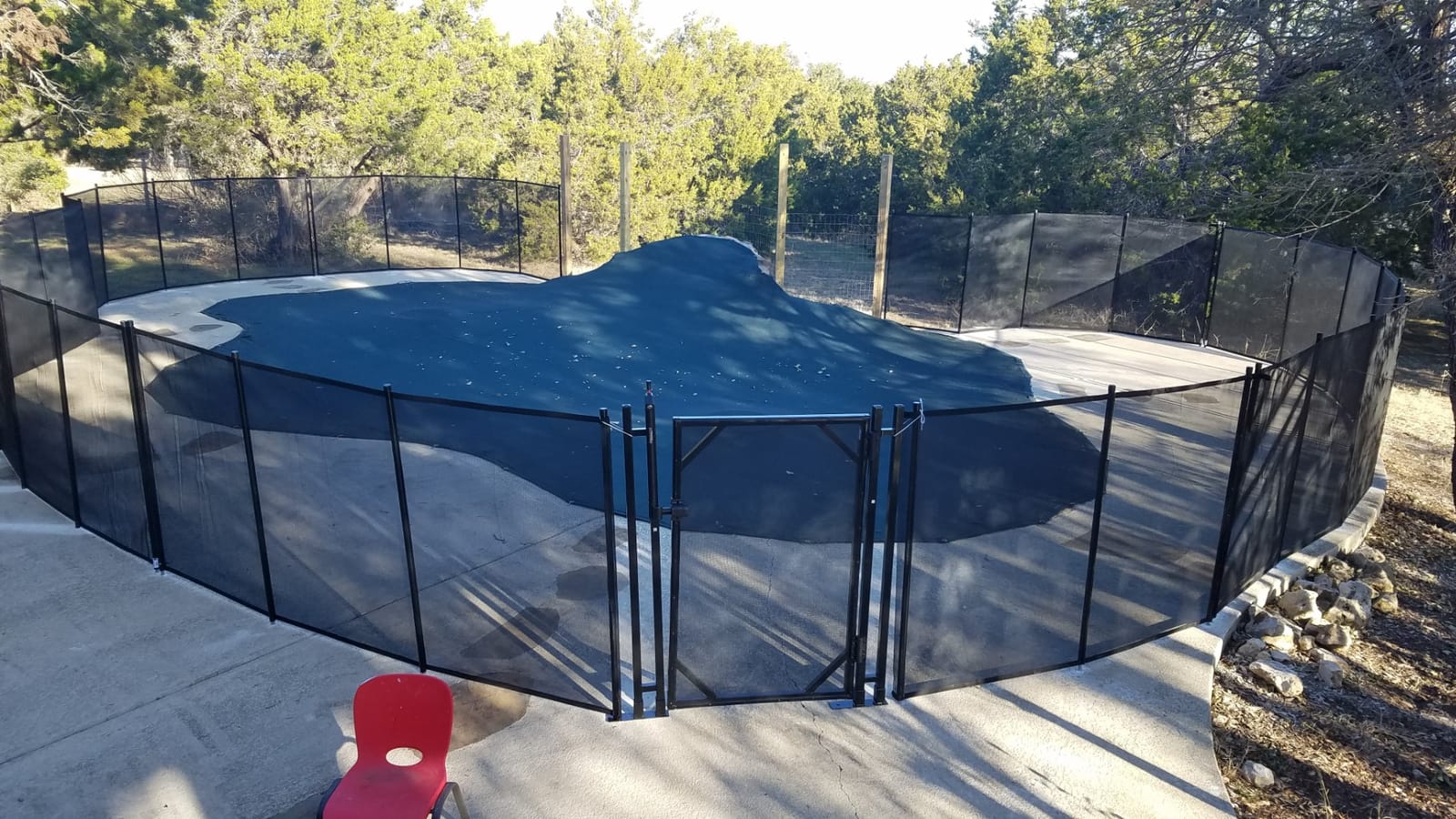
This fence must go into cement or concrete-tiled decking, and the manufacturer does not recommend it for pavers. You drill 5/8-inch holes, drop poles into receptacles, and tension the run. Many owners complete a long perimeter in a single day with one person.
Posts are not as easy to remove and reinstall as marketing clips suggest; a mallet and some effort are involved. Plan on pulling the fence down for winter storage taking a few extra minutes, not seconds.
Watch the Inter-Section Latches
The spring-loaded latches that join sections are the most criticized part. Reviewers describe them as marginal and occasionally hard to unhook, and a run that is only loosely latched at one seam can develop slack along the whole line.
Inspect every seam during your monthly walk-around. If a latch no longer pulls tight by hand, replace it. It is the most common source of four-star reviews, and an easy fix if you catch it early.
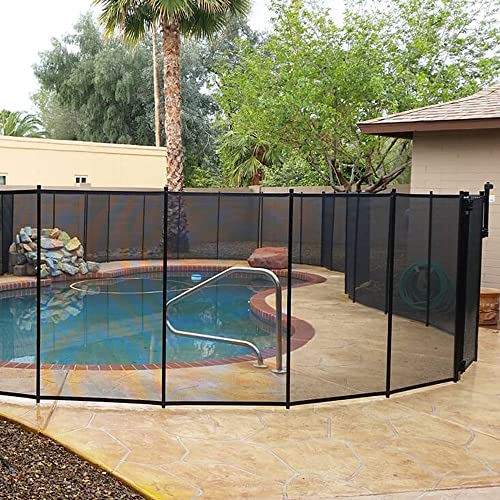
4. VINGLI 4x10⁸ Ft Mesh Fence - Full-Perimeter Coverage in One Purchase
VINGLI Pool Fence 4Ft x108Ft, Swimming Safety Fencing for Inground Pools
4 ft tall in 12 ft sections
4 x 108 ft total coverage
Teslin mesh, aluminum alloy posts
Hammer drill with 5/8 inch bit
+ Pros
- Mesh is sturdy enough to work as a real deterrent
- Fast install
- one owner finished 36 feet in about an hour
- Dogs and toddlers can lean and run against it without movement
- Rolls up for storage and one person can reinstall it
- Cons
- Gate is reported to self-close but not latch reliably
- Drilling template does not always line up
- Instructions conflict on whether the bit is 5/8 inch or 3/4 inch
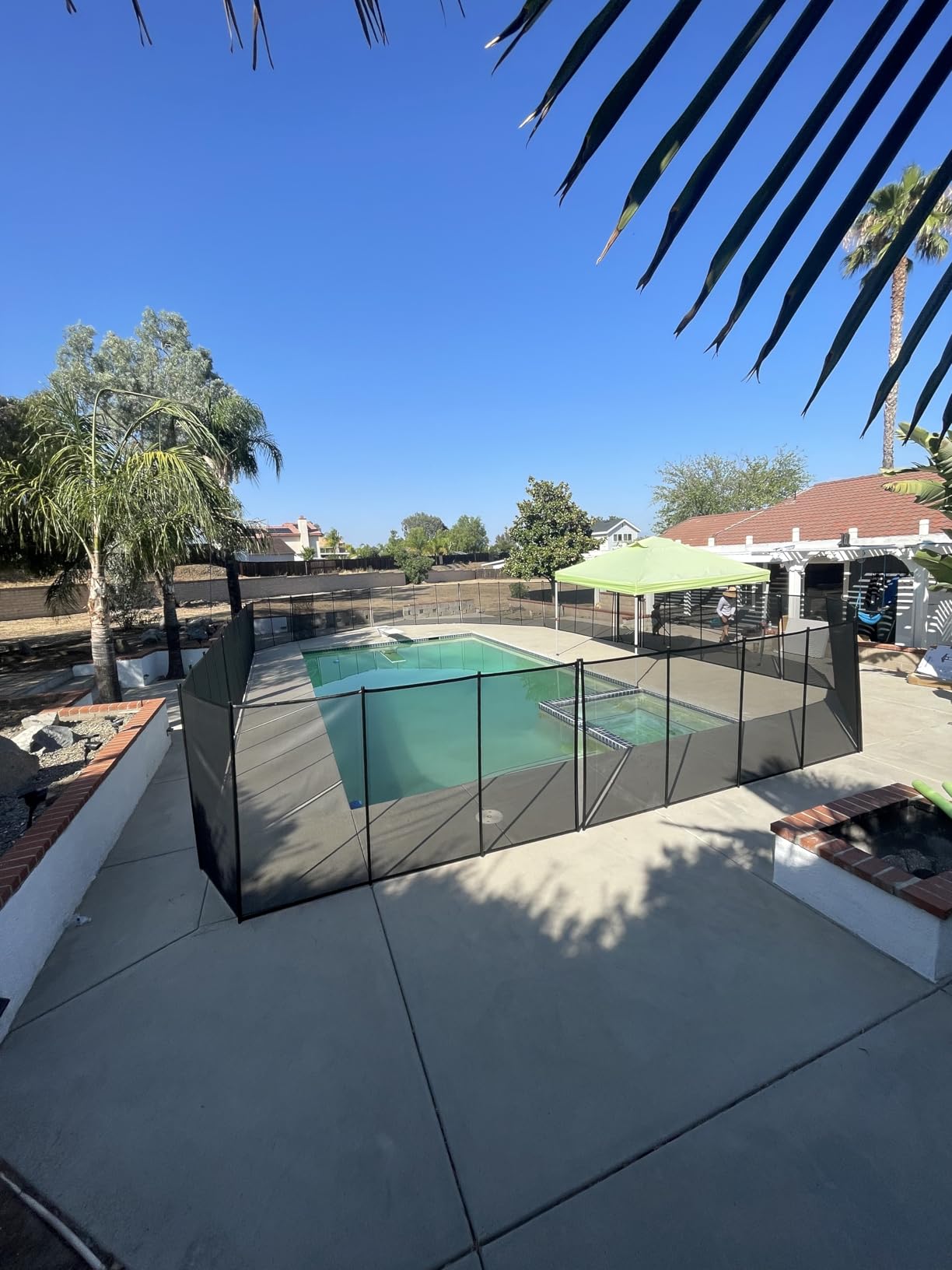
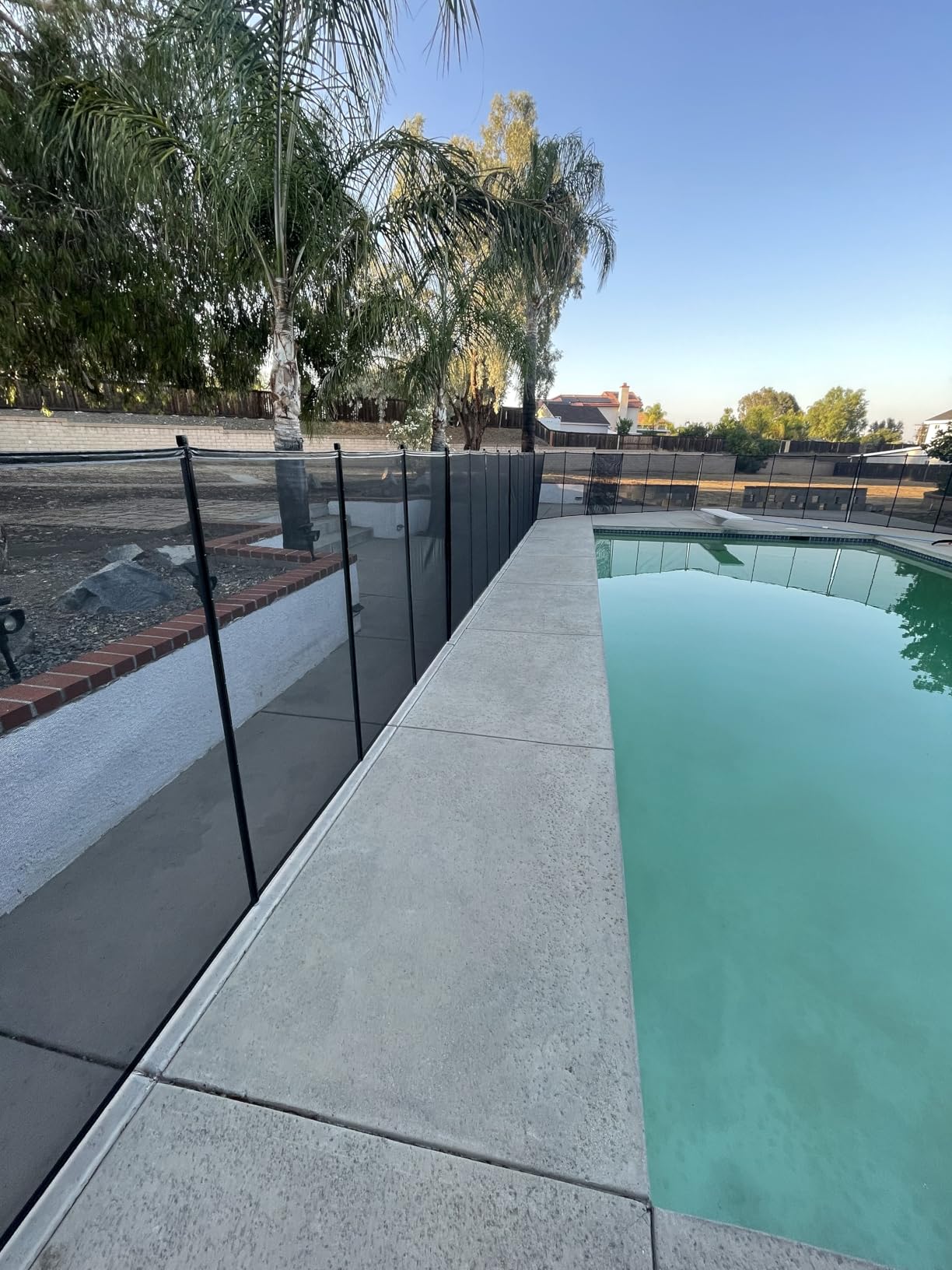
At 108 feet of coverage, this is the run most families need to close a normal in-ground pool without piecing together four or five separate kits. Owners describe the Teslin mesh as sturdy and transparent, and several extended the same fence to divide a yard or contain a dog.
It is the value pick in our list because it delivers the two things a barrier needs, tension and height, at a per-foot cost well below the professional-track options, without the flimsiness of the lightest budget mesh.
Teslin Mesh and Aluminum Alloy Posts
Teslin is a PVC-based mesh that holds its shape better than the cheapest fabric and survives a thunderstorm without the sag you get from a thin budget weave. The aluminum alloy posts resist corrosion, which matters on a permanently damp deck.
The open weave keeps the pool visible, so a parent on the patio can see a child who gets past the fence. That visibility is a real safety feature, not a cosmetic one.
Tensioning Curves and Tight Corners
Straight runs go fast. Curved perimeters and tight corners take more effort, because each turn shortens the effective length and the mesh has to be pulled around the corner post by hand. Budget extra time if your pool is round or oval.
A regular drill will not cut concrete here. Use a hammer drill, and ignore the conflicting bit sizes in the listing and manual by checking what your sleeve diameter actually accepts.
Replace the Gate
Multiple reviews describe this gate as self-closing but not latching, with some owners buying a different-brand gate. That is a code failure in most jurisdictions and a genuine safety gap, so plan on a replacement latch or gate before you consider the run complete.
Everything else about this fence earns its place. It is our pick when a family wants one long run, a fast install, and a barrier that survives being leaned on by a large dog.
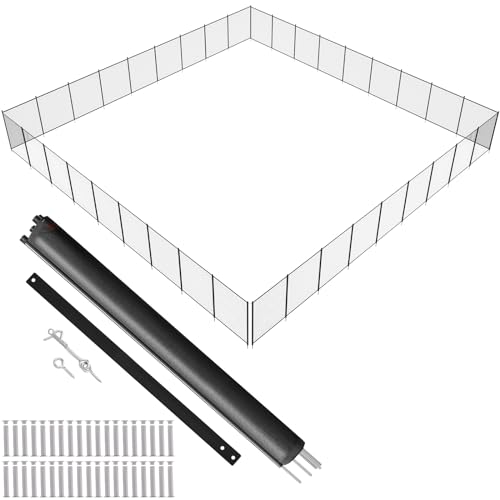
5. VEVOR 4x10⁸ Ft Pool Fence - Best for Large Pools and Odd Shapes
VEVOR Pool Fence, 4 x 10⁸ FT Pool Fences for Inground Pools, Removable Safety Pool Fencing, Easy DIY...
4 x 108 ft coverage
340 gsm Teslin PVC mesh
Stainless steel legs, aluminum pipes
0.63 inch bit recommended
+ Pros
- One long run covers large pools and unusual shapes
- Clear mesh lets you supervise from inside the house
- Pre-installed hooks make assembly quick
- Gate holds when grandchildren lean on it
- Panels are easy to remove for access and storage
- Cons
- Post sleeves frequently arrive broken and are thin plastic
- Sleeve inner diameter is uncommon in the US so spares are hard to find
- Gate latch can be popped off and needs ties to stay secure
- Instructions are metric-only and use vague lean wording
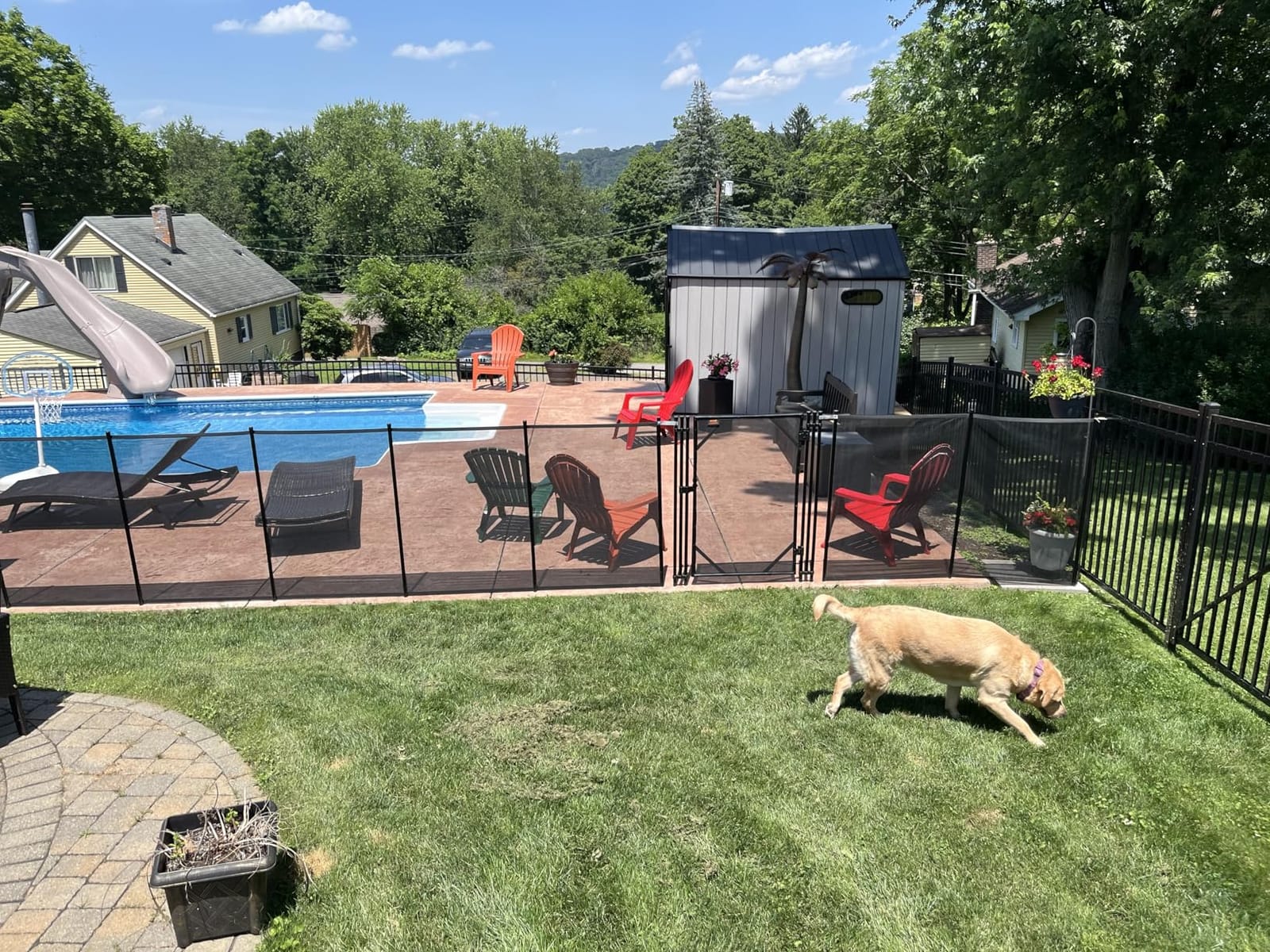
This is the fence to look at first if your pool is large, L-shaped, or surrounded by an unusual deck. Four feet by 108 feet in a single purchase removes the most common DIY headache, which is running out of perimeter half way through a job.
The build is a 340 gsm Teslin PVC mesh with triple-needle stitching, mounted on stainless steel legs and aluminum pipes. Owners who install it correctly often compare it favorably to costlier name-brand fences and say it satisfies local inspection requirements.
Mesh Quality Is the Strength, the Hardware Is the Weakness
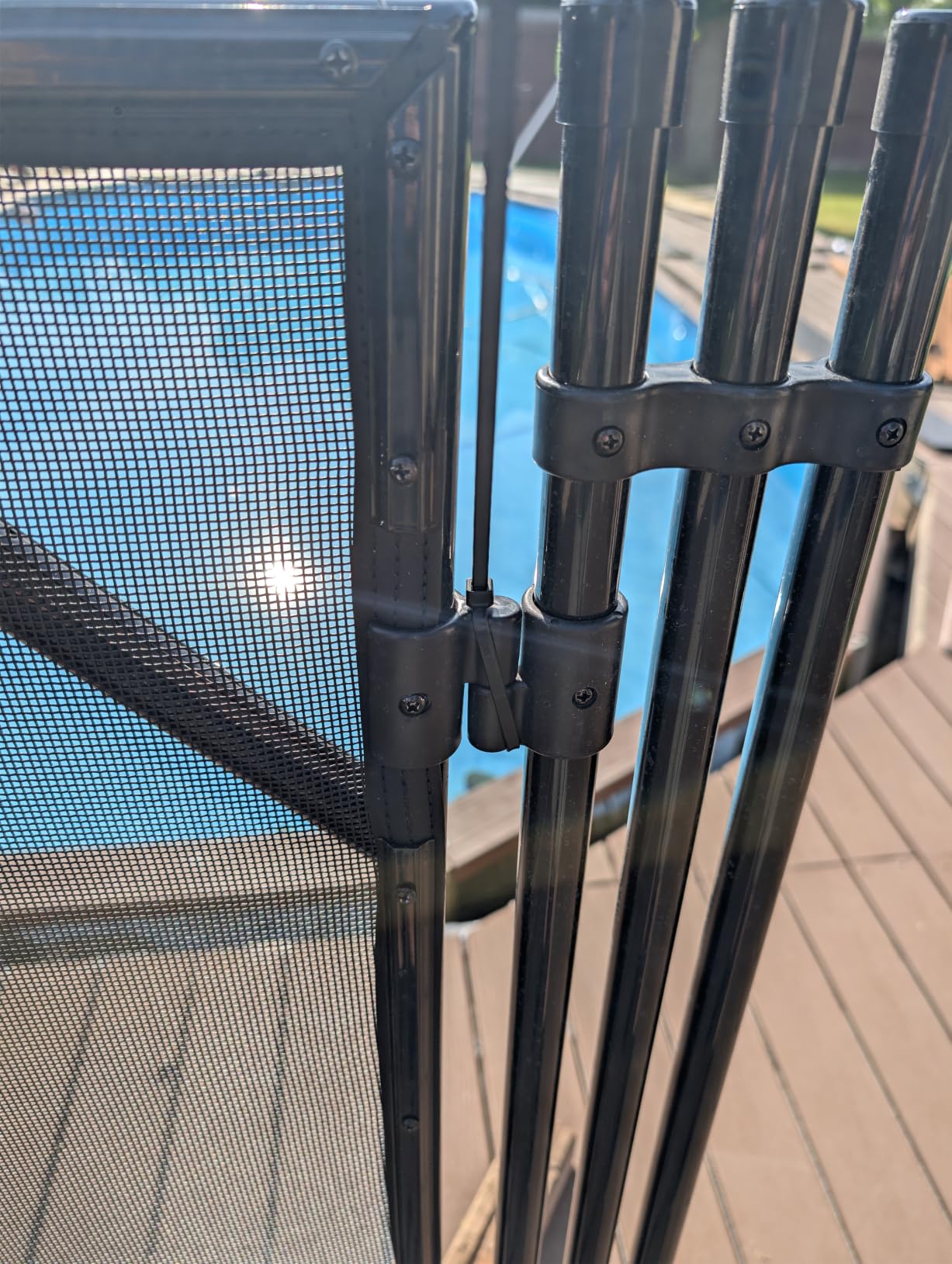
The stitching and fabric weight are genuinely good. The complaint pattern is entirely about small parts: sleeves arriving cracked, top caps falling off, and a gate latch that can be popped with light pressure.
Because the kit ships an extra set of foot sleeves and caps, keep the spares. And because the sleeve inner diameter is a non-standard size, buy a handful of US-standard sleeves from another kit as insurance before you drill anything.
Metric Instructions and a Vague Lean Angle
The documentation describes a light lean without giving a degree figure, and it recommends a 0.63-inch bit. Both are workable, but they push the judgment onto you. Decide on your lean angle before drilling rather than adjusting after the sleeves are set.
Pre-installed hooks are a genuine time saver on a run this long. A single person can put the whole perimeter up in an afternoon and take it down when the pool opens.
Who Should Look Elsewhere
If your gate is going to face a determined toddler, this is not the one. Owners describe the latch popping open, and a father of a three-year-old in the reviews added his own external ties rather than trust it.
For a family that needs the coverage more than the gate hardware, the value is hard to argue with. For anyone fixating on a single point of failure, choose a fence whose gate is the strongest part.
6. Happybuy 4x12 Ft Mesh Section - Lightest Section to Move and Cheapest to Start
Happybuy Pool Fence, 4FTx 12FT DIY Pool Fences for Inground Pools, Removable Child Safety Pool...
4 ft high, 12 ft long section
1000D powder-coated aluminum foot
340 gsm Teslin grid fabric
4 lb per section
+ Pros
- Lowest cost per section in this roundup
- Light 4 lb sections one person can move in minutes
- Panels link to any length and can be cut to fit
- Doubles as a pet
- garden and patio divider
- Cons
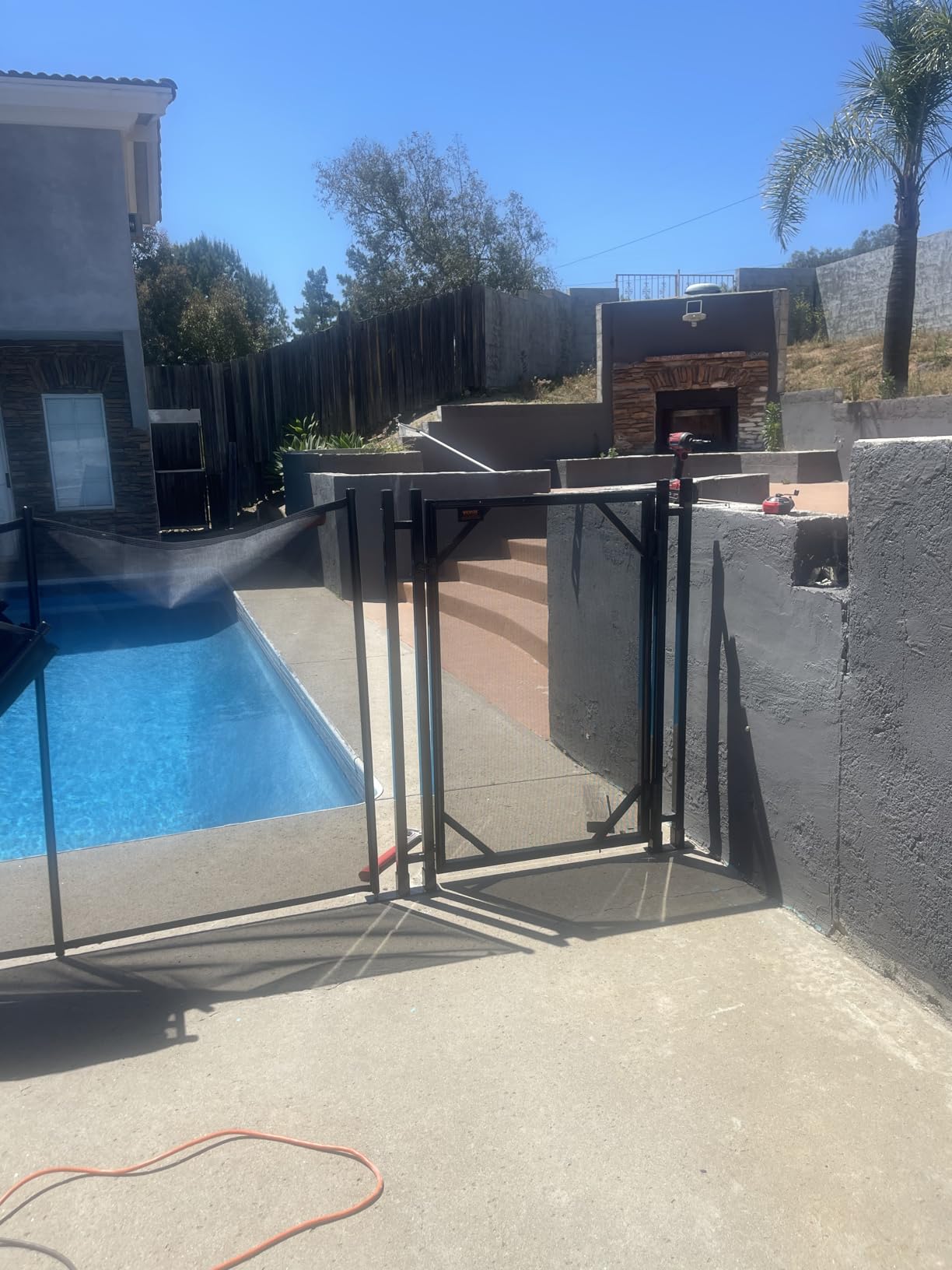
- Gate latch is small plastic that can pop open and lift off the hinge
- Sleeve tubes are flimsy and some arrive cracked
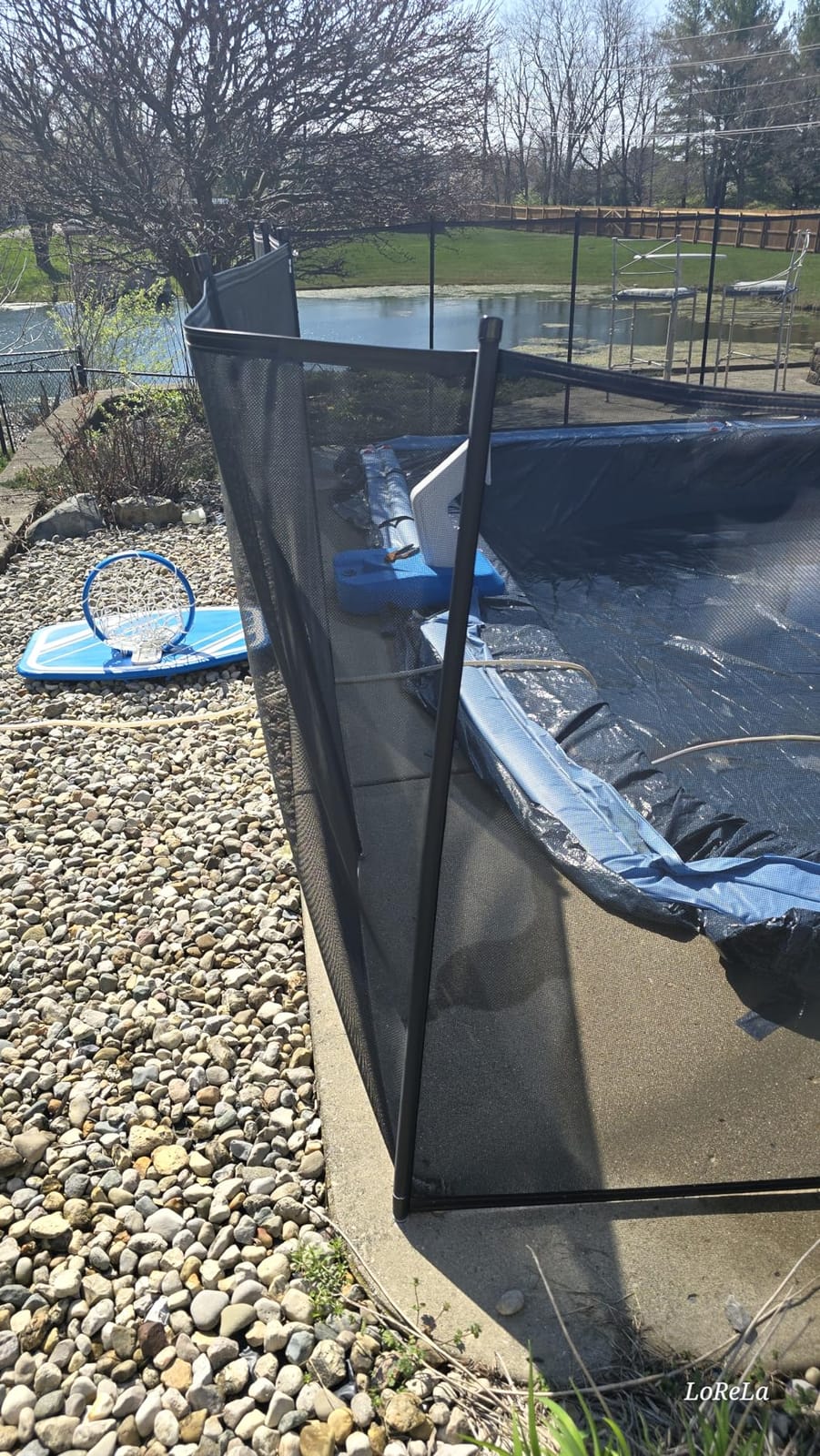
- The run flexes until sections are spaced closely
This is the entry point. A single 4-by-12-foot section is the smallest sensible commitment, it weighs about four pounds, and it is the cheapest way to close one dangerous gap in your perimeter without buying a full system.
Most owners end up adding sections over time, and plenty of them use the same panels for dog containment, a garden edge, or a patio screen once the pool season is over. That reuse is a large part of the value.
Four Pounds Is a Real Feature
On a deck with steps, a slope, or awkward access, weight decides whether you will actually take the fence down for winter. A four-pound panel goes up and down by one person in minutes, and the hook-and-eye buckle connections make reassembly repeatable rather than improvised.
The 1000D powder-coated aluminum foot tube holds up to sun and rain exposure, and the three-stitch overlock seams are stronger than they look in photos.
The Gate Is the Weak Link
Several reviewers, including a parent of a three-year-old, describe the latch as capable of popping open or being lifted off the hinge side by a child. That is exactly the scenario a pool fence exists to prevent, so treat this section as a panel rather than a complete gate system.
If you buy it, add an external latch on your own installation. It is a small addition that converts the main complaint into a non-issue.
Spacing Governs Stiffness
The run flexes more than a heavier fence because the fabric is lighter. Space sections closely and tension firmly, and it firms up considerably. Treat wide spans as a reason to add an intermediate post rather than a reason to accept sag.
For most buyers, this section pairs well with a heavier run around the sides that face the house, where a child is most likely to approach.
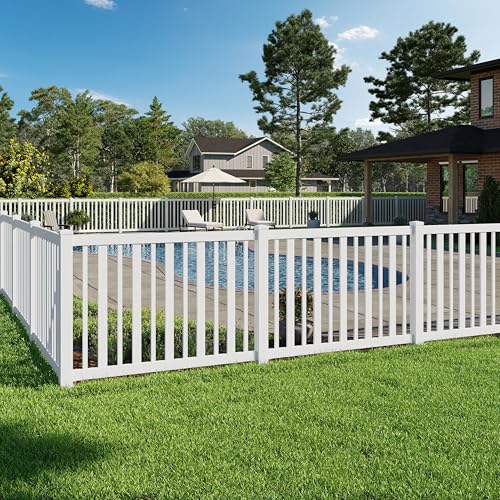
7. WamBam Sturbridge No Dig Panel - No Concrete, No Hammer Drill
WamBam Sturbridge Yard or Pool Fence, White Vinyl No Dig DIY Kit
4 ft high by 6 ft wide panel
PVC vinyl construction
No-dig steel ground anchor
Limited lifetime warranty
+ Pros
- No concrete needed
- the anchor drives straight into the ground
- PVC will not rot or need repainting
- Backed by a limited lifetime warranty
- Clean white picket look that works as a pet barrier too
- Panels trim easily with a sharp hacksaw
- Cons
- Printed directions are confusing and in places incorrect
- The leveling donut does not fit over the post as the directions state
- The finishing post and the gate are both separate purchases
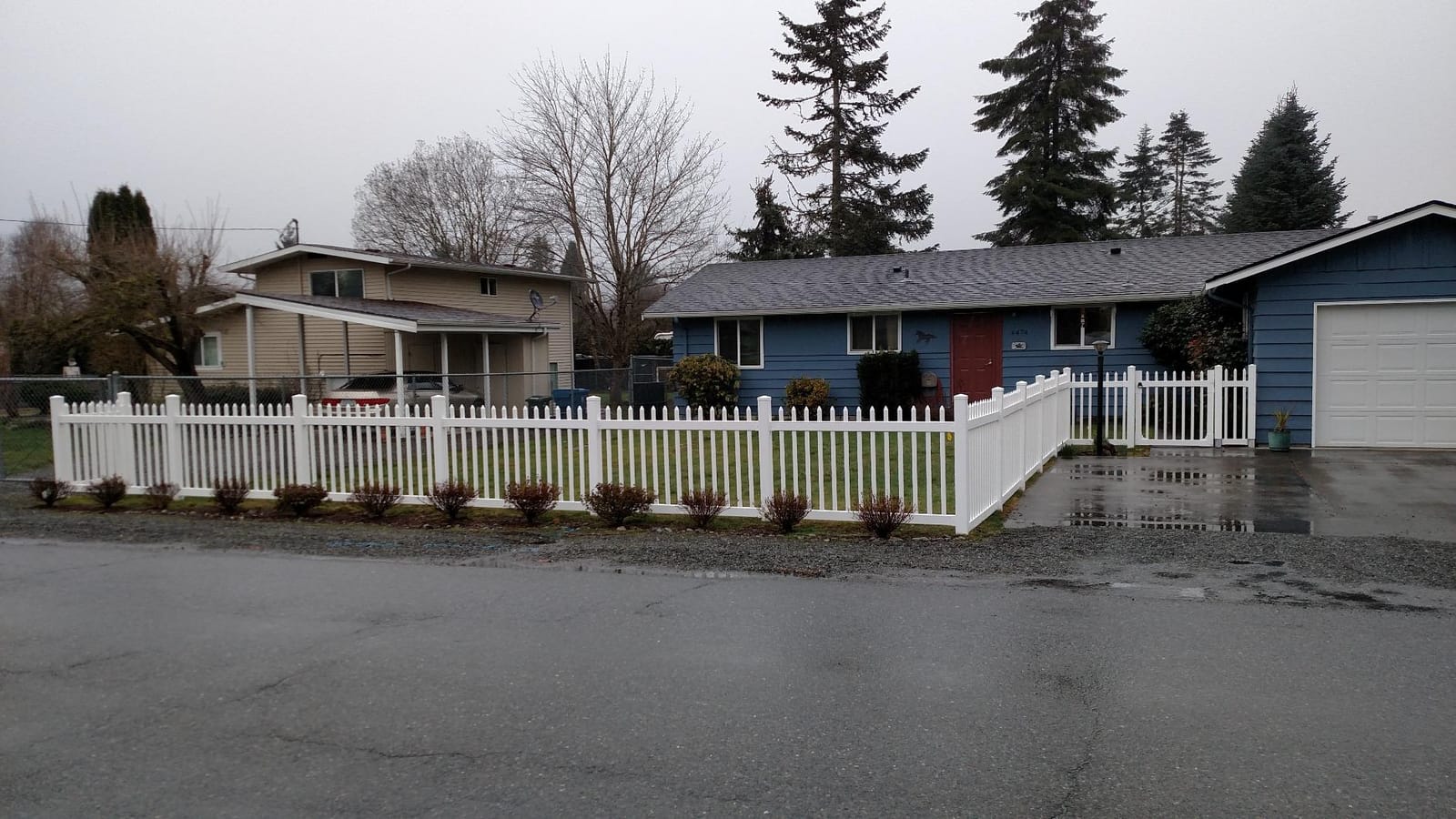
If you cannot drill your deck, this is the strongest answer in the roundup. The panel is a 4-foot-high vinyl picket section that installs on a steel anchor you pound into the ground with a post driver, so there is no masonry work and no risk of cracking a slab or a soft underlayment.
Owners with large, energetic dogs rate it highly, and one review describes completing 200 feet of fencing at roughly a third of what a fencing contractor quoted. The limited lifetime warranty is a fair proxy for how the hardware holds up.
When a No-Dig Anchor Is the Right Call
Renters, owners of soft decks that cannot be drilled, and anyone with a paver surface will find this the only truly code-plausible barrier in the list. It is four feet tall and vertical pickets give no footholds, which is a genuinely different climb profile from mesh.
Pickets do have edges a small child can grip, so inspect the top rail after a season and keep plants and furniture away from the perimeter. A fence that can be climbed from a planter is a fence you have to re-sit.
Read the Instructions Twice, Then Ignore Them
The most common complaint is documentation, not hardware. The leveling donut will not fit over the post as printed, and bottom bracket screws can hit it. Measure twice, place the post first, and attach the panel second.
Order the extra finishing post before you start. It is a separate item, and a quarter-inch measuring error leaves it visibly misaligned. Customer service is repeatedly praised for replacement parts and setup advice when things do not go to plan.
Plan the Gate and the Return
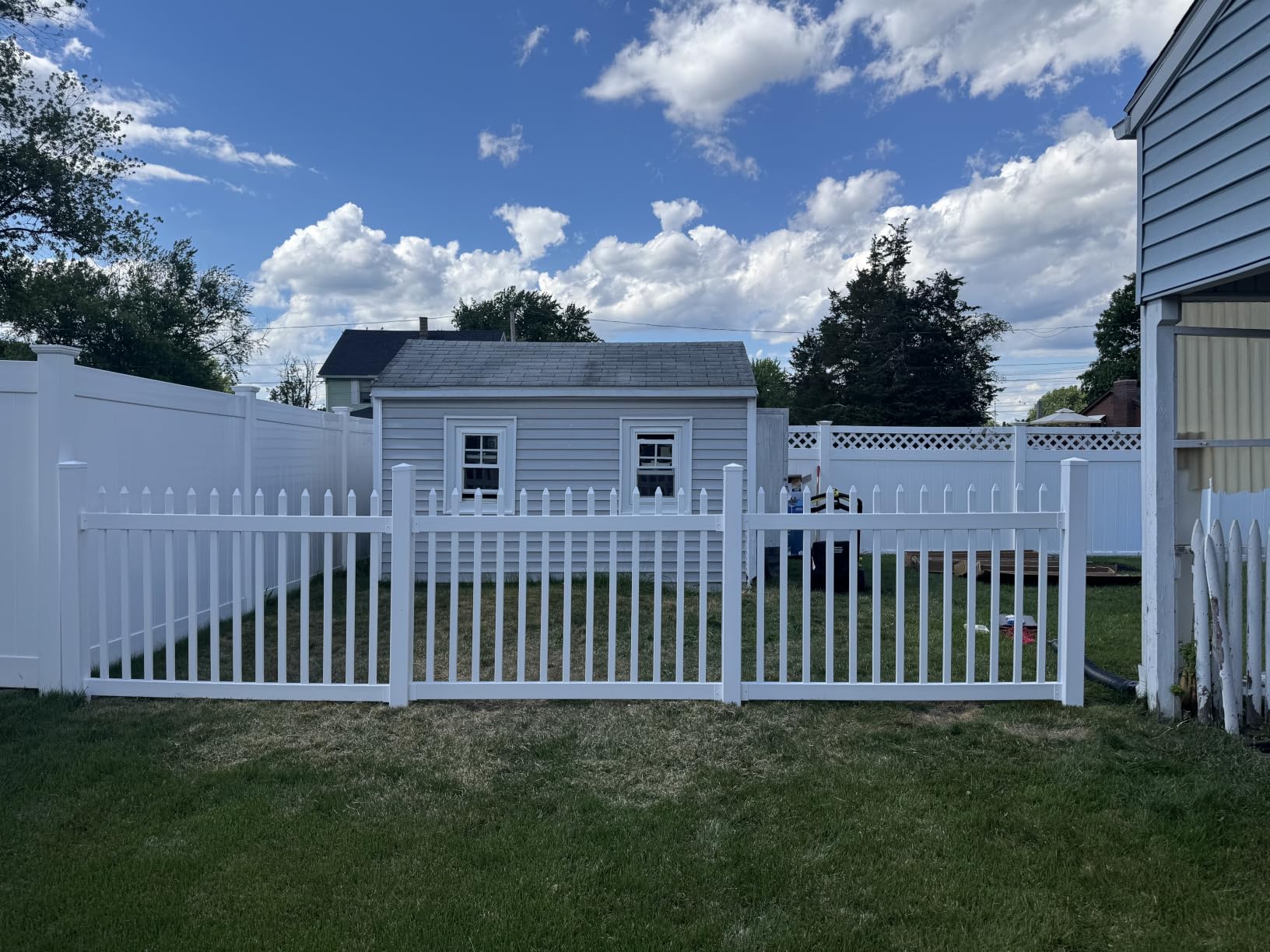
Each box holds one panel and a post, and the compatible gate is a separate purchase. For a closed perimeter, budget one extra finishing post per run plus a gate, or you will end up with a chain at the end of the fence.
Taken as a perimeter system, this is a solid choice for a yard with grass or soil around the pool. It is a poor choice if you need the barrier to disappear visually, since white pickets are far more visible than mesh.
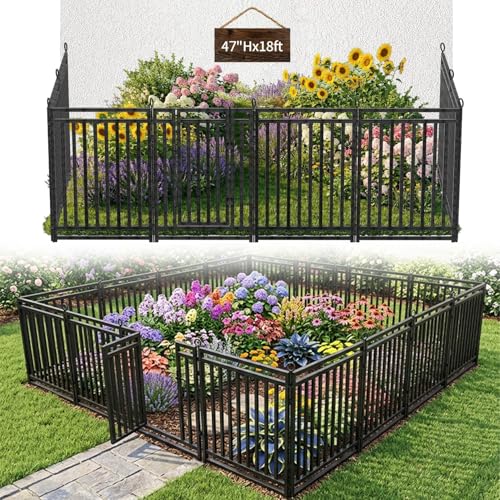
8. Petorldog 18 Ft Metal Panel Fence - Sturdy Metal Where Mesh Would Bend
Petorldog 18ft (L) × 47in (H), 7 Panels & 1 Gate Removable Pool Fence, Robust In-Ground Safety...
47 inch height, 18 ft run
7 panels plus one gate
Black-silver metal finish
Tool-free setup with stakes
+ Pros
- Decorative metal finish doubles as a garden border
- Panels connect and can be reconfigured as the yard changes
- Metal construction feels sturdier than plastic mesh
- A gate is included in the kit
- Cons
- 47 inch height sits between mesh and a 5 foot barrier
- Stakes push into soil so it does not suit a concrete deck
- An 18 foot run means several kits for a typical pool
At 47 inches, this is the tallest barrier here that does not depend on drilled sleeves, and the metal construction gives it a completely different feel from a fabric run. It is a garden fence that doubles as a pool barrier rather than the reverse.
Owners value the modular design, which lets you rearrange panels as the yard changes, and the fact that a gate arrives in the kit. Metal panels connect without tools, so a reconfiguration takes minutes.
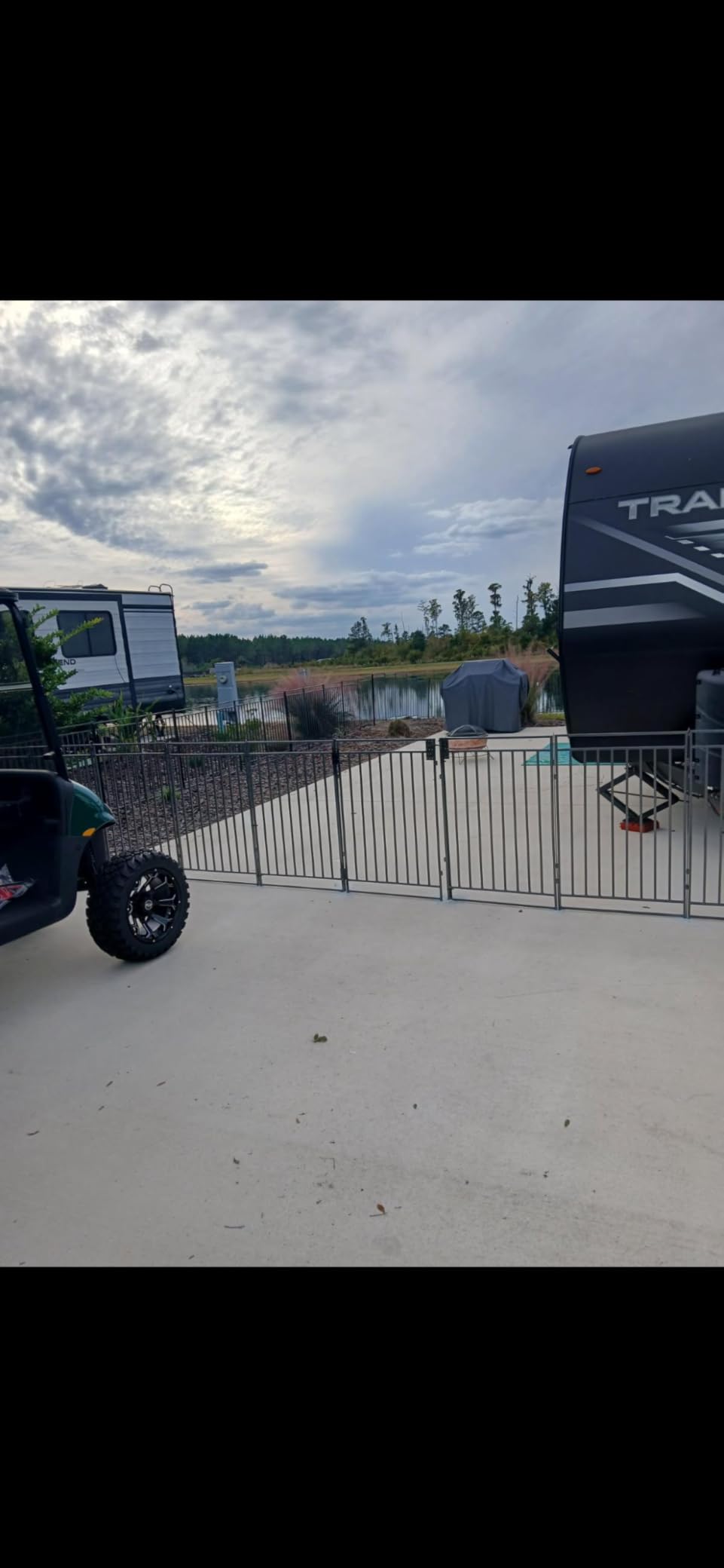
Forty-Seven Inches and What It Buys You
Between a 4-foot mesh fence and a 5-foot one, 47 inches adds a little margin without pushing you into a taller, more expensive system. Because the panels are rigid, they do not need continuous tension to stay upright, which means they stay put when a child leans on them.
The trade is that metal is opaque. You lose the see-through supervision you get from mesh, so this works best where the fence is on the far side of the pool from your usual watching spot.
Soil, Not Concrete
The stakes push into the ground, so this is an above-ground-pool and garden solution. It will not mount to a concrete deck without additional hardware, which rules it out for most in-ground installations.
At 18 feet per kit, a typical pool needs multiple kits. Plan the full perimeter before ordering, and add panels to the sections most likely to face the house.
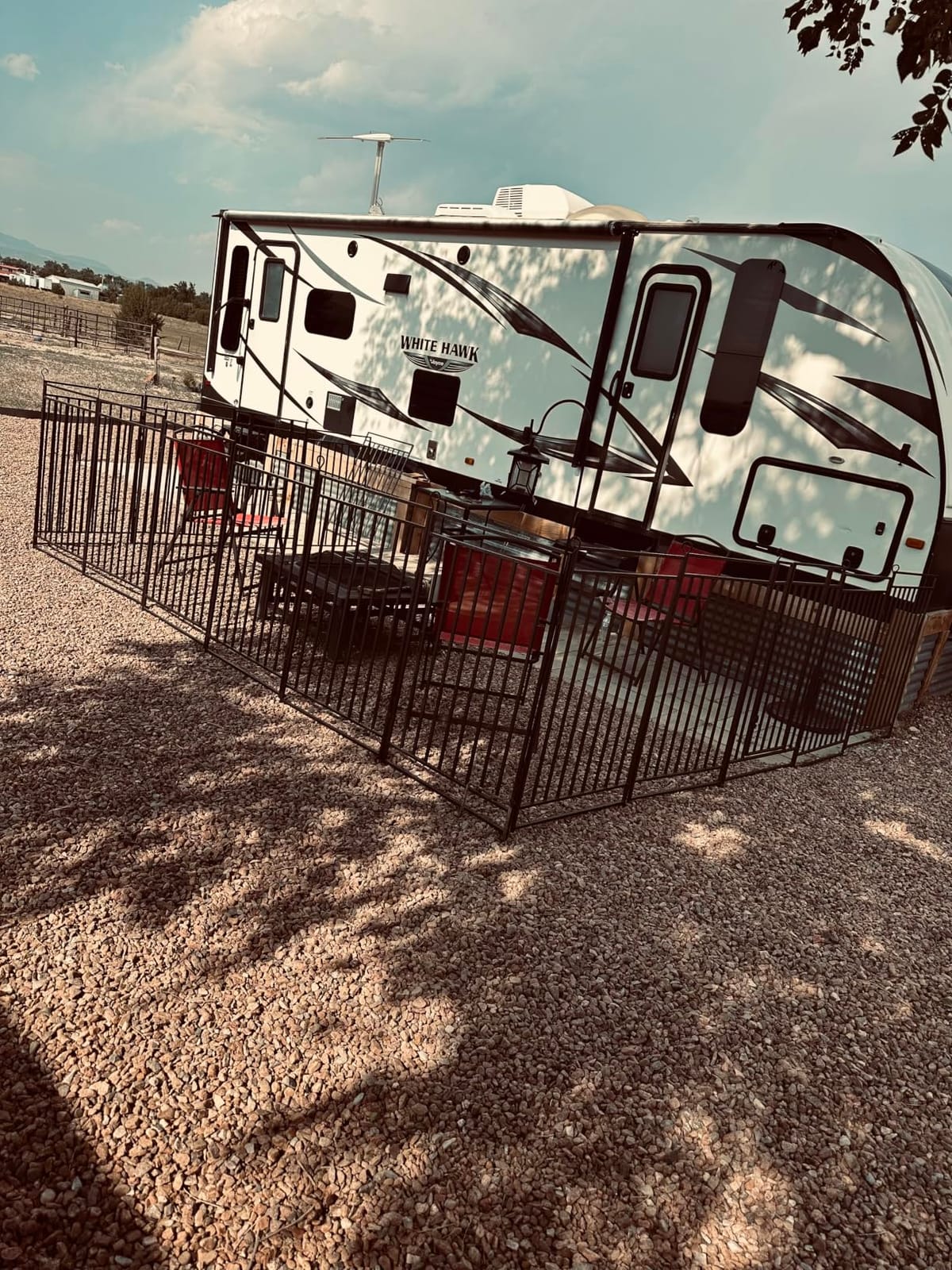
Best Used as a Supplement
Treat this as an addition to a primary mesh barrier rather than a replacement for one. It is well suited to closing a side yard, screening a garden, or adding height to an area where a child would otherwise have a clear climb to the water.
It is a good example of why we rank fences by role. Not every yard needs the same system, and the strongest setup often combines a tensioned mesh run with rigid metal or vinyl on the approach sides.
9. Real Relax 4x48 Ft Mesh Fence - Heaviest Mesh We Tested for Sag Resistance
4×48FT Pool Fence, 350gsm Teslin Mesh Pool Safety Fence, Black
4 ft height, 4 x 48 ft coverage
350 gsm Teslin mesh, triple stitched
Stainless steel feet, aluminum pipes
5/8 inch bit, ruler included
+ Pros
- Heavier 350 gsm mesh feels more substantial than lighter competitors
- Stainless steel feet and aluminum pipes hold up in wind
- Measuring ruler makes hole spacing straightforward
- Nearly invisible and preserves sightlines to the pool
- Sections come out for yard access without fuss
- Cons
- Arrives as one 48 foot run instead of separate 12 foot panels
- No gate is included and one must be bought separately
- Better at prevention than at heavy pushing or leaning
The 350 gsm Teslin mesh is the heaviest fabric in this roundup, and that single number explains most of what owners like about it. Heavier mesh holds tension longer between posts, which means less sag over a season and fewer adjustments at the end of summer.
With stainless steel feet and high-strength aluminum pipes, this is also the most weather-tolerant of the mid-size systems. Owners in the reviews describe it as secure, attractive, and nearly invisible.
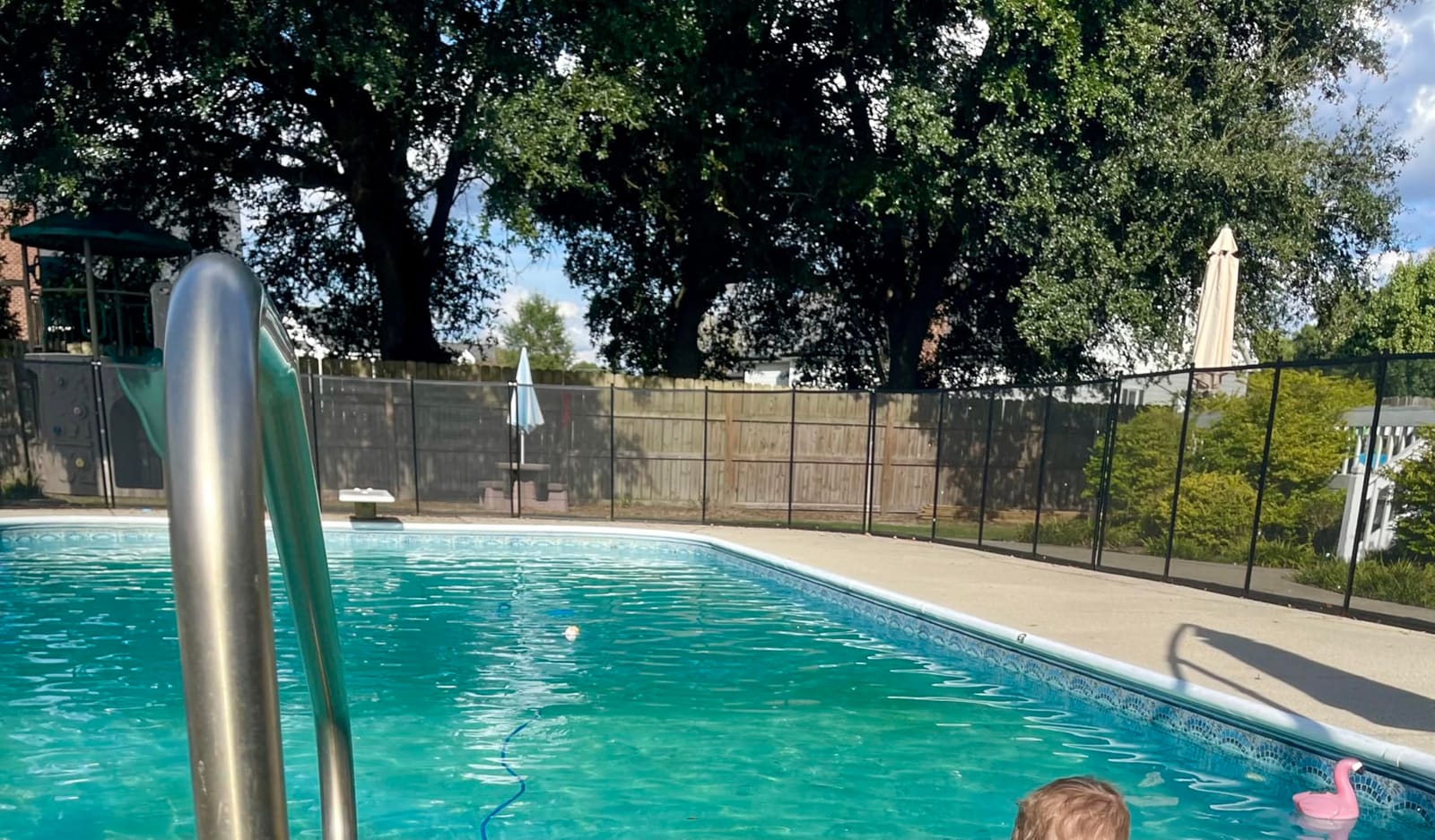
Mesh Weight and Sag Over Time
Sagging is the top recurring complaint among mesh fence owners, and it matters because slack mesh gives a child an edge to grip. Triple-stitched 350 gsm fabric is the direct answer to that problem, and it is why this fence holds its shape through a full season with fewer re-tensionings.
The included measuring ruler is a small touch with real value. Use it to lay out pole spacing before drilling, and the run goes in straight the first time.
The Two Packaging Surprises
This arrives as one continuous 48-foot run rather than as 12-foot panels, which makes it harder to handle and harder to fit around a curved edge. Second, no gate is included, so plan a second order.
Both are solvable. Ask a friend to help with the long run, and pick up a compatible gate at the same time. Buyers who plan for both report being among the most satisfied in the group.
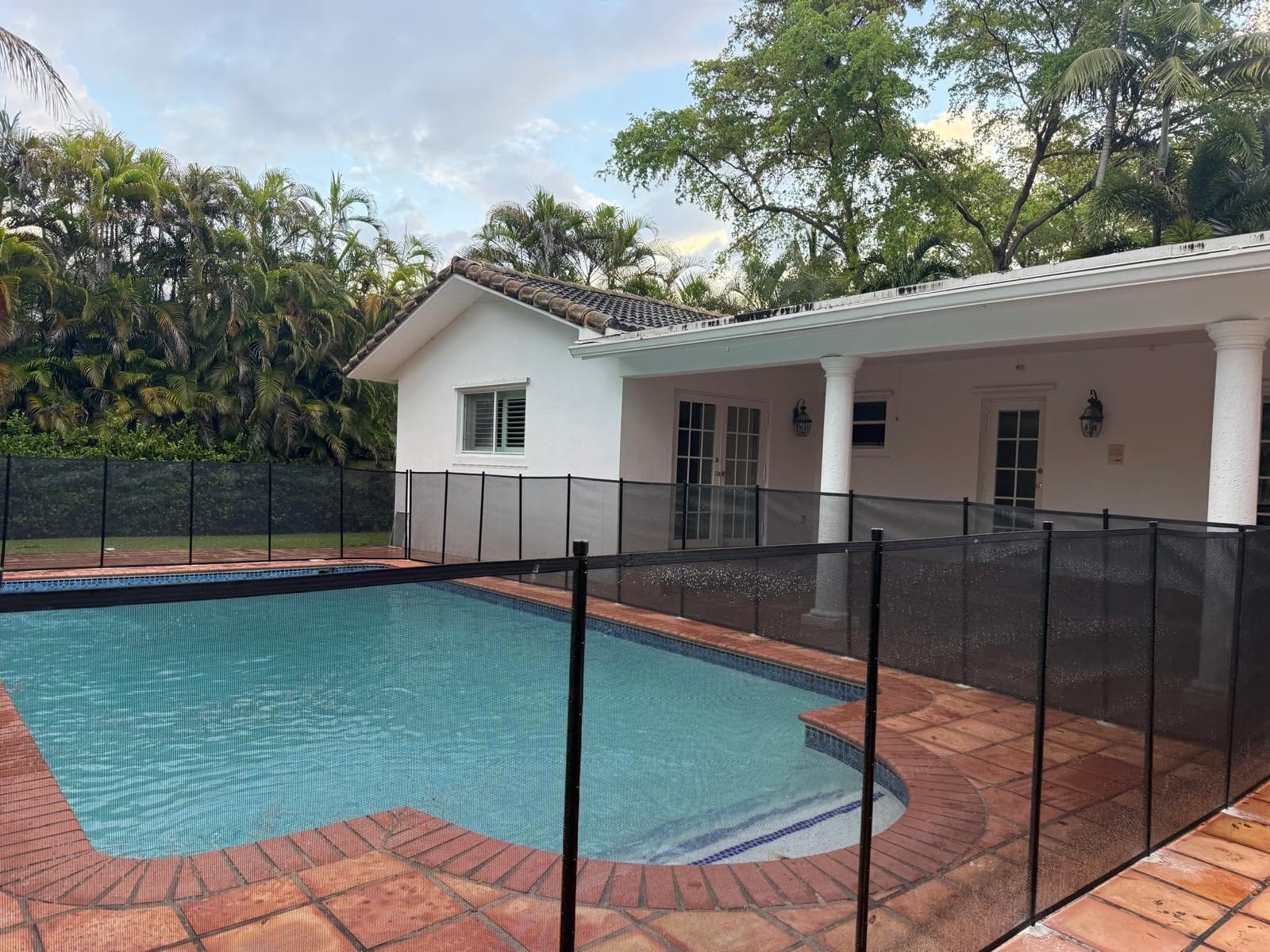
Best for a Mid-Size Perimeter
At 48 feet, this covers a medium in-ground pool and its immediate surround in one run. It is a good match for a family that wants heavier fabric than the budget options without moving up to a 100-foot system.
It is less suited to a yard where a child will habitually push against the barrier, since heavier fabric still relies on tension rather than rigidity. Keep shrubs and play equipment off the fence line.
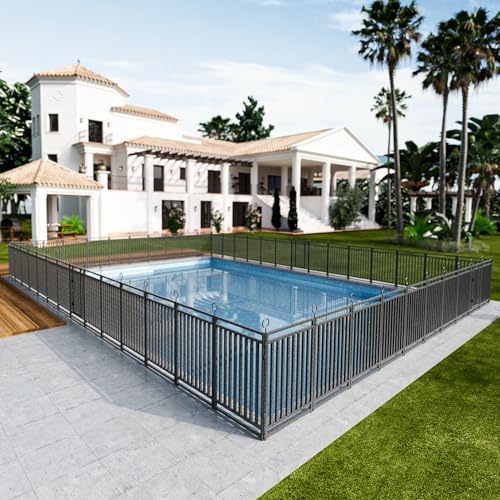
10. Petorldog 40 in x 110 Ft Metal Fence - Longest Run With No Tools Required
Petorldog 40in H x 110ft L Black-Silver Removable Pool Safety Fence
40 in high, 110 ft total length
48 pieces with gate and stakes
Pre-drilled panels, no tools
Double-lock gate latch
+ Pros
- 110 feet of fencing covers a large in-ground pool in one order
- Installs in about an hour with no tools when the ground is soft
- Adapts to uneven ground and unusual heights without fuss
- Panels form rectangles
- circles or corners
- Folds flat for off-season storage
- Cons
- Stakes feel flimsy and some owners add heavier U-shaped stakes
- Panels are easily flipped upside down which confuses the foot fit
- Several reviewers felt the poles should be longer and stronger
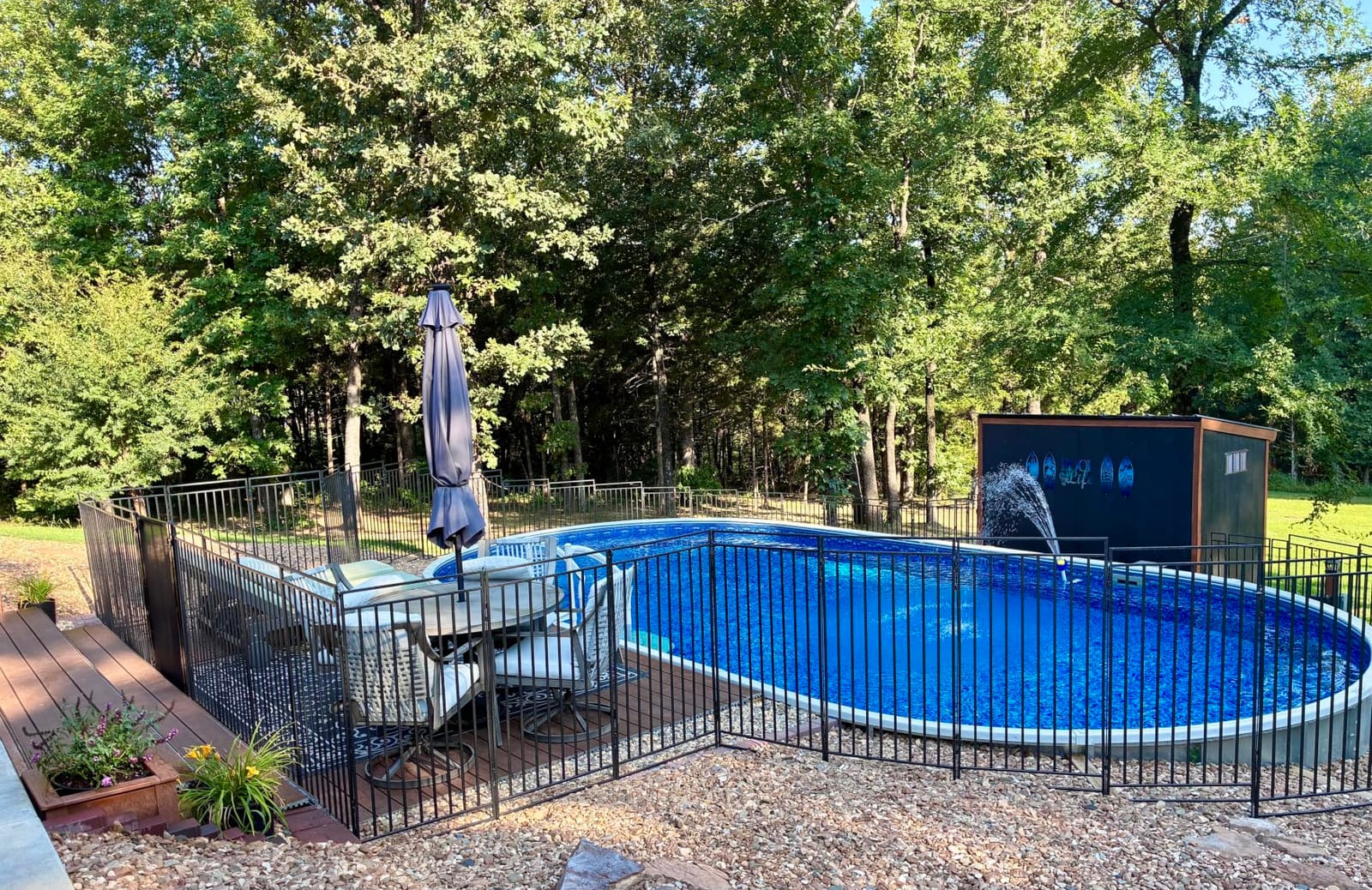
The pitch here is simple: 110 feet of fencing, a gate, and stakes, with no drill and no special tools. Pre-drilled panels push straight into the ground, and owners report finishing the job in under an hour when the soil is soft enough.
It is also the most flexible perimeter we saw. Panels can be arranged in rectangles, circles, or corner layouts, which is useful for a yard where the pool edge is not a simple rectangle.
Uneven Ground and Moving the Layout
Because each panel stands on its own stakes, the fence absorbs ground variation that would put constant strain on a tensioned mesh run. Sloped and irregular ground is where this design genuinely wins, and it also lets you move the whole layout when the yard changes.
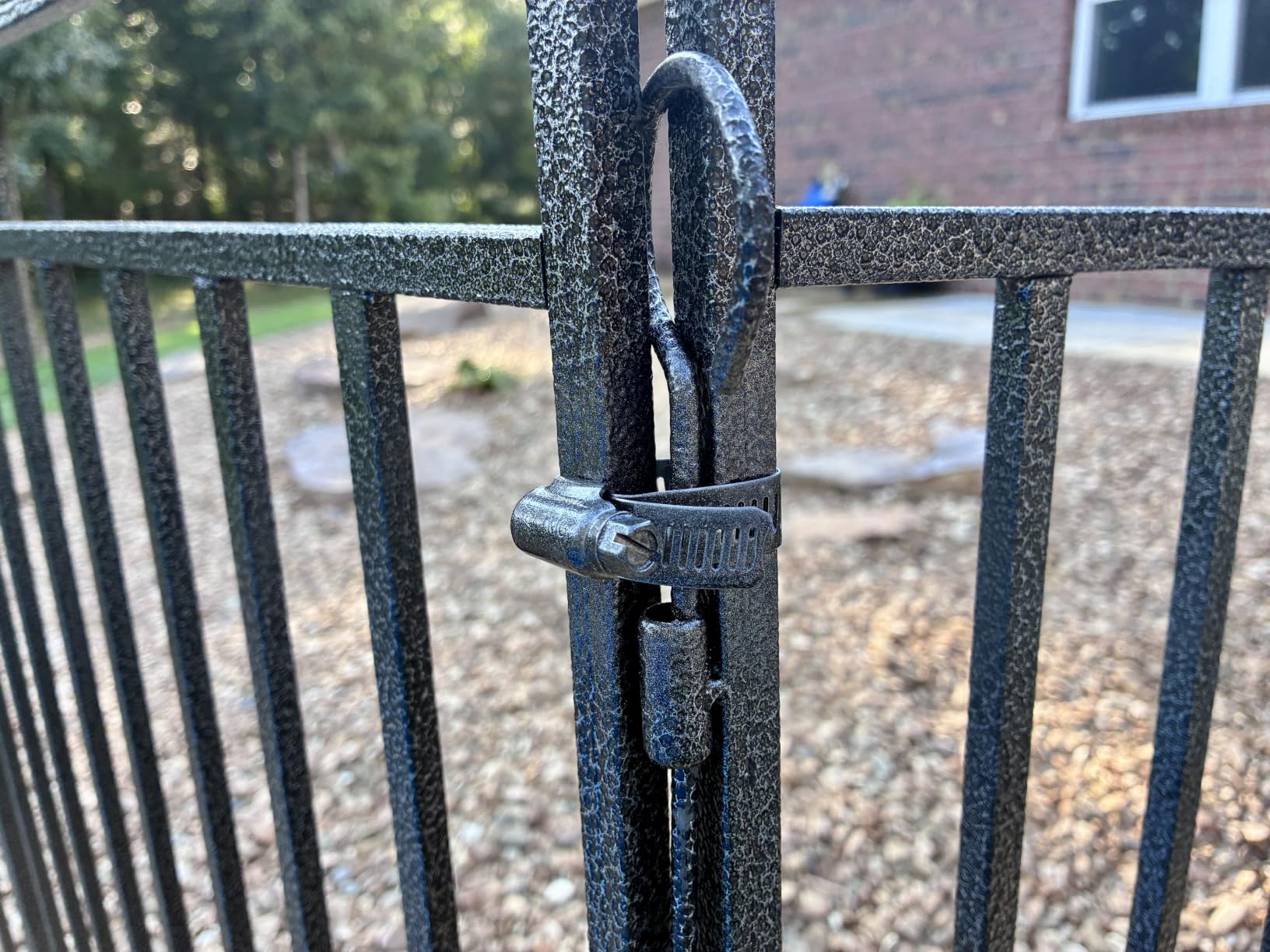
The double-lock gate is a real improvement on the plastic latches in the budget category. That is the safety-critical component, and it is designed not to open unintentionally.
Sturdiness Is the Honest Weakness
Several reviewers felt the poles and stakes are thinner than they expected, and a few found the fence too flimsy for a toddler. Some owners reinforced it with hidden rebar and 1-by-2 rails, which is a reasonable upgrade if you have grandchildren.
At 40 inches, this also sits below the 48-inch code minimum. Treat it as a supplementary layer or a pet barrier rather than your only protection for a mobile toddler.
Who It Suits
It fits owners with a large pool, soft ground, and a strong preference for tool-free setup, and it is a genuine alternative for anyone who cannot or will not drill. The black-silver coating is described as rust-resistant and UV-resistant for year-round use.
It also arrives in multiple boxes, so plan for a split delivery before you start a weekend install. If your priority is the barrier itself rather than the install method, the tensioned mesh systems earlier in this list are the stronger pick.
How to Choose a Pool Fence That a Toddler Cannot Get Past
Height is the number buyers fixate on, and it is the least interesting of the specifications that matter. A 4-foot fence with a floppy bottom rail and a latch that opens with a thumb is worse than a 5-foot fence installed with real tension. Judge the system, not the sticker.
Height, Climb Risk, and the Four-Foot Floor
Code generally requires 48 inches, limited bottom clearance, no climbable handholds, and a self-closing, self-latching gate. Treat that as a legal floor. Children under five who climb can work their way up mesh faster than most parents expect, and the fence is only as tall as its lowest point.
Where your budget allows, push the perimeter that faces the house to 5 feet. Keep chairs, planters, and play equipment away from the fence line, since most documented bypasses start with a foothold rather than a flaw in the fabric.
Self-Closing AND Self-Latching, Not One or the Other
Self-closing means the gate returns by itself. Self-latching means it catches. A gate that does both fails no one. A gate that only does one is a code failure and a real hole in your barrier, and it is the single most common complaint across the reviews in this roundup.
Test it monthly. If it swings, stays open, or takes two hands to catch, replace the latch. Budget for this as a maintenance item, not a one-time purchase, since latches drift with weather and settling.
Mesh Weight, Tension, and Sag
Mesh fabric is measured in gsm, and the range here runs from 340 to 350 gsm. Higher weight holds tension longer between posts, which means less sag by late summer. More important than the number is whether the system pulls tight, because a slack fence is climbable no matter what it weighs.
Plan to re-tension after winter and a few times per season. If your run keeps going slack, the pole spacing is too wide, not the fabric too light.
Above-Ground and In-Ground Pools Need Different Answers
In-ground pools on a concrete deck are the easy case: drill, sleeve, tension. Above-ground pools are not. A soft-sided or inflatable pool cannot be drilled at all, and a steel wall pool can be ringed with panels like the 24-inch resin kit in this roundup, though at a height that is decorative rather than compliant.
For renters, the no-dig steel anchor approach is the practical answer, and it works well on grass and soil. For anyone on a paver deck, confirm with a professional what your surface will accept before ordering.
No-Drill and Minimal-Drill Options
If you want to avoid concrete entirely, you have three routes: pound a steel ground anchor into soil, use a no-dig post that drives in with a post driver, or stake metal panels directly into the ground. Each avoids masonry work, and each trades some rigidity for convenience.
If you can drill, drill. A tensioned mesh run anchored in sleeves is the strongest option in this list, and a rented rotary hammer makes the job an afternoon.
What Actually Drives the Cost
The kit is the smallest part of the budget. A typical DIY mesh run involves the sections, a gate if not included, spare sleeves and caps, a masonry bit or a rented rotary hammer, and your weekend. Professional installation of a quality removable mesh system runs several times the price of the kit and includes tensioning, cut panels for odd corners, and a documented compliance check.
Custom shapes, uneven ground, and gates added later are the three cost drivers that surprise people. Get a written quote that itemizes the gate and the corner work before anyone drills.
Codes, Permits, and the Four-Sided Rule
Requirements vary by state, county, and HOA, but the pattern is consistent: minimum height, limited bottom clearance, no climbable features, and a self-closing self-latching gate. Many jurisdictions require a permit for a permanent enclosure, and some homeowners associations restrict removable mesh.
Ask for a written statement of compliance for your installation, keep it with your home records, and check whether your insurer has an opinion. In our experience, unclear code questions rather than product quality are what create friction with inspectors.
The Monthly Check That Keeps a Fence Working
Once a month, walk the entire perimeter and push on the mesh at mid-height to check tension. Test the gate and confirm it closes and latches unaided. Look for lifted or cracked ground sleeves, frayed seams, and any new climbable object within reach.
Once a year, ideally before the season opens, re-tension the run and rinse the mesh. A fence that is maintained will outlast one that is installed perfectly and ignored, and the whole check takes about ten minutes.
Frequently Asked Questions
What pool fence is safest for toddlers?
The safest pool fence for a toddler is a four-sided barrier at least 48 inches tall, with a self-closing and self-latching gate and no footholds. A tensioned removable mesh system is the most reliable option, because slack-free mesh gives a climber nothing to step on. Where you can afford it, push the perimeter facing the house to 5 feet, and keep chairs, planters and play equipment away from the fence line.
Is a pool fence enough to keep a toddler safe?
No. A pool fence is a delay layer, not a guarantee, and no barrier on the market is childproof. It works because it breaks up a child's path and buys an adult the seconds needed to intervene. Pair it with a door alarm, a pool alarm, a locked ladder or safety cover, and swim lessons. The CDC reports that a four-sided enclosure substantially reduces drowning risk, but supervision remains the primary layer.
Is there a mesh pool fence that does not require drilling?
Yes, with a trade-off. A no-dig steel ground anchor can be pounded into soil with a post driver and holds a 4-foot vinyl panel without any masonry work. Staked metal panels are another option. Both avoid cracking a concrete slab or a soft underlayment, which makes them the practical choice for renters and paver decks. Tensioned mesh is stronger, but it depends on drilled sleeves and a rotary hammer.
Which removable pool safety fence is the best?
For most in-ground pools on a concrete deck, a pre-assembled mesh system at 4 feet with an included template is the easiest to install, and a heavier 340 to 350 gsm mesh holds tension longest through a season. For the tallest climb resistance, a 5-foot mesh system is better. For renters or undrillable surfaces, a no-dig vinyl panel system is the only realistic barrier. Match the system to your deck rather than to the spec sheet.
What type of pool fence is best?
A removable tensioned mesh fence is best for most families because it is affordable, nearly invisible, and can be taken down for winter. Aluminum, glass, and vinyl permanent fencing is stronger and better looking but costs far more and is permanent. Above-ground pools need a different approach from in-ground pools, since a soft-sided pool cannot be drilled. Whichever type you choose, the gate must be both self-closing and self-latching.
What is the average cost of a removable mesh pool fence?
Cost depends almost entirely on how much perimeter you are closing and who drills. A single 4-by-12-foot section is the smallest sensible starting point, a full 4-by-108-foot perimeter run is a bulk purchase, and a compatible gate is often sold separately from the kit. Add a masonry bit or a rented rotary hammer, spare sleeves, and your own weekend. Professional installation of a quality removable mesh system runs several times the kit price, with custom shapes and corner work quoted as extras.
Which Pool Fence Should You Buy for Your Toddler?
If you have an in-ground pool on a concrete deck and want the most proven system with the deepest owner feedback, the Life Saver 4-by-12 section kit is where we start. It installs in an afternoon, disappears visually, and has held up against real toddlers in more than a thousand homes.
If your child is a climber, go taller. The 5-foot mesh system is the strongest barrier here for a determined four-year-old, and the UL certification gives you documentation to show an inspector. If your perimeter is large or oddly shaped, a 108-foot run in one purchase removes the stress of running out of fence mid-job.
If you rent, or your deck cannot be drilled, the no-dig vinyl panel system with a ground anchor is your practical answer, and the 24-inch resin ring is a sensible supplement for a steel wall above-ground pool. For heavy sagging concerns, a heavier gsm mesh that resists losing tension across a season is worth the extra weight.
Whichever you choose in 2026, treat it as one layer. Pair it with door alarms, a pool alarm, a locked ladder or safety cover, swim lessons, and the ten-minute monthly check. The fence is what finally let the parents we spoke to stop standing at the window. That is a real benefit, and it works best when everything else stays in place too.
For water temperature and pool maintenance between swims, see our picks for the best pool thermometers. And if the adults in your house spend time on the water, our guides to ice safety picks and kayak safety whistles are worth a read too.