
10 Best Heated Seedling Mats (October 2026)
A heated seedling mat is a flat, waterproof electric pad that sits under a seed tray and warms the growing medium from below, holding soil near 75-85F so warm-season seeds germinate faster and more evenly than they would at room temperature. Most homes sit between 68 and 72F, which is simply too cool for tomatoes, peppers, eggplants, squash, and basil to sprout reliably. Bottom heat fixes the temperature problem, not the calendar.
I spend a lot of time around camp kitchens, garage benches, and cold-weather gear, and seed starting is the same quiet logistics problem in miniature: you control the environment, you measure it, and you do not trust a dial without a reading. That is why I treat seedling heat the same way I approach battery-powered heated gear, where you check the actual temperature instead of trusting a label. If you want the same discipline applied to cold-weather kit, our heated ski glove roundup uses an identical testing method.
For this guide I went through ten heated seedling mats, read the manufacturer specifications for each one, and cross-checked them against the patterns that show up in what buyers actually report after a full season. Every mat below is a real, currently listed product with published dimensions, wattage, safety certification, and temperature claims. Where reviewers disagree with the spec sheet, I say so. Where a number is a manufacturer claim rather than something I verified, I label it that way.
The core question is not which mat is fanciest. It is which one reaches the right soil temperature in the room you actually have, holds it steady enough to matter, and survives the damp, warm, algae-prone environment a seed tray creates. Those three things decide the outcome far more often than brand name does.
Our Top 3 Heated Seedling Mats for Warm-Season Germination

VIVOSUN 10x20.75 Heat Mat
- Holds 68-86F root zone
- IP67 waterproof PVC
- 20W low draw
- UL and MET certified
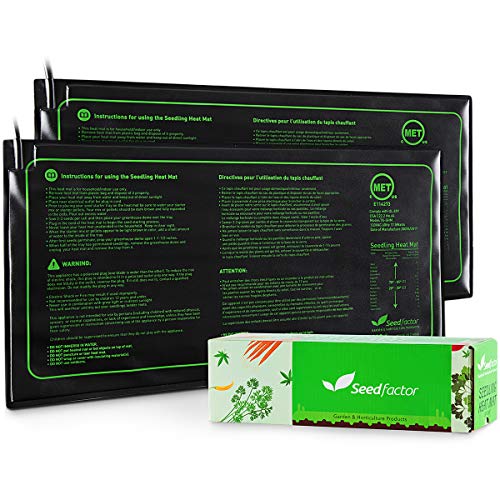
Seedfactor 2 Pack Heat Mat
- Two mats per box
- 70-85F root zone
- MET UL 499 CSA certified
- 17.5W each

BN-LINK 10x20.75 2 Pack
- IP67 waterproof PVC
- 70-85F germination range
- ETL Listed with warranty
- 20W each
Comparing Ten Heated Seedling Mats Side by Side in 2026
Every mat in this roundup covers at least one standard 10 by 20.75 inch seed tray, which is the single most important fit check. The differences that matter after that are certification, water resistance, wattage, and whether a thermostat comes in the box.
| Product | Key Specs | Action |
|---|---|---|
| VIVOSUN 10x20.75 Heat Mat |
|
Check Latest Price |
| Seedfactor 2 Pack 10x20 Heat Mat |
|
Check Latest Price |
| BN-LINK 10x20.75 2 Pack |
|
Check Latest Price |
 AC Infinity SUNCORE S3 AC Infinity SUNCORE S3 |
|
Check Latest Price |
 BN-LINK Mat and Thermostat Combo BN-LINK Mat and Thermostat Combo |
|
Check Latest Price |
 AC Infinity SUNCORE H3 AC Infinity SUNCORE H3 |
|
Check Latest Price |
 MARS HYDRO Mat and Thermostat Set MARS HYDRO Mat and Thermostat Set |
|
Check Latest Price |
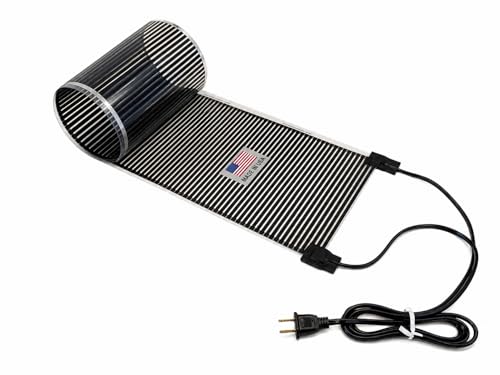 Fast-gro 11x60 Heat Mat Fast-gro 11x60 Heat Mat |
|
Check Latest Price |
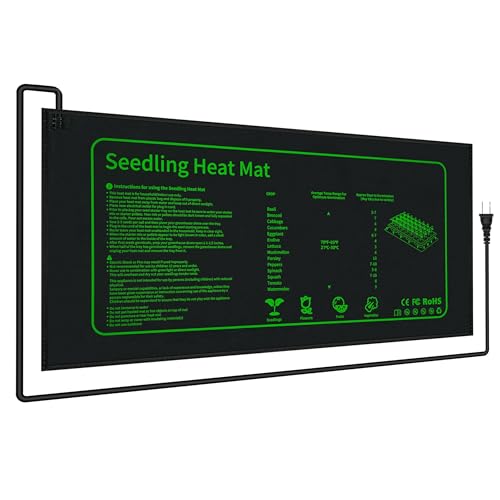 LOCONHA 10x20.75 Heat Mat LOCONHA 10x20.75 Heat Mat |
|
Check Latest Price |
 HYDGOOHO Mat and Thermostat HYDGOOHO Mat and Thermostat |
|
Check Latest Price |
A note on reading this list: the wattage figures are drawn from published specifications, and they cluster tightly between 17.5W and 20W for every single-tray mat here. A 20W mat running for 18 hours a day costs less per season than a single fast-food meal, so electricity is simply not a deciding factor at this scale. Decide on fit, control, and certification instead.
Do You Actually Need a Heat Mat to Germinate Seeds?
No, not for most seeds. You only need one when your soil cannot be held above roughly 70F on its own. If you are starting lettuce, spinach, radish, or peas in a warm room, a mat is wasted electricity. If you are starting tomatoes, peppers, eggplants, squash, cucumber, or basil in a room that drops below that at night, the mat is the difference between germination in four days and germination in three weeks with rot losses in between.
The value of a mat is consistency, not raw speed. A warm mat held at a steady 78F produces more uniform germination than a windowsill that swings from 76F in the afternoon to 61F at 3am. For a two to three day germination window, some growers skip the purchase entirely and use the top of their refrigerator, which runs warm enough to be useful, or a lightbulb fixture in a dark closet. Those tricks work fine for a single tray. The moment you want three or four trays running at a known temperature, a mat with a controller becomes the simple answer.
What Soil Temperature Do Seeds Need to Germinate?
Most warm-season seeds germinate fastest at a soil temperature of 75-85F, and a mat set to around 80F is the sweet spot for nearly all of them. Below about 70F, germination slows sharply and the risk of damping off rises as the medium stays wet and cold. Above roughly 90F you start trading root development for speed, and seeds that sprout first often produce the leggy, stretched seedlings growers complain about most.
Here is the crop breakdown that decides whether a mat belongs in your setup at all:
- Tomatoes, peppers, eggplants want 75-85F. These are the crops that make a mat worth buying.
- Cucumber, squash, melons, basil want 70-85F. A mat speeds things up noticeably in a cool room.
- Warm-season flowers such as marigolds, zinnias, and calibrachoa want 70-80F and benefit from the same bottom heat.
- Cuttings and tropical propagation want 75-85F with humidity, which is where a dial-controlled or digital mat earns its keep.
- Lettuce, spinach, peas, kale, cilantro want 60-70F. A mat actively hurts these crops, and above 75F many of them bolt or fail to germinate at all.
One useful detail from the specifications: the VIVOSUN is documented as holding 68-86F, the BN-LINK and Seedfactor and LOCONHA mats as 70-85F, and the Fast-gro long mat as adding 10-20F above whatever the room is doing. That 68F lower bound is not a marketing trick, it is the honest floor of a fixed-output mat in a cool room, and it is the reason a thermostat matters more than most buyers expect.
1. VIVOSUN 10x20.75 Heat Mat - Even Warmth and the Longest Track Record
VIVOSUN 10" x 20.75" Durable Waterproof Seedling Heat Mat
20W
10x20.75 inch
Holds 68-86F
IP67 waterproof PVC
+ Pros
- Even heat across the tray with no hot spots
- UL and MET certified with model number printed on the mat
- IP67 surface wipes clean
- Carrying bag for roll-up storage
- Cons
- No thermostat included
- Indoor use only and must not be immersed
This is the mat I recommend to almost everyone who asks me where to start. It has been on the market long enough to accumulate an enormous body of owner reports, and the pattern in those reports is unusually consistent: even warmth, no scorching, and a fit that matches a standard 1020 tray without overhang. With over 27k reviews averaging 4.6 stars, it is the best-documented seedling heat mat in this roundup by a wide margin.
The heating element is a far-infrared film sandwiched inside a flexible PVC body with double insulation layers, and the difference between that and a cheap wire mat is that the film spreads the warmth across the whole surface instead of creating a warm line under the cable. It runs at 18 to 20W, which is genuinely negligible, and the 5.9 foot cord reaches a wall outlet from most shelves.
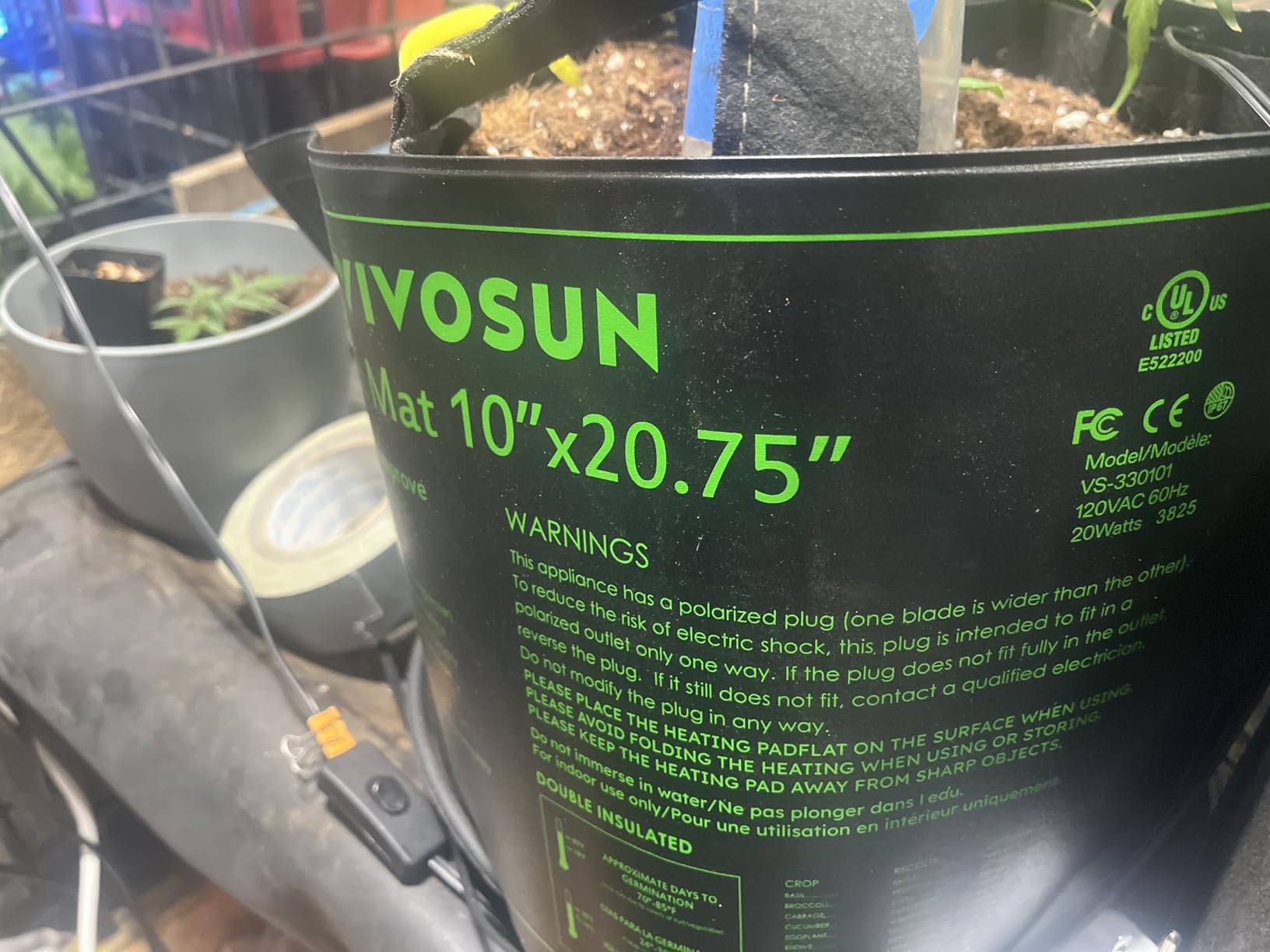
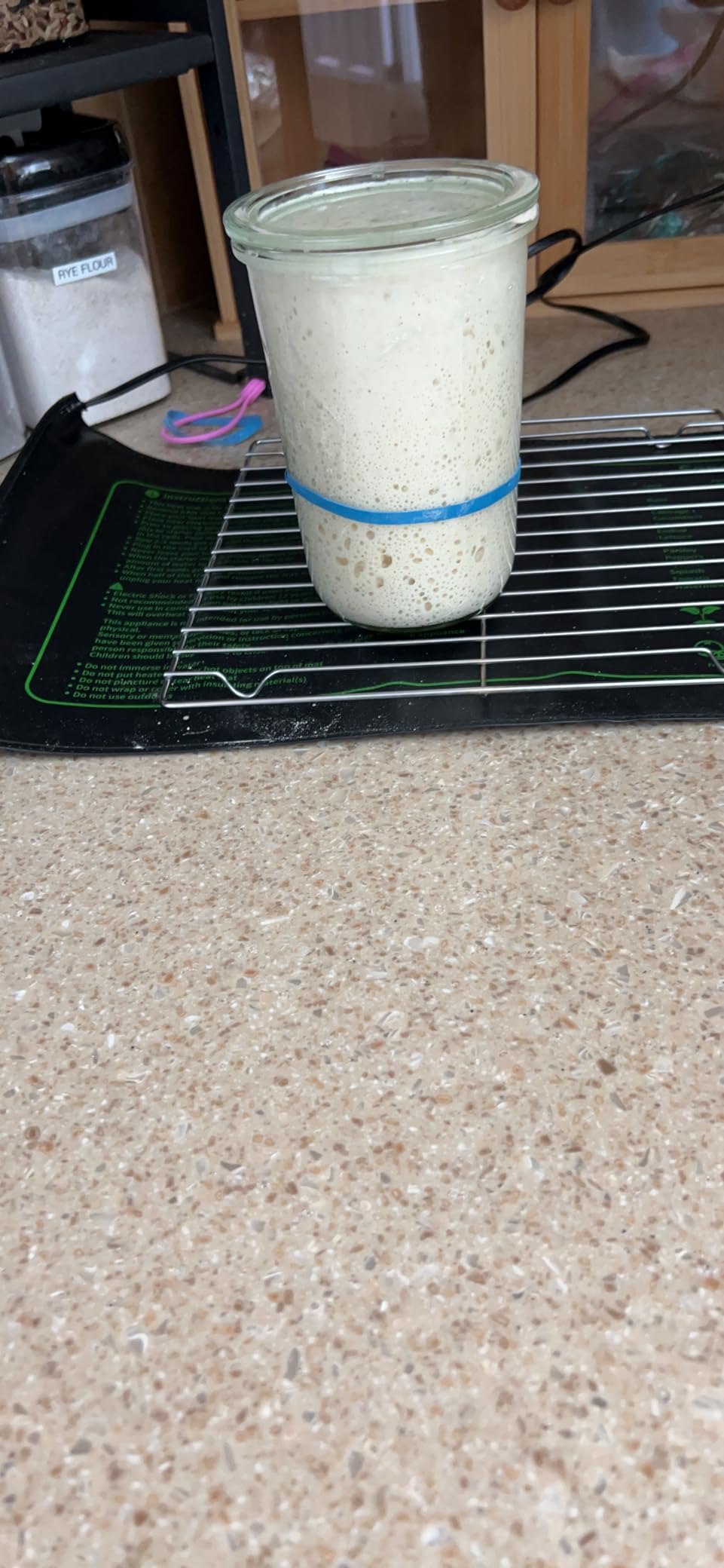
What I like most is how plainly it is built. The mat carries both UL and MET certification with a model number and part number printed on the label, which means you can look the listing up in the safety databases instead of taking a seller's word for it. Owners who have used it across multiple seasons report the PVC is still flexible and unscored, and several use it well beyond seed starting, including bread proofing and kombucha fermentation.
Temperature Reach and the Ambient Room Question
The manufacturer states the far-infrared film reaches up to 104F at a 68-77F ambient, and also states the maintained root-zone range as 68-86F. Those two numbers are not contradictory, they describe different things: 104F is the mat surface at its hottest point, and 68-86F is what a tray of moist medium actually settles at. Buyers in cool rooms should expect the lower half of that range, which is still enough for peppers in a heated house.
This is also the mat that forum buyers recommend most often for repeat purchase, with experienced growers pairing it with a separate temperature controller once they move past a single tray. Doing so turns a good fixed-output mat into a controlled one.
Who This Mat Is Good For and Where It Falls Short
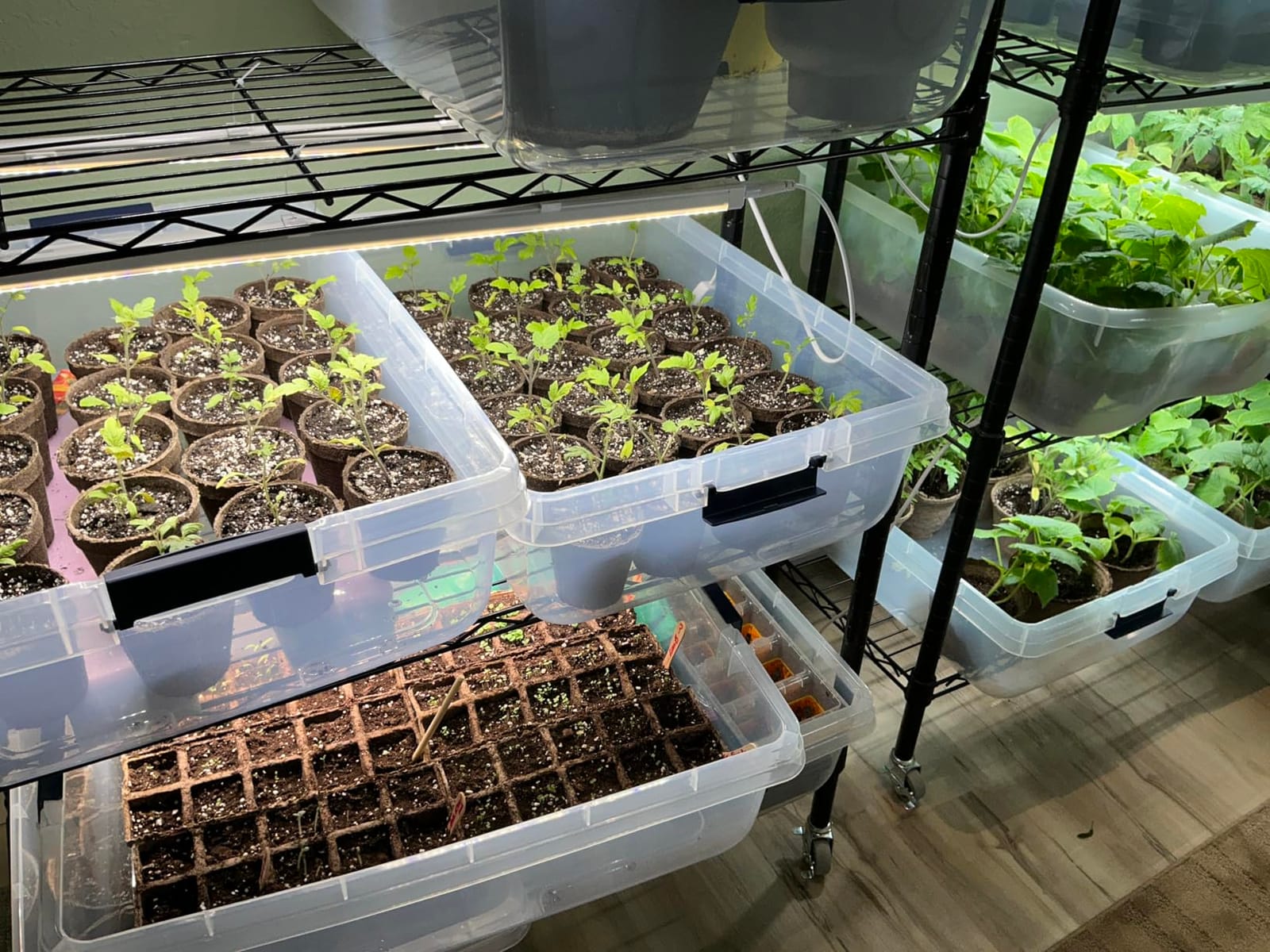
This is the right pick if you are starting one or two trays of warm-season crops in a room that stays above about 68F, and you want the simplest possible setup with no learning curve. It is also the safest recommendation I can make in terms of long-term documentation, because the failure modes people report for it are rare and minor.
The honest limitation is control. It runs at full output whenever it is plugged in, so if your room warms up on a sunny afternoon the soil will follow it up. If you are in a hot climate or a greenhouse, add a controller. If you want the box to arrive complete, look at the combo sets further down this list.
2. Seedfactor MET Certified 2 Pack - Two Trays of Heat in One Box
MET Certified 2 Pack Seedling Heat Mat, Seedfactor Waterproof Durable Germination Station Heat Mat...
17.5W each
Two 10x20 inch mats
Holds 70-85F
MET UL 499 and CSA
+ Pros
- Two mats in one pack doubles capacity
- Triple certification including UL 499 and CSA
- Thickened 7.5mm housing with heat-resistant cord
- Root zone stays in the 70-85F window
- Cons
- No thermostat included
- Fixed output with no way to dial it back
If your plan involves more than one tray, this is the value pick. You get two full-size 10 by 20 inch mats in a single purchase, which means you can run a tomato tray and a pepper tray at the same time, or stagger sowings so the second tray comes up while the first is already hardening off. The 4.6 rating across more than 7,600 reviews says buyers treat the pair as a dependable default rather than a compromise.
The certification story here is the strongest in the budget group. The mats are MET safety certified and comply with UL 499 and CSA C22.2 No.64, which are the specific standards that cover household electric heating appliances. That matters more than it sounds, because it means the product was evaluated for a plug-in heating device rather than being a repackaged panel element.
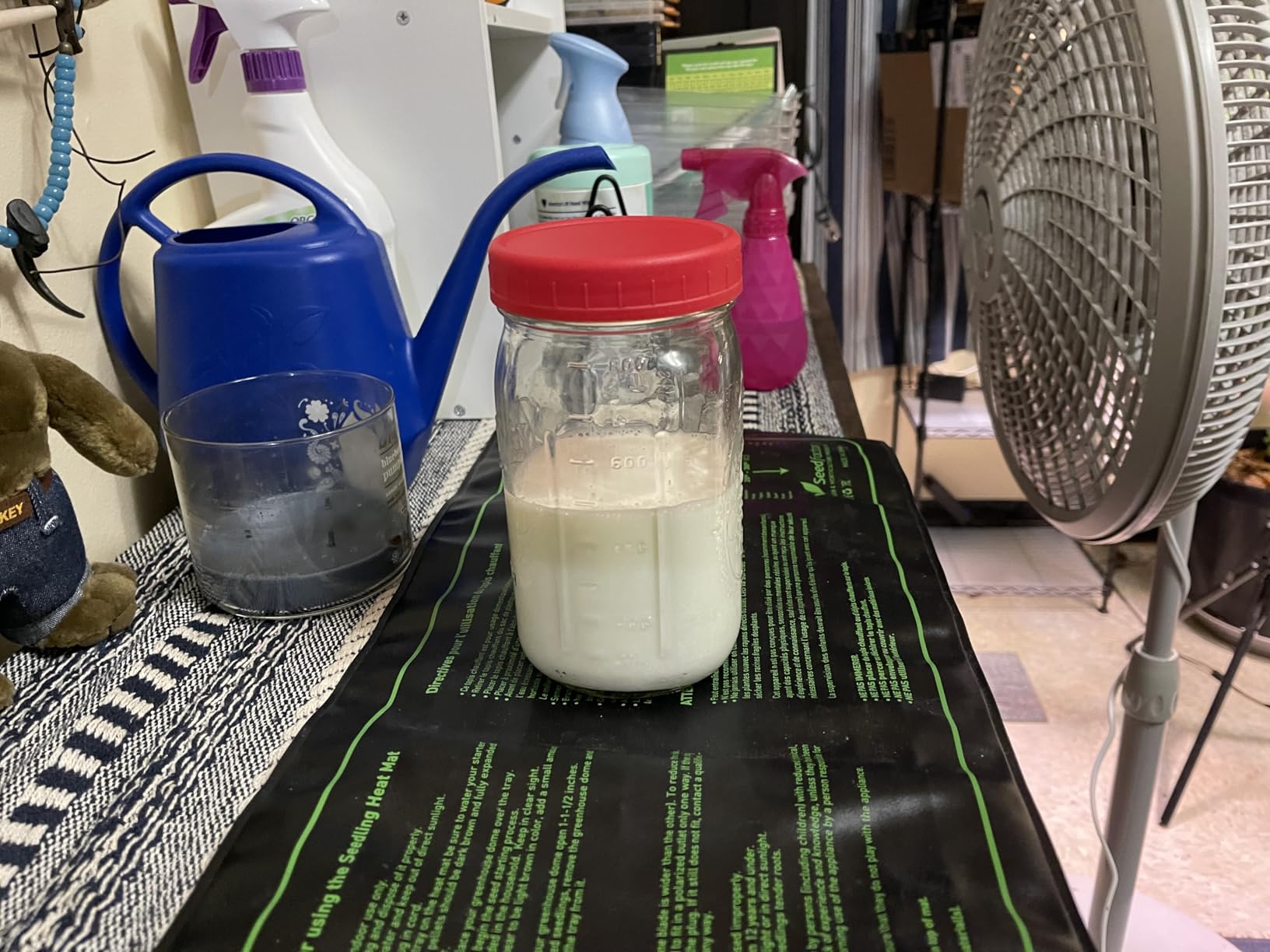
The build detail buyers mention most is thickness. At 7.5mm with a reinforced heating wire and a 5.9 foot SJTW cord rated to 105 degrees, this is a heavier mat than most of its competitors, and that extra material is what several owners credit for even heating across the full surface. Reviewers also point out the same size ladder exists in the line, from a 3.5 by 21 inch mini strip up to a 48 by 20 inch mat, if you outgrow the small size.
Why Two Mats Beat One Bigger Mat
Running two independent small mats is more flexible than one large mat for a simple reason: crop temperature. Peppers want the top of the range and basil is happy lower down, and with two separate mats you can satisfy both at once by leaving one unplugged for a day or two after sprouting. A single wide surface forces every tray to the same setting.
The counterargument is cord management. Two mats mean two cables, and reviewers with crowded shelving do mention routing them along the back edge. Fast-gro later in this list solves that problem with one long strip if clutter is your main objection.
What You Give Up by Skipping the Thermostat
Nothing on day one, and quite a lot in month two. Fixed output means the mat is a function of your room temperature, so a cold snap or a warm afternoon both translate directly into the root zone. If your seeds are forgiving, such as cucumbers or melons, you will not notice. If you are chasing even emergence across a pepper tray, you will.
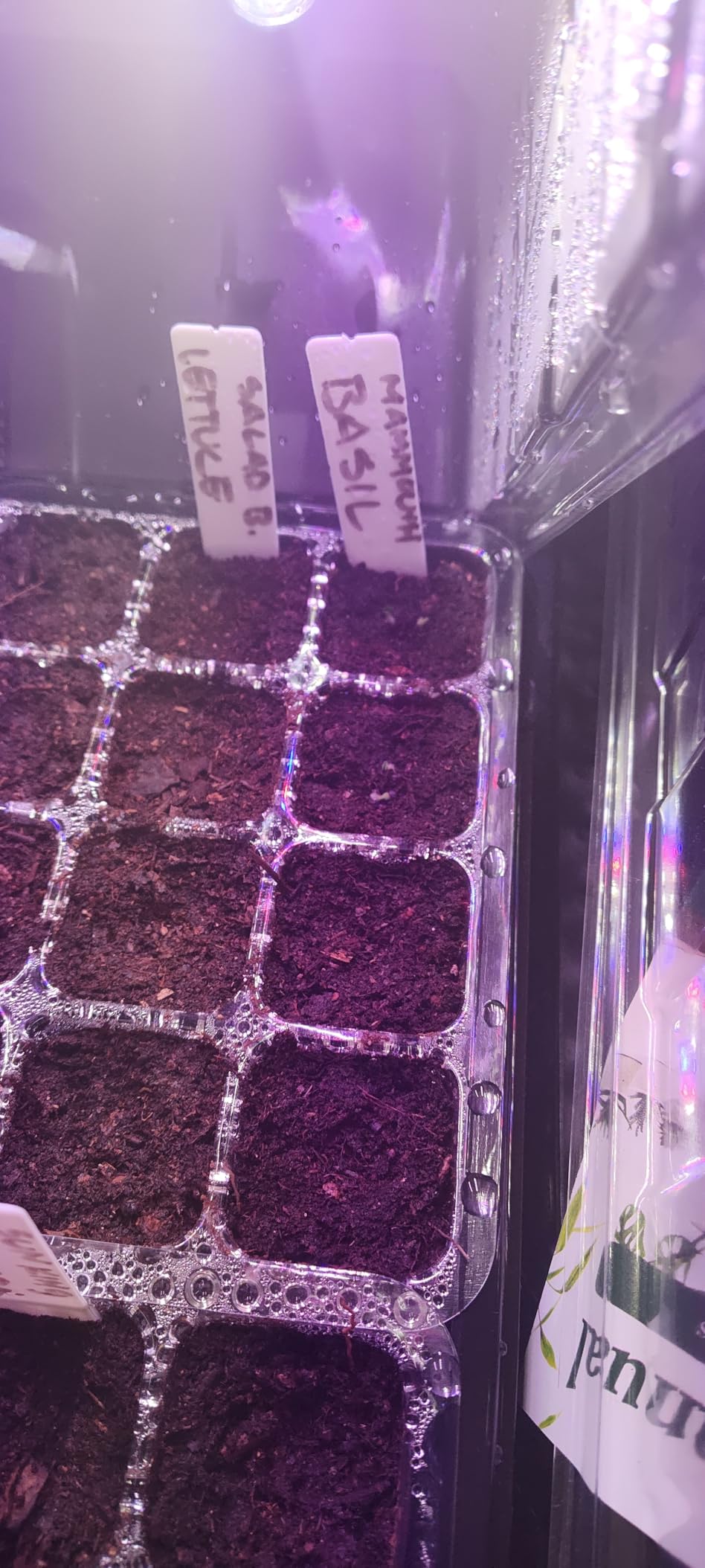
3. BN-LINK 10x20.75 2 Pack - ETL Listed Warmth With a Warranty Behind It
BN-LINK 10" x 20.75" Seedling Heat Mat for Seed Starting Plants Germination
20W each
Two 10x20.75 inch mats
70-85F range
IP67 waterproof
+ Pros
- ETL Listed with a 12-month warranty
- IP67 waterproof surface wipes clean in seconds
- Reinforced film with dual insulation limits scorching
- Available in 2
- 4 and 6 pack counts
- Cons
- No temperature controller in this configuration
- Runs at fixed output
This pair is the one I suggest when a buyer wants a documented safety certification and a warranty without moving up to a combo kit. The 4.6 average comes with a 4.6 from 3,565 reviews, and the five-star share is 80 percent, which is the highest proportion of top marks among the 10 by 20.75 mats in this roundup.
Heating is far-infrared film with reinforced construction and dual insulation layers, holding the root area around 70 to 85F. The surface is multi-layer flexible PVC carrying an IP67 waterproof rating, which in practical terms means you can wipe down a mat that has condensation running over it from a humidity dome without worrying about the electronics underneath.
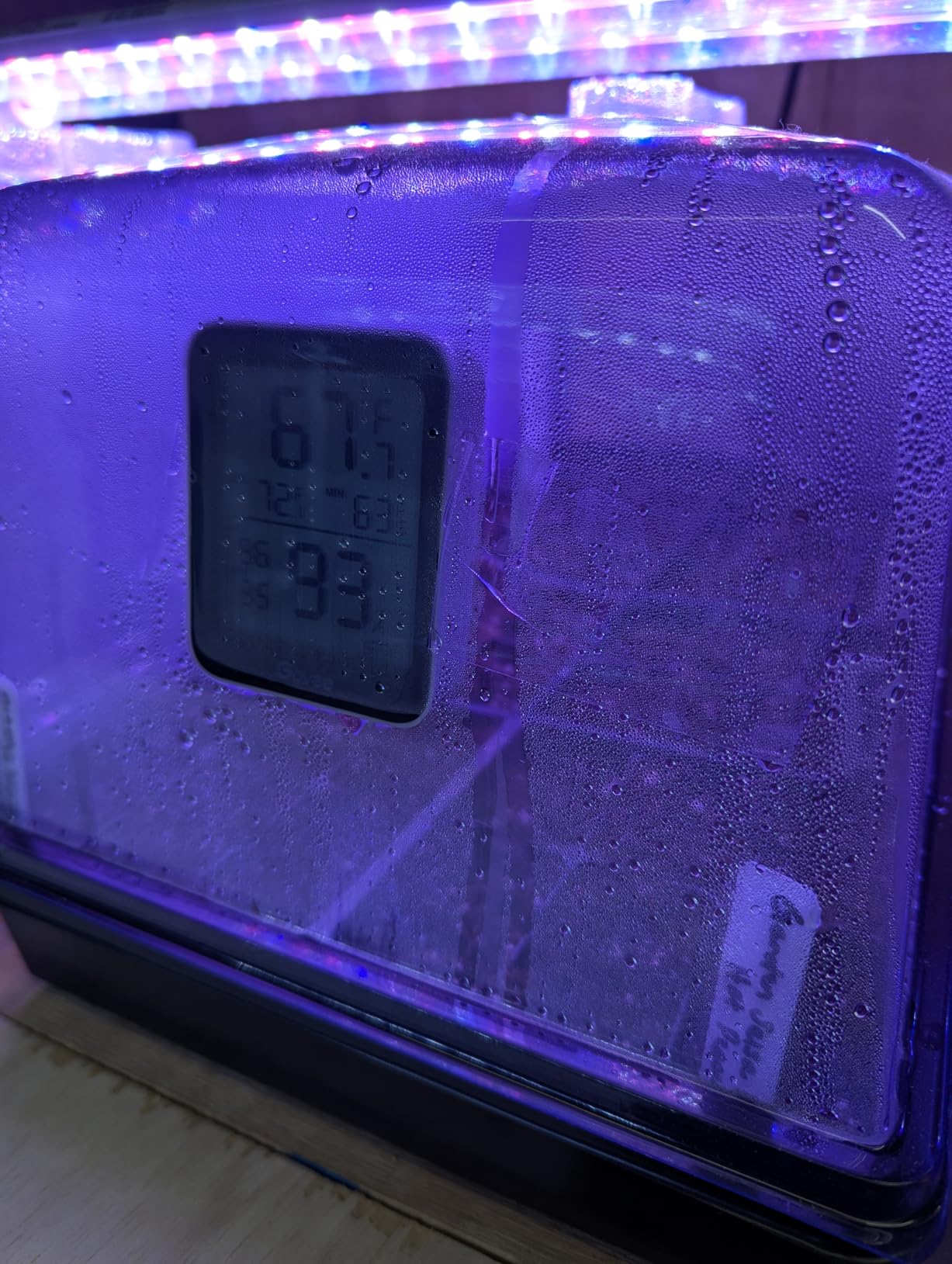
Two practical details stand out. The 5.9 foot cord is long enough to reach an outlet from a standard shelf without an extension, and the mat rolls up small enough that a two, four, or six pack is not a storage problem in a closet. Reviewers also use these well outside of seed starting, with kombucha fermentation, brewing, and reptile enclosures appearing repeatedly in owner reports.
ETL Versus UL and MET, and Why the Label Matters
ETL, UL, and MET are all legitimate NRTL certifications for this product class, so the BN-LINK listing is not weaker than the VIVOSUN listing for safety purposes. All three mean an independent lab evaluated the design against a recognized standard. The practical reason to care is failure mode: a certified heating pad that fails safely is a very different proposition from an uncertified one when it sits inches from damp soil under a plastic dome.
The 12-month warranty adds a second layer. It is not a long warranty, but it is a real commitment from a seller, and it is more than you get from several competitors in this price band.
Who Should Look Elsewhere
Skip this one if you need actual temperature numbers. The dial-free fixed output is fine for a controlled indoor room but gives you no feedback, and in a drafty basement or unheated garage the soil temperature can settle well below the germination window with nothing to warn you.
It is also the better choice over the single-mat equivalent only if you genuinely need two trays. If one tray is your plan, a single mat plus a controller is a smarter use of the same money than two ungoverned mats.
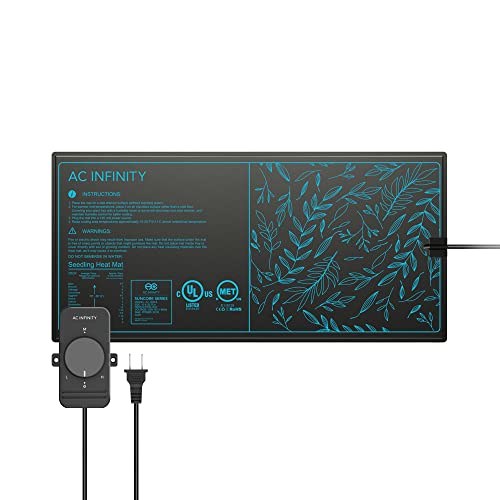
4. AC Infinity SUNCORE S3 - Dial Control That Stops On and Off Cycling
AC Infinity SUNCORE S3, Seedling Mat 10" x 20.75" w/ Variable Heat Control
0.09 inch thin
Three-setting dial
IP-67 quad-layer PVC
UL and MET certified
+ Pros
- Adjustable dial reduces output without switching the mat off
- Very thin 0.09 inch profile sits flat under trays
- Far-infrared film warms quickly and evenly
- Certifications verifiable in online safety directories
- Cons
- Dial is relative
- not a temperature readout
- No soil probe
- so it cannot be calibrated
The SUNCORE S3 solves a specific problem that thermostat users run into constantly. A digital controller cycles the mat fully on and fully off to hold a setpoint, and that on and off cycling is exactly what some growers worry about during early germination. The S3 instead varies output over time using a three-position dial, so the mat dims rather than stops.
It is also the thinnest mat in this roundup at 0.09 inches, with an IP-67 quad-layer PVC construction. That thinness is not a gimmick. It means the mat sits genuinely flat under a tray without buckling, which improves contact and therefore improves how evenly the heat transfers into the medium.
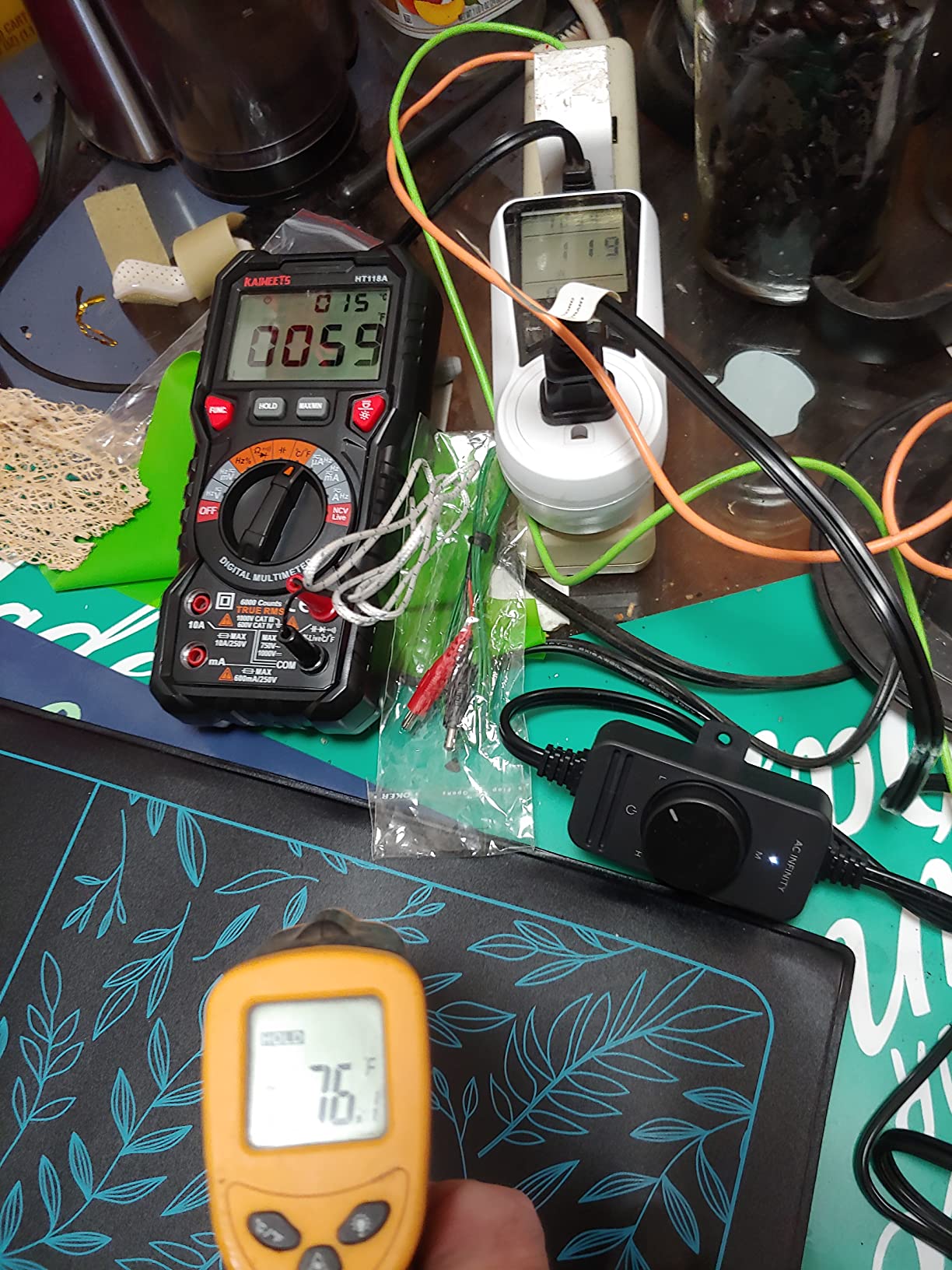
The construction is the same family as the digital SUNCORE H3 below, and the UL and MET file numbers are printed on the listing so you can confirm them yourself. Owners praise the flexible PVC for wiping clean and for surviving the fold-and-store cycle at the end of a season.
Why This Is the Best Mat for Rooting Cuttings
Cuttings differ from seeds in a way that matters here. A cutting has no root system to buffer a temperature swing, and it is usually under a humidity dome where air temperature and surface temperature diverge sharply. Constant low-level warmth is better for new root formation than an aggressive cycle, and that is precisely what the dial provides.
This is the mat to use for pothos, hoyas, mint, and other easy houseplant cuttings, or for tomato clones if you are into that. For a full seed tray where you want to confirm a number, the digital models are a better tool.
The Limitation Is That a Dial Is Not a Thermometer
Here is the honest framing: a three-position dial gives you low, medium, and high, not 72F or 84F. In a room that stays within a few degrees, that is genuinely enough. In a room that swings, it is guesswork with better ergonomics.
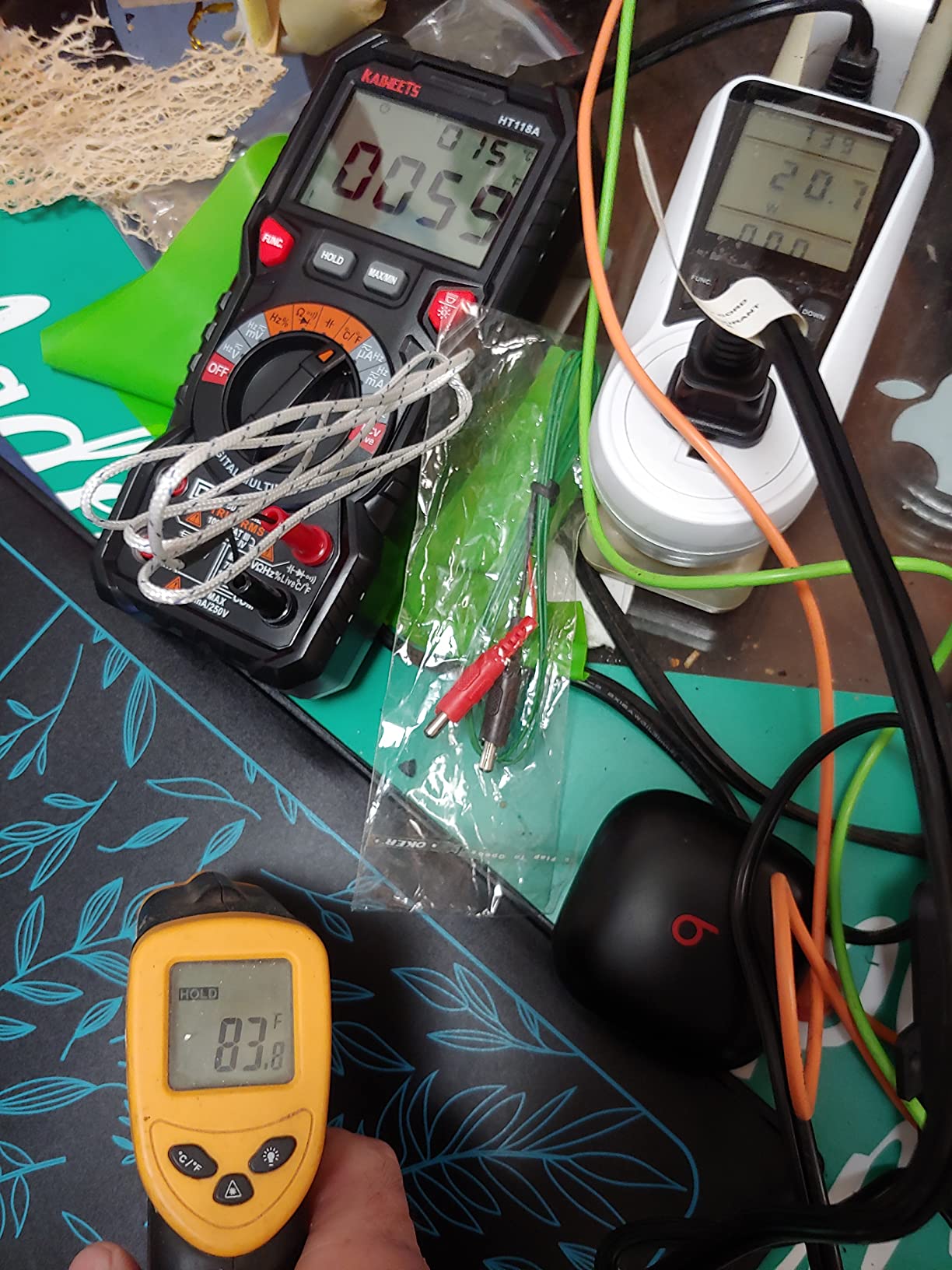
Forum discussion of this category turns up a recurring complaint that even well-regarded mats feel lukewarm at the surface. That is usually a measurement problem rather than a failure: the surface reading is not the soil reading. Push a separate soil thermometer into the medium to know what the roots actually feel, and treat the dial as the adjustment knob rather than the answer.
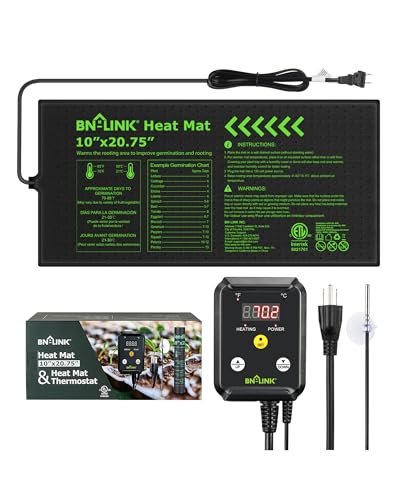
5. BN-LINK Heat Mat and Thermostat Controller Combo - One Box, 40-108F Range
BN-LINK 10" x 20.75" Seedling Heat Mat with Thermostat Controller Combo Set
20W mat plus controller
40-108F range
F and C toggle
ETL Listed
+ Pros
- Mat and controller arrive in one box
- LED display with a simple 3-button interface
- Very wide 40-108F adjustable range
- Controller rated to 120VAC and 1000W
- Cons
- 4.3 average with a higher share of 1-star reviews
- Controller and probe cords are shorter than the mat cord
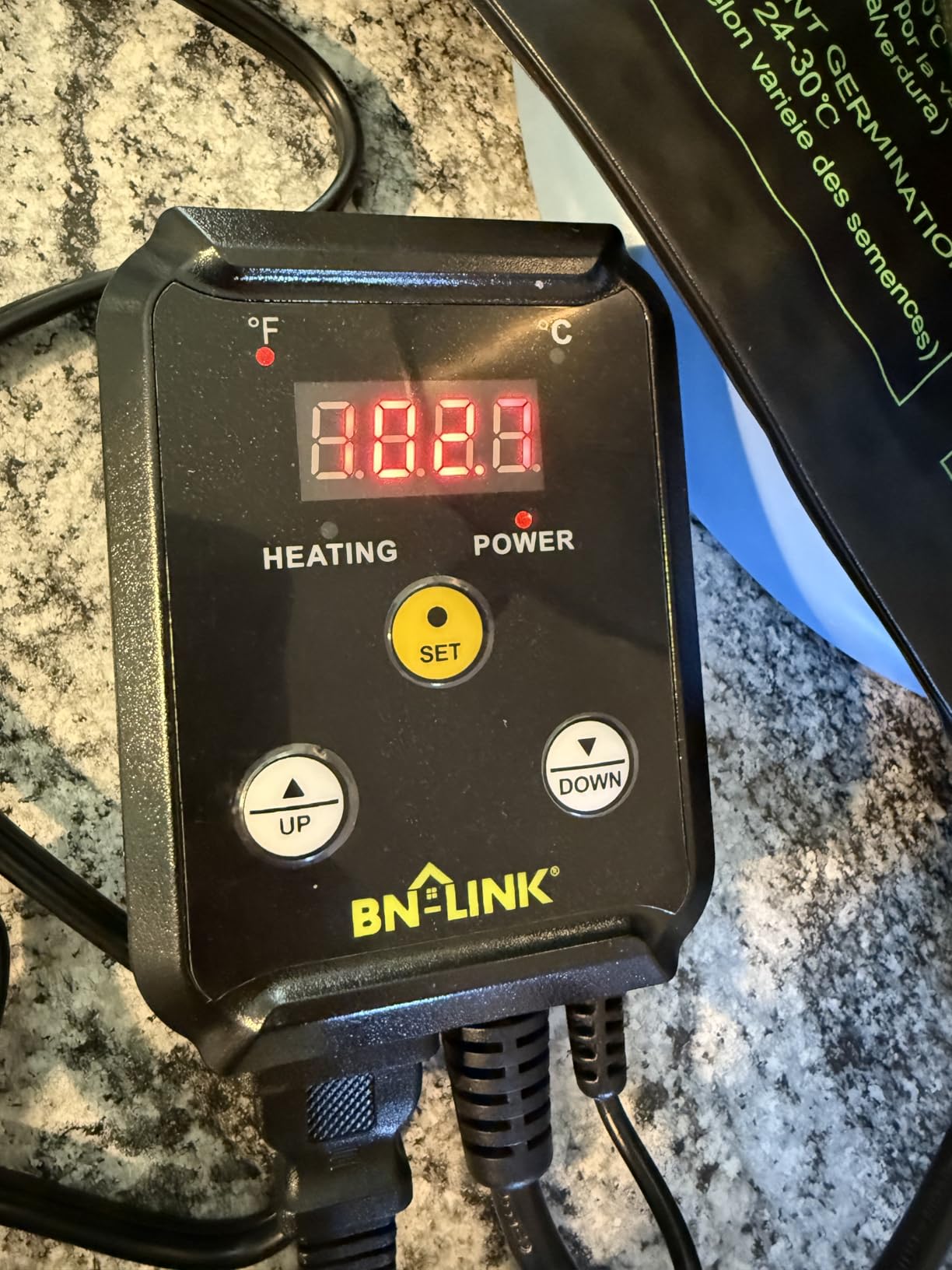
This is the bundle I point people toward when they want a complete setup and do not want to source a controller separately. The mat is the same well-regarded 10 by 20.75 inch IP67 model, and the controller adds a 40 to 108F adjustable range with a Fahrenheit and Celsius toggle, a bright LED readout, and a three-button interface that anyone can learn in a minute.
That range is unusually wide. Most seed starting needs 75 to 85F, so the top and bottom thirds of this dial exist for other work, such as keeping a fermentation bucket or a reptile enclosure at a specific target. Buyers who use the mat for kombucha and brewing are a visible share of the reviews, and the wide range is why.
The heating hardware is described as consistent, with reinforced film and double insulation layers holding 70 to 85F without scorching roots. Reviewers consistently like the single-box convenience and the readable display, and the F and C toggle is a small touch that matters if you are working from metric seed packets.
Read the Rating Before You Buy the Bundle
This bundle carries a 4.3 average, the lowest of the controller combos here, and the reason is visible in the distribution: 8 percent one-star against 2 percent on most of the fixed mats. Reading the reviews, the complaints concentrate on the controller rather than the mat. Heating performance is rarely the issue. Setup confusion, controller behaviour, and expectations are.
That is a meaningful caveat and I would rather state it than hide it. If you want a digital readout, this is a fair deal with a documented weak point. If controller reliability is your top concern, the MARS HYDRO set or the AC Infinity H3 both carry stronger review records in the same functional category.
Cords and Practical Layout
One concrete detail worth planning around: the controller cord is 3.94 feet and the probe cord is 4.92 feet, both shorter than the mat's own 5.9 foot cord. In a setup where the mat sits on a shelf and the controller sits on the floor or on top of a grow light, the controller may be the part that reaches its limit first. Measure before you commit to a shelf layout.
6. AC Infinity SUNCORE H3 - Digital Readout With No Guesswork
AC Infinity SUNCORE H3, Seedling Mat 10” x 20.75” w/ Smart Heat Controller
Digital controller with live reading
0.09 inch mat
IP-67 quad-layer PVC
UL and MET certified
+ Pros
- Real-time temperature display confirms the setpoint is being met
- Far-infrared film warms fast with no hot spots
- Thin flexible mat rolls into an included storage bag
- Reported accurate in a humidity dome for cuttings
- Cons
- Controller can be set in Fahrenheit only
- Some owners report about a 1F display offset and occasional no-power issues
- Lowest review count in the roundup at 151
Where the S3 gives you a dial, the H3 gives you a number. The smart heat controller displays real-time mat temperature on a screen and adjusts output in exact increments, which is the difference between thinking you are at 80F and confirming it. For anyone who has burned a tray by cooking seedlings and then gone looking for a way to prove it to themselves, that display is worth a lot.
The mat underneath is the thin quad-layer PVC design, IP-67 rated, 10 by 20.75 inches, with far-infrared film that the manufacturer says warms faster and distributes more evenly than a conventional element. It carries the same UL and MET certifications as the S3, which means the two products share a verified safety file.
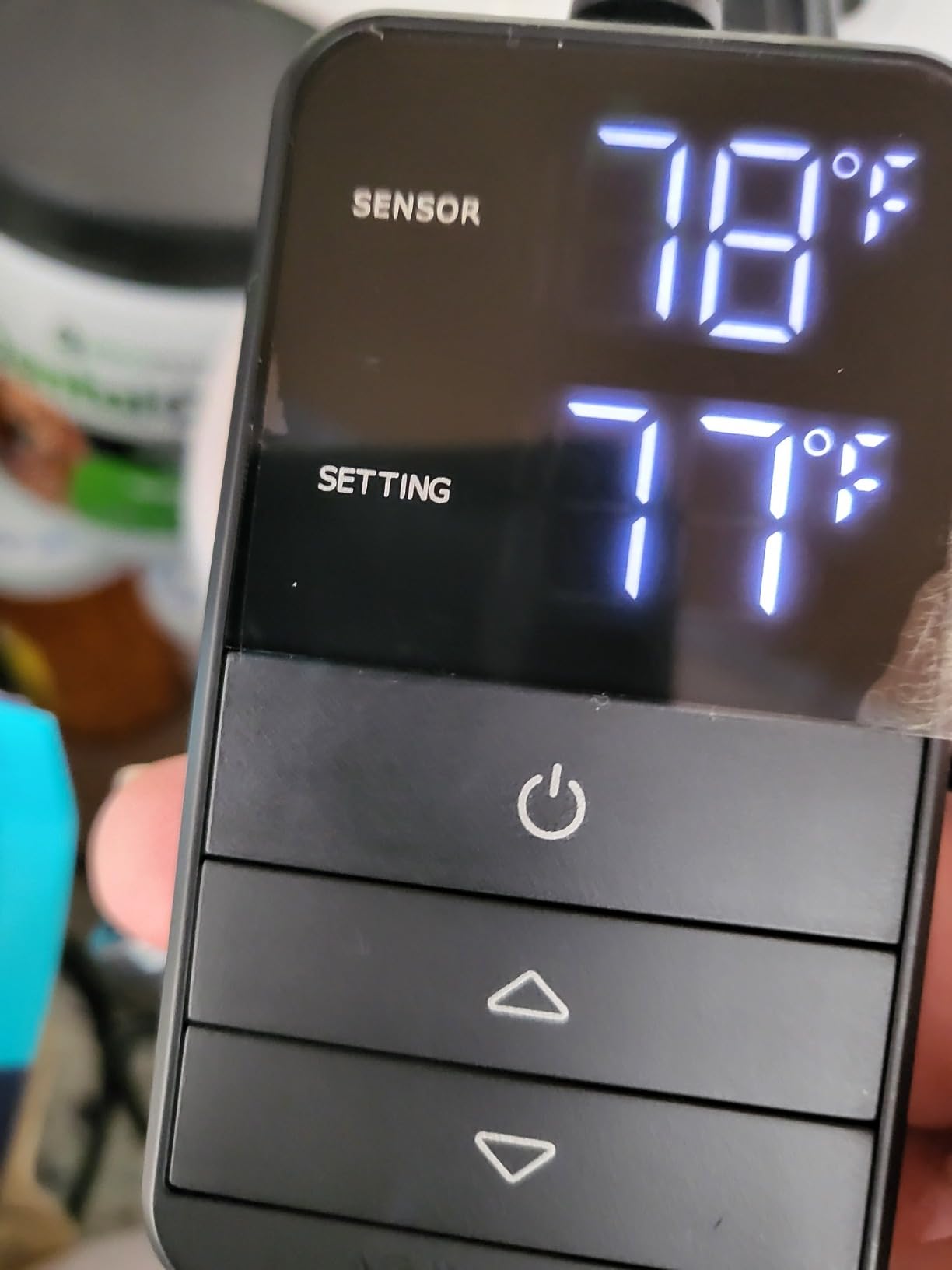
Owners of working units praise the thin flexible mat, the easy-clean surface, and the storage bag, and several report that the size fits both a standard seed tray and a standard humidity dome without overhang. That combination matters if you are propagating rather than starting from seed, because a dome that overhangs the mat edge will wick heat away from the corners.
The Controller Complaints Are Real and Specific
Three issues appear often enough to plan around. First, the display is Fahrenheit only, which is a genuine inconvenience for growers working in Celsius. Second, some owners report the readout sits about 1F above the actual mat temperature, which is small but real, and it is exactly the situation where an independent soil thermometer earns its keep.
Third, and most importantly, some owners report the mat failing to energize, and one international review notes the controller does not retain its setting after a power interruption, leaving the mat off overnight. In a cold room that is a real risk to a tray of sprouts. The honest caveat is that this product carries 151 reviews, by far the fewest in this roundup, so the long-term reliability picture is genuinely thin rather than poor.
Who Should Buy the H3 Instead of the S3
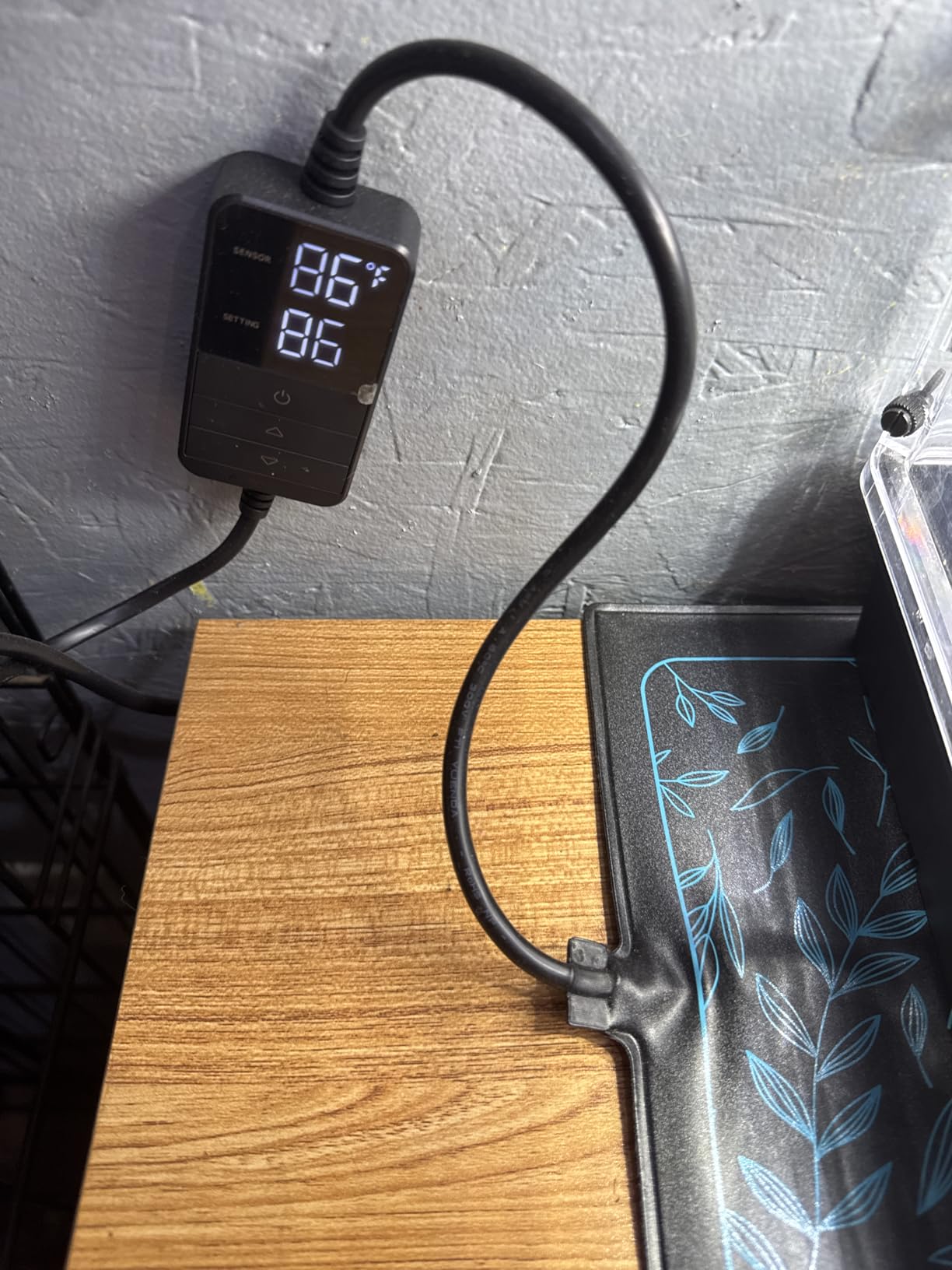
Buy the H3 if you are starting peppers and eggplants, propagating cuttings under a dome, or running in any space where the temperature is not boring and predictable. You want the confirmation, and you will use the display every single day for the two to three weeks the tray is on heat.
Stay with the S3 if your room is stable and you would rather not deal with a controller at all, or if you want the ability to reduce output gradually rather than hold an exact number. Both are good products aimed at different levels of fuss.
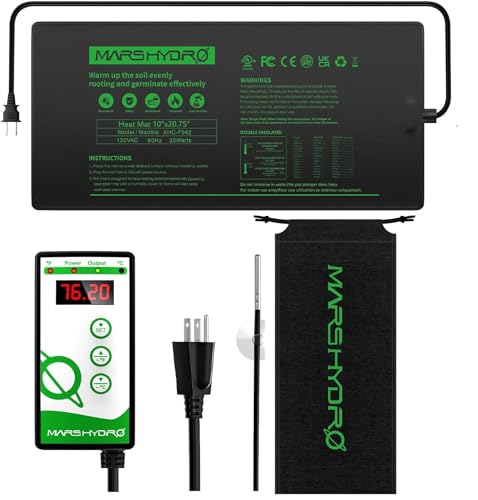
7. MARS HYDRO Mat and Thermostat Set - Overheat Protection Built In
MARS HYDRO 10''x 20.75'' Seedling Heat Mat with Thermostat Combo Set,Heating Pad for for...
20W mat plus digital thermostat
32-110F range
Overheat auto shutoff
IP67 and UL and FCC
+ Pros
- Overheat protection shuts power off automatically
- Very even heating with no wrinkling in the film
- Storage pouch included for seasonal storage
- Works with a light timer to create a night-off swing
- Cons
- Adds roughly 5-9F over ambient rather than a large lift
- Fahrenheit-only display
- Bulky controller box
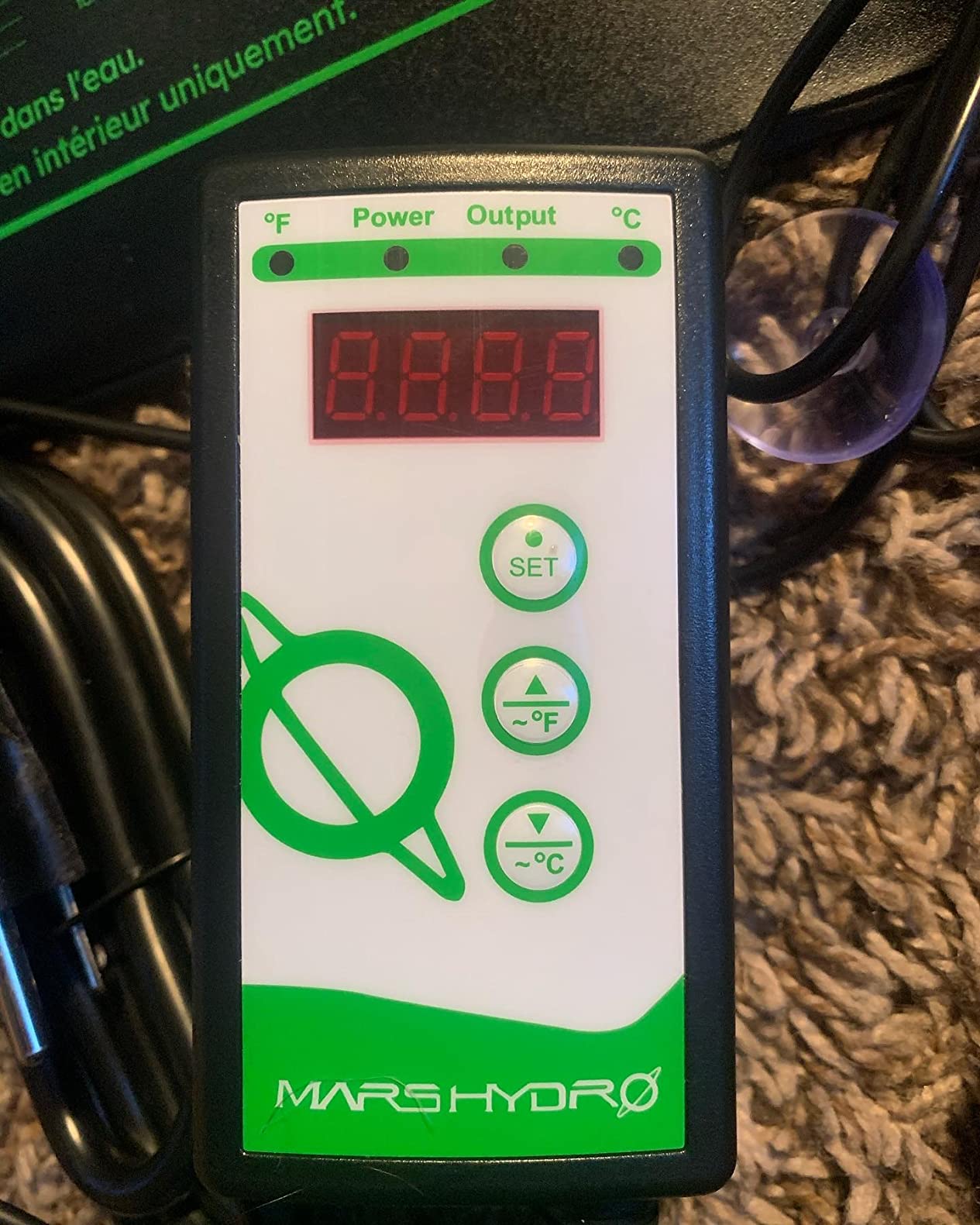
The MARS HYDRO set is the combo I would choose for an unheated space, because the built-in overheat protection is a real safety feature rather than a marketing line. If the controller misreads, if the probe comes out of the medium, or if the room heats up unexpectedly, the mat cuts power instead of continuing to climb.
The thermostat covers 32 to 110F, which is a wider window than the 40 to 108F of the BN-LINK bundle, and it is driven by three buttons, so it is approachable for a first-time user. The mat itself runs at 20W with infrared heating particles distributed across the surface, and the manufacturer claims thermal efficiency up to 97 percent. Treat that efficiency figure as a manufacturer claim rather than an independent measurement.
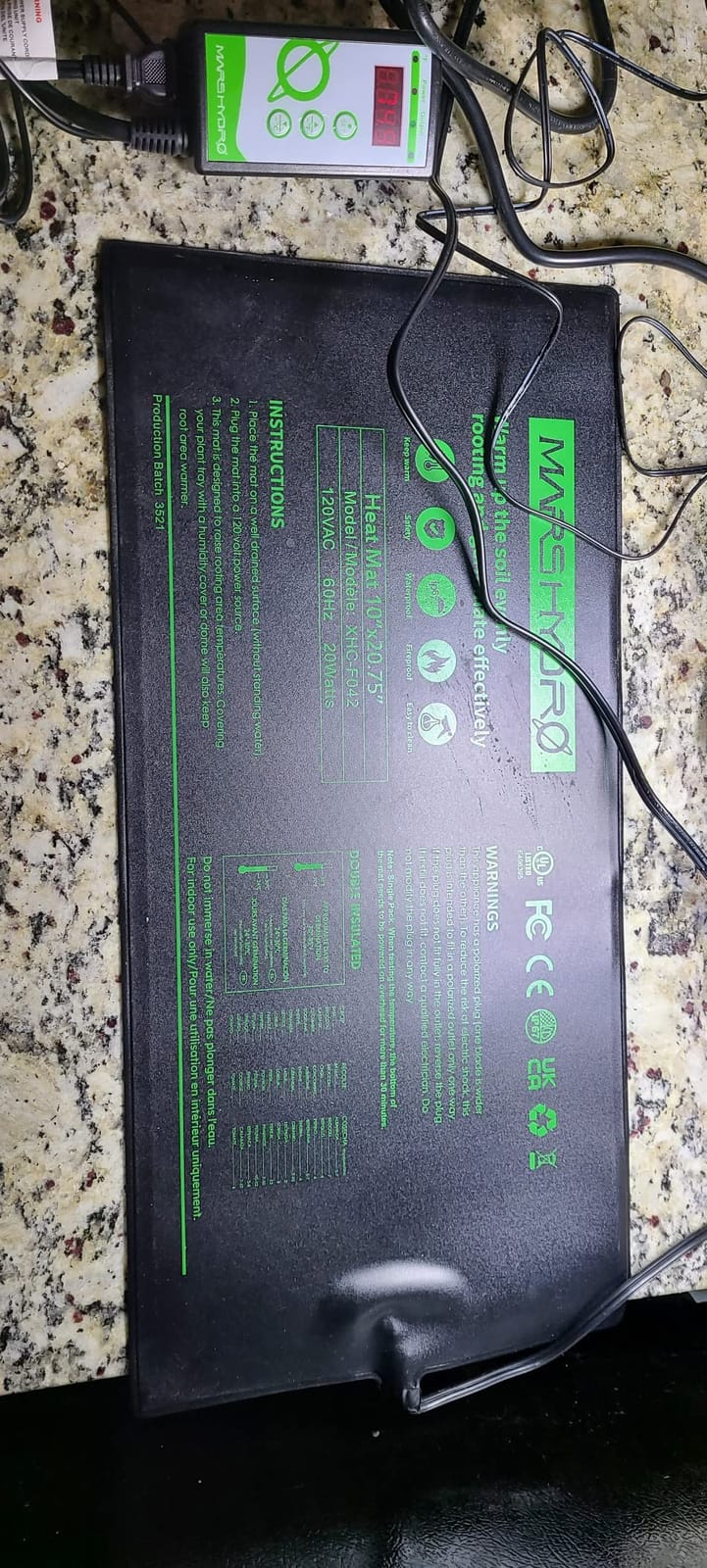
Two construction details stand out in owner reports. The heating film is reported as laying flat with no wrinkles or creases, and the heavy-duty PVC outer layer carries an IP67 waterproof rating with a transparent PET film protecting the core while still conducting heat. The set is UL and FCC certified, and the surface wipes clean without fuss.
Understanding the 5-9F Reality Check
The most important honest note in this review is that this mat is not built for a large temperature rise. Owners report it typically adding roughly 5 to 9F over ambient, and one international review reports a brewing setup that never reached the indicated temperature. If your room is already at 70F, that is fine. If your room is at 55F, this set will not rescue you and no 20W mat of this class will.
This is the same ambient-temperature limit that trips up every buyer in this category, and it is worth more attention than any single product feature.
A Clever Use for Growers With Lights
One pattern that shows up in reviews is pairing the controller with a light timer so the mat switches off at night and back on at dawn. That creates a deliberate temperature swing rather than a constant 24-hour warm spell, which some growers prefer for sturdier stems. It is a simple wiring choice, not a feature, and it is worth trying if constant bottom heat is producing soft growth.
8. Fast-gro 11x60 Inch Mat - One Strip for a Whole Grow Shelf
Fast-gro Seedling Heat Mat 11 in x 60 in, Even Heating, Water-Resistant Pad
11x60 inch strip
10-20F above ambient
0.1 inch film
Made in USA
+ Pros
- One long mat covers multiple trays and cuts cord clutter
- Ultra-thin 0.1 inch film with no dead zones
- Water and oil resistant surface wipes clean
- Made in the USA with UL-recognized components
- Cons
- Runs hotter than cheaper mats and some report a larger rise than advertised
- No thermostat and only one heat setting
- End-connection insulation is held by tape that can be disturbed
Once you are past a single tray, the argument for a long strip gets strong fast. Eleven inches by sixty inches gives you a continuous warming surface that multiple trays, propagation stations, and greenhouse benches can sit on, and it removes the cable pile that comes with four small mats on the same shelf.
The heating approach is thin-film rather than a wire mat, laying flat at 0.1 inches and distributing warmth across the surface with what owners describe as no dead zones. The documented output is 10 to 20F above ambient, which makes it one of the stronger raw performers in this list, particularly in a cool room.
It is manufactured in the USA with UL-recognized components, and the brand is unusual in offering seven standard sizes from 11 by 22 inches up to 11 by 120 inches, plus custom sizes. If your shelving is an odd dimension, that is a real advantage nobody else in this roundup offers.
Owners report using it far beyond seedling trays, including worm bins and livestock nesting boxes, and several mention years of service. The water- and oil-resistant clear film wipes down easily even after a season of condensation and spilled water.
It Runs Hotter, So Pair It With a Controller
Because output is fixed at a single setting, and the temperature rise can exceed the advertised range in a cool room, this is the mat in the roundup where a controller is not optional in my view. For delicate seedlings and temperature-sensitive plants, the manufacturer itself recommends a compatible thermostat. Think of the mat as the heater and the controller as the governor.
A Durability Note Worth Taking Seriously
Two practical cautions appear in owner reports. The end-connection insulation is held in place by electrical tape that can be peeled or rubbed off, which matters if small children or pets are anywhere near the propagation bench. There are also isolated reports of a mat that stopped producing heat after under two months, alongside many more that report years of use, so treat it as a small but real risk rather than a pattern.
For a market gardener running a dedicated propagation shelf, or a grower who wants a clean bench with one cable, this is the right shape of product. For a single tray in a spare room, it is far more surface than you need, and a 10 by 20.75 mat is the smarter purchase.
9. LOCONHA 10x20.75 Heat Mat - Straightforward Warmth on an Entry Budget
LOCONHA Seedling Heat Mat for Seed Starting, 10" x 20.75" Waterproof
20W
10x20.75 inch
Holds 70-85F
Sealed waterproof PVC
+ Pros
- Covers a full 1020 tray at the lowest cost in the roundup
- Holds the 70-85F germination range
- Safe to leave running continuously
- Sealed multi-layer PVC wipes clean and resists water
- Cons
- No thermostat and no temperature reading
- 4.3 average with a 9 percent one-star share
This is where I send people who want to try a heat mat for the first time without committing much. It covers a full 10 by 20.75 inch tray, runs at 20W, and holds the 70 to 85F range that most seeds need. The manufacturer states it is safe to leave on 24 hours a day, which is the operating mode every seed tray actually requires.
Construction is multi-layer flexible waterproof PVC with a sealed outer layer protecting the internal heating element, at 0.25 inches thick. Storage is simple: roll it up with the cord wrapped around the outside, no bag required. The 13.4 ounce weight means it is genuinely portable between a kitchen counter and a garage shelf.
Buyers also use it for pet and reptile enclosures, which is a fair use for a warm flat surface in a sealed box. Available in 1, 2, and 4 pack configurations, so you can scale without changing product family.
What the 4.3 Rating Actually Reflects
This mat shares a 4.3 average with the BN-LINK combo, but for a different reason. The one-star share here is 9 percent, and reading the reviews, the complaints point to less consistent heating or shorter perceived durability rather than a functional failure. Buyers generally accept that it maintains a steady root-zone temperature in a standard tray; a minority find the output less even over time than the premium mats.
My read is that this is a fair budget product rather than a bad one. It does the job, it does not have the certification paperwork of the pricier options listed here, and it gives you no feedback on what the soil is doing.
When This Is the Right Call
Buy this one if you are germinating a single tray of cucumbers, squash, or flowers, you are in a normally heated room, and you want to see whether bottom heat makes a measurable difference in your results before investing in a controlled setup. Add a thermometer either way, even at this level, because it costs very little and it is the only way to know the answer.
10. HYDGOOHO Heat Mat With Thermostat - The Biggest Claimed Temperature Lift
HYDGOOHO Seedling Heat Mat with Thermostat 40-108 Degrees Fahrenheit Warming Pad, Warm Hydroponic...
18W mat with probe thermostat
68-108F range
Rated 40-50F over ambient
IP67
+ Pros
- Probe-based thermostat holds within about 1-2F of the setpoint
- Controller doubles as a readable medium thermometer
- 18W draw with a storage box included
- UL and MET certified heavy-duty PVC
- Cons
- Several reviews report the bundled controller failing while the mat still heats
- One report of very slow heat-up and a dead mat on reuse
- Thicker 0.5 inch profile
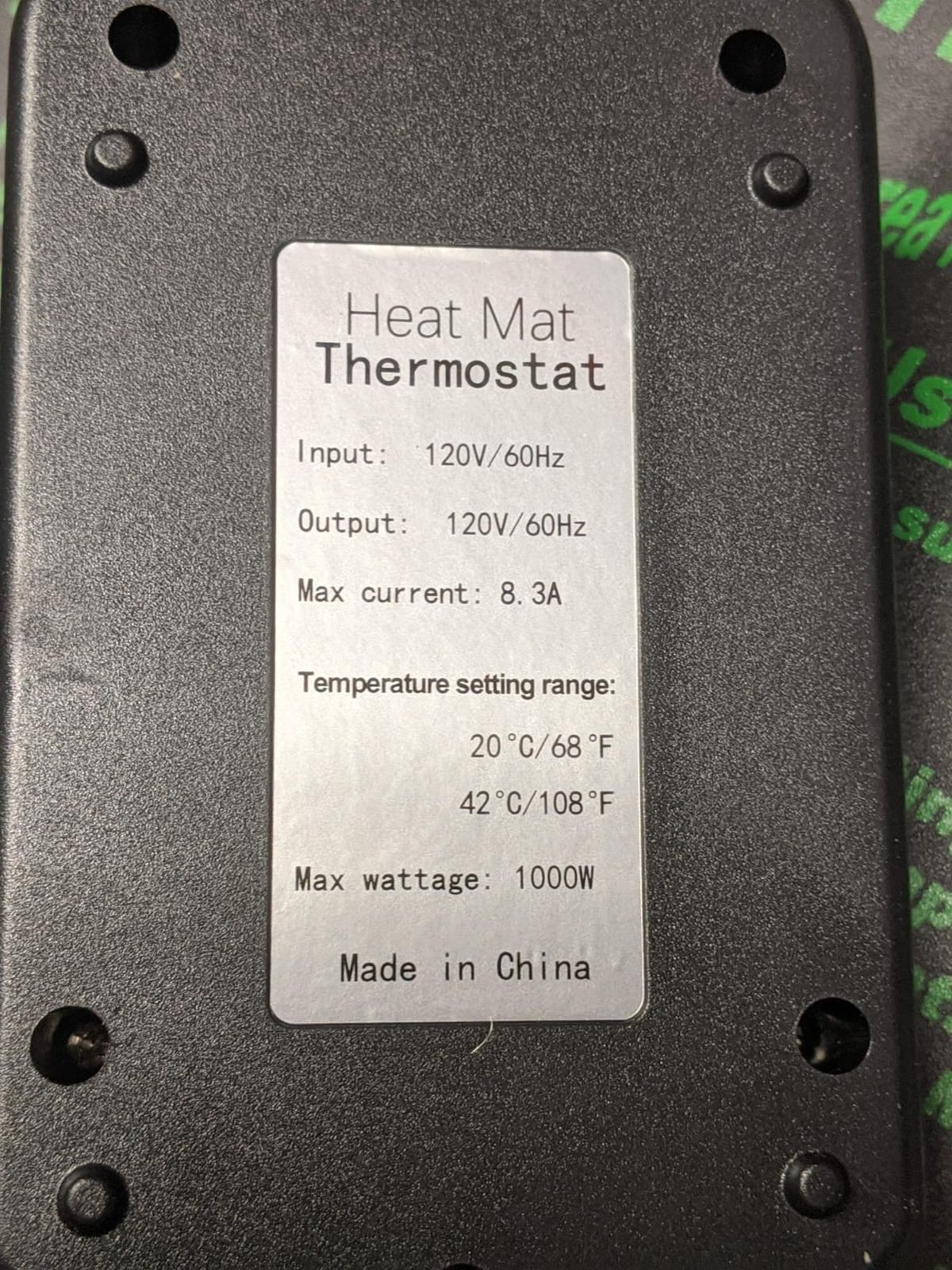
This is the most interesting spec sheet in the roundup and it needs careful handling. The manufacturer rates this mat to add 40 to 50F above ambient, which would be extraordinary for an 18W pad, and the thermostat is documented as holding 68F to 108F with a sensor probe. The probe is a genuine advantage, since it is the part buyers in forum threads most often struggle to position properly in a multi-cell tray.
Reviewers who have working systems like the controller for a specific reason: it holds temperature within a degree or two of the setpoint, and it doubles as a visible thermometer you can read without disturbing the tray. For keeping a fermentation bucket, incubation box, or hydroponic reservoir at a target, that combination of mat and probe is unusually capable.
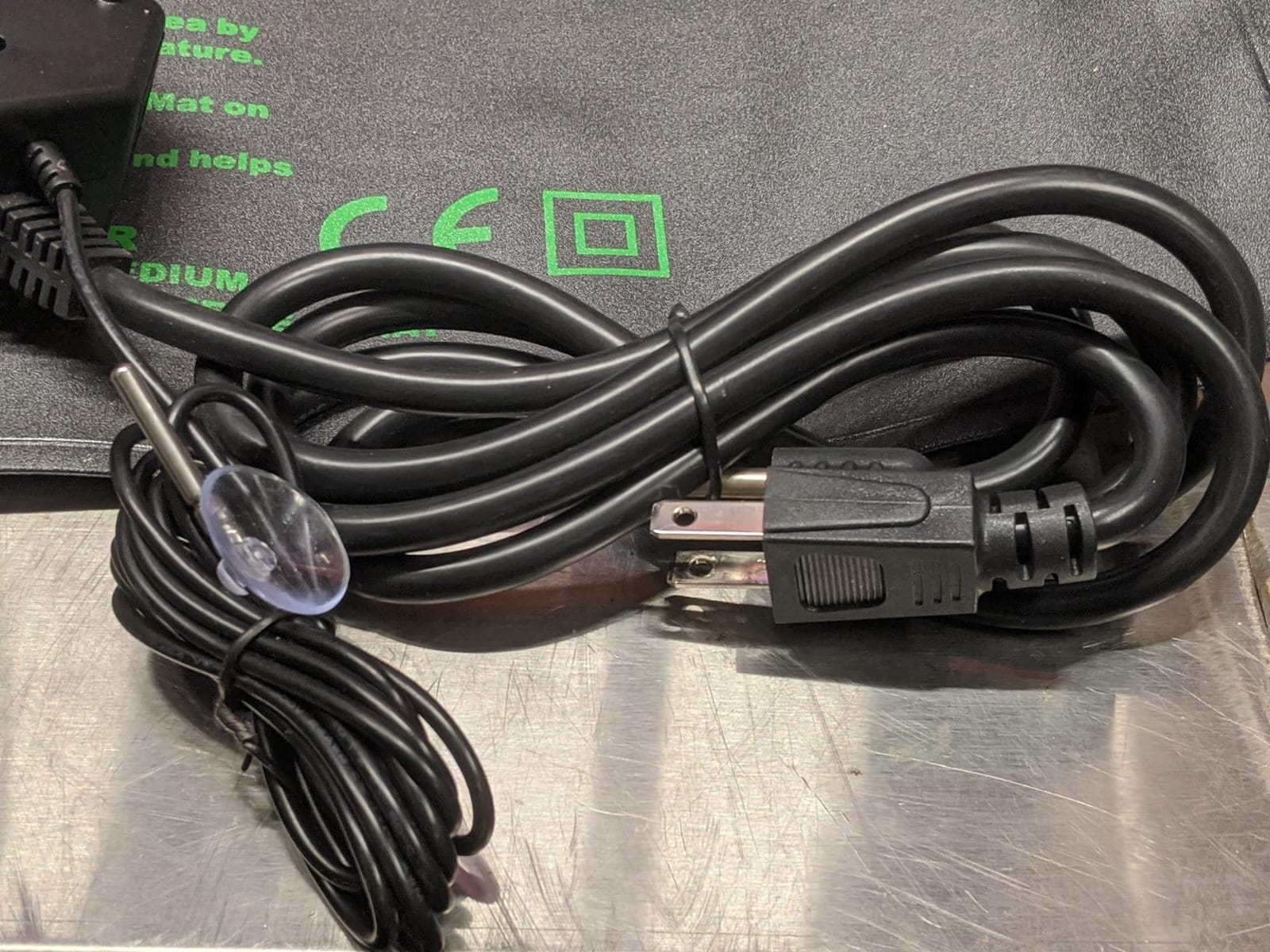
The controller is also compatible with most other nursery heat mats, so if you already own an 18W pad and want to add control later, this unit can run it. The mat itself is heavy-duty insulated PVC with an IP67 surface, drawing only 18W, and it folds into an included storage box.
Where the Bundle Falls Short
The 4.4 average is held down by a distinct pattern: several reviews describe the controller failing or switching itself off, while also noting that the mat still heats fine when plugged in directly. That is useful diagnostic information, because it tells you the failure is in the controller rather than the heating element, and it means you can keep using the mat with a different controller.
There are also isolated reports of very slow heat-up, a mat that stopped heating on a second use, and the honest 40 to 50F lift figure is a manufacturer claim that most buyers do not describe achieving. At 0.5 inches, this is also the thickest mat in the roundup and the bulkiest to store.
Choosing This One Deliberately
This makes sense if you are using heated mats for something beyond seed trays, such as fermentation, incubation, or keeping a root-zone reservoir warm, where the probe-based control is the point. For pure germination in a heated room, a cheaper combo with a narrower and more believable range is the more sensible purchase.
Why Your Heat Mat Is Not Getting Hot
This is the most common complaint in every seed starting forum I have read, and it has almost never been a defective mat. In most cases it is one of five things, and you can check all five in about ten minutes before you send anything back.
One, the room is too cold for the mat to do much. A 20W mat is a gentle heat source, not a furnace. In a 55F basement, most of these mats add 5 to 15F and stop. Published figures in this roundup range from roughly 5 to 9F for one model up to 10 to 20F for a long-strip design, so the same mat feels completely different in a cold garage than in a warm bedroom.
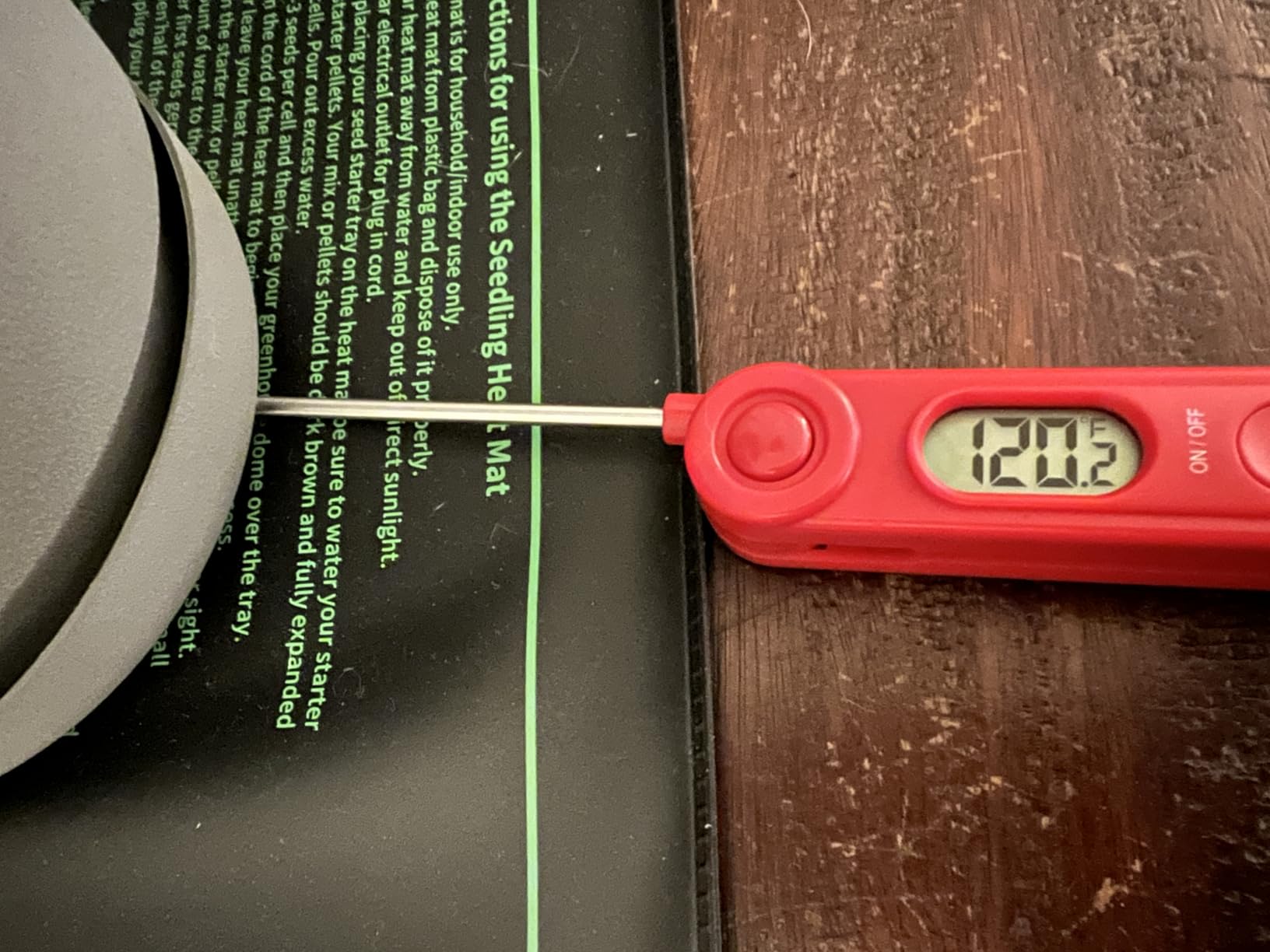
Two, you are reading the mat surface instead of the soil. The surface of a warm mat in open air reads several degrees higher than the medium sitting on it. Push a separate soil thermometer into the tray and read that.
Three, the mat has a gap under the tray. Heat transfers through contact. A tray that rocks, a mat that is slightly larger than the tray, or a warped wooden shelf all create dead air pockets that cut output dramatically. Keep the surface flat and the mat fully supported.
Four, ambient heat is fighting a cold room at night. A mat that works fine at 3pm can lose the whole accumulated gain overnight. This is where a controller earns its cost, and where a room thermometer is more useful than another mat.
Five, an unnoticed hazard is cooking the sensor. Forum users have reported burning out a mat when a bowl of water caught sunlight and focused it onto the mat surface. Never place reflective objects or standing water in direct sun next to a powered mat, and keep water bowls away from the mat edge.
How to Use a Heated Seedling Mat Without Cooking Your Seedlings
The sequence matters more than the hardware. Work through it in order and the mat will behave predictably, which is the entire goal.
Pre-warm before you sow. Plug the mat in and let it reach temperature before the tray goes down. Putting a cold, wet tray onto a cold mat wastes the first day of the germination window.
Place the tray so it sits flat. Full contact is what makes bottom heat useful. If the mat is longer than the tray, support the overhang so the whole tray is level.
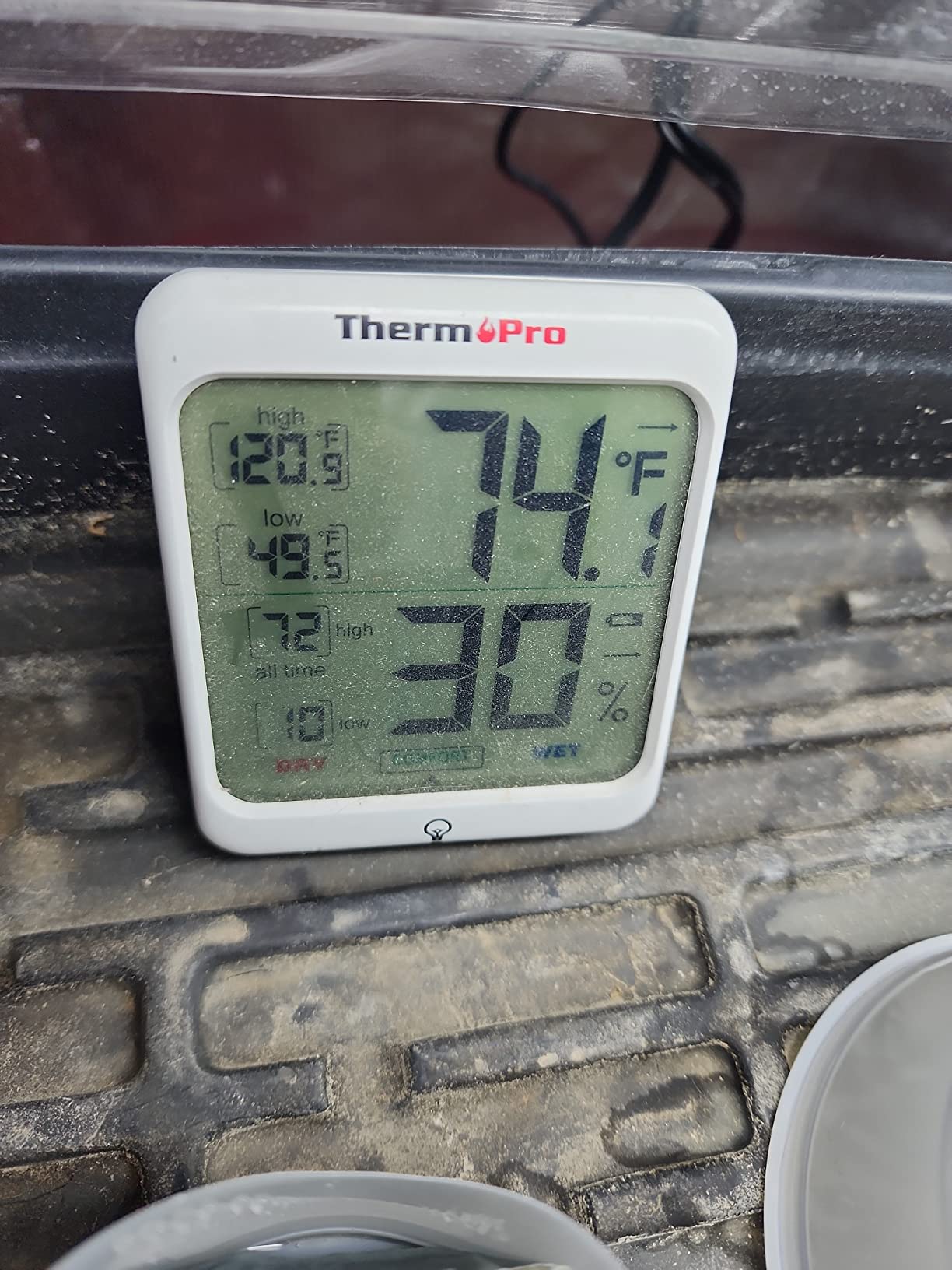
Set the thermostat, then verify it. Aim for about 80F for tomatoes and peppers. Insert a soil thermometer into the middle of the tray, not against the wall, and check after an hour. This one habit resolves most of the accuracy complaints people have about controllers.
Use a humidity dome for seeds, and vent it. Seeds germinate best in a sealed, humid environment. Once you see the first sprout, open the dome a crack, and remove it entirely within a day or two. Leaving a dome on after emergence is the single most common cause of damping off in a heated tray.
Water from the top, gently. Bottom watering a heated tray lets the mat run under saturated medium, which is the fastest route to root damage. A light top watering keeps the root zone evenly moist without overheating it.
Move seedlings off the mat as soon as they sprout. The mat's job ends at emergence. Leaving heat under a tray once true leaves appear produces stretched, pale, leggy seedlings, because the plant grows toward the light while the roots stay in continuously warm soil. Once the first true leaves are out, move the tray to normal room temperature under your grow light.
Power down between cycles. If you are running two sowings a month apart, unplug between them. A mat left on for months adds nothing to an empty shelf and is one more thing drawing current in an unheated space.
One more safety note that we cover in detail for heated apparel in our heated gear safety guide: never substitute a human body heating pad for a seedling mat. Those pads are designed for skin contact, run at a different wattage profile, and are not sealed for a wet environment. Germination trays will destroy them, and they are a fire risk in a humid space under a plastic dome.
How to Choose the Right Seedling Heat Mat
Match the Mat to Your Tray, Not the Other Way Round
The standard domestic seed tray is 10 by 20.75 inches, and it is the single most useful sizing fact in this category. Every mat in this roundup covers at least one of those trays. When you move up, ask whether you want one bigger mat or two smaller ones, because they behave differently. Two small mats let you set different crops at different stages, which matters when peppers and basil share a shelf. One long strip gives you a clean bench and one cable, which matters when space is tight.
The other sizing trap is buying a mat slightly smaller than the tray and hoping the edge cells will catch some warmth. They will not. The perimeter of a heating film is the first place heat drops off, and the outer cells of a tray are exactly where leggy, slow-germinating seedlings show up.
Decide Between Fixed Heat, Dial Control, and a Thermostat
These are three genuinely different products, and the forum consensus is that the controller matters more than any other feature once you are past your first tray. A fixed-output mat such as the VIVOSUN or BN-LINK pair is a function of room temperature, which is fine in a stable, heated space and unreliable anywhere else.
A dial-controlled mat such as the SUNCORE S3 sits in the middle. It lets you reduce output without switching the mat fully off, which avoids the hard cycling that some growers dislike, but it gives no number. A thermostat with a probe such as the MARS HYDRO set or the HYDGOOHO combo gives you a setpoint and a readout, and for peppers, eggplants, and cuttings under a dome, that is worth the extra cost.
One practical detail on probe placement that comes up constantly in grower threads: in a 72-cell tray, the probe is awkward to seat in a single cell. Push it into the medium between two cells and press the surrounding cells in so the probe stays in contact, then cover the tray with a dome so the air space keeps the surrounding medium near probe temperature. A probe reading warm, dry air is worse than no probe, because it switches the heat off when you need it most.
Understand IPX4 Versus IP67 Before You Buy
Not all heat mats are waterproof, and the difference matters more than most spec sheets suggest. IPX4 means splash resistant: water hitting the surface from any direction will not cause damage, which is enough for condensation and occasional misting. IP67 means dust tight and protected against temporary immersion, which is what you want if you are running a humidity dome, watering heavily, or working in a greenhouse where condensation runs down the dome onto the mat.
Every IP67 mat in this roundup, the VIVOSUN, both BN-LINK models, the AC Infinity SUNCORE models, the MARS HYDRO set, and the HYDGOOHO pair, uses multi-layer or quad-layer sealed PVC. That construction is what allows a damp-cloth wipe without unplugging anything, and it is the reason to prefer a certified sealed mat over an unsealed panel if you are propagating in a humid space.
Check Wattage, Certification, and Cord Length
Wattage is the least interesting spec here, because all ten of these mats sit between 17.5W and 20W except the larger options. At that draw, a mat running eighteen hours a day uses a trivial amount of electricity, so treat wattage as a data point rather than a decision criterion.
Certification matters much more. UL, MET, and ETL are all legitimate third-party safety certifications for household electric heating appliances, and every product in this roundup carries at least one. The ADVANCED move is to check the file number, which several listings print, in the online safety directory yourself. It takes a minute and it is the difference between trusting a listing and verifying a product.
Watch the cord length against your actual layout. Mats commonly include a 5.9 foot cord, while bundled controllers are often shorter, sometimes around 4 feet. The controller is usually the part that ends up furthest from the outlet, so measure from the shelf to the socket before you commit.
Match the Mat Type to Your Setup
For a single tray, any of the 10 by 20.75 mats in this list works. For multiple trays, decide between multi-pack small mats and one long strip based on whether crop differentiation or bench cleanliness matters more to you. For greenhouse-scale or commercial seedling production, a mat at this wattage stops being sensible, and a soil-warming cable snaked through the bench becomes the better tool.
One last category note: mats are not only for soil. Several of these products are marketed and reviewed for brewing, bread proofing, kombucha, incubation, and reptile or pet enclosures. That is legitimate use of a waterproof heating pad, but if germination is not your goal, the wider thermostat ranges on the combo kits become the more relevant feature.
Frequently Asked Questions
Do I really need a heat mat to germinate seeds?
Only when your soil cannot be held above about 70F on its own. Tomatoes, peppers, eggplants, squash, and basil need soil in the 75-85F range, so a mat is worthwhile for them in a cool room. Lettuce, spinach, peas, and kale germinate fine at room temperature and can actually be damaged by extra heat.
What temperature should a heat mat be for seed germination?
Set the soil to 75-85F, with about 80F the best single target for most warm-season seeds. Below roughly 70F germination slows sharply and damping off risk rises. Going above 90F speeds up sprouting but produces weaker, leggier seedlings, so more heat is not better.
How long should you leave seedlings on a heat mat?
Remove seedlings as soon as the first seed sprouts. Heat is only needed during germination, which usually takes two to seven days. Once true leaves appear, move the tray to room temperature under your grow light, because leaving heat under a tray produces stretched, pale seedlings.
Do I need a thermostat for my seedling heat mat?
For a single tray in a heated room, a fixed mat is workable. Once you run multiple trays, propagate cuttings, or work in a garage or basement, a thermostat with a soil probe is worth it because a fixed-output mat simply follows room temperature. Verify the setpoint with a separate soil thermometer.
Why is my seedling heat mat not getting hot?
Most often the room is too cold for the mat to add much, since these are gentle 18-20W heat sources that typically add 5-20F above ambient. Other common causes include reading the mat surface instead of the soil, a gap under the tray that breaks contact, a cold night wiping out the accumulated heat, or sunlight reflected off a water bowl burning the mat.
Are all heat mats waterproof?
No. An IPX4 rating means splash resistant, which handles condensation. An IP67 rating means dust tight and protected against temporary immersion, which is what you want under a humidity dome or in a greenhouse. Most sealed multi-layer PVC mats in this roundup carry IP67 and can be wiped with a damp cloth.
Can I use a human heating pad for seeds?
Do not. Body heating pads are built for skin contact, are not sealed for wet environments, and run at a different power profile. A humidity dome and wet growing medium will damage a pad, and it becomes a fire risk in a damp enclosed space. Use a certified propagation heat mat instead.
Which Heated Seedling Mat Should You Buy?
If you want one mat and one decision, choose the VIVOSUN 10 by 20.75. It is the best documented product in this category, it holds the root zone in range in a normally heated room, and it carries verifiable UL and MET certification. Add a controller later if you outgrow it.
If you are running two trays, take the Seedfactor 2 Pack for the value and the triple certification, or the BN-LINK 2 Pack if the 12-month warranty matters to you. If temperature control is the priority, the MARS HYDRO combo adds overheat protection and the AC Infinity SUNCORE H3 gives you a live digital readout.
For cuttings under a dome, the AC Infinity SUNCORE S3 with its dial control is the one I recommend. For a full propagation shelf, the Fast-gro 11 by 60 strip covers everything on one cable. And if you just want to find out whether bottom heat helps at all, the LOCONHA mat is the cheapest honest way to test the idea.
Whichever you choose in 2026, buy an independent soil thermometer alongside it. It is the smallest purchase in this entire guide and the one that will tell you the truth about what your seeds are experiencing.