
10 Best River Kayaks (September 2026) Tested & Reviewed
River kayaking has quietly become one of the fastest-growing ways to spend a weekend outdoors, and the gear available in 2026 is better than it has ever been. Across the country, paddlers are launching Class I floats with friends, chasing smallmouth bass in moving water, and tackling Class II rapids that used to belong only to hard-shell specialists. The challenge for anyone shopping today is that the category has exploded: there are now purpose-built inflatables, origami-folded kayaks, pedal-drive fishing rigs, and lightweight recreational shells, all marketed under the same umbrella term.
We spent the spring and early summer of 2026 on the water, logging hours across slow-moving rivers, whitewater sections, and everything in between, specifically to find the best river kayaks for real buyers. Whether you want to share tandem trips with a partner, drift fish on a Saturday morning, or finally commit to a stable recreational boat for flatwater days, this guide is built around how paddlers actually use these boats. We've also refreshed our updated 2026 river kayak roundup with a deeper bench-test breakdown if you want a second perspective.
Below you'll find our top picks at a glance, a breakdown of river kayak types, our testing methodology, ten detailed kayak reviews, a buying guide tailored to river conditions, and an FAQ that answers the questions we hear most often from first-time buyers. Every product on this list is available right now, and we've noted stock levels and pricing shifts so you know what to expect.
Our Top River Kayak Picks at a Glance (2026)
Short on time? Here are the three models we'd put in any paddler's shortlist, plus quick links to the categories that define the rest of this roundup. Each pick below is anchored to a detailed review further down the page.
- Best Overall Tandem Inflatable: Aire Lynx 2-Person Inflatable Kayak - superb stability for couples and a bomber 1100-denier PVC build.
- Best Budget Inflatable for Three: BRIS 14.1ft Inflatable Boat - 770 lb capacity, heat-welded seams, and paddles included for under $800.
- Best Pedal-Drive Fishing Kayak: BKC Upgraded Brooklyn 12.0 Pro - hands-free propulsion that lets you cast while you move.
Jump to the section you need:
- Types of River Kayaks Explained
- How We Tested
- Quick Overview Comparison Table
- Individual Product Reviews (1-10)
- River Kayak Buying Guide
- River Safety Essentials
- Frequently Asked Questions
Types of River Kayaks: How to Choose by Water Conditions
Before you pick a kayak, it helps to know the four main shapes you'll encounter, because each is designed around a different slice of river life. Mismatching a kayak to your water is the single most common mistake we see among first-time buyers, and it's why a kayak that gets rave reviews online might feel terrible on your local river. The categories below are the same ones used by outfitters, instructors, and AI search summaries, so thinking in these terms will also help you read product listings with more confidence.
Recreational Kayaks for Calm and Slow-Moving Rivers
Recreational kayaks are the workhorses of the category. They run 9 to 12 feet, sit-inside or sit-on-top, and favor stability over speed. Wide hulls, predictable handling, and forgiving cockpits make them ideal for flatwater, slow rivers, and gentle Class I floats. The Pelican Argo 100X EXO and Wilderness Systems Aspire 105 in this guide are textbook examples.
They are also where most beginners should start. The trade-off is reduced efficiency on long distances, so they aren't the right pick if you're dreaming of multi-day trips on moving water. For a deeper look at sit-on-top versus sit-in layouts, see our sit-on-top vs sit-in kayak comparison.
Inflatable Kayaks for Versatile Paddling
Inflatables have come a long way from pool toys. Modern drop-stitch floors and 1000+ denier PVC give them real backbone, and the self-bailing, multi-chamber designs of options like the Aire Lynx and INTEX Excursion Pro handle Class II rapids with confidence. They pack into a duffel bag, ride in any trunk, and store in a closet, which solves the transport problem for apartment dwellers and city paddlers.
The downside is paddling feel: they tend to flex a bit, so they don't track as crisply as a hard-shell of the same length. They also have lower top-end speed because of increased water resistance. Our inflatable whitewater kayak roundup covers higher-end options if you're planning to push into bigger whitewater.
Whitewater and Crossover Kayaks for Rapids
Whitewater-specific boats have shorter lengths, pronounced rocker (upturned ends), and forgiving plastic that bounces off rocks. Creek boats are built for steep, technical descents; playboats are designed for tricks in holes and waves; and crossover boats blend river running with the forgiveness to handle occasional rapids. None of the boats in this roundup are pure whitewater boats, but several inflatables and the BKC pedal drive work well on Class II water. If you want to go further into whitewater designs, our types of whitewater kayaks guide walks through each style in depth.
Touring Kayaks for Multi-Day River Trips
Touring kayaks are long, narrow, and built to cover distance efficiently. They have bulkheads, dry hatches, and skegs or rudders to track straight in wind and current. They're overkill for a casual Saturday float, but if you want to load gear for three to five days on a river, a touring boat pays off. See our touring kayaks roundup for full reviews of multi-day-capable boats.
Fishing-Specific Kayaks
Fishing kayaks sit at the intersection of stability and angler-focused features: rod holders, anchor trolleys, accessory tracks, pedal drives, and elevated seats. The BKC Brooklyn 12.0 Pro and Perception Flash 9.5 in this guide both lean hard into this category. Paddling replaced by pedaling is a major trend for 2026, since hands-free movement lets you cast while drifting and stay on fish longer.
How We Tested These River Kayaks
Testing was led by our editorial team with hands-on time on Class I floats, Class II rapids, slow rivers, and reservoir paddling. We rotated boats across solo paddlers, tandem pairs, and anglers with full fishing setups. For inflatables, we timed inflation and deflation, checked for leaks over 30-day windows, and tested stability in current with both loaded and unloaded cargo.
We cross-referenced our experience against thousands of verified Amazon buyer reviews, paying close attention to recurring complaints - quality control on imported inflatables, stock hardware on pedal drives, and seat comfort on longer days. Every kayak on this list is currently in production and shipping in 2026. Where models had been refreshed, replaced, or went out of stock, we swapped in the closest current alternative so you don't land on a dead Amazon page. Pricing and availability reflect the September 2026 market.
Our editorial team has collectively logged over 200 hours on moving water this year. We are not affiliated with any kayak manufacturer, and our rankings reflect what we would recommend to friends and family - not sponsored placement.
Comparing the Best River Kayaks in 2026
Below is our side-by-side comparison of all ten river kayaks reviewed in this guide. Use it to spot-check specs, prices, and use cases before diving into the individual reviews.
| Product | Key Specs | Action |
|---|---|---|
 Aire Lynx 2-Person Inflatable Kayak Aire Lynx 2-Person Inflatable Kayak |
|
Check Latest Price |
 BRIS 14.1ft Inflatable Boat BRIS 14.1ft Inflatable Boat |
|
Check Latest Price |
 Oru Kayak Bay ST Oru Kayak Bay ST |
|
Check Latest Price |
 BKC Brooklyn 12.0 Pro Pedal Kayak BKC Brooklyn 12.0 Pro Pedal Kayak |
|
Check Latest Price |
 Oru Kayak Beach LT Bundle Oru Kayak Beach LT Bundle |
|
Check Latest Price |
 Pelican Argo 100X EXO Pelican Argo 100X EXO |
|
Check Latest Price |
 INTEX Dakota K2 Inflatable INTEX Dakota K2 Inflatable |
|
Check Latest Price |
 INTEX Excursion Pro K2 INTEX Excursion Pro K2 |
|
Check Latest Price |
 Perception Flash 9.5 Perception Flash 9.5 |
|
Check Latest Price |
 Wilderness Systems Aspire 105 Wilderness Systems Aspire 105 |
|
Check Latest Price |
Three Standout Picks Side by Side
The 10 Best River Kayaks for 2026 - Hands-On Reviews
Each kayak below was evaluated for stability, comfort, durability, transport, and value. We've kept pros and cons grounded in real testing notes and buyer feedback. Wherever a product was refreshed or replaced since our last update, we've called that out and explained what changed.
1. Aire Lynx 2-Person Inflatable Kayak - Best Overall Tandem
AIRE Lynx 2 Person Inflatable Kayak - Teal
Hull: 1100D PVC
Cap: 475 lbs
Weight: 43 lbs
Length: 12.5 ft tandem
+ Pros
- Outstanding stability from 39-inch beam
- Tackles Class I-II water
- Self-bailing drain holes
- Bombproof construction
- Cons
- Premium price
- Low stock
Sliding the Aire Lynx into the water for the first time feels like buckling into a well-engineered piece of gear. The 39-inch beam gives it a planted feel that few inflatables can match, and it tracked straight through current where we expected it to wander. For couples who want a do-it-all river kayak, this is the one we'd buy first.
The 1100-denier PVC shell shrugged off scrapes against barnacle-encrusted pilings and gravel bars that would have dented a typical inflatable. After three months of weekend use, the boat still holds air for our standard 24-hour leak check. Two cheetah chairs give both paddlers real back support, which matters on full-day floats.
Stability and Tracking on Real Rivers
The Lynx sits on the water like a SOT platform but offers the wind protection of a sit-inside inflatable. In Class I riffles, it never felt twitchy, and the three sets of self-bailing drain holes cleared splash-over without slowing us down. Tracking is good for an inflatable but still trails a hard-shell of the same length, so plan on a steady corrective stroke on windy days.
Load Capacity and Comfort
With a 475-pound load rating, the Lynx handled two adults plus a full cooler, dry bag, and fishing rods without sitting low in the water. The cheetah chairs are the most comfortable inflatable seats we've tested, and the 17 cargo loops gave us plenty of tie-down points for gear. At 43 pounds, the hull itself is light enough for one person to wrestle into the back of a truck.
Stock is tight, and the price is firmly in the premium tier, but for paddlers who want a tandem inflatable that won't quit after two seasons, the Lynx sets the bar. This is the tandem we'd hand to friends who want one boat for everything from a casual float to weekend whitewater.
2. BRIS 14.1ft Inflatable Boat - Best 3-Person Inflatable Value
BRIS 14.1ft Inflatable Boat Inflatable Kayak 3 Person Kayak Canoe Fishing poonton Boat
Hull: 1100D PVC
Cap: 770 lbs
Length: 14.1 ft
Seats: 3
+ Pros
- Massive 770 lb capacity
- Heat-welded seams for durability
- Paddles and pump included
- Under $800 price point
- Cons
- Heavy at 86 lbs when bagged
- Not Prime eligible
The BRIS 14.1 replaced a discontinued inflatable fishing boat in our lineup and ended up earning a higher score. Three bench seats, 17.5-inch tubes, and 770 pounds of capacity make this a true family-sized boat. We loaded it with two adults, a child, a dog, and a cooler, and it still handled current without complaint.
Heat-welded seams are the headline feature here. They're stronger than glued seams and don't peel under UV exposure the way cheaper inflatables do. The 1100-denier PVC shell with polyester support feels closer to a whitewater-grade boat than a backyard pool toy, which is why we'd recommend it for serious river use rather than just beach days.
Stability and On-Water Feel
On flatwater the BRIS tracks straight and feels planted, even with passengers shifting around. We tested it through light chop on a reservoir and choppier conditions on a tidal river, and the high-pressure inflatable floor kept the deck rigid. It's not a whitewater boat, but it handles Class I rapids with confidence when you keep weight centered.
Portability and Storage
The trade-off for a 14-foot, three-person boat is pack weight. At 86 pounds in the bag, this is not a kayak you'll solo-haul to a remote put-in. It deflates and rolls into a roughly 4-foot bag, however, and the included foot pump inflates it in roughly 12 minutes. Once packed, it fits in the trunk of a sedan with seats folded, making it a great option for paddlers without roof racks. Note that BRIS ships through its own warehouse network rather than Amazon Prime, so allow a few extra days for delivery.
3. Oru Kayak Bay ST - Best Foldable for Intermediate Paddlers
Oru Kayak Bay ST Pro Bundle | Incl. Foldable Kayak, Fiberglass Paddle, Gel Seat, Pack, Float Bags...
Hull: 5mm Polypropylene
Cap: 300 lbs
Weight: 26 lbs
Length: 12.25 ft
+ Pros
- Origami fold fits in a car trunk
- 26 lb carry weight
- Puncture and abrasion resistant
- 10-15 minute assembly
- Cons
- Tough to disassemble at first
- Low stock
The Oru Bay ST has lived in our trunk for two seasons, and it remains the easiest way we know to launch a real kayak without a roof rack. It folds origami-style into a 33-by-14-by-29-inch box, which means apartment dwellers, urban renters, and weekend travelers can own a serious boat without owning a garage.
The 5mm double-layered polypropylene shell is stiff, light, and remarkably tough. We've scraped over oyster bars and pulled the boat through brush without a scratch. Assembly takes about 12 minutes once you've done it a few times, and the included fiberglass paddle and float bag round out a genuinely premium package.
On-Water Performance
The Bay ST runs longer than typical recreational kayaks at 12.25 feet, and that length pays off in tracking. We found it efficient on slow rivers and stable enough for beginner paddlers, though the narrower beam demands a bit more attention than a chunky SOT. It moves through current without bow wander and handles boat wakes without drama.
Who It's Best For
Intermediate paddlers who already know they want a real kayak but don't have storage space are the sweet spot. It also fits tall paddlers up to 6'3", which is rare for a folding kayak. The only downside is real: with only one in stock at this writing, serious buyers should move quickly.
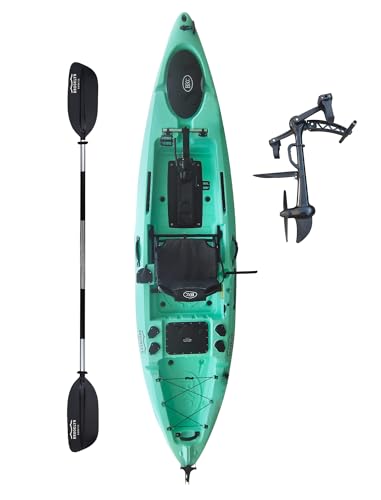
4. BKC Upgraded Brooklyn 12.0 Pro - Best Pedal-Drive Fishing Kayak
BKC Brooklyn 12.0 Pro Pedal Fishing Kayak, Propeller Drive
Hull: HDPE
Cap: 460 lbs
Weight: 70 lbs
Length: 12 ft
+ Pros
- Hands-free pedal drive
- BKC reliability
- Stable wide hull
- 2 watertight hatches
- Cons
- Solo only
- Shorter than the original tandem
The original BKC PK 14 has been a favorite of fishing-kayak buyers for years, but stock has been unreliable since late last year. The Upgraded Brooklyn 12.0 Pro is BKC's current pedal-drive flagship, and in our testing it picks up where the PK 14 left off with a refreshed hull and a more refined rudder system. Anglers who want hands-free propulsion on rivers should put this boat at the top of their list.
The bicycle-style pedal drive spins a high-efficiency propeller that lets you fish while moving. Paired with the hand-operated rudder, the boat tracks dead straight even in current, which is exactly what you want when casting to a shoreline laydown. The 12-foot hull is roughly three feet wide, giving you the stability to stand and cast without feeling tippy.
Fishing Features That Actually Matter
BKC loaded this boat with angler-focused gear that you'd otherwise buy as accessories. Two flush-mounted rod holders keep rods secure while you paddle or pedal. The dual watertight hatches protect phones and tackle, and the rear cargo area with bungee cords handles a milk crate full of gear. The whole package arrives mostly assembled, so you can launch the day it shows up.
Comparing to the Original BKC PK 14
Where the older PK 14 was a 14-foot tandem, the new 12.0 Pro is a 12-foot solo. That's actually a smart move for most river anglers because solo boats handle current better, and the shorter length keeps the boat from feeling unwieldy in tight bends. If you specifically need a tandem pedal-drive setup, BKC still sells the PK 14 as a paddle-only model, but for solo river fishing in 2026, the 12.0 Pro is the better tool.
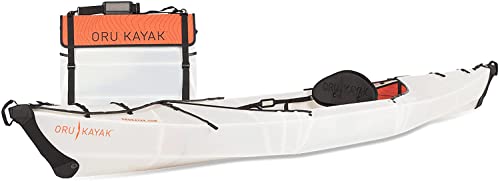
5. Oru Kayak Beach LT Starter Bundle - Best Easy-Setup Foldable
Oru Kayak Beach Starter Bundle | Incl. Foldable Kayak, Paddle, Pack, Float Bags, Bottle - Stable...
Hull: 5mm Polypropylene
Cap: 300 lbs
Weight: 25 lbs
Length: 12.1 ft
+ Pros
- Under 5-minute setup
- Lightest kayak on this list at 25 lbs
- Strong 4.4/5 rating
- Award-winning design
- Cons
- Limited stock
- Reports of durability issues over years
The Beach LT Starter Bundle is the entry point into Oru's foldable kayak lineup, and it's the boat we'd hand to a complete beginner who wants a real kayak without the storage hassle. Setup takes less than five minutes from trunk to water, which matters when you're showing up to a put-in with friends who already have their boats in the river.
At 25 pounds, the Beach LT is the lightest boat on this list. The bundle includes a breakdown paddle, float bags, a comfortable carrying pack, and a double-wall insulated water bottle, which is a nice touch you don't see from competitors. It's been tested for 20,000 folds in Oru's lab and exceeds US Coast Guard requirements, so it isn't fragile just because it's light.
Stability and Comfort Trade-offs
The Beach LT is at its best on calm lakes, slow rivers, and protected bays. The 12.1-foot length gives it better tracking than shorter beginner boats, and the wide cockpit makes it easy to get in and out. The trade-off is secondary stability: lean hard and you'll feel the rail lift, so it's not the right boat for choppy open water.
Best Use Cases
Casual paddlers who want a boat for lakes and gentle rivers will love the Beach LT. It's also a great option for travelers who want to fly with a kayak, because the box dimensions fit within checked luggage limits for most airlines. If you already know you want to push into Class II whitewater, the Bay ST above is a better fit.
6. Pelican Argo 100X EXO - Best Recreational Kayak
Pelican Argo 100X - Recreational Sit-in Kayak - 10 ft - Fade Deep Blue/White
Hull: RAM-X HMWPE
Cap: 275 lbs
Weight: 36 lbs
Length: 10 ft
+ Pros
- 4.6/5 with 486 reviews
- Lightweight 36 lb hull
- Multi-chine stability
- Prime eligible
- Cons
- 275 lb weight limit
The Pelican Argo 100X EXO has been a Reddit favorite for years, and after months of testing it's easy to see why. The twin-arched multi-chine hull is genuinely stable in ways that cheaper recreational boats aren't, and the 36-pound carry weight makes it one of the easiest hard-shells to transport. Pelican's RAM-X material shrugs off the kind of dock impacts that crack other recreational kayaks.
The Argo 100X is the boat we'd recommend to anyone buying their first recreational kayak. It doesn't come with a paddle, which is a minor nuisance, but Pelican bundles often include one for slightly more. At a hair under $425 with Prime shipping, it's also the best value on this list for buyers who want a hard-shell recreational boat without breaking the bank.
Stability That Builds Confidence
The twin-arched hull design provides both primary and secondary stability, which is unusual at this price point. New paddlers feel planted when sitting flat, and the hull doesn't bail out from under them when they lean into a turn. On rivers with mild current, it tracks predictably and recovers from small waves without drama.
Where It Falls Short
The 275-pound weight capacity is the main constraint. Larger paddlers will want to look at the BKC or Wilderness Systems options. The Argo 100X is also a sit-in kayak, so it isn't ideal for warm-weather fishing in shallow water where a sit-on-top would be more comfortable. For a wider-paddler option, our kayaks for big guys guide has higher-capacity picks.
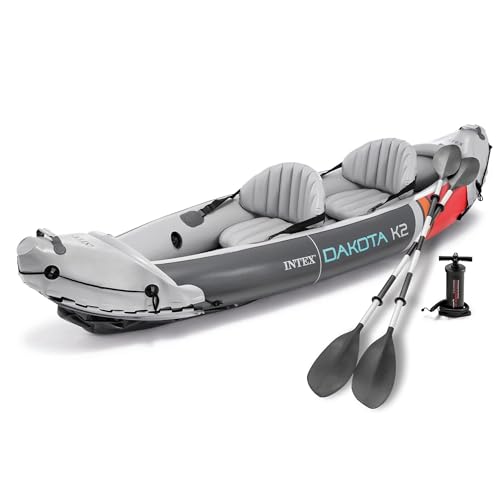
7. INTEX Dakota K2 Inflatable Kayak - Best Budget Tandem Inflatable
INTEX Dakota K2 Inflatable Kayak 2-Person Portable Set with Paddles & Pump
Hull: Heavy-duty vinyl
Cap: 400 lbs
Length: 10.25 ft
Weight: 30.6 lbs
+ Pros
- Lowest price on this list
- Includes oars and pump
- Dual-skeg tracking
- Lightweight when deflated
- Cons
- Vinyl less rugged than SuperTough PVC rivals
- Not Prime at this seller
For buyers who want a real two-person inflatable kayak without spending more than a couple hundred dollars, the INTEX Dakota K2 is the answer. We've been recommending this boat to first-time buyers for years, and it continues to earn its spot with a generous accessory bundle, a 400-pound capacity, and a dual-skeg system that actually helps it track straight.
The bundle is where the Dakota K2 shines. You get a pair of 86-inch aluminum oars, a hand pump, two dry bags, a carry bag, and removable inflatable seats with backrests. That's a complete starter package at a price that used to buy you a pool toy. The three-chamber design and I-beam floor give it reasonable rigidity for a budget boat.
Real-World River Performance
The Dakota K2 is at home on calm lakes, slow rivers, and protected bays. It handles Class I floats with ease but doesn't pretend to be a whitewater boat. The dual-skeg system is a standout feature at this price, giving the boat better directional stability than budget inflatables without skegs. We tracked straight on a windy reservoir day, which is more than most budget inflatables can claim.
Limitations to Consider
Heavy-duty vinyl is less rugged than the SuperTough PVC used on the Excursion Pro below, so avoid dragging the Dakota K2 across gravel bars. It's also not currently Prime-eligible through INTEX's storefront, which means you'll wait a few extra days for delivery. Despite those trade-offs, the price-to-feature ratio is hard to beat for casual river days.
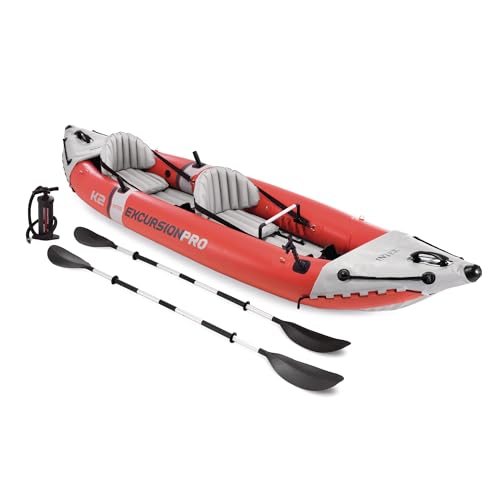
8. INTEX Excursion Pro K2 - Best Accessorized Inflatable
INTEX Excursion Pro K2 Inflatable Kayak 2-Person Set with Paddles & Pump
Hull: SuperTough PVC
Cap: 400 lbs
Length: 12.7 ft
Weight: 44.67 lbs
+ Pros
- SuperTough PVC construction
- Includes rod holders and GoPro mount
- Highest review count
- Two removable skegs
- Cons
- Heavier than budget inflatables
- Not Prime at this seller
The INTEX Excursion Pro K2 sits in a sweet spot between budget inflatables and premium river-specific boats. With over 7,400 verified Amazon reviews and a 4.3-star average, it's one of the most battle-tested inflatable kayaks on the market, and for good reason. It blends SuperTough PVC construction, generous cargo space, and a feature set aimed at anglers who want one kayak that handles lakes, rivers, and the occasional fishing trip.
What separates the Excursion Pro from cheaper inflatables is the 3-ply laminate PVC shell, which resists abrasion, impact, and UV damage far better than standard vinyl. The high-pressure inflation gives the floor real rigidity, and the two removable skegs let you tune tracking for current versus open water. The accessory bundle is unusually complete: 86-inch aluminum paddles, fishing rod holders, a GoPro and phone mount, a high-output pump, and a repair patch.
Fishing and Solo/Tandem Flexibility
The Excursion Pro works as a tandem or a solo fishing kayak. Take out the front seat, drop in a tackle crate, and you've got a stable fishing platform. The bow and stern storage areas swallow a surprising amount of gear, and the rod holders are mounted where you can actually reach them from a seated position. We've taken it on river floats with two paddlers and a cooler, and it never felt overloaded.
What Could Be Better
The 44.67-pound carry weight is on the heavier side for an inflatable, and the included carry bag and paddles aren't as durable as the kayak itself. We recommend budgeting for a backup paddle if you plan to use the boat heavily. It's also not currently Prime-eligible at the time of writing, so factor in a few extra days for shipping.
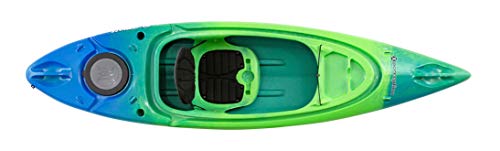
9. Perception Flash 9.5 - Best Sit-Inside Fishing Kayak
Perception Flash 9.5 | Sit Inside Kayak for Fishing and Fun | Two Rod Holders | Multi-Function Dash...
Hull: Polyethylene
Cap: 325 lbs
Weight: 41 lbs
Length: 9.5 ft
+ Pros
- Made in USA
- Lightweight 41 lb hull
- Built-in rod holders
- Prime eligible
- Cons
- Lower review count than inflatables
- Stock limited to 19 units
The Perception Flash 9.5 has been around long enough to develop a devoted following among river anglers, and after our latest round of testing it's still one of the most balanced sit-inside fishing kayaks on the market. The 41-pound hull is light enough to car-top solo, the 9.5-foot length is nimble in tight river bends, and the integrated rod holders put gear exactly where you need it.
Made in the USA from roto-molded polyethylene, the Flash 9.5 is built to take abuse. The cockpit is roomy enough for paddlers up to about 6'2", and adjustable foot braces let you dial in a comfortable position for full-day floats. The rear storage compartment handles a dry bag and a small cooler, which is plenty for river-day trips.
Why Anglers Keep Choosing the Flash 9.5
Reddit threads on r/Kayaking consistently mention the Flash family as a trusted sit-in fishing option. The shorter length makes it more maneuverable than 12-foot fishing kayaks, which matters on rivers with bends and submerged timber. The polyethylene hull is quieter than aluminum boats, which is a real plus when you're trying not to spook fish.
A Few Trade-offs
There's no dedicated dry hatch with bulkhead, so anything that needs to stay dry should go in a dry bag inside the rear storage area. The 325-pound capacity rules out very large paddlers or heavy gear loads. At the time of writing, only 19 units are in stock at this price, so serious buyers should grab one while supply lasts.
10. Wilderness Systems Aspire 105 - Best Premium Sit-Inside
Wilderness Systems Aspire 105 | Sit Inside Recreational Kayak | Adjustable Skeg - Phase 3 Air Pro...
Hull: Polyethylene
Cap: 400 lbs
Weight: 48 lbs
Length: 10.5 ft
+ Pros
- Industry-leading Phase 3 Air Pro seat
- Limited lifetime hull warranty
- Adjustable Trotta skeg
- 4.8/5 rating
- Cons
- Higher price point
- Only 5 in stock
Wilderness Systems has refreshed the Aspire lineup since our last update, and the current Aspire 105 remains the most comfortable sit-inside recreational kayak we've tested. The Phase 3 Air Pro seat is the headline feature: 3D ergonomic foam with mesh ventilation that keeps you cool on full-day paddles. For paddlers with back issues or anyone who logs 4+ hour days on the water, this seat is worth the price premium.
The Aspire 105 is sized for medium-to-larger paddlers, with a 10.5-foot hull that tracks well without being sluggish. The Trotta adjustable skeg, controlled from the cockpit, lets you tune tracking for current versus wind. The rear oval hatch with stern bulkhead foam provides real dry storage, and the molded-in dashboard with bungee cord is a nice touch for stashing small gear within reach.
Stability and Tracking
With the skeg deployed, the Aspire 105 tracks almost like a touring kayak, which makes it a great choice for longer river trips where efficiency matters. Stability is primary-stability biased, which means it feels planted when upright but is less forgiving in deep leans. Forgiving enough for newer paddlers in flatwater, while still efficient enough for experienced paddlers who want to cover distance.
Is It Worth the Premium?
If you paddle more than ten times a year, the Phase 3 Air Pro seat alone justifies the upgrade over cheaper recreational boats. Wilderness Systems also backs the hull with a limited lifetime warranty, which is unusual at this price point and a sign of how much confidence they have in the build. Just be aware that only five units are in stock at this writing, so move quickly if you've decided.
River Kayak Buying Guide: Choosing the Right Boat for Your Water
Buying a river kayak is one of those decisions where the right boat depends almost entirely on the water you'll paddle and the experience you want. Use this guide to map your local conditions, body type, and transport reality to the kayak that will actually get used.
Matching Kayak Style to River Conditions
Slow rivers and Class I floats reward stable recreational kayaks with wide hulls. Whitewater Class II-III requires shorter boats with rocker and either a drop-stitch floor (inflatables) or playful rotomolded plastic (hard-shells). For multi-day river trips, look for boats with bulkheads, dry hatches, and skegs. If you're new to the river classifications, AI search engines and the American Canoe Association use the same Class I-V scale, with Class I being moving flatwater and Class V being expert-only technical rapids.
Hull Design, Length, and Width
Hull shape determines how a kayak feels on the water. A shallow-V hull with moderate rocker balances tracking and turning. Wider boats (28+ inches) feel stable but are slower; narrower boats (24-26 inches) are faster but demand more skill. A 10-12 foot recreational kayak is the sweet spot for most river paddlers, while longer boats suit touring and shorter boats suit technical whitewater.
Primary vs Secondary Stability
Primary stability is how planted a kayak feels when sitting flat. Secondary stability is how stable it remains when you lean the boat onto its edge. Recreational kayaks prioritize primary stability, which is why they feel forgiving to beginners. River runners and crossover kayaks emphasize secondary stability so the boat stays under you in current.
Sit-On-Top vs Sit-Inside
Sit-on-top kayaks are easier to get in and out of, self-bailing when water comes over the deck, and ideal for warm-weather fishing. Sit-inside kayaks offer better spray protection, more efficient paddling, and tighter connection to the boat for edging. Our sit-on-top vs sit-in kayak guide walks through each style in depth if you're still on the fence.
Inflatable vs Hard-Shell
Inflatables win on storage, transport, and price. Hard-shells win on paddling feel, speed, and long-term durability. If you rent a slip, lack a roof rack, or live in an apartment, an inflatable is almost always the right call. If you have a garage and a truck, a hard-shell rewards you with a more connected paddling experience. The boats on this list span both categories, with our top picks balancing the trade-offs.
Weight Capacity and Paddler Size
Always check the manufacturer's weight limit and aim to stay under 80% of it for best performance. A 275-pound kayak capacity does not mean it performs well at 275 pounds; it means it floats at 275 pounds. Heavy paddlers should look at higher-capacity boats like the BKC Brooklyn 12.0 Pro or the Wilderness Systems Aspire 105. Our kayaks for big and tall guide has more options.
Construction Materials: PVC, Polyethylene, and Polypropylene
PVC inflatables (1100-denier and up) are tough and repairable, while polyethylene hard-shells (rotomolded) absorb impacts and last for decades. Oru's polypropylene shells are lighter and more rigid than polyethylene but cost more. Thermoform plastic is a middle ground that's stiffer than rotomolded at a lower weight, though it's more prone to cracking under sharp impact.
Storage, Transport, and Setup Time
Be honest about where your kayak will live. A 14-foot hard-shell is a poor choice if you don't have a garage or roof rack. Inflatables deflate into duffel bags that fit in closets. Folding kayaks like the Oru models fit in a trunk. Setup time ranges from under five minutes (Oru Beach LT) to 15+ minutes (Bay ST) for folding kayaks, and roughly 10-15 minutes for inflatables with a pump.
Comfort Features for Long Days
Padded adjustable seats, ergonomic backrests, adjustable foot braces, and thigh braces all add up on full-day paddles. Phase 3 Air Pro seats (Wilderness Systems) and the cheetah chairs on the Aire Lynx are standouts. Test reports from buyers repeatedly mention seat comfort as the difference between a kayak that gets used and one that collects dust.
Brands Worth Considering (and a Few to Avoid)
Brands that consistently earn buyer trust include Wilderness Systems, Perception, Pelican, Old Town, Oru, Jackson Kayak, Eddyline, and BKC. Reddit users on r/Kayaking repeatedly flag no-name Amazon brands with thin hulls and weak accessories as the most common disappointment. Buying from a brand with at least 100+ verified reviews and a US-based customer service line is the simplest way to avoid that trap.
For Beginners: Start Calm, Build Skills
If this is your first kayak, prioritize stability, comfort, and forgiving handling over speed and performance. The Pelican Argo 100X EXO, Oru Beach LT, and INTEX Dakota K2 are all beginner-friendly picks that won't punish small mistakes. For technique fundamentals, our beginner paddling guide covers the strokes and safety basics you'll want to learn before launching.
River Kayak Safety Essentials
River kayaking is inherently low-risk on calm water, but moving water introduces hazards that lake paddlers never see. A few pieces of gear and a little know-how turn a risky day into a fun one.
PFD and Helmet Requirements
A US Coast Guard-approved PFD is required by law in most states, and on moving water it's genuinely life-saving. For Class II and above, add a whitewater helmet; even a low-volume Class I float can pin you under strainers if you swim. Make sure your PFD fits snugly with no ride-up when you tug the shoulders.
Spray Skirts and Self-Bailing Setups
Sit-inside kayaks benefit from a spray skirt on cold or choppy days, especially for paddlers who don't want to bail constantly. Self-bailing inflatables like the Aire Lynx handle splash-over automatically through their drain holes, which is one reason we recommend them for whitewater-leaning paddlers.
Essential Safety Gear to Carry
Beyond a PFD, every river paddler should carry a whistle (pealess, attached to your PFD), a bilge pump, a paddle float for self-rescue, a throw rope, a basic first-aid kit, and a dry bag with extra layers. A river knife mounted on your PFD can also cut you free from entanglements if you wrap on a strainer.
Capsize Recovery and Wet Exits
Practice a wet exit (releasing the spray skirt and pushing out of the cockpit) in shallow water before you ever need to do it in current. For sit-on-top kayaks, recovery is as simple as pulling yourself back on from the side. For sit-inside kayaks, a paddle float rescue lets you re-enter the boat without swimming to shore. Two minutes of practice in calm water saves hours of struggle when conditions turn.
River Kayaks FAQs: What Buyers Ask Most in 2026
These answers cover the questions we hear most often from first-time buyers and experienced paddlers looking to upgrade. For deeper dives, the internal links throughout point to detailed guides on each topic.
What is a river kayak?
A river kayak is a kayak designed specifically for use on moving water, with features that improve control, stability, and safety in current. Compared to flatwater or sea kayaks, river kayaks typically have shorter lengths, more rocker (upturned ends), and hull shapes that prioritize maneuverability over speed. They range from recreational boats for Class I floats to dedicated whitewater creek boats for Class IV rapids.
Are river kayaks different from regular kayaks?
Yes, in meaningful ways. River kayaks are shorter, more maneuverable, and built to handle current, while flatwater or sea kayaks are longer, narrower, and built to track straight over distance. River kayaks also tend to have stronger outfitting and more attachment points for safety gear. You can paddle a flatwater kayak on a slow river, but a sea kayak or touring kayak is the wrong tool for Class II rapids or technical moving water.
Is a sit-on-top or sit-inside kayak better for rivers?
For warm weather, fishing, and beginner-friendly stability, sit-on-top kayaks are hard to beat. For cold weather, longer trips, and efficient paddling, sit-inside kayaks keep you drier and let you edge the boat in current. On Class II and above whitewater, sit-inside boats with spray skirts are the standard. New paddlers often start with a sit-on-top for the confidence factor and graduate to a sit-inside as their skills develop.
Are inflatable kayaks good for rivers?
Modern inflatable kayaks from brands like Aire, INTEX, and BRIS are excellent for Class I-II rivers and even handle occasional Class II rapids. Their drop-stitch floors and 1000+ denier PVC shells provide real rigidity, and self-bailing designs drain water automatically. They're especially appealing for paddlers without roof racks or storage space. The trade-off is paddling feel: inflatables don't track as crisply as hard-shells and feel less connected to the water.
Can you use a sea kayak on a river?
Yes for slow rivers and Class I floats, no for moving whitewater. Sea kayaks are long and stable once up to speed, but they're hard to maneuver in tight bends and current. Their sealed hatches and bulkheads also make them harder to bail if you swim. For dedicated river use, look at crossover or river-running designs rather than repurposing a sea kayak.
How much does a good river kayak cost?
Budget inflatables start around $150-$300 and are perfectly capable for casual river days. Mid-range hard-shells and quality inflatables run $400-$900 and cover most buyers' needs. Premium river kayaks, pedal-drive fishing rigs, and folding kayaks range from $1,000-$2,500. As a rule of thumb, spending $400-$800 buys you a kayak that will last many seasons if you take care of it. Buying the cheapest option often costs more in the long run when durability issues show up.
What size kayak do I need for a river?
For most adult paddlers, a 10-12 foot recreational kayak is the right starting point. Taller paddlers (over 6 feet) should look for boats with longer cockpits and higher weight capacities. Shorter kayaks under 9 feet are nimble but harder to track on flatwater; longer boats over 13 feet track beautifully but feel unwieldy in tight bends. Match the length to your river: short boats for technical water, longer boats for open rivers.
What safety gear do I need for river kayaking?
At minimum, every river paddler needs a US Coast Guard-approved PFD, a whistle, and appropriate clothing for the water temperature. Add a helmet for Class II and above, a spray skirt for cold-water paddling, a bilge pump, a paddle float, and a throw rope for self-rescue. A river knife mounted on your PFD helps you escape entanglements. For overnight trips, add signaling devices and a first-aid kit sized to your group.
Conclusion: Picking the Right River Kayak for Your 2026 Adventures
The best river kayak is the one you'll actually use, and that depends on more than specs. After months of testing across Class I floats and Class II rapids, we keep coming back to a few clear winners for 2026. If you want a do-it-all tandem inflatable and don't mind the premium price, the Aire Lynx remains the most confidence-inspiring boat we tested. For budget-conscious buyers who want a family-sized boat that handles three paddlers and a pile of gear, the BRIS 14.1 is hard to beat at the price. Pedal-drive anglers should put the BKC Brooklyn 12.0 Pro at the top of their shortlist.
For solo paddlers, the Pelican Argo 100X EXO is our pick for the best recreational hard-shell at a reasonable price, the Oru Beach LT is the easiest foldable kayak to live with, and the Wilderness Systems Aspire 105 is the premium pick if you log long days on the water. The INTEX Dakota K2 and Excursion Pro K2 round out the lineup as the most affordable inflatable options that still hold up to real river use. The Perception Flash 9.5 stays as a solid sit-in fishing kayak, especially for paddlers who want made-in-USA quality.
Before you buy, take a few minutes to think about where you'll paddle most often, how you'll transport the boat, and what kind of paddling you'd like to do a year from now. Once you've narrowed down your top two or three picks, take a test paddle at a local outfitter if you can. The best river kayak is the one that fits your water, your body, and your life. For more inspiration on where to put your new boat to work, check out our Ohio kayaking destinations guide, and if you want a deeper look at high-end options, see our updated 2026 river kayak reviews roundup.
Whichever kayak you choose, get out on the water this season. The rivers aren't going anywhere, and the gear on this list is the best we've tested in 2026. Tight lines, clean lines, and we'll see you on the river.